Shopify Canvas Lets Merchants Build Online Stores by Chatting with AI Agent Sidekick


3 Sources
[1]
Shopify debuts Canvas, a way to build online stores by chatting with AI
Shopify introduced a new site-building tool Thursday called Canvas that lets merchants set up their Shopify store by chatting with AI. While Shopify already offered a fairly capable no-code builder before Canvas, it involved editing a selected theme by rearranging modular sections and blocks.
[2]
Shopify unlocks 'big picture' design control with new conversational AI tool
It just got easier to manage your brand and design consistency * Shopify has launched a new tool for editing websites * Canvas lets you view and edit your entire website from one workspace * It is rolling out to users over the coming days Shopify has launched Canvas, a new tool that lets users
[3]
Shopify Canvas builds online stores through AI chat
Shopify introduced Canvas on Thursday, an AI-powered site-building tool that lets merchants create and modify online stores by chatting with its AI agent, Sidekick. Canvas is initially available only on desktop and lacks several capabilities at launch, including third-party theme support, app
Share
Copy Link
Shopify launched Canvas, an AI-powered site-building tool that enables merchants to create and customize online stores through conversational AI. The platform uses Sidekick to render real-time code changes, eliminating the need for coding expertise or hiring developers for store design.
Shopify Canvas Transforms Online Store Creation with Conversational AI
Shopify introduced Canvas on Thursday, marking a significant shift in how merchants build online stores
1
. This AI-powered site-building tool allows users to build online stores by chatting with AI, specifically through Shopify's AI agent Sidekick, eliminating the traditional barriers of coding knowledge and developer costs. Unlike Shopify's previous no-code builder that required manual theme editing and code manipulation for deeper customizations, Canvas enables merchants to simply describe their vision in plain English and watch as the AI tool brings it to life2
.Real-Time Code Rendering Sets Canvas Apart
What distinguishes Shopify Canvas from static preview tools is its real-time code rendering capability
3
. As Sidekick makes changes based on merchant requests, Canvas displays the actual code behind the store being rendered in real time, not just a mockup. Merchants can test full page interactivity, animations, and view how pages appear across different screen sizes immediately. This conversational AI tool takes the guesswork out of site development by showing exactly what the final product will look like as it's being built. Sidekick even captures screenshots of its work, creating a feedback loop that ensures the AI sees the same updates merchants see on their screens1
.Store-Wide Visualization Improves Design Consistency
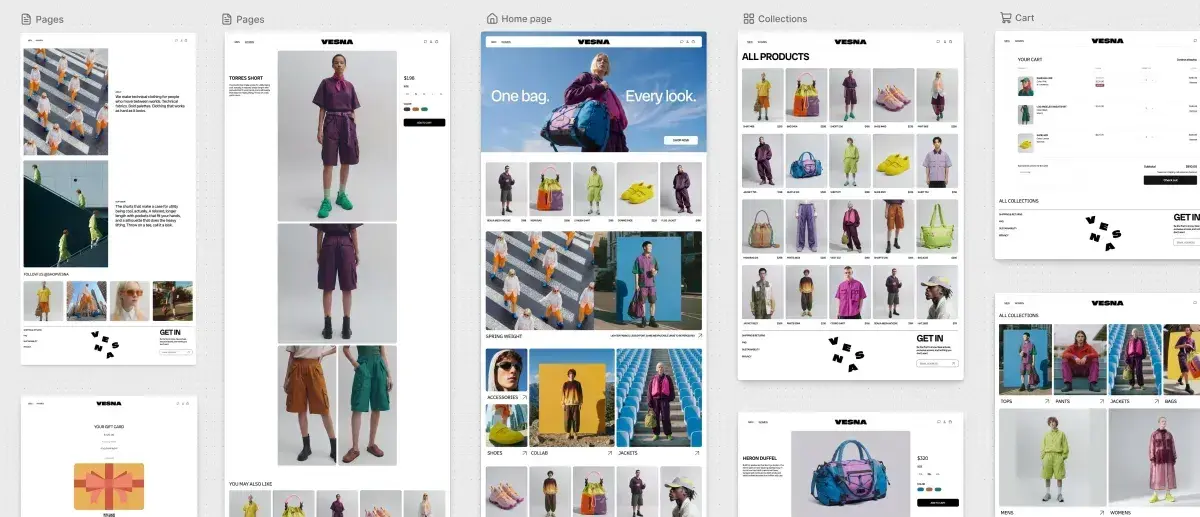
Canvas introduces a unique workspace approach that lets merchants view every page of their e-commerce site laid out together on one screen
2
. This store-wide visualization helps identify branding inconsistencies across the entire site before zooming in to address specific details. Ben Sehl, Director of Product at Shopify, highlighted the dramatic time savings: "When I built Kotn 12 years ago, I knew how to code, and it still took me two weeks to get a rough store working. Today, an entrepreneur on Shopify can build a fully custom store in twenty minutes."2
This represents a shift from fragmented page editing to holistic site management, giving merchants control over theme architecture and responsive design from a single interface.Technical Architecture Enables AI-Driven Web Development
To make this no-code alternative work effectively, Shopify restructured its underlying technology. The company gave Sidekick direct access to theme files and simplified the theme architecture so the store's structure, logic, and design would be easier for the AI to understand and modify
1
. Merchants retain the option to click individual elements for manual edits, but the primary interaction model centers on conversational commands. Sidekick carries design decisions across sessions to maintain consistency, eliminating the need to repeatedly explain preferences2
. While Sidekick previously handled tasks like writing code, building apps, and customizing themes, Canvas integrates these capabilities into a comprehensive site-building product.Related Stories

Current Limitations and Competitive Landscape
Canvas is currently available only on desktop and ships with notable restrictions at launch
3
. The initial release lacks support for third-party themes, app blocks and extensions, markets, translations, rollouts, and theme updates. These limitations may constrain merchants who rely on specialized functionality or operate in multiple regions. The tool will exist alongside Shopify's current theme editor during this early rollout phase, offering a hybrid approach to website editing2
. Canvas enters a crowded market of AI-powered website builders, competing with established platforms from Wix, Squarespace, Webflow, and Framer, as well as vibe-coding platforms like Lovable and Replit1
.What Merchants Should Watch For
As Canvas rolls out to users over the coming days, merchants should monitor how quickly Shopify addresses the missing features, particularly third-party theme support and app extensions that many stores depend on. The success of this AI-driven web development approach will likely influence how other e-commerce platforms integrate conversational AI into their offerings. For entrepreneurs without coding skills or developer budgets, Canvas could democratize access to professional-quality online stores, but its long-term value depends on Shopify expanding its capabilities beyond the current limitations. The platform's ability to maintain design consistency while handling complex customization requests will determine whether it becomes the primary tool for Shopify merchants or remains a complementary option to traditional theme editors.
References
Summarized by

Navi
[3]
Related Stories
Shopify Revolutionizes E-commerce with AI-Powered Store Builder and Enhanced Platform Features
22 May 2025•Technology

Amazon Canvas brings interactive dashboards and scenario planning to third-party sellers
03 Mar 2026•Technology

Canva Unveils Major AI-Powered Update: Visual Suite 2.0 Challenges Tech Giants
11 Apr 2025•Technology

Recent Highlights



Recent Highlights
Today's Top Stories






Don’t drown in AI news. We cut through the noise - filtering, ranking and summarizing the most important AI news, breakthroughs and research daily. Follow topics that matter to you and stay ahead.


