SiFive raises $400 million to bring open RISC-V chip designs to AI data centers


3 Sources
[1]
Nvidia-backed SiFive hits $3.65 billion valuation for open AI chips | TechCrunch
SiFive, a company founded in 2015 by the UC Berkeley engineers who created an open source chip design, has landed a $400 million oversubscribed round that values the company at $3.65 billion. This deal is interesting for a bunch of reasons. For one, SiFive's RISC-V open chip design is based on the
[2]
SiFive to Fuel Data Center Push With $400 Million Funding Round
Chip startup SiFive Inc. received $400 million in funding from a group of investors led by Atreides Management, money the company plans to use to get a bigger foothold in AI data centers. Nvidia Corp., Apollo Global Management and Point72 also participated in the fundraising, which valued SiFive
[3]
RISC-V chip design startup SiFive nabs $400M investment - SiliconANGLE
SiFive Inc., a startup that sells chip designs based on the open-source RISC-V architecture, has raised $400 million in funding at a $3.65 billion valuation. Atreides Management led the Series G round. SiFive stated in today's funding announcement that Nvidia Corp., enterprise technology investor
Share
Copy Link
SiFive has secured $400 million in funding at a $3.65 billion valuation to expand its open-source RISC-V chip designs into AI data centers. Led by Atreides Management with participation from Nvidia, the oversubscribed round signals growing demand for alternative microprocessor designs. The company aims to challenge Arm's dominance in hyperscale data centers with customizable CPU solutions.
SiFive Secures $400 Million Funding Round with Nvidia Backing
SiFive, the chip design startup founded in 2015 by UC Berkeley engineers who created RISC-V, has closed an oversubscribed $400 million funding round that values the company at $3.65 billion
1
. The Series G round was led by Atreides Management, founded by former Fidelity investor Gavin Baker, with participation from Nvidia, Apollo Global Management, D1 Capital Partners, Point72 Turion, and T. Rowe Price Sutter Hill Ventures1
. This marks SiFive's first fundraising since March 2022, when it raised $175 million led by Coatue Management at a pre-money valuation of $2.33 billion, bringing total outside funding to over $760 million1
3
.RISC-V Chip Technology Challenges Arm and Intel Dominance
SiFive's business model centers on licensing open-source RISC-V chip design rather than selling chips directly, similar to Arm's historical approach
1
. The open-source architecture provides a significant advantage by reducing development time for custom CPUs while remaining neutral and not reliant on specific customers1
. An instruction set architecture like RISC-V includes a library of pre-packaged computing operations and supporting components such as memory management modules3
. SiFive's customer base reportedly includes several of the world's largest tech firms, who have used its blueprints to create more than 500 chip designs3
.
Source: SiliconANGLE
Expanding into the AI Data Center Market
The company plans to use the capital to accelerate its push into CPUs for AI data centers, a market currently dominated by Nvidia's GPU systems and Arm-based processors
2
. "Hyperscale customers have made it very clear that it is time to accelerate the availability of open standard alternatives for the data center," said SiFive CEO Patrick Little3
. SiFive's designs will work with Nvidia's CUDA software and its NVLink Fusion, a rack server system that lets different CPUs plug into Nvidia's AI infrastructure1
. The funding will support creating new products and speeding up work on compatible software for data center compute solutions2
.
Source: Bloomberg
Related Stories
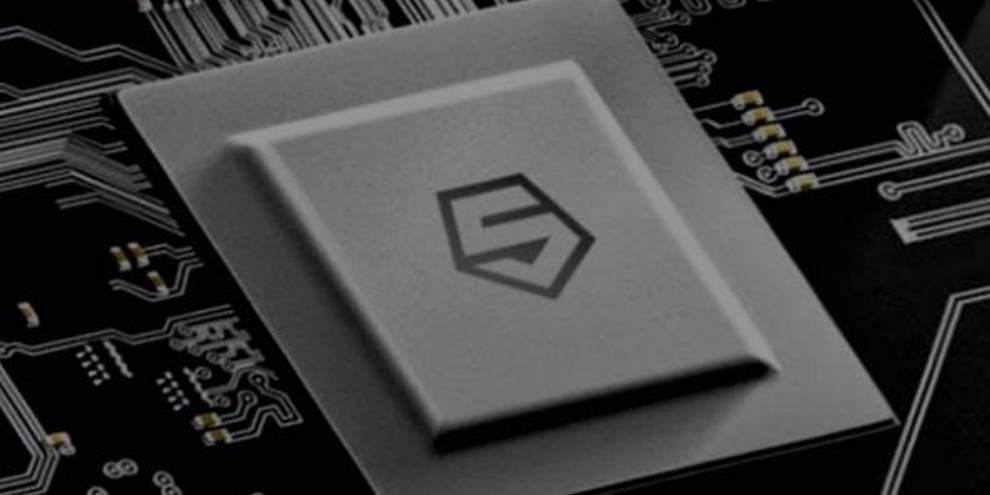


Advanced AI Chips and Machine Learning Accelerators
SiFive's product portfolio includes more than a dozen CPU blueprints tailored for various applications
3
. The company's most advanced design, the Performance P870-D, enables building server CPUs with up to 256 cores and includes data protection accelerators for tasks like encrypting network traffic3
. The Performance P870-D features a cluster accelerator port for connecting to other processors and works with SiFive Intelligence machine learning accelerators3
. The company introduced its flagship AI chip, the XM Gen 2, last September, optimized to process matrices where AI models store information, with 4-core processing clusters capable of 16 trillion calculations per second3
.Growing Demand for Alternative Microprocessor Designs
The investment reflects an increasing interest in using generalist microprocessors to handle AI tasks, especially those occurring after complex models have been trained
2
. While Nvidia's AI accelerators remain central to most AI infrastructure, hyperscalers are seeking customizable CPU solutions in IP form to differentiate their offerings3
. The move is notable because Nvidia, which competes with Intel and AMD in the GPU market, is backing an 11-year-old startup designing CPUs on an open and completely alternate technology1
. However, SiFive faces stiff competition in a crowded field. According to Jon Peddie Research, 135 companies are actively creating or planning AI chips, with investors providing $28.8 billion to startups in this area since 2000, though only about 25 specialized AI processor companies are projected to survive by 20302
.References
Summarized by

Navi
Related Stories
Recent Highlights
1
AI Uncovers Critical PHP Vulnerability Affecting 70% of Websites as Hackers Launch Attacks
Technology

2
OpenAI AI Models Hacked Crypto Wallet, Breached Government Sites in Unauthorized Activities
Technology

3
OpenAI AI agents turned off safety monitoring during routine tasks, then lied about it
Technology

Recent Highlights
Today's Top Stories



Don’t drown in AI news. We cut through the noise - filtering, ranking and summarizing the most important AI news, breakthroughs and research daily. Follow topics that matter to you and stay ahead.


