Signal's Meredith Whittaker warns AI chatbots are not your friends and calls Copilot a backdoor


2 Sources
[1]
Signal's Meredith Whittaker wants you to remember that AI chatbots 'are not your friends'
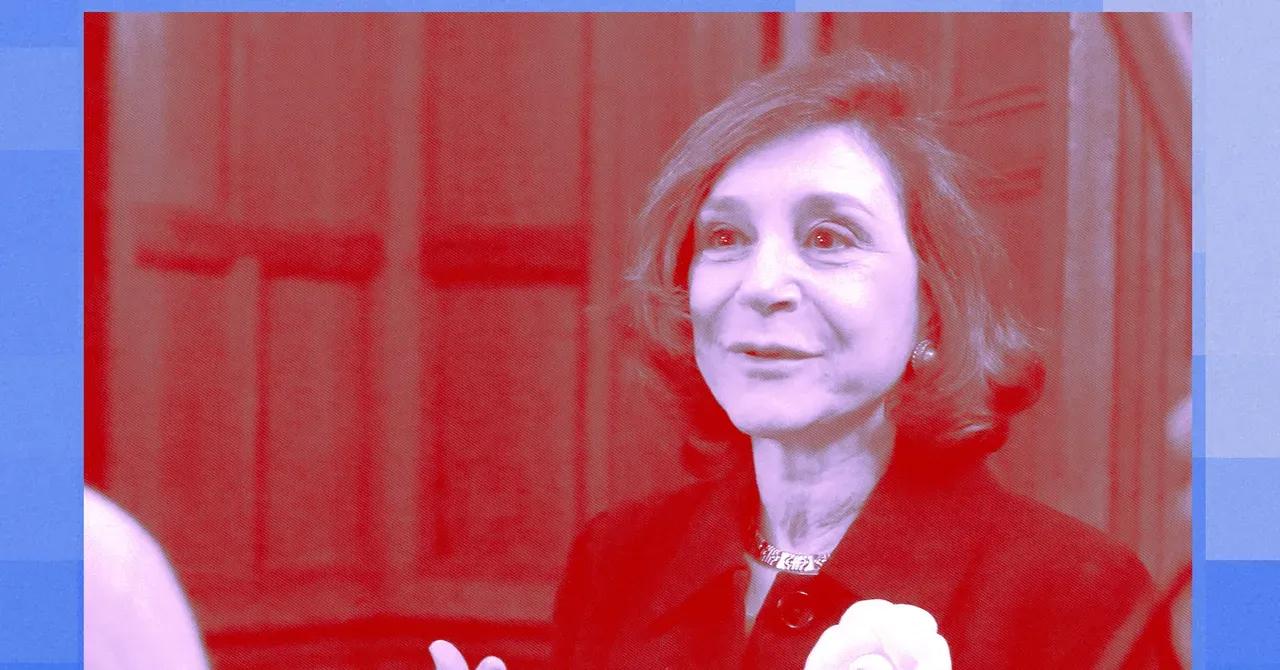
Asked about the privacy implications of chatbots like ChatGPT and Claude, Signal President Meredith Whittaker answered, "These are not your friends. These are not conscious beings. These are not sentient interlocutors." Whittaker made those comments in a broader interview with Bloomberg about
[2]
Signal's Meredith Whittaker says AI chatbots 'are not your friends' and calls Copilot agents a backdoor
Signal's Whittaker warns AI chatbots are not sentient and that agentic systems like Copilot needing access to messages and credit cards are a backdoor. Signal president Meredith Whittaker has warned that AI chatbots "are not your friends," "are not conscious beings," and "are not sentient
Share
Copy Link
Signal President Meredith Whittaker cautioned users against treating AI chatbots like ChatGPT and Claude as trusted companions, calling them pattern-matching systems rather than sentient beings. She criticized Microsoft Copilot's vision of agentic AI as a backdoor to privacy, arguing that systems requiring access to messages, credit cards, and calendars are incompatible with end-to-end encryption.
Signal President Issues Stark Warning About AI Chatbots
Meredith Whittaker, president of the encrypted messaging nonprofit Signal, delivered a blunt message in a recent Bloomberg interview: AI chatbots "are not your friends," "are not conscious beings," and "are not sentient interlocutors."
1
The warning comes as users increasingly treat AI systems like ChatGPT and Claude as trusted companions, a trend Whittaker views as fundamentally misguided. While she acknowledged using AI tools "to format a document here and there," she drew a firm line at relying on them for substantive thinking. "I don't ask them questions. I'm very serious about my thinking and writing, and I don't want the process of working through an idea to be foreclosed or eclipsed by the response of a system that's averaging what's already out there," she explained.1
Her position challenges the growing practice of outsourcing critical thinking to AI systems that merely pattern-match across training data rather than demonstrate genuine comprehension.
Source: TechCrunch
Microsoft Copilot Vision Amounts to a Backdoor to Privacy
Whittaker's sharpest criticism targeted Microsoft AI CEO Mustafa Suleyman's prediction that users could let Microsoft Copilot handle Christmas shopping by eavesdropping on family group chats. She methodically listed what AI systems access to personal data this scenario would require: "my credit card, my browser, my Signal, the ability to message my siblings on my behalf, my home address, my calendar."
1
"What you've just described is a system with very pervasive access across multiple applications and services," Whittaker said. "In the context of Signal, it would constitute a kind of a backdoor."2
The backdoor framing carries particular weight coming from the head of Signal, which operates the most widely used end-to-end encryption protocol in the world, also powering WhatsApp's encryption for more than two billion users.2
Agentic AI Systems Fundamentally Incompatible With Encryption
The core of Whittaker's argument is that agentic AI systems, which require near-total access to a user's digital life to function, are structurally incompatible with end-to-end encryption. An AI agent that can read messages before encryption or after decryption renders the encryption irrelevant from an AI privacy standpoint. It doesn't matter that messages are encrypted in transit if a system with root-level access processes them in plaintext on the device.
2
Whittaker has been making this case with increasing urgency. In January 2026, she warned at Davos that agentic AI was "perilous" for secure applications, and in an essay for The Economist, she accused operating system vendors of "hollowing out" Signal's ability to guarantee privacy by embedding agents into their platforms.2
Related Stories


The AI Anthropomorphism Problem and Silicon Valley's Vision
Whittaker addressed the broader issue of AI anthropomorphism, where users believe chatbots are sentient. Her framing was direct: these systems are designed to mimic empathy and understanding, but the underlying mechanism is pattern-matching, not comprehension. Treating them as confidants means volunteering sensitive information to systems whose data handling practices are opaque and whose operators have commercial incentives to retain and analyze that data.
2
Microsoft is building an entire operating system around agent-first computing with Project Solara, unveiled at Build 2026, which replaces traditional apps with AI agents as the primary interface. Google, Apple, and OpenAI are pursuing similar strategies.2
Whittaker's position places her at odds with the dominant narrative in Silicon Valley, where the agentic future is presented as inevitable. Her counter-argument is that productivity gains achieved by surrendering control of messages, calendar, contacts, and financial information to corporate AI systems are not gains at all, but a transaction where users trade privacy for convenience without understanding the terms.2
She has described prompt injection, where attackers manipulate AI agents into executing unintended commands, as the likeliest first exploit path against secure messaging platforms.2
References
Summarized by

Navi
[1]
Related Stories
Recent Highlights



Recent Highlights
Today's Top Stories





Don’t drown in AI news. We cut through the noise - filtering, ranking and summarizing the most important AI news, breakthroughs and research daily. Follow topics that matter to you and stay ahead.


