Snake-Inspired Soft Robotic Enteroscope Navigates 6 Feet of Small Intestine in 11 Minutes


2 Sources
[1]
Soft robotic enteroscope offers a new approach to small intestine examination
UT Southwestern Medical CenterOct 28 2026Reviewed An innovative robotic device inspired by snake movement could someday help gastroenterologists diagnose and treat inflammatory bowel disease (IBD) and other disorders of the small intestine and remove small polyps while reducing trauma to the
[2]
Robot could improve diagnosis, treatment of small intestine disorders | Newswise
DALLAS - Oct. 28, 2026 - An innovative robotic device inspired by snake movement could someday help gastroenterologists diagnose and treat inflammatory bowel disease (IBD) and other disorders of the small intestine and remove small polyps while reducing trauma to the organ's delicate
Share
Copy Link
Researchers at UT Southwestern Medical Center and MIT developed BIOSENTER, a soft robotic enteroscope inspired by snake movement that successfully navigated 6 feet of small intestine in 11 minutes during preclinical trials. The bioinspired device performed real-time imaging, tissue biopsy, and fluid delivery without visible tissue damage, offering a safer alternative to current double-balloon enteroscopes for diagnosing inflammatory bowel disease and other gastrointestinal conditions.
BIOSENTER Combines Snake Movement and Kirigami Design for Small Intestine Examination
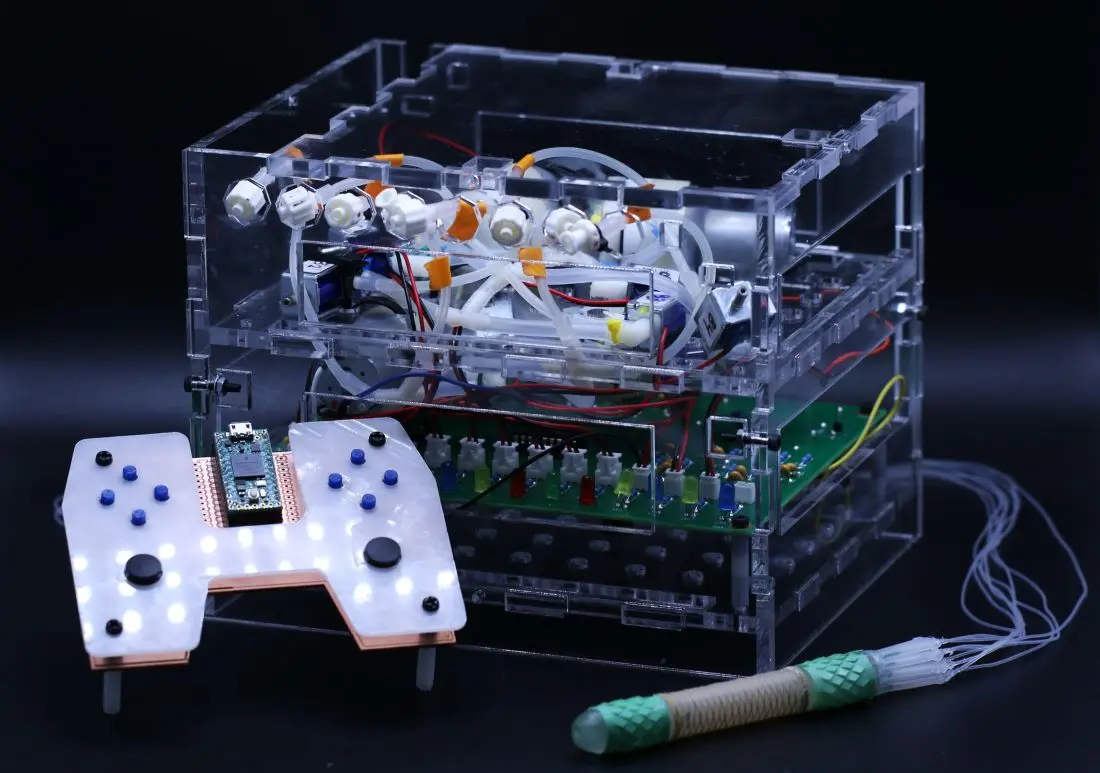
Researchers at UT Southwestern Medical Center and MIT have developed BIOSENTER, a bioinspired soft robotic device that could transform the diagnosis and treatment of small intestine disorders. Led by Dr. Binbin Ying, Assistant Professor of Biomedical Engineering and Internal Medicine at UT Southwestern Medical Center, the team published findings in Science Robotics demonstrating how this soft robotic enteroscope successfully performed small intestine examination during preclinical trials
1
2
. The device mimics snake movement and uses kirigami, the Japanese art of cutting and folding paper into 3D shapes, to navigate the organ's challenging anatomy. Dr. Ying emphasized the potential impact: "Our long-term goal is to develop robotic tools that can help clinicians examine the small intestine more safely and efficiently"1
.
Source: Newswise
Preclinical Trials Show BIOSENTER Navigates 6 Feet in 11 Minutes
During the latest preclinical trials, BIOSENTER successfully traveled through 6 feet of small intestine in approximately 11 minutes while performing real-time imaging, tissue biopsy, and localized fluid delivery without visible tissue damage
1
2
. The bioinspired soft robotic device measures just over 3.5 inches long as a hollow cylinder. Air pumping within Kevlar-reinforced inflatable chambers elongates and bends the robot's body, mimicking snake musculature. Kirigami sleeves made of polyimide form the device's head and tail, creating bristly surfaces that anchor BIOSENTER within the slippery mucosal lining. Scientists control the device using a joystick to navigate the small intestine. The design generates sufficient anchoring force without requiring the extensive expansion needed by conventional balloon-based systems, reducing potential trauma to delicate intestinal tissues.Addressing Critical Gaps in Small Intestine Diagnosis and Treatment
The small intestine presents unique challenges for medical examination—spanning about 20 feet in length with tight folds and a slippery mucosal lining that makes it one of the most difficult organs to access
1
. Current double-balloon enteroscopes require extensive training, and few gastroenterologists are qualified to perform the procedure. These existing endoscopic tools are time-consuming, limiting the number of patients who can be examined daily, and carry potential risks. BIOSENTER technology could eventually aid physicians treating conditions requiring deep examination within the small intestine, including gastrointestinal bleeding, Crohn's disease, other forms of inflammatory bowel disease (IBD), and tumors. The device contains a central channel accommodating tools for imaging, biopsy, and delivery of therapeutic agents, enabling comprehensive diagnosis and treatment of small intestine disorders.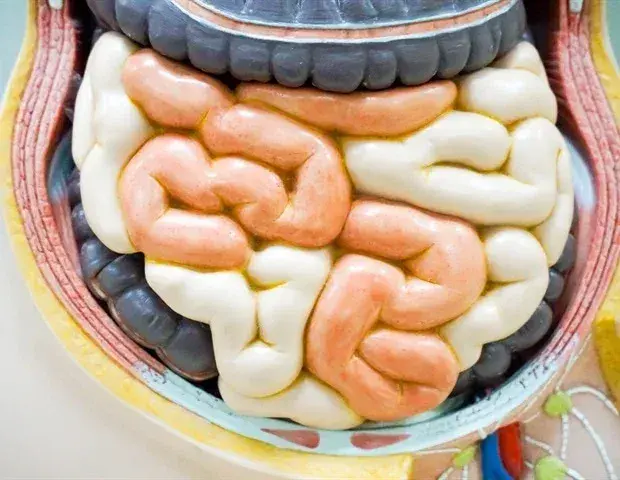
Source: News-Medical
Related Stories

AI Integration Points Toward Autonomous Navigation
Members of the Ying Lab are integrating AI to optimize the kirigami structure and improve locomotion capabilities
1
2
. Dr. Ying envisions that enteroscopes using BIOSENTER technology may eventually achieve autonomous navigation through patients' small intestines. If researchers successfully integrate the robot's capabilities into existing tools, they could lower training barriers and improve access to lifesaving examinations and procedures. Giovanni Traverso, M.D., Ph.D., Professor of Mechanical Engineering at MIT and gastroenterologist at Brigham and Women's Hospital, served as the study's corresponding author, with several MIT collaborators joining Dr. Ying in this research. Dr. Ying began developing BIOSENTER during his postdoctoral training at MIT and Brigham and Women's Hospital before joining UT Southwestern Medical Center in 2025, where he continues refining the design with colleagues in the Ying Lab.Path Forward Requires Validation Before Human Testing
Dr. Ying acknowledged that "further engineering development and validation will be needed before human testing, including evaluation of performance over longer distances, safety, usability, and direct comparison with current double-balloon enteroscopy"
1
. The team initially tested BIOSENTER within transparent PVC pipe structures mimicking the small intestine's twists and turns before advancing to biological tissue testing. Watch for continued refinements in the device's ability to navigate longer intestinal distances and integration of advanced AI algorithms for improved autonomous navigation. If the technology matures sufficiently, researchers plan to evaluate its robotic capabilities in clinically relevant settings to determine how it could complement existing endoscopic procedures for small intestine examination.References
Summarized by

Navi
Related Stories
Hair-Like Soft Robot Captures Tumor Cells From All 23 Liver Cancer Patients Tested
26 Aug 2026•Health

AI Outperforms Gastroenterologists in Assessing Crohn's Disease via Colonoscopy Analysis
28 Aug 2025•Health

AI-Powered Robot Performs Autonomous Gallbladder Surgery, Marking Milestone in Surgical Robotics
10 Jul 2025•Technology

Recent Highlights
1
OpenAI's AI Models Disprove 27-Year Exponential Time Hypothesis, Rendering Decades of Research Obsolete
Science and Research

2
Google DeepMind unveils Genie 4 world model with audio and 2-minute interactive simulations
Technology

3
Microsoft AI Diagnostic Tool Beats Doctors With 83% Accuracy on Complex Medical Cases
Health

Recent Highlights
Today's Top Stories







Don’t drown in AI news. We cut through the noise - filtering, ranking and summarizing the most important AI news, breakthroughs and research daily. Follow topics that matter to you and stay ahead.


