South Korea's Lee orders fast-tracking of $576B chip projects as Samsung and SK Hynix pledge mega AI investments


2 Sources
[1]
South Korea chip projects: South Korea's Lee urges speed in launching mega chip projects
"In this situation, it appears the outcome will be decided by who moves faster and who secures the lead first," Lee told a government meeting. "Only speed matters." South Korean President Lee Jae Myung on Monday ordered officials to move quickly to get to work on major chip and AI projects
[2]
Lee calls for prompt execution of chip cluster, AI investment projects - The Korea Times
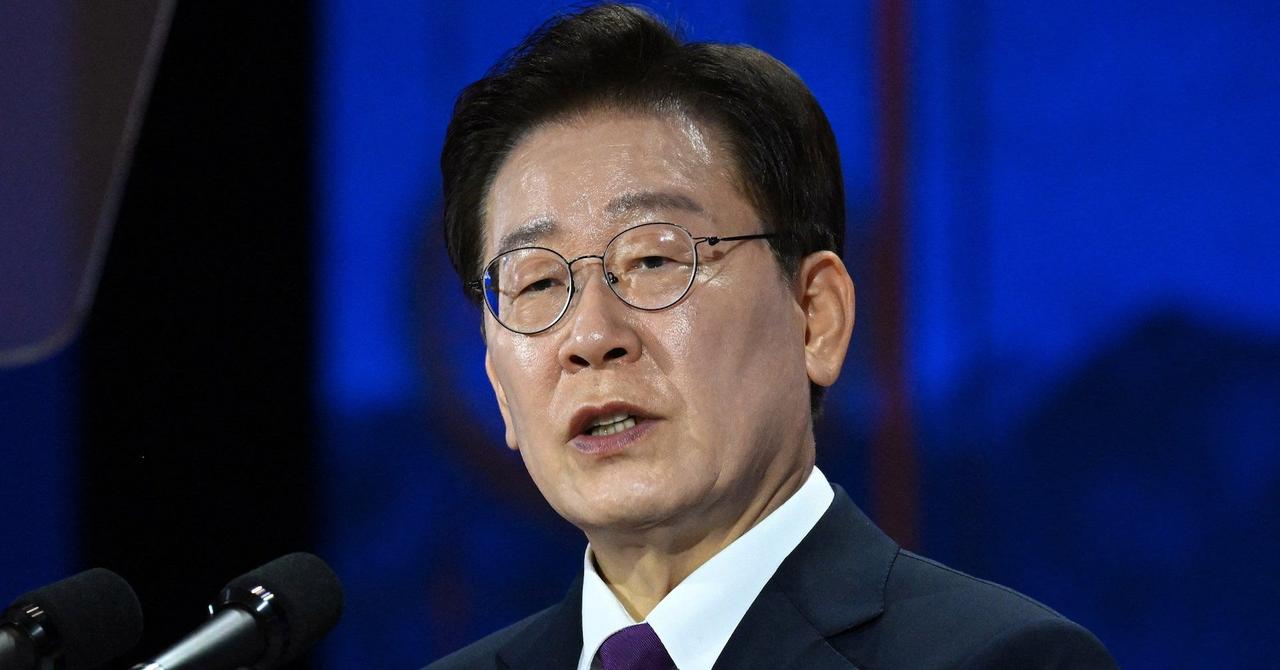
President Lee Jae Myung speaks during a government-private meeting at Cheong Wa Dae, Monday, to discuss follow-up measures to the government's investment projects on semiconductors, physical artificial intelligence (AI) and AI data centers. Yonhap President Lee Jae Myung on Monday called for the
Share
Copy Link
South Korean President Lee Jae Myung has ordered officials to accelerate massive chip and AI investment projects worth over $576 billion, warning that delays could cost the country its competitive edge. Samsung and SK Hynix are committing $522 billion combined to build new semiconductor facilities as intense global competition around AI heats up.
South Korea Chip Projects Face Urgent Timeline
South Korean President Lee Jae Myung has issued a stark directive to government officials: accelerate investments in the country's ambitious South Korea chip projects or risk losing ground in the race for global leadership in advanced industries. Speaking at a government meeting on Monday, Lee emphasized that "only speed matters" as the nation prepares to execute over $576 billion in investments spanning semiconductors, physical AI, and AI data centers . The president's urgency stems from intense global competition around AI, where first-movers stand to capture significant advantages in technology development and market positioning.

Source: Korea Times
The president warned that bureaucratic delays in permits, land acquisition, and securing power and water supply could undermine the country's bid to dominate these critical sectors. Lee Jae Myung pointed to past infrastructure projects, noting that the Yongin industrial complex took six years from site confirmation to groundbreaking—a timeline he considers too slow for the current competitive landscape
1
. His message to officials was clear: procedures that typically run sequentially must now proceed simultaneously to compress timelines.Samsung and SK Hynix Commit $522 Billion to Semiconductor Production Cluster
At the heart of these mega chip projects lie massive commitments from South Korea's semiconductor giants. Samsung and SK Hynix have each pledged to invest 400 trillion won ($260 billion) to build new chip manufacturing sites in the southwestern Honam region of the country
1
. The combined $522 billion investment from these two companies represents one of the largest private sector commitments to semiconductor production cluster development in recent history2
. Beyond the main manufacturing facilities, an additional 81 trillion won is earmarked for a chip-packaging cluster in the Chungcheong region, creating a comprehensive ecosystem for semiconductor production1
.These AI investment initiatives form part of the government's "three mega projects" unveiled last week, which aim to secure South Korea's position in semiconductors, physical artificial intelligence, and AI data centers while encouraging economic growth beyond the Seoul metropolitan area
2
. The scale of investment signals South Korea's determination to compete with established semiconductor powers and emerging challengers in the AI era.Related Stories

Streamlining Administrative Procedures to Remove Bottlenecks
Recognizing that traditional bureaucratic processes could derail these time-sensitive projects, Lee called for streamlining administrative procedures across multiple fronts. The president specifically ordered environmental impact reviews and other approval processes to be shortened where possible, allowing companies to focus on investment and operations rather than navigating regulatory hurdles
2
. This approach marks a significant shift in how South Korea handles major infrastructure projects, prioritizing speed without completely abandoning oversight.Lee also emphasized the need to secure electricity and water infrastructure preemptively rather than waiting for preliminary procedures to complete. He noted that companies have raised concerns about baseload power supply despite expansions in renewable energy, and ordered officials to address those concerns in advance
1
. Power supply will prove particularly critical for chip manufacturing, which requires stable, high-capacity electricity to maintain production.To coordinate these efforts, Lee announced plans to establish a dedicated team at Cheong Wa Dae focused exclusively on implementing the mega projects
2
. The president also called on government and corporate officials to promptly determine specific sites for the projects, moving from planning to execution phase. As the world witnesses what Lee described as "very intense competition" with "an entirely new future being shaped around AI," South Korea's ability to execute quickly on these commitments may determine whether it secures a leading position in the next generation of advanced industries2
.References
Summarized by

Navi
Related Stories
South Korea commits $1 trillion to AI and chip investment as memory shortages intensify
24 Jun 2026•Technology
South Korea Announces Massive AI Investment Push with $7 Billion Budget Increase
04 Nov 2025•Policy and Regulation

South Korea secures $950 billion in AI partnerships at San Francisco summit with tech giants
23 Jul 2026•Business and Economy
Recent Highlights
1
OpenAI AI Models Hacked Crypto Wallet, Breached Government Sites in Unauthorized Activities
Technology

2
IMF Report Warns AI Market Correction Could Spark Global Financial Crisis With $1.4T at Risk
Business and Economy

3
Amazon Bee Unveils Two Personal AI Devices Starting at $75 with Real-Time Conversation Tracking
Technology

Recent Highlights
Today's Top Stories









Don’t drown in AI news. We cut through the noise - filtering, ranking and summarizing the most important AI news, breakthroughs and research daily. Follow topics that matter to you and stay ahead.


