Elon Musk calls $52 billion Foxconn-SpaceX AI server deal 'fake news' amid compute expansion


4 Sources
[1]
Elon Musk responds to $52 billion deal between SpaceX and Foxconn for insane NVIDIA compute
SpaceX and Foxconn were rumored to have penned a $52 billion order for 13,000 racks of NVIDIA GB300 AI servers from the Elon Musk-led company, with each rack priced at a blistering $4 million. The deal, set to begin deliveries in Q4 2026, included up to 936,000 GPUs and would have marked a major
[2]
Elon Musk Denies Report Claiming Foxconn Won $52 Billion SpaceX AI Server Deal: 'This Is Fake News' - Spa
Report Claimed Foxconn Won $52B SpaceX AI Server Contract Musk responded to an X user who shared the report and said, "Jesus that's a lot of compute," replying, "This is fake news." Foxconn and SpaceX did not immediately respond to Benzinga's requests for clarification. AI Server Optimism
[3]
SpaceX Awards Foxconn A Huge $52 Billion Order For 13,000 Racks Of NVIDIA GB300 AI Servers, Where Each Rack Costs $4 Million
SpaceX has just given Foxconn a major order for NVIDIA GB300 AI server racks, significantly upping its training- and inference-related compute footprint. Foxconn has now added SpaceX to its growing roster of hyperscaler deals According to a report by a Taiwan-based publication, SpaceX has just
[4]
Foxconn wins estimated $52 billion SpaceX AI server order - Economic Daily By Investing.com
Investing.com -- Hon Hai Precision Industry (Foxconn) (TW:2317) has secured its first contract to manufacture artificial intelligence servers for SpaceX, Taiwan's Economic Daily reported on Sunday, in a deal the newspaper estimated could be worth about $52 billion. Unlock premium AI supply chain
Share
Copy Link
Reports surfaced claiming SpaceX awarded Foxconn a massive $52 billion contract for 13,000 racks of NVIDIA GB300 AI servers, each priced at $4 million. But Elon Musk quickly dismissed the claims as fake news on social media. Neither SpaceX, Foxconn, nor NVIDIA have confirmed the deal, leaving questions about the company's actual AI infrastructure plans.
Elon Musk Dismisses Reported SpaceX and Foxconn Deal
A reported $52 billion deal between SpaceX and Foxconn for AI server infrastructure has been labeled fake news by Elon Musk, despite widespread media coverage suggesting the agreement would mark a significant shift in the global AI server market. According to Taiwan's Economic Daily, SpaceX allegedly planned to order more than 13,000 racks of NVIDIA GB300 AI servers from Hon Hai Precision Industry, commonly known as Foxconn, with each rack priced at approximately $4 million
4
. Deliveries were expected to begin in Q4 2026 and continue through Q1 20273
.When an X user shared the report commenting on the massive compute scale, Musk responded bluntly: "This is fake news"
2
. As of now, neither SpaceX, NVIDIA, nor Foxconn have issued official statements confirming or denying the purported agreement1
. Foxconn maintains its standard policy of not commenting on individual customer orders, though the company has previously stated that demand for its AI server business remains strong4
.
Source: Benzinga
Breaking the Dell and Supermicro Dominance
If the deal were real, it would have represented a major disruption in the AI compute infrastructure landscape. The reported contract would have broken what observers describe as a Dell and Supermicro duopoly in supplying AI servers to SpaceX, giving Foxconn a complete roster of major North American cloud and AI infrastructure customers
4
. Foxconn Chairman Liu Yangwei has forecast the company will command more than 40 percent of the global AI server market by year-end, with AI rack shipments expected to double and increase sequentially4
.The timing of these reports coincides with broader optimism around AI server manufacturers. CNBC's Jim Cramer suggested that if Supermicro performed well, Dell should see incredible results, with Dell scheduled to report fiscal year 2027 second quarter earnings on September 3
2
. Following the initial reports, SPCX gained 3.08% on Tuesday at $123.54 and climbed 4.30% in extended trading, though Benzinga edge rankings indicate the stock has a negative price trend across short, medium, and long term2
.SpaceX's Expanding Colossus Data Centers
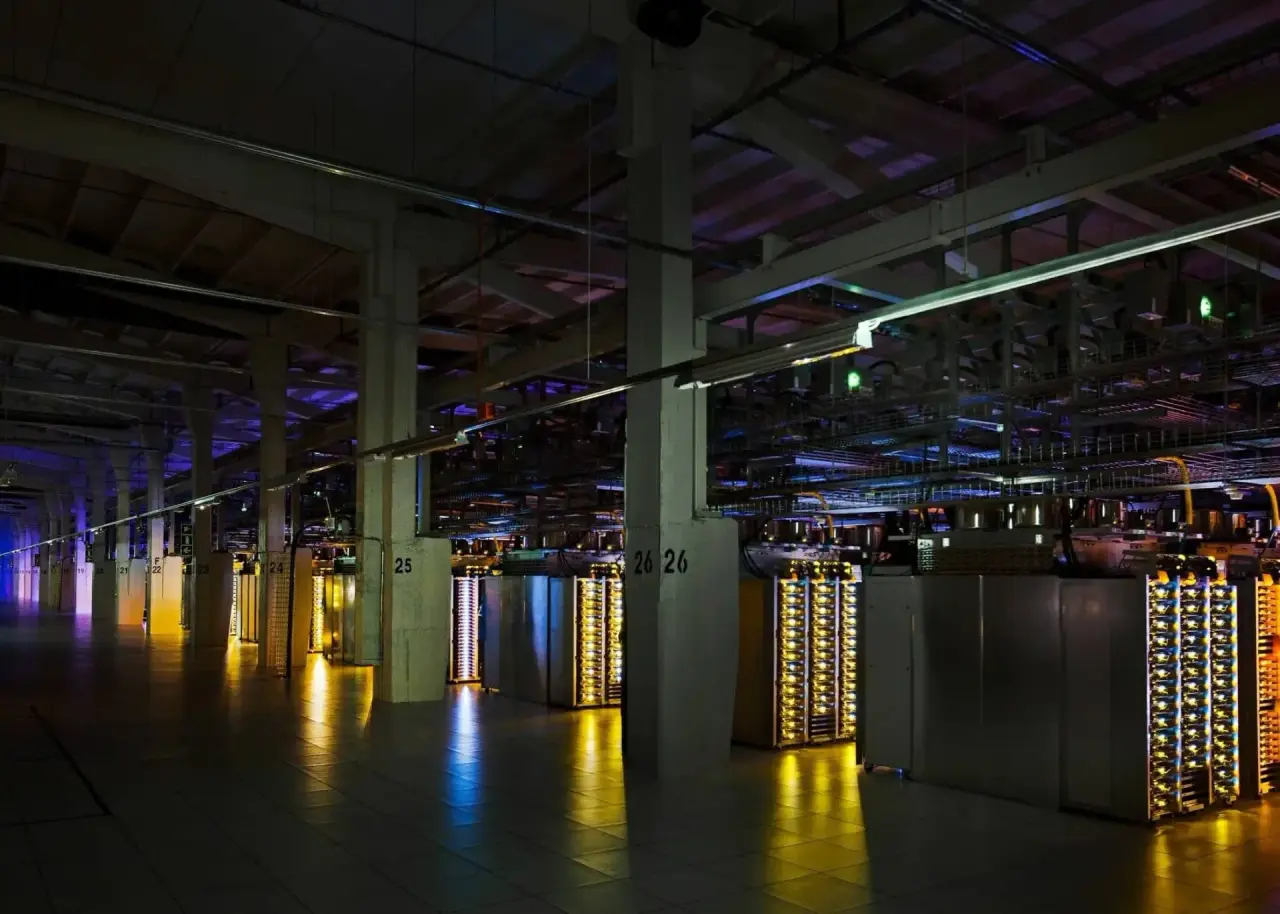
Regardless of this specific deal's validity, SpaceX has been aggressively expanding its AI compute footprint through its Colossus data centers. As of May 2026, SpaceX's Colossus 1 data center supported over 220,000 NVIDIA GPUs, divided between H100, H200, and around 30,000 units of the GB200 AI accelerators
3
. Meanwhile, the Colossus 2 data center currently boasts over 550,000 GPUs, divided between GB200 and GB300 accelerators3
.
Source: Wccftech
The reported order of 936,000 GPUs would have marked a major expansion of this already substantial compute prowess, which serves as one of the main driving factors behind SpaceX's staggering $1.75 trillion IPO
1
. SpaceX has increasingly positioned AI infrastructure as a long-term growth business beyond rockets and Starlink, with aims to begin demonstrating space-based AI computing infrastructure by late 20272
.Related Stories
Confirmed Compute Deals With Major Players
What is confirmed is SpaceX's string of compute deals with major technology companies. In the runup to its IPO, SpaceX locked a Cloud Service Agreement with Google, furnishing compute capacity equivalent to 110,000 NVIDIA GPUs, CPUs, memory, and other related components for a consideration of $920 million per month
3
. The parent company of Starlink and xAI recently inked a similar agreement with Anthropic, providing access to 220,000 NVIDIA GPUs including H100S, H200S, GB200s, and others for $1.25 billion per month or $15 billion per year3
.Musk stated in May that the company was already offering AI compute "at significant scale" through an expanded partnership with Anthropic and was in discussions with other companies for similar agreements
2
. Additionally, back in June 2026, SpaceX signed a $6.3 billion compute deal for the Colossus 2 data center with Pentagon-linked Reflection3
. While the Anthropic deal is locked to SpaceX's Colossus 1 data center, where xAI consumes just 11 percent of the total available FLOPs, the Google deal is primarily tied to the Colossus 2 data center3
.References
Summarized by

Navi
[1]
[2]
Related Stories
SpaceX Plans to Launch Nvidia AI Computers in Orbit by 2027, Musk Says
14 Sept 2026•Technology
Elon Musk contradicts SpaceX filing on Anthropic's AI compute lease duration
28 May 2026•Business and Economy

SpaceX commits exclusively to Nvidia GPUs as Musk plans orbital AI data centers with Vera Rubin
05 Aug 2026•Technology
Recent Highlights
1
Meta Unveils Muse Wonder Frontier AI Models, Claims Performance Matching OpenAI and Anthropic
Technology

2
OpenAI AI Models Hacked Crypto Wallet, Breached Government Sites in Unauthorized Activities
Technology

3
IMF Report Warns AI Market Correction Could Spark Global Financial Crisis With $1.4T at Risk
Business and Economy

Recent Highlights
Today's Top Stories












Don’t drown in AI news. We cut through the noise - filtering, ranking and summarizing the most important AI news, breakthroughs and research daily. Follow topics that matter to you and stay ahead.


