SpaceX AI infrastructure bets on Earth-based compute while orbital plans remain years away


8 Sources
[1]
SpaceX's near-term AI payoff seen tethered to Earth, not outer space
July 10 (Reuters) - Elon Musk may have pitched a future where space powers AI, but Wall Street analysts say SpaceX's near-term value remains firmly tethered to Earth, where it is building out the infrastructure underpinning the AI boom. Infrastructure providers, particularly data centers, are
[2]
Major banks give their first ratings on SpaceX and they're quite bullish: 'Apex of civilizational ambition'
The big banks on Wall Street began equity research coverage on SpaceX Tuesday, and their bullishness on the rocket company is reaching literary proportions. Analysts for Deutsche Bank said Tuesday that SpaceX represents "the apex of civilizational ambition, oftentimes expressed in steel and fire,
[3]
Forget rockets: Morgan Stanley sets $300 SpaceX target based on a secret AI weapon
Morgan Stanley has initiated coverage on SpaceX with an Overweight rating and a $300 target price, arguing its biggest opportunity lies beyond rockets. The brokerage believes SpaceX's vertically integrated AI infrastructure, combining terrestrial and orbital compute, could transform it into one of
[4]
Elon Musk Says SpaceX Would Be Worth More Than Earth if It Achieves Its Goals Amid First AI Satellite Rev
SpaceX to Exceed Earth's Value? "I wonder if History will look back at this $7.5-40B Anthropic/SpaceXai deal as the biggest unforced error of the AI era," the user said, while also outlining that the deal could hinder Anthropic's IPO as users could transfer most token exchange to SpaceX and
[5]

Elon Musk's startling claim to SpaceX investors
Someone on X (the former Twitter) was criticizing the deal Anthropic struck with SpaceX to use its Colossus data centers. The argument was that handing $45 billion to SpaceX through May 2029 could be a massive unforced error, potentially letting xAI drain Anthropic's token traffic and leaving
[6]
Goldman Sachs sets new SpaceX stock price target for 2026
SpaceX (SPCX) didn't enter the market quietly. Its blockbuster debut has instantly made it one of the most-watched companies on Wall Street, with investors chasing a rare public-market play on rockets, satellites, Starlink, and Elon Musk's next frontier. The first major analyst calls are landing
[7]

Mizuho initiates SpaceX stock coverage with Outperform rating By Investing.com
Investing.com - Mizuho initiated coverage on Space Exploration Technologies (NASDAQ:SPCX) with an Outperform rating and a price target of $200.00 on Tuesday. The stock currently trades at $160.42, giving the company a market capitalization of $2.11 trillion, though InvestingPro data suggests the
[8]

Wall Street warms to SpaceX ahead of Nasdaq 100 inclusion
(Corrects paragraph 12 to say Oppenheimer initiated coverage on SpaceX in June and not in July) July 7 (Reuters) - SpaceX's addition to the Nasdaq 100 on Tuesday is expected to unleash billions in passive buying, as brokerages kick off coverage of the $2 trillion-plus rocket and satellite company
Share
Copy Link
Wall Street analysts say SpaceX's near-term AI infrastructure value lies in terrestrial data centers, not orbital compute. The company's Colossus supercomputer deals with Anthropic and Google are expected to generate over $28 billion annually, far exceeding its launch and Starlink businesses. While Elon Musk touts orbital AI as transformative, analysts view it as a 10-years-plus opportunity dependent on Starship achieving rapid reusability and lower launch costs.
SpaceX AI Infrastructure Anchored to Terrestrial Compute
Elon Musk may envision a future where space powers AI, but Wall Street analysts maintain that SpaceX AI value remains firmly grounded on Earth. Major banks initiating coverage following the company's June IPO are bullish on SpaceX's terrestrial AI infrastructure, even as they treat orbital compute as a longer-term bet dependent on technological breakthroughs that remain years away
1
.The company's Colossus supercomputer clusters have already begun generating substantial revenue through deals with enterprise customers including Anthropic, Google, and Reflection AI. These terrestrial compute contracts are expected to produce more than $28 billion in annual revenue, a figure that far exceeds SpaceX's 2025 AI revenue of approximately $3.2 billion and surpasses revenue from its launch and Starlink connectivity businesses individually, according to Reuters calculations
1
. Analysts caution, however, that these contracts contain termination provisions and should not be viewed as guaranteed long-term recurring revenue.
Source: Market Screener
Massive Investment in AI Infrastructure and Vertical Integration
SpaceX invested nearly $18 billion in AI infrastructure and development in 2025, including approximately $12.7 billion in AI-related capital expenditure and $5.1 billion in AI research and development. This spending dwarfs investments in its space and connectivity businesses
1
. Colossus and Colossus II together provide roughly one gigawatt of AI compute capacity, placing SpaceX among the world's largest AI compute operators.Morgan Stanley initiated coverage with an Overweight rating and $300 price target, arguing that SpaceX's vertically integrated terrestrial and orbital compute stack could transform it into one of the most powerful AI infrastructure platforms. The bank's base-case model projects SpaceX revenue rising from about $45 billion in 2026 to $319 billion in 2030 and $3.3 trillion by 2040
3
. The analysts believe SpaceX can achieve industry-leading compute cost and time-to-power through vertical integration, targeting infrastructure capex of roughly $4-$5 per watt versus industry averages closer to $9 per watt.Wall Street's Bullish Yet Cautious Stance
Major banks that served as underwriters for SpaceX's IPO released overwhelmingly positive research coverage, with Deutsche Bank calling the company "the apex of civilizational ambition" and Raymond James describing Starship as "the defining industrial innovation of our generation"
2
. JPMorgan expects SpaceX to expand terrestrial AI compute capacity to about 9 gigawatts by 2029, roughly equivalent to four times the power generated by the Hoover Dam1
.
Source: ET
Cantor Fitzgerald emphasized that "a planetary infrastructure company does not compete within existing markets—it defines the cost structure of new ones," assigning an Overweight rating with a $246 price target
2
. The $60 billion acquisition of AI coding startup Cursor signals SpaceX's expansion beyond infrastructure into enterprise software, allowing it to monetize both AI applications and the computing capacity behind them.Orbital AI Compute Remains a Decade Away
Despite Musk's vocal support for orbital AI compute—recently claiming "SpaceX will be worth more than the rest of Earth if we accomplish our goals"
4
—analysts view space-based AI infrastructure as unproven and highly dependent on key technological milestones. "Any kind of displacement of terrestrial data centers is 10 years plus out," said Anthony Milovantsev, a partner at consultancy firm Altman Solon1
.Bank of America analysts noted that "the long-term viability of orbital data centers as unproven and highly dependent on key technological milestones that have yet to be fully realized"
1
. The orbital AI plan depends on Starship rockets achieving rapid reusability, dramatically lower launch costs, and advances in satellite engineering.Related Stories
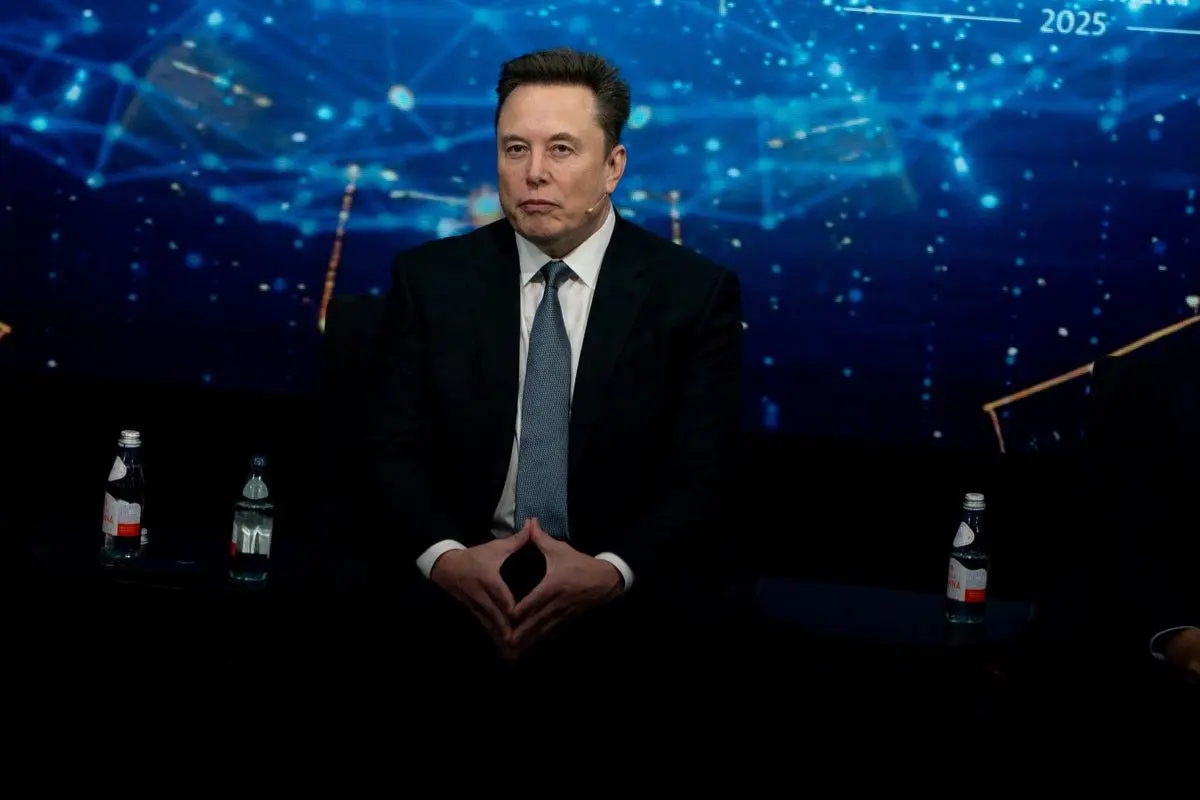
Starmind Constellation and AI1 Satellite Unveiled
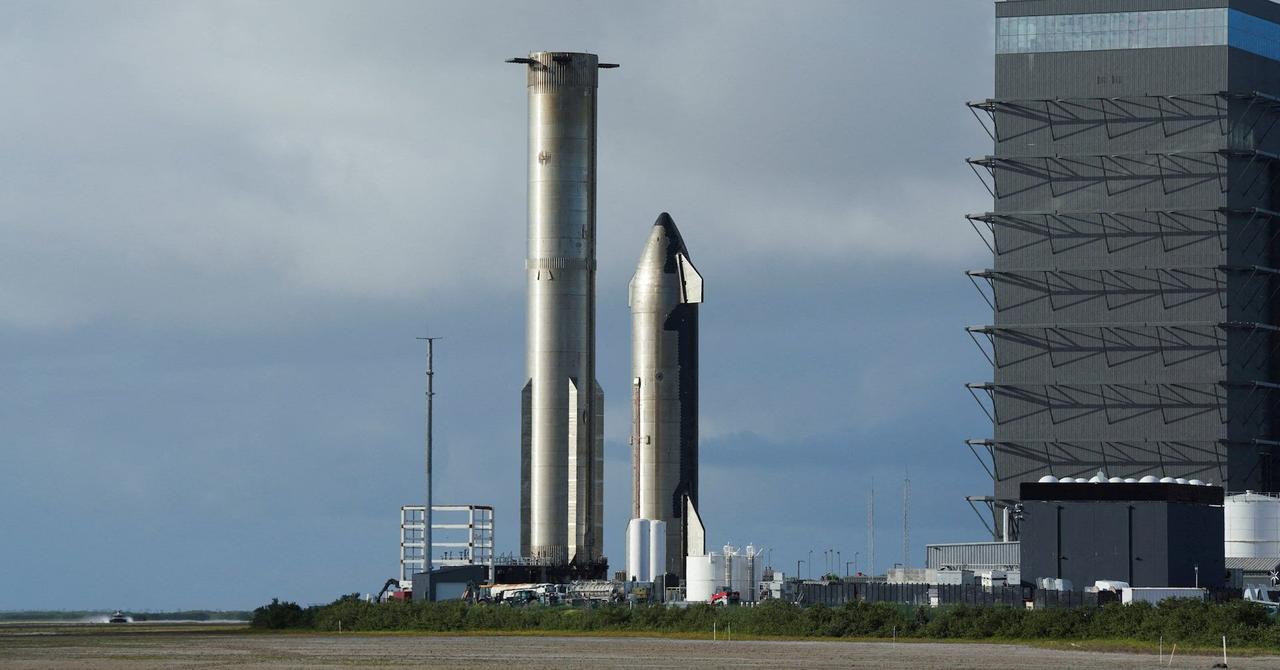
SpaceX revealed renderings of its AI1 satellite, part of the Starmind constellation dedicated to orbital AI compute. Each AI satellite will support chips from all providers and possess a 150 kW peak compute payload with an average payload compute of 120 kW. The satellites will have a wingspan of 70 meters and utilize a 150 kW solar array
4
.
Source: Reuters
Morgan Stanley models orbital compute deployments beginning in 2028 at 160 MW, reaching 2.7 GW in 2030, 21 GW in 2032, and 364 GW by 2040, with orbital becoming the majority of total AI compute capacity by 2032. The bank estimates orbital compute could reach cost parity with current terrestrial data centers by 2031, with capex per watt falling from about $166/W in 2028 to $9/W by 2040
3
.Anthropic Deal Fuels Infrastructure Buildout
The Anthropic deal, which commits $45 billion through May 2029 to use SpaceX's Colossus and Colossus II data centers, has sparked debate about whether the AI company is inadvertently funding a future competitor
5
. Critics argue that Anthropic's money directly funds SpaceX's infrastructure buildout, potentially the same infrastructure that will eventually compete with Claude through xAI.For investors watching the AI space race, the debate is no longer about SpaceX's ability to build and monetize AI infrastructure. Rather, it centers on how quickly the company can transform orbital AI compute from a visionary concept into a viable business beyond Earth's atmosphere. JPMorgan expects SpaceX to pivot to orbital compute for incremental capacity additions beyond 2029, while continuing to operate terrestrial compute clusters
1
. The coming years will determine whether Musk's bold claims about space-based AI infrastructure can match the proven success of his Earth-bound data centers.References
Summarized by

Navi
[4]
[5]
Related Stories
SpaceX warns orbital AI data centers may never work as $1.75 trillion IPO looms
22 Apr 2026•Business and Economy
SpaceX files for record IPO, stakes future on $26.5 trillion AI market and orbital data centers
21 May 2026•Business and Economy
SpaceX IPO banks on orbital AI data centers to justify $1.77 trillion valuation
03 Jun 2026•Business and Economy

Recent Highlights



Recent Highlights
Today's Top Stories







Don’t drown in AI news. We cut through the noise - filtering, ranking and summarizing the most important AI news, breakthroughs and research daily. Follow topics that matter to you and stay ahead.


