Stanford AI stars raise $110 million for Noeri, a system that rewrites its own instructions


2 Sources
[1]
Noeri raises $110m from Menlo and Nvidia for self-improving AI
Nvidia, Cisco and Snowflake also invested in Noeri, a lab founded this year. Its AI tunes a company's tools, instructions and models to each task, and a person approves every change. Noeri, an AI lab founded this year by Stanford professors Yejin Choi and Carlos Guestrin, has raised $110m, the
[2]
Former UW AI researchers Yejin Choi and Carlos Guestrin raise $110M for AI startup Noeri
Yejin Choi and Carlos Guestrin, two prominent AI researchers who spent years at the University of Washington before moving to Stanford, have raised $110 million for Noeri, a startup building AI systems that keep improving on a company's own work. Menlo Ventures led the round, with participation
Share
Copy Link
Noeri raised $110 million led by Menlo Ventures, and its system tunes a company's AI setup continuously, with a person approving every change.
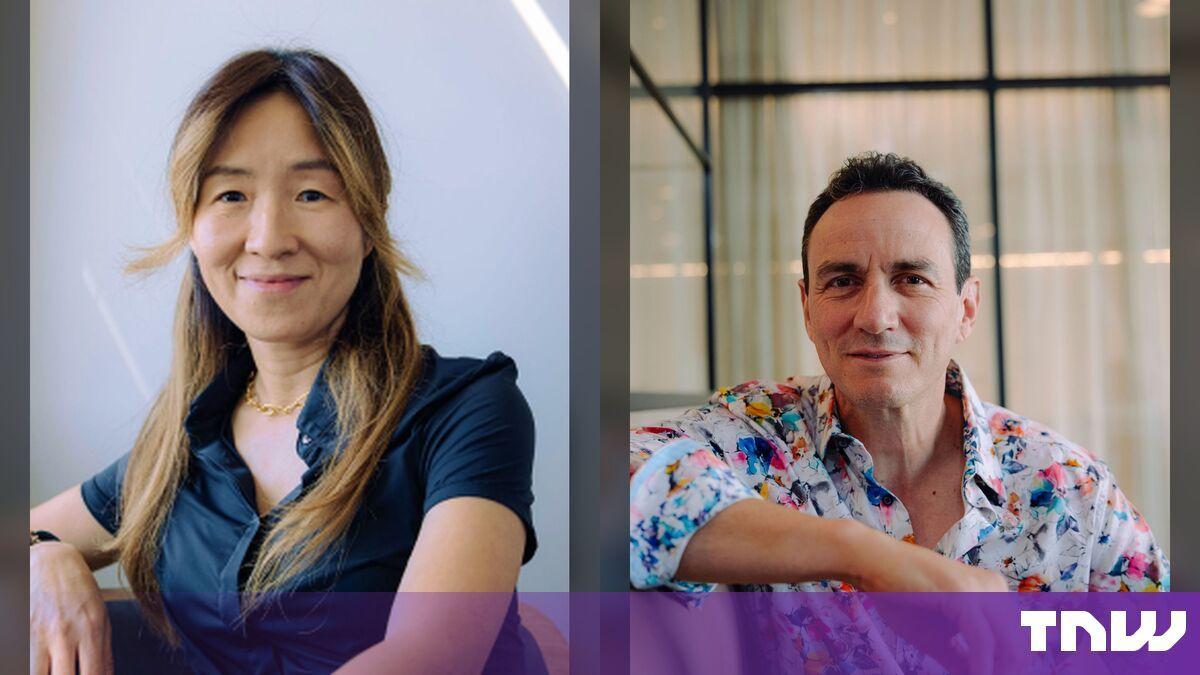
Noeri, an AI lab Stanford professors Yejin Choi and Carlos Guestrin founded in 2026, raised $110 million, announced Monday November 16
1
2
. Menlo Ventures led the round, with Madrona Venture Group, Kindred Ventures, Wing Venture Capital and New Enterprise Associates taking part, and Cisco Investments, Nvidia and Snowflake joining as strategic investors. Noeri did not disclose its valuation, per Bloomberg1
2
.
Source: The Next Web
What the system does
The pair are serious names in machine learning. Choi is a 2022 MacArthur Fellow who ran common-sense reasoning work at the Allen Institute for AI before joining Stanford
1
2
. Guestrin co-created XGBoost, co-founded Turi, which Apple bought in 2016, then led Apple's central machine learning group1
2
.
Source: GeekWire
The company says it builds self-improving AI: the system studies a company's own data and workflows, then rewrites the instructions, swaps the tools and reassigns which model handles each step
1
2
. Where it pays off, it replaces the models themselves1
2
. Every proposed change comes with an explanation and needs a person's approval, much like a code review. Customers keep their own data, the company says, along with the workflows and models they create, subject to third-party model licenses1
2
.Why they built it
Guestrin said every company he talks to faces the same curve: spend more for the top model, or accept weaker results from a cheaper one
1
. Choi said the idea grew partly from a Stanford microbiology and immunology team that needed OpenAI's models at a lower cost1
2
. "We made this small AI that learns to use other AI, including GPT-4, but not 5 because at Stanford we are too poor to use GPT-5 all the time for research," Choi told Bloomberg1
. Per Choi, that small AI beat GPT-5 on that one team's research needs, a single self-reported result1
2
.The company name makes the founders' argument for them: Noeri means intelligence in the plural
2
. In an essay posted with the launch, they wrote: "Few companies would build their core operations on a single consultant who also advises every competitor, can change its terms at will, and can never be brought in-house. A single, centralized AI offers exactly that arrangement"2
. Noeri also aims to apply its AI, further out, to scientific research: forming hypotheses, running experiments and learning from results1
. It says smaller specialised models make that affordable on problems from new molecules and proteins to complex technical systems1
.Related Stories

A field with company in it
No independent benchmark backs that result
1
2
. Noeri has company in model tailoring, too. Per a July report in The Information, Thinking Machines Lab's Tinker, fine-tuning software offered through an API, already helps businesses tailor models2
. So does Applied Compute, which embeds engineers with customer teams2
.Some backers are repeats for Guestrin: Madrona and New Enterprise Associates led a $6.75 million round in his earlier startup GraphLab in 2013
1
2
. Menlo also backed Town's $108 million round in October1
2
. Noeri itself is based in Palo Alto, keeps an office in Zurich and is recruiting researchers and engineers in both1
. "Yejin and I both have worries about centralization, about one company owning everything," Guestrin told Bloomberg1
.References
Summarized by

Navi
[1]
Related Stories
Nebius Raises $700 Million for AI Infrastructure Expansion, Backed by Nvidia and Others
02 Dec 2024•Business and Economy

Mirendil raises $200 million to build self-improving AI that accelerates scientific discovery
29 Jun 2026•Startups

Former Meta Executives Raise $15 Million for AI Assistant Startup Yutori
27 Mar 2025•Technology
Recent Highlights


Recent Highlights
Today's Top Stories





Don’t drown in AI news. We cut through the noise - filtering, ranking and summarizing the most important AI news, breakthroughs and research daily. Follow topics that matter to you and stay ahead.


