Stanford's MUSK AI Model Revolutionizes Cancer Prognosis and Treatment Predictions


4 Sources
[1]
New AI model predicts cancer prognosis, response to treatment
The melding of visual information (microscopic and X-ray images, CT and MRI scans, for example) with text (exam notes, communications between physicians of varying specialties) is a key component of cancer care. But while artificial intelligence helps doctors review images and home in on
[2]
AI predicts cancer prognoses, responses to treatment
The melding of visual information (microscopic and X-ray images, CT and MRI scans, for example) with text (exam notes, communications between physicians of varying specialties) is a key component of cancer care. But while artificial intelligence helps doctors review images and home in on
[3]
Unique AI predicts cancer prognoses and responses to treatment by combining data from medical images with text
The melding of visual information (microscopic and X-ray images, CT and MRI scans, for example) with text (exam notes, communications between physicians of varying specialties) is a key component of cancer care. But while artificial intelligence helps doctors review images and home in on
[4]
Stanford researchers develop AI model to enhance cancer prognosis predictions
Stanford MedicineJan 8 2025 The melding of visual information (microscopic and X-ray images, CT and MRI scans, for example) with text (exam notes, communications between physicians of varying specialties) is a key component of cancer care. But while artificial intelligence helps doctors review
Share
Copy Link
Stanford Medicine researchers develop MUSK, an AI model that combines visual and text data to accurately predict cancer prognoses and treatment responses, outperforming standard methods.

Stanford Researchers Develop Revolutionary AI Model for Cancer Care
Researchers at Stanford Medicine have developed a groundbreaking artificial intelligence (AI) model named MUSK (multimodal transformer with unified mask modeling) that promises to transform cancer prognosis and treatment decisions. This innovative model combines visual information from medical images with text-based data from clinical notes, addressing a significant challenge in cancer care
1
.MUSK's Unique Approach and Training
MUSK represents a significant departure from current AI applications in clinical settings. The model was trained on an extensive dataset comprising:
- 50 million medical images of standard pathology slides
- Over 1 billion pathology-related texts
This comprehensive training allows MUSK to incorporate both visual and language-based information, mimicking the multifaceted approach physicians use in clinical practice
2
.Impressive Performance Across Multiple Cancer Types
The researchers tested MUSK's capabilities across various cancer types and stages, with remarkable results:
-
Disease-specific survival prediction: MUSK accurately predicted patient outcomes 75% of the time, compared to 64% for standard methods based on cancer stage and clinical risk factors
3
. -
Immunotherapy benefit prediction: For non-small cell lung cancer, MUSK correctly identified patients who would benefit from immunotherapy 77% of the time, surpassing the standard PD-L1 expression method (61% accuracy)
4
. -
Melanoma relapse prediction: MUSK achieved 83% accuracy in identifying melanoma patients likely to relapse within five years, outperforming other foundation models by 12%
2
.
Related Stories

Advantages of MUSK as a Foundation Model
MUSK is designed as a foundation model, which offers several advantages:
- Ability to use unpaired multimodal data, expanding the pool of available training data
- Flexibility to be fine-tuned for specific clinical questions with smaller, specialized datasets
- Potential to serve as an off-the-shelf tool for doctors to customize for various applications
1
Implications for Cancer Care
Dr. Ruijiang Li, senior author of the study and associate professor of radiation oncology at Stanford, emphasizes the potential impact of MUSK on patient care:
"The biggest unmet clinical need is for models that physicians can use to guide patient treatment. Currently, physicians use information like disease staging and specific genes or proteins to make these decisions, but that's not always accurate."
4
By leveraging vast amounts of diverse data, MUSK aims to provide more precise predictions about patient outcomes and guide treatment decisions more effectively than current methods.
References
Summarized by

Navi
[2]
[3]
Related Stories
ChatGPT Like AI Model Shows Promise in Cancer Treatment Decision-Making
05 Sept 2024

AI Tool Achieves 91% Accuracy Predicting Lung Cancer Immunotherapy Outcomes Across Global Study
14 Sept 2026•Health
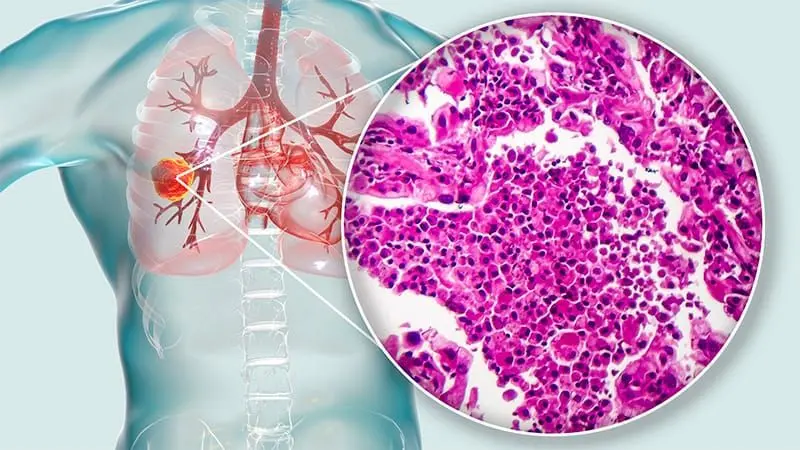
AI Breakthrough Enhances Personalized Cancer Treatment with Multi-Modal Data Analysis
01 Feb 2025•Health

Recent Highlights



Recent Highlights
Today's Top Stories





Don’t drown in AI news. We cut through the noise - filtering, ranking and summarizing the most important AI news, breakthroughs and research daily. Follow topics that matter to you and stay ahead.


