Starbucks Plans AI Personalized Digital Menus and Facial Recognition at Drive-Thru


2 Sources
[1]
Starbucks wants to use AI to show you a 'personalized digital menu' at the drive-thru
Starbucks could eventually show you a personalized digital menu when you pull up to the drive-thru. During an earnings call on Thursday, Starbucks CEO Brian Niccol said the company is going to explore "experiences that recognize participating customers as they arrive, present personalized digital
[2]
Facial Recognition Could Be Coming to a Starbucks Near You
Starbucks CEO Brian Niccol said the company is 'exploring experiences that recognize participating customers as they arrive, present personalized digital menus and make payment more effortless.' Would you let an AI-enabled camera scan your face if it meant you got your latte faster? Facial
Share
Copy Link
Starbucks CEO Brian Niccol announced the company will explore AI-driven customer experiences including personalized digital menus that recognize participating customers at drive-thrus. Starting in 2027, the coffee chain will test AI models to help baristas input orders more accurately, though facial recognition technology has sparked privacy concerns among consumers.
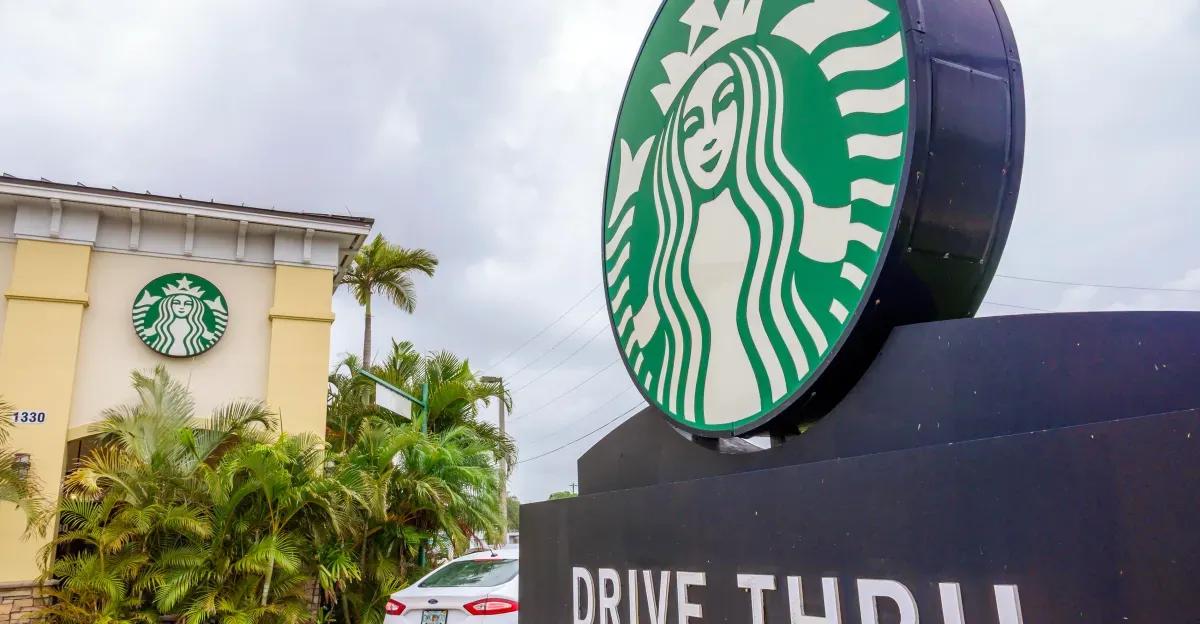
Starbucks Explores AI-Driven Personalized Digital Menus
Starbucks CEO Brian Niccol revealed during a recent earnings call that the coffee giant is exploring AI-driven customer experiences that could transform how customers interact at drive-thrus
1
. The company plans to test experiences that recognize participating customers as they arrive, present personalized digital menus, and make payment more effortless2
. While Starbucks never explicitly named facial recognition technology in its earnings call, the language strongly suggests the potential deployment of such systems to identify customers and tailor their ordering experience2
.This approach mirrors initiatives already underway in the fast-food industry. Yum Brands, which owns Taco Bell, announced in April that it is testing AI to present customers at drive-thrus with different menus on a car-by-car basis
2
. McDonald's has also piloted an AI-powered feature called ArchIQ at select drive-thrus, allowing the chatbot to identify repeat customers and let them order their usual items1
. These developments signal a broader industry shift toward AI-driven personalized digital menus designed to boost operational efficiency and customer experience.AI Models in Drive-Thru to Improve Order Accuracy
Beyond personalized digital menus, Starbucks plans to integrate AI models in drive-thru operations starting in 2027. Brian Niccol stated that background AI models will help baristas input orders more accurately and efficiently as they interact with customers during the 2027 financial year
2
. This initiative aims to reduce errors and streamline the ordering process, addressing a common pain point in fast-paced drive-thru environments where order accuracy can directly impact customer satisfaction.The company is also planning to integrate AI-powered tools into the Starbucks app's search and discovery features, with potential for conversational ordering and agentic capabilities in the future
1
. Starbucks has already begun allowing customers to place orders through ChatGPT, demonstrating its commitment to conversational AI interfaces1
. Additionally, the company rolled out Green Dot Assist, an AI-powered tool that employees can use to ask questions about recipes and service standards, further embedding AI across its operations1
.Privacy Concerns and Consumer Pushback
The potential use of facial recognition technology has triggered immediate privacy concerns among consumers. Many have expressed opposition on platforms like X and Bluesky, with one user calling the potential rollout an example of intrusive and weird business practices
2
. Facial recognition has been a source of controversy globally over the past decade, with human rights campaigners consistently highlighting privacy issues associated with the technology2
.Niccol emphasized that the company is still early in this work and will test, learn, and scale what works
1
. This cautious approach suggests Starbucks is aware of the sensitivities surrounding facial recognition and will likely proceed incrementally. The mention of participating customers also indicates that any facial recognition system would be opt-in rather than mandatory, potentially addressing some privacy concerns.Related Stories

What This Means for the Fast-Food Industry
Starbucks' exploration of AI-driven personalized digital menus and facial recognition represents a significant bet on technology to differentiate customer experience in an increasingly competitive market. The fast-food industry has seen mixed results with AI implementations. Last year, viral videos showed consumers exploiting Taco Bell's AI ordering system, including one instance where someone ordered 18,000 cups of water
2
. These failures highlight the risks of deploying AI-powered tools before they're fully refined.However, successful implementation could yield substantial benefits. Personalized digital menus could increase average order values by suggesting items based on past purchases and preferences. Improved order accuracy through AI models in drive-thru could reduce waste and enhance operational efficiency, directly impacting baristas' workflow and customer satisfaction. The integration of conversational ordering through platforms like ChatGPT could also appeal to tech-savvy consumers seeking frictionless experiences.
Watch for how Starbucks addresses privacy concerns during testing phases and whether competitors accelerate their own AI initiatives in response. The 2027 timeline for AI models in drive-thru gives the company ample time to refine its approach, but also signals that widespread deployment of these AI-driven customer experiences remains years away. Consumer acceptance will ultimately determine whether personalized digital menus become industry standard or remain a niche experiment.
References
Summarized by

Navi
[2]
Related Stories
Starbucks Brews AI Innovation: Voice Ordering, Virtual Assistants, and Future Possibilities
21 Oct 2025•Business and Economy

Starbucks Brews Up AI Assistant to Support Baristas, Not Replace Them
11 Jun 2025•Business and Economy

Starbucks Revolutionizes Inventory Management with AI Technology
04 Sept 2025•Technology
Recent Highlights
1
OpenAI's AI Models Disprove 27-Year Exponential Time Hypothesis, Rendering Decades of Research Obsolete
Science and Research
2
Google DeepMind unveils Genie 4 world model with audio and 2-minute interactive simulations
Technology

3
Anthropic Faces $379 Million in Copyright Infringement Lawsuits Over Unlawfully Using Songs
Policy and Regulation

Recent Highlights
Today's Top Stories




Don’t drown in AI news. We cut through the noise - filtering, ranking and summarizing the most important AI news, breakthroughs and research daily. Follow topics that matter to you and stay ahead.


