States Push AI Regulation Forward Despite Trump's Executive Order Warning


2 Sources
[1]
Just months after Trump warned states not to regulate AI, Republican and Democratic lawmakers are doing it anyway | Fortune
Six months after President Donald Trump warned states not to regulate artificial intelligence, they are increasingly doing just that. Congress has stalled on producing federal regulation of artificial intelligence as states forge ahead and scrutinize how chatbots interact with children, how AI
[2]
Trump Tried to Block State AI Regulations, but Some States Are Forging Ahead
HARRISBURG, Pa. (AP) -- Six months after President Donald Trump warned states not to regulate artificial intelligence, they are increasingly doing just that. Congress has stalled on producing federal regulation of artificial intelligence as states forge ahead and scrutinize how chatbots interact
Share
Copy Link
Six months after President Trump issued an executive order warning states against regulating artificial intelligence, Republican and Democratic lawmakers are advancing state legislation anyway. With Congress stalled on federal oversight, states are targeting AI chatbots, employer use of AI systems, and catastrophic risks—filling a regulatory vacuum despite threats of legal challenges and funding restrictions.
States Defy Trump's Executive Order on AI
Six months after President Donald Trump warned states not to regulate artificial intelligence, state legislation is accelerating across the country. Despite Trump's executive order on AI directing the attorney general to challenge state laws deemed more than "minimally burdensome," states are forging ahead with targeted AI regulation
1
. The push comes as Congress has stalled on producing federal oversight, leaving a regulatory vacuum that states are increasingly filling with bipartisan support.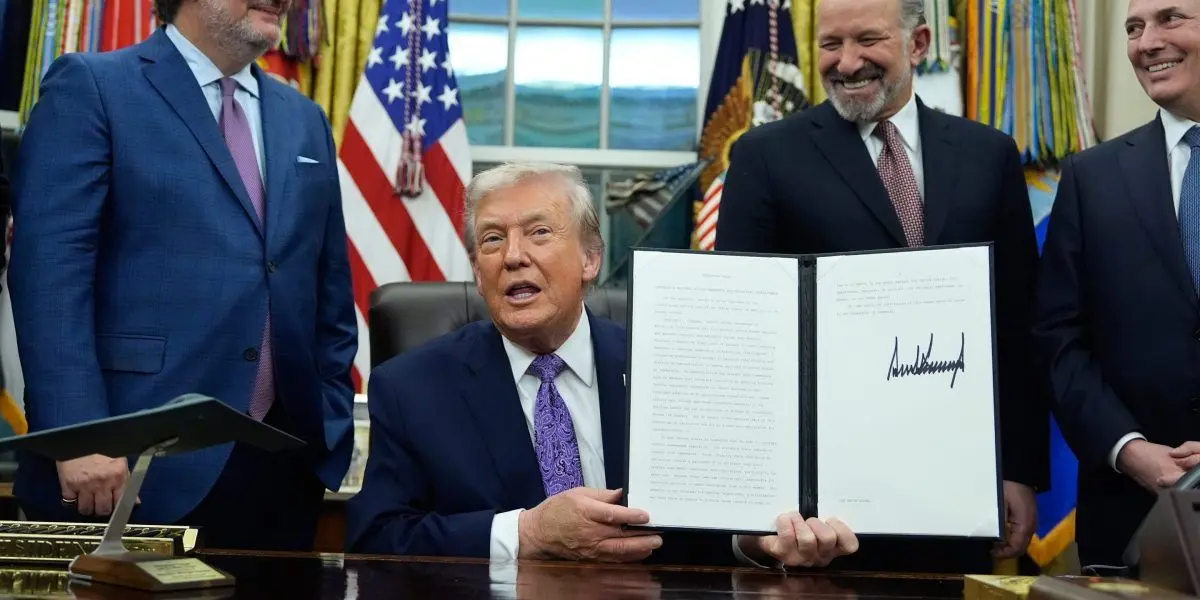
Source: Fortune
Trump has made AI a top national and economic security priority, arguing that letting states clutter the regulatory playing field for an industry spending trillions of dollars is too risky in the race with China for AI superiority
2
. His executive order threatened to restrict funding from broadband deployment and other grant programs to states with AI laws, while directing the Commerce Department to compile a list of problematic regulations. Yet the White House has given no indication it has enforced these threats by going to court or withholding money.Bipartisan State Legislation Fills Federal Gap
The tension between federal and state powers in AI governance has not deterred lawmakers from either party. More bills have been introduced this year than last, including by Republicans, according to Justine Gluck, policy director of the Future of Privacy Forum
1
. This surge in state-level AI legislation signals a willingness by members of Trump's party to cooperate with Democrats in addressing AI risks.In Illinois, legislation on Democratic Gov. JB Pritzker's desk builds on elements from California and New York laws passed last year. The bill requires developers of large advanced AI models to create AI safety protocols preventing catastrophic risks such as biological weapons attacks, power outages, or large-scale hacks
2
. Illinois goes further by mandating independent audits to verify developers comply with their own policies—a significant step toward greater accountability.The bill's sponsor, Democratic state Sen. Mary Edly-Allen, dismissed Trump's warnings: "I don't know if you've met Illinois, but we're pretty independent." The legislation drew nearly unanimous support, and analysts expect this kind of regulation to expand to other states
1
.States Advancing AI Regulation for Chatbots and Children
A mix of Republican- and Democratic-led states have passed laws this year restricting how AI chatbots interact with people, especially children. Colorado, Connecticut, Idaho, Iowa, Nebraska, and Oregon have all enacted such measures
2
. These laws typically require companies to disclose when users are interacting with AI instead of a human, restrict chatbot interactions with minors, give parents control over child access, and mandate privacy protections for data shared with chatbots.Connecticut recently enacted provisions specifically for companion chatbots that sustain ongoing relationships with humans. Under these rules, chatbots cannot interact with anyone under 18 unless programmed to discourage self-destructive behavior and equipped with parental management tools
1
. This targeted approach reflects how states are probing corners of life where Americans interact with AI but may not know it.Related Stories

Federal Framework Meets Resistance
The Trump administration released a "national policy framework" urging Congress to preempt state laws out of step with its regulatory worldview and pass legislation protecting children, intellectual property rights, and free speech. A recent bipartisan draft proposal in the House, however, met withering criticism from key Democrats and Republicans
1
. The White House maintains it won't target state laws preventing fraud or protecting consumers and children, though enforcement of Trump AI policy remains unclear.State lawmakers have stepped back from earlier, wider-ranging attempts to regulate AI that governors viewed as too onerous, including efforts to hold developers accountable for bias. But they're returning with more targeted legislation that addresses specific risks while avoiding the broad strokes that previously triggered vetoes
2
. This strategic shift suggests states are learning to navigate the political landscape while still asserting their authority over AI governance within their borders.References
Summarized by

Navi
Related Stories
State AI Laws Multiply as Trump Administration Pushes National Standard Over Local Regulation
19 Apr 2026•Policy and Regulation

Trump's Executive Order Targets State AI Laws, Sparking Bipartisan Pushback and Legal Uncertainty
08 Dec 2025•Policy and Regulation
Trump Administration Puts AI Regulation Executive Order on Hold Amid Republican Backlash
19 Nov 2025•Policy and Regulation

Recent Highlights



Recent Highlights
Today's Top Stories







Don’t drown in AI news. We cut through the noise - filtering, ranking and summarizing the most important AI news, breakthroughs and research daily. Follow topics that matter to you and stay ahead.


