SPAN wants to install mini data centers in your home—with subsidized electricity and internet


5 Sources
[1]
The newest AI boom pitch: Host a mini data center at your home
Data centers may be coming to your neighborhood as side installations associated with new homes -- and in exchange would offer subsidized electricity and Internet access along with backup batteries to homeowners. The company behind the plan has already begun pilot testing in preparation for a
[2]
Fancy a Data Center in Your Backyard? Start-Up Wants Distributed Data Centers in Homes
SPAN claims consumers can slash their energy and internet bills, by installing a miniature 'distrbuted data center' in their own home. With concerns growing over environmental impacts and soaring electricity use, many Americans are none too keen on having a new data center built in their
[3]
Americans oppose huge AI data centers in their towns. Tiny ones in their homes may be a different story
Data centers are gobbling up land, driving up electric bills, and becoming a lightning rod for public discontent over big tech's power in society. Maine's legislature recently passed a data center ban in the state (but failed to override the governor's veto). According to the National Conference
[4]
Startups are installing tiny data centers in people's homes to reduce strain on the beleaguered electrical grid | Fortune
Amidst the anxiety and disdain for data center growth, startups see an opportunity by designing mini data centers to install in homes that have less of a financial burden on residents, as well as a potentially lower ecological footprint than warehouse data centers. California-based Span, in
[5]

You can put a data center at your house -- but who really pays?
Nvidia has put its name behind a fledgling effort to put mini-data centers beside people's homes in boxes that look like HVAC units. It's a "power" play, considering that the main bottleneck to building out more data center capacity is not money or chips, but rather retrofitting the electrical grid
Share
Copy Link
San Francisco startup SPAN is launching a pilot program to install cabinet-sized data center nodes outside homes, partnering with Nvidia and major homebuilders like PulteGroup. The company promises to pay residents' electricity and internet bills in exchange for hosting the liquid-cooled GPU units, charging just a $150 monthly fee. A 100-home trial begins this year, with plans to scale to 80,000 nodes by 2027.
SPAN Introduces Distributed Data Centers for American Homes
San Francisco-based startup SPAN has unveiled an ambitious plan to transform residential neighborhoods into networks of distributed data centers, offering homeowners subsidized electricity and internet access in exchange for hosting compact computing units
1
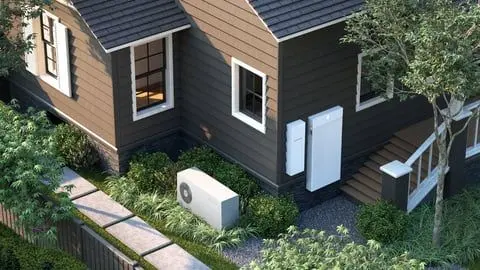
. The distributed data center solution deploys cabinet-sized XFRA nodes containing liquid-cooled Nvidia RTX Pro 6000 Blackwell Server Edition GPUs alongside newly constructed homes, with each unit operating quietly thanks to fanless cooling technology4
.The company has already begun pilot testing and targets a 100-home proof of concept this year in partnership with PulteGroup, one of America's largest homebuilders
2
. Each XFRA node houses 16 Nvidia RTX Pro 6000 Blackwell Server Edition GPUs, 4 AMD EPYC Server CPUs, and 3 terabytes of memory, all powered by tapping into excess household electrical capacity that typically goes unused1
.
Source: PC Magazine
How In-Home Data Centers Work for Residents
Homeowners who participate in the program can expect SPAN to cover their electricity and internet bills while charging a flat monthly fee of approximately $150
4
. The arrangement varies by neighborhood and region, with some areas potentially receiving service at no cost at all2
. SPAN's strategy centers on utilizing the roughly 80 amps of available capacity in most modern US homes built within the last 30 years, which typically feature 200-amp electrical service1
.Each installation includes a wall-mounted SPAN smart electrical panel paired with a 16 kilowatt-hour battery backup system, managed by the company's proprietary PowerUp software
1
. These smart electrical panels provide granular breakdowns of household energy usage and intelligently tap additional electrical service capacity from the existing grid2
. During rare residential peaks in electricity consumption, the system first draws from the home battery backup before temporarily reducing non-critical flexible loads like electric vehicle charging1
.Addressing Opposition to Traditional AI Data Centers
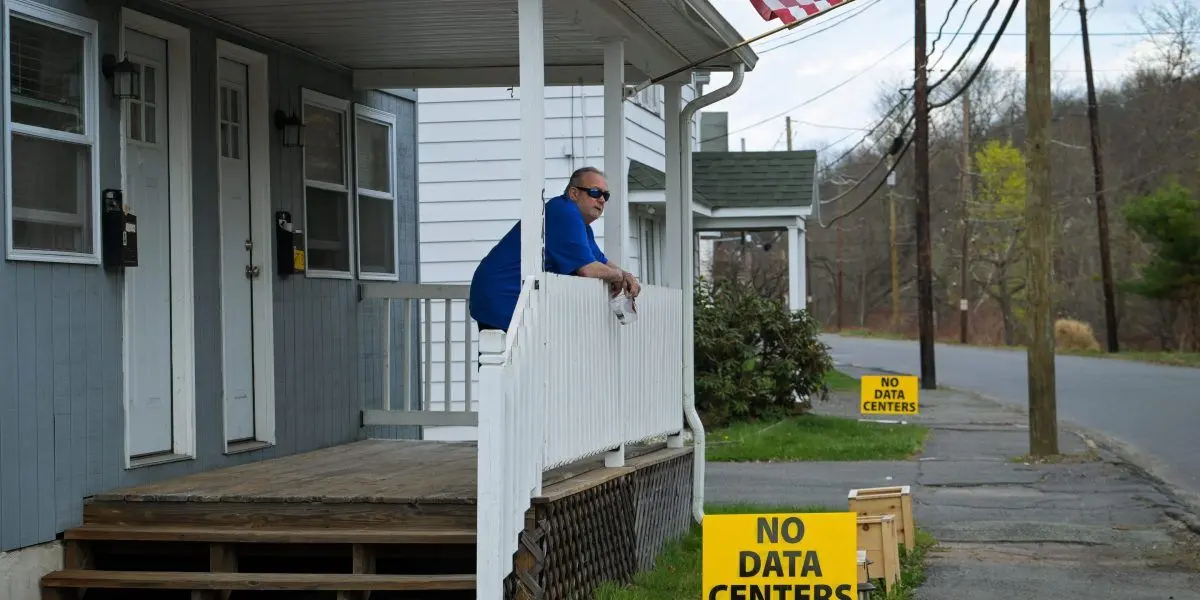
The timing of SPAN's launch coincides with mounting public opposition to warehouse-scale AI data centers across the United States. According to the National Conference of State Legislatures, 14 states from Oklahoma to New York are considering legislation to ban or pause new data center construction
3
. Maine's legislature recently passed a data center ban, though the governor vetoed it3
.
Source: Fortune
Tiny data centers in homes could sidestep many concerns plaguing traditional facilities. "Data centers are loud, ugly, and often drive up local electricity bills," said Chris Lander, vice president of XFRA at SPAN, noting that the home-based alternative is "quiet, discreet, and makes energy more affordable for the host and community"
1
. Goldman Sachs research suggests conventional data centers could drive up electric bills by 6% over the next year, while water consumption remains another flashpoint—a recent study projected data centers would drain as much as 399 billion gallons of water in Texas alone by 20304
.SPAN claims it can install 8,000 XFRA nodes at one-fifth the cost of building a typical 100-megawatt data center with equivalent compute capacity
1
. Ryan Harris, chief revenue officer of SPAN, told Fortune the company can install nodes at six times the speed of centralized facilities4
.Related Stories

Scaling Distributed Compute for AI Workloads
Starting in 2027, SPAN plans to scale up to 80,000 XFRA nodes across the United States, providing more than 1 gigawatt of distributed compute capacity
1
. Harris indicated the company sees a path to contributing hundreds of megawatts, if not gigawatts, of scale compute capacity annually4
.These distributed networks won't replace the centralized facilities built by hyperscalers like Google and Microsoft for intensive AI model training. Instead, the data center in your home model proves more suitable for cloud gaming, content streaming, and AI inference—where trained models are applied to real-world tasks
1
. The low-latency solution can scale quickly amid record AI demand without requiring massive new infrastructure projects2
.Balaji Tammabattula, chief operating officer at energy company BaRupOn, confirmed the technical feasibility: "Just as a home computer can contribute processing power to a distributed network, a home can host compute hardware that feeds into a larger data processing system"
3
.Questions About Long-Term Viability and Grid Impact
While SPAN emphasizes energy efficiency benefits and reduced strain on the electrical grid, some experts urge caution. Utah State University physics professor Robert Davies calculated that only 30%-40% of homes may prove suitable for mini data centers due to integration constraints, stable internet requirements, and homeowner willingness
4
. Davies warned that efforts to modestly reduce ecological harms could potentially exacerbate problems if not carefully managed4
.SPAN isn't alone in exploring residential computing solutions. UK-based startup Heata has installed servers in about 100 homes that act as a virtual data center while using waste heat for home heating needs, claiming to have saved about 1 gigawatt-hour of energy and generated 8 million liters of hot water, saving homes approximately $55,000 on energy bills
4
.The question remains whether this model can achieve meaningful scale and whether homeowners, homeowner associations, and regulators will approve widespread adoption
3
. With technology companies on pace to spend as much as $1 trillion annually by 2027 on AI infrastructure, and McKinsey forecasting global data center spending to hit $7 trillion by 2030, the pressure to find alternative solutions continues mounting3
. SPAN's initial rollout will focus on newly built homes before piloting retrofits for existing homes and smaller commercial properties2
.References
Summarized by

Navi
[1]
[2]
[5]
Related Stories
AI Data Centers Waste Up to 40% of Power on Inefficiencies, Nvidia Reveals
09 Oct 2026•Technology

Trump Expands Ratepayer Protection Pledge as AI Data Centers Drive Electricity Costs Higher
22 Jul 2026•Policy and Regulation

Big Tech Signs Pledge to Pay AI Data Center Energy Costs, But Will It Protect Consumers?
04 Mar 2026•Policy and Regulation
Recent Highlights



Recent Highlights
Today's Top Stories



Don’t drown in AI news. We cut through the noise - filtering, ranking and summarizing the most important AI news, breakthroughs and research daily. Follow topics that matter to you and stay ahead.


