SUSE Extends Rancher Prime AI Agents to Virtual Machines, Releases SLES 16.1 for Hybrid Workloads


3 Sources
[1]
SUSE points Rancher Prime's AI agents at virtual machines and updates its enterprise Linux
Open-source enterprise software company SUSE S.A. today extended the artificial intelligence troubleshooting agents in its SUSE Rancher Prime platform from Kubernetes clusters to virtual machines. The company released version 16.1 of its SUSE Linux Enterprise Server operating system at the same
[2]
SUSE Solidifies Position as Platform for AI Workloads
SUSE Rancher Prime, SUSE AI Factory, and SUSE Linux Enterprise Server updates expand capabilities for AI-assisted operations, infrastructure modernization and greater control across hybrid environments SUSE today announced new capabilities across its open infrastructure platform to help
[3]
SUSE Expands AI Infrastructure Platform with Agentic AI and Enhanced Enterprise Security
SUSEannounced new capabilities across its open infrastructure platform to help enterprises deploy, manage, and secure AI and business-critical workloads across hybrid environments. The platform unites SUSE Rancher Prime for managing Kubernetes applications and virtual machines, SUSE AI Factory for
Share
Copy Link
SUSE has expanded its Rancher Prime platform's AI troubleshooting agents from Kubernetes clusters to virtual machines through integration with SUSE Virtualization. The company simultaneously released SUSE Linux Enterprise Server 16.1, consolidating traditional, immutable and real-time workloads under one operating system. These updates target enterprises deploying AI workloads alongside existing applications in hybrid environments.
SUSE Extends AI Troubleshooting to Virtual Machines
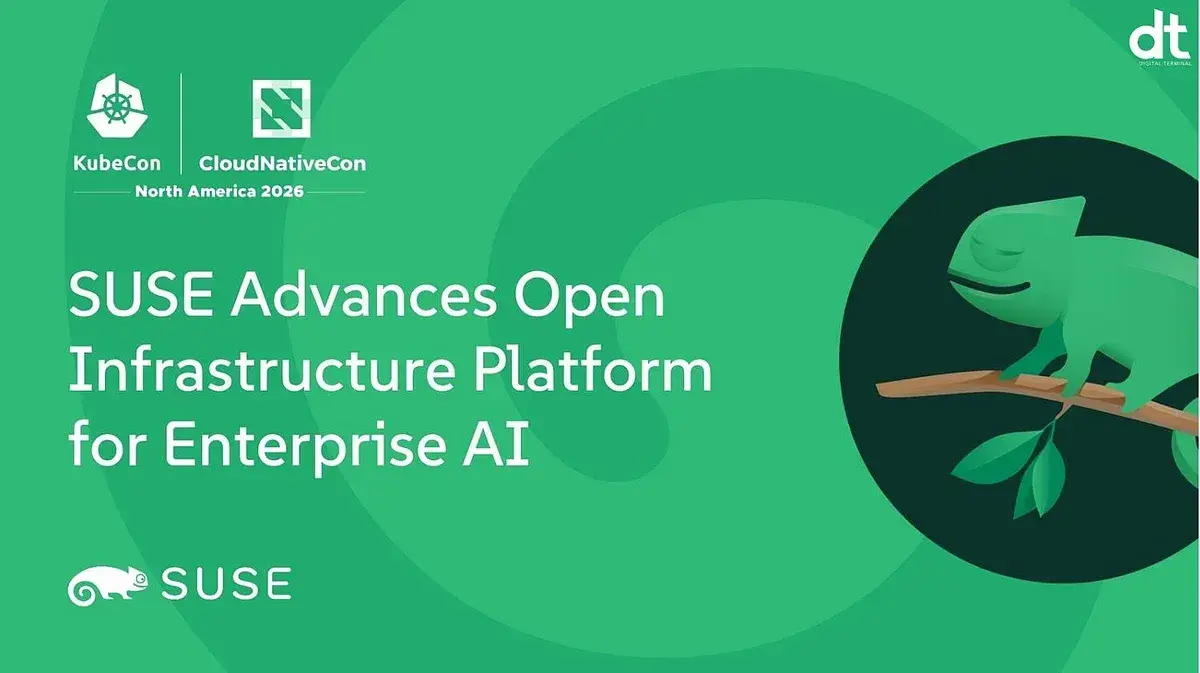
SUSE has expanded the AI troubleshooting agents in its Rancher Prime platform beyond Kubernetes clusters to include virtual machines
1
. This extension arrives through a new integration with SUSE Virtualization, broadening the reach of Liz, the Rancher Prime assistant that SUSE first shipped as a tech preview in November 2025. The move addresses a critical need as enterprises transition from AI experiments to production deployments that must coexist with legacy applications in hybrid environments2
.
Source: DT
The timing reflects shifting enterprise priorities. Research sponsored by SUSE found that IT leaders rank Kubernetes management as their top investment priority, with AI workloads second, and 24% identified AI-assisted troubleshooting as essential for simplifying Kubernetes management
1
2
. These AI-driven capabilities now extend across both container and VM infrastructure, giving teams a consistent approach to managing diverse workloads.AI Agents Operate Under Human Oversight
The AI troubleshooting agents work as specialized sub-agents within Liz's orchestration framework. Nothing the agents propose gets executed until someone approves it, maintaining enterprise oversight while improving operational efficiency
1
. This design addresses a documented tension: 91% of organizations acknowledge employees bypass security controls at least occasionally to work faster2
.New OAuth2 support enables Liz to connect with Model Context Protocol servers, expanding integration possibilities
1
. Peter Smails, SUSE's general manager of cloud native, previously indicated customers could bring their own agents to Liz, suggesting an extensible architecture. SUSE has also introduced an AI-first version of the Rancher command-line interface with server-side dry run capabilities, letting operators preview changes before implementation1
.SUSE Linux Enterprise Server 16.1 Consolidates Workload Types
SUSE released version 16.1 of SUSE Linux Enterprise Server alongside the Rancher Prime updates. The release consolidates deployments that previously required separate SUSE products. Customers running SUSE Linux Enterprise Micro or SUSE Linux Enterprise Real Time can migrate to SLES 16.1 and maintain everything on one support lifecycle
1
. This consolidation reduces operational complexity for organizations managing traditional, immutable and real-time workloads2
.The release includes an on-box Model Context Protocol framework for AI-assisted diagnostics, currently in tech preview
1
. Support for NVIDIA-accelerated infrastructure is built in, along with expanded live patching capabilities and preparation for post-quantum cryptography1
2
.Related Stories

Infrastructure Performance and Security Enhancements
SUSE Rancher Prime Virtual Clusters gains a Hosted Control Plane mode, enabling platform teams to offer Kubernetes as a service on SUSE's RKE2 distribution
1
. The v2 data engine in SUSE Storage delivers up to 10 times faster performance for stateful workloads, according to SUSE1
2
.On the security front, SUSE Application Collection now holds more than 1,000 Python libraries built from verified sources. Each ships with a software bill of materials and provenance information for dependency assessment
1
. The upcoming SUSE Security 6.0 release will add SUSE Security Vulnerability Scanner to identify and rank flaws in deployed workloads and cluster nodes. Its Runtime Enforcer component will detect and block anomalous workload behavior1
.Open Infrastructure Strategy Targets Vendor Lock-In Concerns
Thomas Di Giacomo, SUSE's chief technology and product officer, emphasized that companies scaling AI deployments need infrastructure capable of handling new workloads alongside existing applications without sacrificing security, performance or control. SUSE's commitment to an open infrastructure platform means organizations can adopt AI workloads on their terms without vendor lock-in
1
2
.
Source: SiliconANGLE
SUSE Linux Enterprise Server 16.1 is available now, with its MCP framework in tech preview. The AI-first Rancher command-line interface and Hosted Control Plane mode for Virtual Clusters are in open beta. Remaining Rancher Prime features will ship on independent release schedules
1
. Watch for how enterprises balance AI-assisted automation with necessary human oversight as these capabilities move from preview to production, and whether the performance claims for stateful workloads hold across diverse deployment scenarios.References
Summarized by

Navi
[1]
Related Stories
SUSE Linux Enterprise Server 16 Debuts as First Enterprise OS with Built-in AI Agent Framework
05 Nov 2025•Technology

Red Hat AI Strengthens Agentic AI Security and Hybrid Cloud Capabilities with OpenShift 5
09 Nov 2026•Technology
SUSE Expands Open Source Capabilities in AI, Cloud, and Enterprise Linux at SUSECON 25
25 Mar 2025•Technology

Recent Highlights


Recent Highlights
Today's Top Stories







Don’t drown in AI news. We cut through the noise - filtering, ranking and summarizing the most important AI news, breakthroughs and research daily. Follow topics that matter to you and stay ahead.


