Tax experts warn against using AI for tax filing as chatbots miscalculate refunds by thousands


6 Sources
[1]
Think AI Can Do Your Taxes? The IRS Might Disagree
There's just one small problem. The Internal Revenue Service expects financial data to be accurate, not just "close enough." I asked some tax experts whether you should have a general-purpose AI chatbot like ChatGPT, Claude, Gemini or Perplexity do your taxes for you. The answer was clear. "I
[2]
xAI Exec Says Have Grok Check Your Taxes! Tax Experts Say Do Not Do That!
With about a month left until the April 15 deadline for filing taxes, you may be tempted to pawn off the task onto an AI chatbot. After all, companies keep saying they are more capable than ever of autonomously handling tasks like coding apps or, you know, bombing military targets. Surely, they can
[3]
Why you shouldn't use ChatGPT as a tax consultant
Cybersecurity pros say step away from ChatGPT and hire an old fashioned tax pro. Credit: Zain bin Awais / Mashable / Getty Images We've come a long way from the days of lugging boxes of receipts over to your accountant's office. By 2022, 150.6 million individual federal income tax returns were
[4]
AI tools like Gemini and Copilot can't do your tax return for you - but they might be able to help
With less than five weeks until Tax Day, some filers are turning to artificial‑intelligence chatbots for help. A local tax expert warns that while AI can be useful, it can also make costly mistakes, and you're the one who pays for them. Mike Valenti, tax director at Bryn Mawr Trust Advisors, says
[5]

AI is changing how Americans file taxes in 2025 -- 3 risks you should know before filing
Artificial intelligence is changing how Americans file taxes in 2025. Many tax platforms now use AI assistants to help people organize documents and find deductions. However, experts warn about possible risks. AI mistakes, stronger IRS checks using technology, and new deepfake tax scams could
[6]
Can AI do your taxes? Prompts to try, risks to know, and 3 ways it can help
AI tax tools and software: Artificial intelligence is increasingly integrated into tax preparation, assisting with tasks like data extraction and summarizing tax law changes. While AI tools offer efficiency, experts emphasize the need for human oversight and caution regarding data privacy.
Share
Copy Link
As Tax Day approaches, tax experts are urging Americans not to rely on AI chatbots like ChatGPT and Grok for tax filing. Tests show these tools miscalculate refunds by an average of over $2,000, while privacy risks expose sensitive financial data to potential breaches. Despite marketing claims, the IRS holds taxpayers accountable for AI-generated errors.
Tax Experts Reject AI Tax Preparation Despite Industry Push
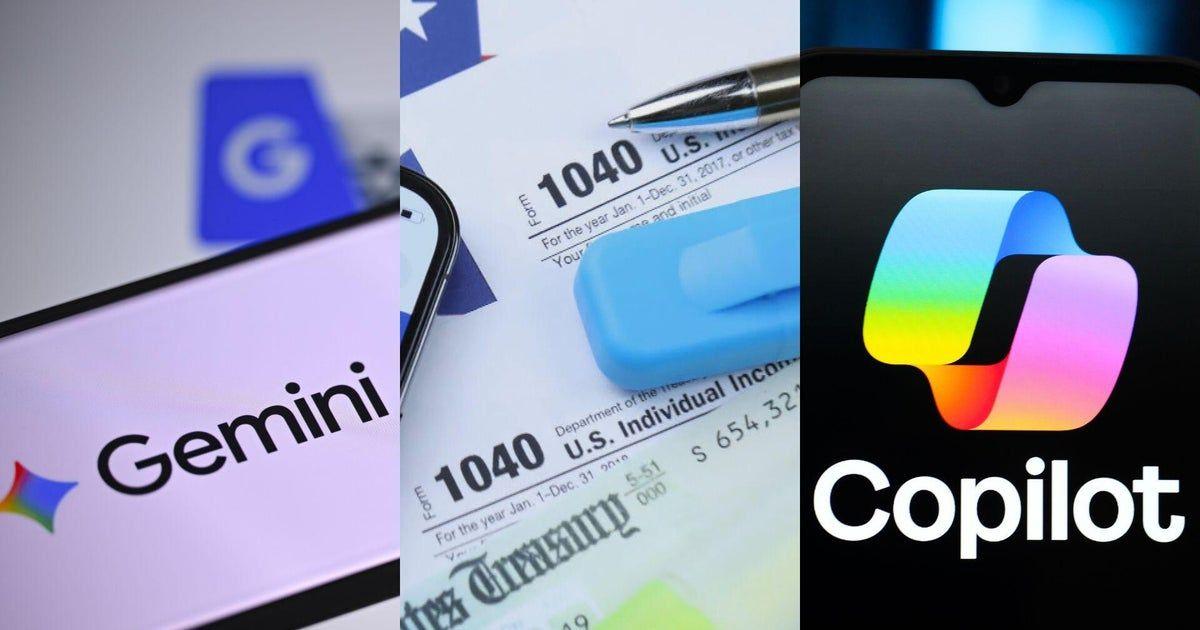
With the April 15 deadline approaching, tax experts are issuing stern warnings against using AI chatbots for tax filing, even as companies promote these tools as convenient alternatives to professional help. When asked whether taxpayers should use general-purpose AI chatbots like ChatGPT, Claude, Gemini, or Perplexity for taxes, tax attorney Travis Thompson, director in the business and finance group at Fennemore, was unequivocal: "I don't recommend that at all." Sterling Raskie, senior lecturer of finance at the University of Illinois Urbana-Champaign, echoed this sentiment, stating "My advice would be no"
1
.
Source: CBS
The pushback comes despite aggressive marketing from AI companies. James Burnham, xAI's General Counsel, recently told followers on X that a friend had Grok check their TurboTax return and increased their tax refund by $1,400, though he later added a disclaimer that it wasn't tax advice
2
. Around 30 percent of Americans say they will use an AI tool such as ChatGPT to help prepare their taxes, according to a recent survey by McAfee, with rates higher among younger taxpayers3
.AI Tax Mistakes Cost Thousands in Miscalculated Refunds
The primary concern centers on accuracy. The New York Times tested multiple chatbots using tax situations prepared as training materials by TaxSlayer and found that AI chatbots miscalculated refunds and amounts owed to the IRS by an average of more than $2,000
2
. TaxCalcBench, a benchmarking test designed to evaluate an AI model's ability to calculate tax returns, found that most options failed to even crack 50% accuracy across a full return2
.
Source: ET
"Tax preparation in particular requires purpose-built systems designed for accuracy, compliance, reliability, and security," an Intuit spokesperson explained. "While a general-purpose LLM may provide broad tax information, it is not specifically trained or validated to prepare accurate tax returns across complex federal and state scenarios"
2
. AI hallucinations remain a persistent problem, with chatbots confidently providing incorrect information. "In general, you can't trust the output," said Abhishek Karnik, head of threat intelligence research at McAfee. "You don't want that to turn into an issue with the IRS, because the IRS doesn't care if you say 'the AI told me so'"3
.Mike Valenti, tax director at Bryn Mawr Trust Advisors, warns that AI chatbots for taxes often lack nuance when it comes to specific details about tax returns. Chatbots might explain a deduction correctly but not whether you qualify, or pull information from the wrong tax year
4
. The risks of using AI for taxes are especially pronounced for complex situations including income earned in multiple states, Roth conversion transactions, and crypto staking rewards5
.Privacy Risks Expose Sensitive Financial Data to Breaches
Beyond inaccuracy, data security poses a critical threat. "General-purpose chatbots aren't designed to securely handle highly sensitive financial information," explained Christopher Caen, CEO of AI cybersecurity firm Mill Pond Research. Platform breaches could expose users' private conversations to bad actors, while live chats can be intercepted by malicious browser extensions or compromised devices
3
.
Source: Gizmodo
Researchers at Stanford analyzed privacy policies of major AI chatbots and found that many leading US companies feed user inputs back into their models to improve capabilities. Companies including Anthropic, OpenAI, and xAI require users to manually opt out of allowing their conversations to be used for training purposes
2
. Meta previously allowed users to browse other people's prompts and conversations with its chatbot, revealing medical, legal, and other sensitive information. A similar situation happened with xAI, which temporarily made user conversations with Grok publicly visible and searchable2
."You don't want those numbers floating around the internet," Thompson warned. "There is nothing secure about these clients," added Valenti
1
4
. Tax experts strongly advise never uploading full tax forms, Social Security numbers, bank account details, or other personally identifiable information like employer details or addresses to AI chatbots.Related Stories

IRS Accountability and Emerging AI Tax Tools
Chris Linderwell, vice president of consumer tax products at H&R Block, emphasized the stakes: "It's important to keep in mind that if an AI chatbot provides incorrect guidance and a person uses it to file an incorrect tax return, they (the person) are responsible for infractions or violations, which could include penalties, interest, and lost refunds"
1
. The IRS is also deploying AI to detect discrepancies, using systems like the Discriminant Information Function (DIF) to cross-match reported income with W-2 forms, Form 1099-DA for cryptocurrency transactions, and Form 1099-K for payment app income5
.Cybercriminals are leveraging generative AI to create more convincing phishing scams, using voice cloning to imitate accountants or IRS officials and building fake websites that mimic real IRS pages . While AI tax advice from general chatbots carries significant risks, tax experts acknowledge AI can serve limited educational purposes. OpenAI representatives confirmed ChatGPT can help translate tax terms, prepare checklists, or provide questions to ask your CPA, though "you should always review the ChatGPT output since it is not a replacement for a licensed professional"
1
.Joel Salas, owner of Elevated Tax Strategies, pointed to purpose-built AI tax tools like Taxbox as safer alternatives that can function as a "tax assistant or tutor"
2
. For taxpayers who cannot afford a CPA or tax professional, experts recommend using established tax software with built-in AI features rather than general-purpose chatbots, carefully documenting all income sources, and practicing good digital hygiene by enabling multifactor authentication and avoiding public networks when handling tax code-related tasks.References
Summarized by

Navi
[4]
Related Stories
Taxpayers rush to AI for tax help, but experts warn of incomplete answers and costly mistakes
28 Mar 2026•Technology

AI chatbots deliver confident financial advice that's often wrong, leaving investors burned
07 Jul 2026•Science and Research

AI Chatbots in Personal Finance: Potential and Pitfalls
22 Aug 2025•Technology

Recent Highlights



Recent Highlights
Today's Top Stories






Don’t drown in AI news. We cut through the noise - filtering, ranking and summarizing the most important AI news, breakthroughs and research daily. Follow topics that matter to you and stay ahead.


