TCS chairman says AI agents may equal employee count, signaling slowdown in IT hiring


2 Sources
[1]
India's TCS chair says AI agents may equal headcount, dampen hiring
BENGALURU, June 9 (Reuters) - India's largest software services exporter Tata Consultancy Services (TCS.NS), opens new tab expects IT companies to slow down hiring, as the company moves towards having an equal number of employees and AI agents in its workforce, Chairman N Chandrasekaran said at the
[2]
India's TCS chairman expects AI agents to equal employee count
BENGALURU, June 9 (Reuters) - Indian software services exporter Tata Consultancy Services expects IT companies to have an equal number of employees and AI agents, Chairman N Chandrasekaran said during the company's annual general meeting on Tuesday. "If the company has half a million employees,
Share
Copy Link
Tata Consultancy Services Chairman N Chandrasekaran announced that AI agents may soon match the company's employee headcount, fundamentally reshaping India's IT sector. The move signals reduced hiring across the industry as automation transforms traditional labor-intensive business models, though TCS says new roles will emerge alongside the transition.
TCS Envisions Equal Numbers of AI Agents and Human Workers
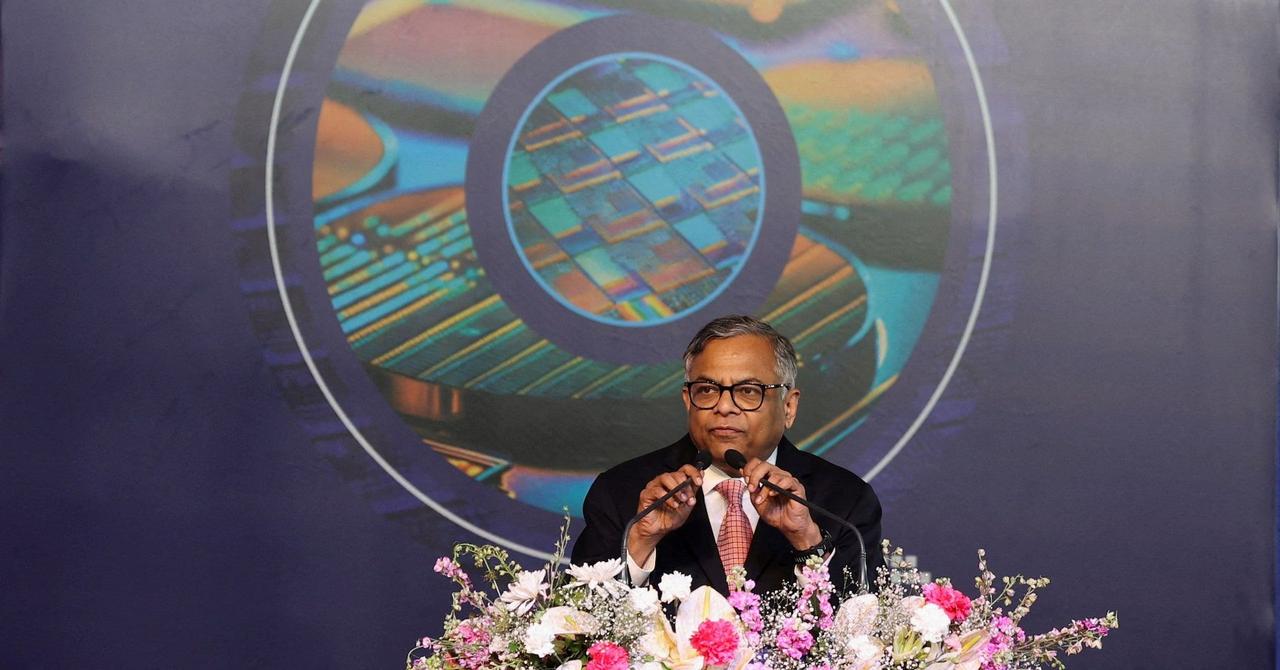
Tata Consultancy Services Chairman N Chandrasekaran delivered a striking forecast at the company's annual general meeting on Tuesday, revealing that AI agents may equal headcount in the near future
1
. "If the company has half a million employees, the day is not far when the company will have half a million AI agents," Chandrasekaran stated, emphasizing that collaboration between humans and AI will define the future of work2
. This vision from India's largest software services exporter by market cap and employee count carries significant weight for India's IT sector, a $315-billion industry that serves as one of the country's largest private sector employers1
.
Source: Reuters
The Mumbai-headquartered company has already begun adjusting its human workforce. Last July, TCS cut more than 12,000 jobs, and headcount fell by more than 23,000 on a net basis in the fiscal year ended March 2026
1
. While Chandrasekaran emphasized that TCS does not plan to downsize staff, he confirmed the company will hire less going forward as AI automates tasks previously handled by people.Slowdown in IT Hiring Reflects Broader Industry Shift
The slowdown in IT hiring extends beyond TCS alone. Chandrasekaran noted that increased usage of AI agents would curb the number of people hired by both TCS and the broader IT industry as automation takes hold
1
. "Some of the work being done will go to AI agents. That will be the nature of the transition that we have to go through not only as a company, as an industry, and as a country," he explained. This transition matters deeply for India's IT sector, which has been grappling with investor concerns that AI could disrupt its traditional, labor-intensive business model. The industry has already slowed down hiring amid geopolitical turmoil that has dented client demand1
.Market sentiment reflects these concerns. TCS shares have fallen more than 32% so far in 2026, compared with a 25% drop in the Nifty IT index
1
. Advanced AI tools have shaken up the way companies work across industries from Silicon Valley to media and IT in recent years as businesses seek efficiencies while staying on top of rapid technological changes.Related Stories

New Roles Emerge as AI Component Becomes Universal
Despite the reduction in traditional hiring, Chandrasekaran indicated that new roles and opportunities would emerge as companies adapt to AI-driven ways of working
1
. The company's financial performance demonstrates AI's growing importance: TCS's annualized AI revenue crossed $2.3 billion in the quarter ended March 31. Looking ahead, Chandrasekaran projected that 100% of TCS's revenue will have an AI component before the end of the decade1
. This shift from optional AI integration to universal adoption signals a fundamental transformation in how IT services are delivered, with layoffs and workforce restructuring likely to continue as the industry navigates this transition while simultaneously creating opportunities for workers who can effectively collaborate with AI systems.References
Summarized by

Navi
[2]
Related Stories
TCS Embraces Generative AI as a 'Transformative Force', Plans to Integrate AI Agents Alongside Human Workforce
28 May 2025•Business and Economy

Tata Consultancy Services plans 8,900 AI deployment engineers and hunts for AI acquisitions
12 Jul 2026•Business and Economy
TCS Layoffs Signal AI-Driven Transformation in India's $283 Billion IT Sector
08 Aug 2025•Business and Economy
Recent Highlights
1
Meta Unveils Muse Wonder Frontier AI Models, Claims Performance Matching OpenAI and Anthropic
Technology

2
IMF Report Warns AI Market Correction Could Spark Global Financial Crisis With $1.4T at Risk
Business and Economy

3
OpenAI Releases 722 AI-Generated Math Solutions, Triggering Existential Crisis in Mathematics
Technology

Recent Highlights
Today's Top Stories










Don’t drown in AI news. We cut through the noise - filtering, ranking and summarizing the most important AI news, breakthroughs and research daily. Follow topics that matter to you and stay ahead.


