64% of Teens Use AI Chatbots as Schools Grapple With Cheating and Learning Impact


15 Sources
[1]
About 12% of U.S. teens turn to AI for emotional support or advice | TechCrunch
AI chatbots have become embedded in the lives of American teenagers, according to a report published Tuesday by the Pew Research Center. While the most common uses of AI among this demographic are to search for information (57%) and get help with schoolwork (54%), teens are also using AI to fill
[2]
Nearly 60% of Teens Believe Their Peers Use AI to Cheat at School, Survey Finds
Kids think AI is alright, according to survey data the Pew Research Center published Tuesday. They're using it for a wide range of schoolwork tasks -- including cheating. Teenagers seem to have a more optimistic view of AI compared to adults. Only 17% of US adults felt AI would have a positive
[3]
Most Teens Use AI for Homework Help. 10% Let It Do Everything
Most American teenagers have grown comfortable with treating AI chatbots as substitute teachers, but far fewer say they've ever used one as a therapist, according to a new report from the Pew Research Center. The top use for these conversational apps is something less exciting than either of those
[4]
Experts examine AI's role in learning, equity, and creativity
Experts also encouraged educators to prioritize human connections over technology in student support. Last week, Stanford Institute for Human-Centered AI and the Stanford Accelerator for Learning convened educators, researchers, technologists, policy experts, and more for the fourth annual
[5]

Colleges face a choice: Try to shape AI's impact on learning, or be redefined by it
What happens to a college education when a chatbot can draft an essay, summarize a reading and generate computer code in seconds? The arrival of artificial intelligence in college classrooms has been swift and, for many schools, disorienting. As professors of economics and business management and
[6]

More Than Half of Teens Use Chatbots for Schoolwork, Survey Finds
More than half of teenagers in the United States use artificial intelligence tools for help with their schoolwork, according to a new study from the Pew Research Center. Fifty-four percent of teenagers aged 13 to 17 said they had used chatbots like OpenAI's ChatGPT or Microsoft's Copilot for tasks
[7]

Most teens believe their peers are using AI to cheat in school
About half of teenagers say they use AI to help with schoolwork, according to a new survey. (Izusek/iStock) A majority of American teenagers believe that their peers are using artificial intelligence to cheat in school, according to new research, and more than 1 in 10 teens use AI for emotional
[8]
'A.I. Literacy' Is the New Drivers' Ed at This Newark School
Reporting from North Star Academy Washington Park High School in Newark The first session of a new artificial intelligence class this month for high school seniors in Newark involved purely human intelligence. The students' assignment: to compare when they had passively scrolled through
[9]

Teens admit their true feelings about AI chatbots
Teens turn to AI more commonly than their parents might know. Credit: Thai Liang Lim via iStock / Getty Images Plus Whether or not their parents realize it, nearly two-thirds of American teens say they use artificial intelligence chatbots for activities including homework help, research, video
[10]

In some schools, chatbots interrogate students about their work. But the AI revolution has teachers worried
The fast take-up of innovative technology risks creating a 'two-speed system', an Independent Schools Australia paper warns Once upon a time, school students would submit an essay, and teachers would mark it. Job done. Enter "Thinking Mode". Now, in some Australian schools, once a student
[11]
In some classrooms, teachers ask: Can AI teach students to write better?
(Illustration by Junne Joaquin Alcantara/The Washington Post; iStock) When Craig Schmidt gave his high school English students an assignment based on "Fahrenheit 451," he threw them a curveball: He told them to use ChatGPT. Schmidt asked the class to write several paragraphs reflecting on the
[12]

'Students can't reason': Teachers warn AI is fueling a crisis in kids' ability to think | Fortune
In the 1980s and 1990s, if a high school student was down on their luck, short on time, and looking for an easy way out, cheating took real effort. You had a few different routes. You could beg your smart older sibling to do the work for you, or, a la Back to School (1989), you could even hire a
[13]

Teens are using AI frequently in their daily lives, and many parents aren't aware, survey finds
Cara Tabachnick is a news editor at CBSNews.com. Cara began her career on the crime beat at Newsday. She has written for Marie Claire, The Washington Post and The Wall Street Journal. She reports on justice and human rights issues. Contact her at [email protected] Parents are
[14]

26% US teens in survey think AI will have negative impact on society
A majority of U.S. teens said they use AI chatbots, while about 26% think AI will have a negative impact on society in the next 20 years, according to a Pew Research Center survey of U.S. teens ages 13 to 17. Over half use them to search for information and get schoolwork help, while fewer rely on
[15]

Teens Use AI Chatbots to Fill Roles of Hitherto Done by Family and Friends: Pew Research
Another concern is that barely half the parents surveyed are aware of AI use by their teens at home, though many of the kids themselves divulge it A new research conducted in the United States suggests that nearly a third of all teen users of AI chatbots are using them to perform roles hitherto
Share
Copy Link
New data from the Pew Research Center reveals that nearly two-thirds of American teenagers use AI chatbots, with 54% turning to them for schoolwork help. But the findings also expose troubling trends: 10% of students let AI do most or all of their assignments, while 12% seek emotional support from chatbots. As artificial intelligence reshapes education, schools face urgent questions about academic integrity, learning outcomes, and student wellbeing.
Student AI Use Reaches 64% as Parents Underestimate Adoption
Artificial intelligence has rapidly embedded itself into the daily lives of American teenagers, with 64% now using AI chatbots according to a Pew Research Center report published in February 2026
1
. The figure reveals a significant gap between perception and reality: only 51% of parents believe their teen uses these tools1
. This disconnect highlights how quickly educational technology has infiltrated classrooms, often outpacing parental awareness and institutional oversight.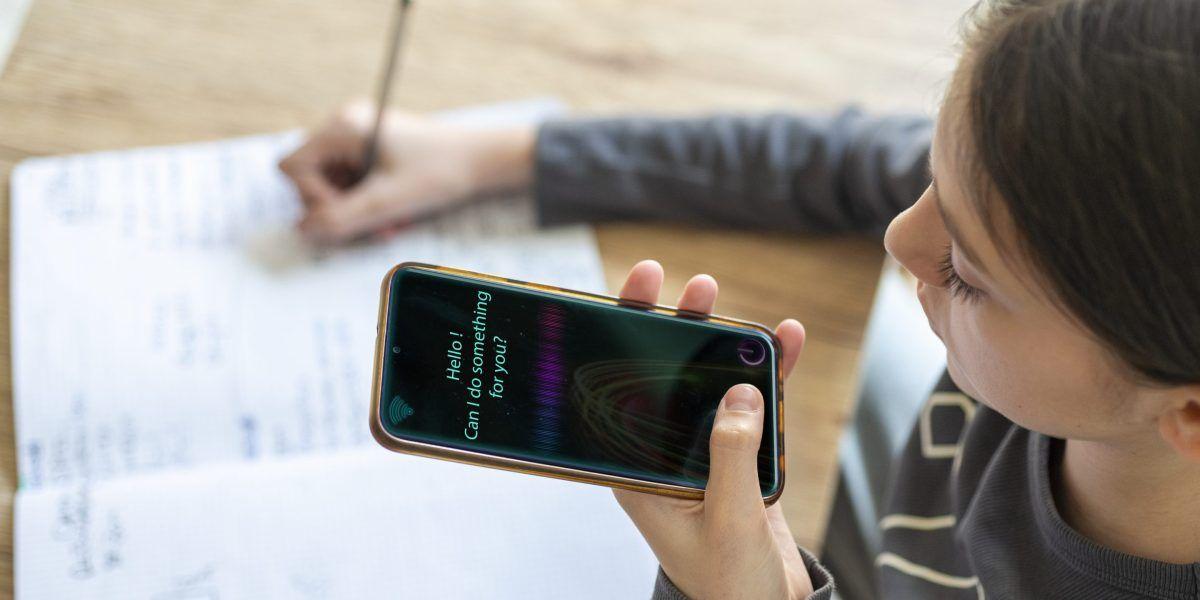
Source: Fortune
The most common application of student AI use centers on information gathering, with 57% of teens using chatbots to search for information
1
. Close behind, 54% report using AI for schoolwork assistance1
. When broken down further, 48% use AI chatbots to research specific topics, 43% for solving math problems, and 35% to edit writing assignments2
. These patterns suggest teens view AI primarily as an academic tool, though the line between legitimate help and academic dishonesty remains blurred.
Source: PC Magazine
AI for Homework Help Raises Academic Integrity Concerns
While many students use AI for homework help in limited ways, the data exposes more troubling patterns. Ten percent of teens admit to using chatbots to complete all or most of their schoolwork, with an additional 21% using them for some assignments and 23% for a little
3
. The problem appears most acute in lower-income households, where 20% of students in families earning less than $30,000 annually rely on AI for most or all schoolwork, compared to just 7% in households making over $75,0003
.Plagiarism concerns extend beyond individual use. Nearly 60% of teens believe their peers regularly use AI to cheat at school
2
. Specifically, 34% report that students at their school use AI to cheat very or extremely often, while 25% say it happens somewhat often3
. Only 14% believe fellow students rarely or never engage in using AI to cheat3
. This widespread perception of academic dishonesty threatens to undermine trust in educational institutions and devalue genuine achievement.AI's Impact on Learning and Critical Thinking Under Scrutiny
Educators and researchers are increasingly concerned about AI's impact on learning processes, not just academic integrity. Stanford School of Engineering professor Mehran Sahami argues that artificial intelligence has broken a fundamental assumption in education: that strong products indicate strong learning processes
4
. Students can now generate impressive work without engaging in meaningful learning, forcing educators to focus on assessing the actual learning process rather than just evaluating end products4
.Research presented at Stanford's AI+Education Summit revealed alarming findings about creativity. Assistant professor Guilherme Lichand studied middle school students in Brazil and found that while students with AI assistance performed better on creative tasks while using the tool, those benefits disappeared when the tool was removed
4
. Most concerning, students who lost AI access after having it performed four times worse than their initial advantage, suggesting AI had damaged their creative self-concept4
.AI for Emotional Support Raises Mental Health Concerns
Beyond academics, 12% of U.S. teens use AI chatbots for emotional support or advice, while 16% engage in casual conversation with these tools
1
. Mental health professionals express serious concerns about this trend. Dr. Nick Haber, a Stanford professor researching therapeutic potential of large language models, warns that these systems can be isolating. "There are a lot of instances where people can engage with these tools and then can become not grounded to the outside world of facts, and not grounded in connection to the interpersonal, which can lead to pretty isolating—if not worse—effects," he told TechCrunch1
.
Source: CXOToday
General purpose tools like ChatGPT, Claude, and Grok are not designed for therapeutic use, and in extreme cases can have life-threatening psychological effects
1
. Character.AI disabled its chatbot experience for users under 18 following public outcry and lawsuits over two teenagers' suicides that occurred after prolonged conversations with the company's chatbots1
. Parents show greater concern about emotional applications: only 18% approve of teens using AI for emotional support, while 58% actively disapprove1
.Schools and Colleges Struggle With AI Integration in Schools
Higher education institutions are taking varied approaches to AI use in college settings. Most schools have issued guidance rather than sweeping mandates, with liberal arts colleges like the University of Richmond, Bard College, and Trinity College emphasizing ethical and responsible use
5
. A 2024 study of 116 research universities found instructors largely determine course policies individually, with few campus-wide bans5
.Analysis of over 31,000 syllabuses at a large Texas research university showed business courses allow the greatest AI use, while humanities courses permit it least
5
. AI was most commonly allowed for editing, study support, and coding, but restricted for drafting, revising, and reasoning or problem-solving5
. Some faculty have shifted to oral exams, live debates, and presentations to ensure student assessment reflects genuine understanding rather than AI-generated content5
.Related Stories

AI Literacy Emerges as Non-Negotiable Skill
Educators increasingly recognize that AI literacy must become a core component of curricula. Mike Taubman, a teacher at North Star Academy in Newark, developed an "AI driver's license" curriculum that teaches students to choose destinations, learn how these tools work, understand limitations and risks, and define ethical boundaries
4
. Without structured AI policy and education, students teach themselves, and 70-80% use AI to short-circuit learning rather than enhance it, according to Sahami4
.The Stanford AI+Education Summit emphasized that equity in AI access and education remains critical. Wendy Kopp, founder of Teach for All, noted that AI amplifies whatever educational foundation already exists
4
. In mission-driven schools with strong pedagogy, AI becomes powerful for educators and learners. Without strong guidance, it becomes a distraction4
. The importance of human connection in education cannot be replaced by technology, experts stressed, particularly for student support and development of critical thinking skills4
.Mixed Outlook on AI's Future Impact
Teens themselves hold mixed views about artificial intelligence's societal impact. When asked about the next 20 years, 36% expect AI will have a positive effect on them personally, while 32% think it will be equally positive and negative, 15% expect negative consequences, and 17% remain unsure
3
. Their outlook dims when considering society broadly: 31% predict positive results, 34% see equal positives and negatives, 28% expect negative outcomes, and 8% are unsure3
. This contrasts with only 17% of U.S. adults who felt AI would have a positive impact over the next 20 years in a previous Pew study2
.References
Summarized by

Navi
Related Stories
72% of U.S. Teens Use AI Companions: Study Reveals Widespread Adoption and Potential Risks
15 Jul 2025•Technology

Teens Increasingly Turn to AI Companions for Advice and Friendship, Raising Concerns
23 Jul 2025•Technology

AI Companions and Teens: The Growing Concern Over Digital Relationships
26 Sept 2025•Technology
Recent Highlights



Recent Highlights
Today's Top Stories










Don’t drown in AI news. We cut through the noise - filtering, ranking and summarizing the most important AI news, breakthroughs and research daily. Follow topics that matter to you and stay ahead.


