4 Sources
4 Sources
[1]
Tesla just increased its capex to $25B. Here's where the money is going. | TechCrunch
Tesla CEO Elon Musk kicked off the company's first-quarter earnings call with a monetary heads-up -- or depending on the mindset of the investor, a warning. Tesla's capital expenditures will skyrocket to $25 billion in 2026, far outpacing its previous annual spend as it races to stay ahead of the competition and transitions to an AI and robotics company, according to its first-quarter earnings report. That figure, which covers what Tesla plans to spend on physical assets outside of its day-to-day operating expenditures, is three times higher than its annual capex budget in previous years. For comparison, Tesla's annual capital expenditures were $8.5 billion in 2025, $11.3 billion in 2024, and $8.9 billion in 2023. Tesla had announced in January that it expected capital expenditures to be in excess of $20 billion in 2026, already a substantial increase meant to cover its AI initiatives, including investments in compute infrastructure and data centers, and the expansion and ramp of its manufacturing and R&D production lines, among other items. This $5 billion uptick suggests these initiatives will require more money than previously planned. But so far, its quarterly capital expenditure, which was $2.5 billion, was in line with previous quarters, the report shows. Of course, Musk views this as a positive, a sentiment many other shareholders will likely also share since it positions Tesla as a company investing in its future, namely AI and robotics. "With 2026 we're going to be substantially increasing our investments in the future," Musk said in the earnings call Wednesday. "So you should expect to see significant, a very significant increase in capital expenditures, but I think well justified for a substantially increased future revenue stream." Musk was quick to note that Tesla isn't the only company raising its capital expenditure budget. Amazon, for instance, has projected $200 billion in capital expenditures in 2026, across "AI, chips, robotics, and low earth orbit satellites." Google is slated to spend between $175 billion and $185 billion in capital expenditures in 2026, up from $91.4 billion the previous year. The increase in Tesla's capital expenditures is linked to Musk's desire and ambition to evolve the company beyond building and selling EVs, solar, and energy storage. Some of the capex spend will go towards Tesla's core technologies such as its battery and AI software, according to Musk. The company plans to invest in AI training, chip design, and "laying the groundwork" for increasing manufacturing production, as well as invest in its robotaxi operations and its new semiconductor research fab in Austin. The Fremont, California factory will likely suck up some of that capital as the company ends production of the Tesla Model S and Model X and begins building its Optimus humanoid robot at scale. The company said Wednesday it has also cleared ground outside its Austin factory for a dedicated Optimus manufacturing facility. Tesla plans to increase its internal production of Optimus for testing and then "probably" make Optimus "useful outside of Tesla sometime next year," he said. Tesla is also putting money towards strengthening its supply chain "across the board," Musk said, adding that this covers batteries, energy, and AI silicon. All of this spending, which CFO Vaibhav Taneja said will last a couple of years, comes with a literal cost. The company, which enjoyed a brief 4% share price bump due, in part, to an unexpected $1.4 billion in free cash flow, will head into negative territory later this year, Taneja said. Tesla shares erased their gains in after-hours trading as Musk and Taneja laid out these plans to investors. Still, Tesla is still on loads of cash. At the end of the fist quarter, Tesla reported $44.7 billion in cash, cash equivalents, and short-term investments. "While this may seem like a lot, and we will have the impact of negative free cash flow for the rest of the year, we believe this is the right strategy to position the company for the next era," Taneja said.
[2]
Tesla raises 2026 capex to $25 billion
Three times its historical spend, as it bets on Optimus, robotaxi, AI compute, and a chip fab in Austin The company will go negative on free cash flow for the rest of 2026, CFO Vaibhav Taneja confirmed. But Q1 delivered an unexpected $1.4 billion positive free cash flow beat, and Tesla ended the quarter with $44.7 billion in cash. The capex uplift from $20B to $25B is a $5 billion revision to guidance issued just three months ago. Tesla announced on its Q1 2026 earnings call on 22 April that it is raising its capital expenditure guidance for 2026 to approximately $25 billion, up from the "over $20 billion" figure communicated to investors in January. The new figure is roughly three times Tesla's historical annual capex run rate: the company spent $8.5 billion in 2025, $11.3 billion in 2024, and $8.9 billion in 2023. CFO Vaibhav Taneja confirmed on the call that Tesla expects to run negative free cash flow for the remainder of the year, a reversal from Q1 which delivered an unexpected $1.4 billion in positive free cash flow. Tesla ended the first quarter with $44.7 billion in cash, cash equivalents, and short-term investments. Musk outlined the allocation across several categories. The largest is six simultaneous new production lines across vehicles, robots, energy storage, and battery manufacturing, a scope of parallel ramp unprecedented for Tesla. This covers Cybercab production (the dedicated robotaxi platform), Semi truck manufacturing, and the Houston Gigafactory. A dedicated Optimus manufacturing facility is under construction outside Tesla's Austin factory. Musk indicated on the call that large-scale Optimus production would begin in the "late July, August time frame." The Fremont, California factory, ending production of the Model S and Model X, will shift to Optimus manufacturing at scale. A portion of the capex is directed at AI compute. Tesla plans to more than double its AI compute capacity in roughly six months. The company is also building a semiconductor research facility, referred to as a "Terafab", in Austin, Texas, focused on chip design. Musk framed this as part of Tesla's need to control its silicon supply chain for AI training and inference. Strengthening the supply chain across batteries, energy, and AI silicon was also cited as a spending category. Musk framed the capex increase as an unambiguous positive. "With 2026 we're going to be substantially increasing our investments in the future," he said. "So you should expect to see significant, a very significant increase in capital expenditures, but I think well justified for a substantially increased future revenue stream." He contextualised it by comparing Tesla's spend to Amazon's projected $200 billion and Google's $175-$185 billion in 2026 capex. The robotaxi programme has moved beyond Austin. During Q1, Tesla expanded its unsupervised robotaxi service to Dallas and Houston, adding to existing operations in Austin and the San Francisco Bay Area. Musk described hyper-conservative system behaviour as an intentional safety posture. Tesla has 1.28 million FSD subscribers. Musk also said Optimus would be "probably" made "useful outside of Tesla sometime next year," meaning 2027. Tesla shares briefly gained around 4% on the free cash flow beat before erasing gains in after-hours trading as Musk and Taneja detailed the capex plans.
[3]
Tesla Stock Sinks On CapEx -- Intel Pops On Elon Musk's Mention - Tesla (NASDAQ:TSLA)
Tesla CapEx Spike Hits Stock As Intel Pops On Elon Musk Comments TSLA stock is moving after earnings. See the price action here. $25 Billion CapEx On the company's earnings call with analysts, CFO Vaibhav Taneja said Tesla now expects capital spending to exceed $25 billion this year, a significant increase from its previously outlined $20 billion plan. The revised outlook reflects accelerated investments in AI infrastructure and next-generation manufacturing capabilities. "Our current expectation for 2026 is over $25 billion of CapEx ... we're further increasing our investment in AI-related initiatives, including the AI infrastructure to support robotaxi and the launch of Optimus," Taneja said on the call. The spending surge underscores Tesla's strategic pivot toward AI-driven platforms, including its robotaxi ambitions and Optimus program. Taneja added that Tesla has "already started placing orders for the research semiconductor fab in Austin and for solar manufacturing equipment," signaling expansion across both computing and energy segments. However, the aggressive investment cycle is expected to weigh on near-term financials. Taneja warned the company anticipates "negative free cash flow for the rest of the year" as it scales infrastructure and production capacity. CEO Elon Musk framed the elevated spending as a long-term value driver tied to AI-enabled revenue streams. He said the investments are "well justified" for what Musk described as a "substantially increased future revenue stream." Intel's Fab Tesla's growing focus on AI infrastructure places it more directly in competition with major tech players investing heavily in compute, data centers and advanced semiconductor capabilities. "Intel is excited to partner with us on some of the core manufacturing technologies, so we plan to use Intel's 14A process, which is state of the art," Musk said, referring to Intel's most advanced node expected to launch in 2027. He added that while the process is still under development, it should be "fairly mature or ready for prime time" by the time Tesla's Terafab scales. Meanwhile, Tesla shares reversed earlier gains, falling about 1.5% during the call after Musk reiterated that capex would exceed $25 billion this year, up from a prior forecast of more than $20 billion. TSLA Price Action: Tesla stock was up 0.28% during regular trading and down 0.81% at $384.39 in after-hours trading on Wednesday, according to Benzinga Pro data. Photo: Tada Images / Shutterstock This content was partially produced with the help of AI tools and was reviewed and published by Benzinga editors. Market News and Data brought to you by Benzinga APIs To add Benzinga News as your preferred source on Google, click here.
[4]
Tesla lifts 2026 spending plans by a quarter as Musk funds AI and robotic dreams
April 22 (Reuters) - Tesla sharply raised its spending plan to more than $25 billion for the year as CEO Elon Musk pours money into artificial intelligence, robotics and chips - moves he said were "well justified" to build big future revenue streams. The EV maker's investors took a more skeptical view, pushing its stock down 2.4% after these remarks on a post-earnings call with analysts on Wednesday. The shares had risen as much as 4% after the bell as Tesla reported positive free cash flow in the first quarter. "We are going to be substantially increasing our investment in the future," Musk said. "You should expect to see very significant increase in capital expenditures that are I think well justified for a substantially increased future revenue stream." "Tesla is not alone in this," he added, noting big capex plans at top tech companies. Tesla is in the middle of one of the most expensive bets in its history. Musk pivoted the electric vehicle maker's focus to building artificial-intelligence-powered self-driving cabs and humanoid robots, and much of Tesla's $1.45 trillion market cap rests on that vision. The company in January had forecast more than $20 billion in capital expenses for 2026. Last year, it spent $9 billion. "We are in a very big capital-investment phase, which is going to start now and would last a couple of years," Tesla CFO Vaibhav Taneja said, adding that the company will record negative free cash flow for the rest of 2026. TESLA RECORDS UNEXPECTED CASH SURPLUS In the first quarter, Tesla recorded positive free cash flow of $1.44 billion, compared with estimates for a cash burn of $1.43 billion, according to data compiled by LSEG. First-quarter profit topped Wall Street targets in a sign that the electric vehicle maker was holding the line on costs in a difficult global environment. Tesla's capital expenditures in the quarter were about 40% below what analysts on average were expecting. The Austin, Texas-based automaker reported revenue of $22.39 billion for the three months ended March 31, compared with analysts' average estimate of $22.6 billion, according to data compiled by LSEG. ROBOTAXI AND CYBERCAB Investors have increasingly turned their attention to Musk's push into self-driving technology and robotics, seeking clearer evidence that the autonomy narrative is shifting from promise to commercial reality. Tesla said it was gearing up to start volume production of its Cybercab - a fully autonomous vehicle without a steering wheel or pedals - this year. The company had in January said production ramp would start in the first half. Musk said on Wednesday that initial production of Cybercab would be slow, but he expected that to gather pace toward the end of this year. Tesla started rolling out its Model Y robotaxis in Dallas and Houston, it said on Saturday, marking further expansion of its nascent service in the United States since its Austin launch last year. Preparations are under way to expand the service to five other cities in Arizona, Florida and Nevada, and Musk said on Wednesday he expects the service in a dozen or so states by the end of this year. That expansion was to take place in the first half of the year, according to plans laid out in January, though the company has previously missed similar timelines. Dutch vehicle authority RDW has notified the European Commission of its plan to seek European Union-wide approval for the Full Self-Driving software system, the regulator said earlier this month. VEHICLE SALES RISE AMID PRESSURE Tesla delivered fewer vehicles than Wall Street expected in the first quarter, but deliveries were up 6.3% from a year earlier, when protests against Musk's far-right politics had weighed on demand. Analysts have cut their estimates for annual deliveries, with some expecting a drop this year. "We saw continued growth in demand for our vehicles in markets in APAC and South America, while also seeing a rebound of demand in both EMEA and North America," Tesla said in a statement. Tesla's core automotive business has come under pressure as competitors introduce newer models, often at lower price points. The expiration of a U.S. electric-vehicle tax incentive has added to the strain. Tesla is developing an all-new smaller, cheaper electric SUV, with plans to start production in China and potentially expand production to the U.S. and Europe, Reuters has exclusively reported. The project remains in the early stages of development and is not expected to reach production in the near term. Tesla's energy generation and storage unit has emerged as a key bright spot, buoyed by sustained demand for grid-scale batteries that support renewable energy and help stabilize electricity networks. (Reporting by Akash Sriram in Bengaluru and Abhirup Roy in San Francisco; Writing by Sayantani Ghosh; Editing by Pooja Desai, Peter Henderson and Matthew Lewis)
Share
Share
Copy Link
Tesla announced a dramatic increase in capital expenditure to $25 billion for 2026, three times its historical annual spend. CEO Elon Musk is directing funds toward artificial intelligence infrastructure, the Optimus humanoid robot, robotaxi operations, and a new semiconductor research facility in Austin. The company expects negative free cash flow for the rest of the year despite ending Q1 with $44.7 billion in cash.
Tesla CEO Elon Musk announced during the company's first-quarter earnings call that capital expenditure will reach $25 billion in 2026, marking a dramatic escalation in spending as the company pivots toward artificial intelligence and robotics
1
. This figure represents three times Tesla's historical annual spend—the company invested $8.5 billion in 2025, $11.3 billion in 2024, and $8.9 billion in 20232
. The $25 billion target is a $5 billion revision upward from the "over $20 billion" guidance issued just three months earlier in January, signaling that Tesla's ambitious initiatives require more resources than initially anticipated1
.
Source: Benzinga
The increase in capital expenditures reflects Musk's determination to transform Tesla beyond an electric vehicle manufacturer into an AI and robotics powerhouse. CFO Vaibhav Taneja confirmed on the earnings call that Tesla is "further increasing our investment in AI-related initiatives, including the AI infrastructure to support robotaxi and the launch of Optimus"
3
. A significant portion of the spending will target AI compute capacity, with Tesla planning to more than double its capabilities within approximately six months2
. The company is also constructing a semiconductor research facility, referred to as a "Terafab," in Austin, Texas, focused on AI chip design2
. Musk revealed that Tesla will partner with Intel on core manufacturing technologies, planning to use Intel's 14A process for advanced chip production3
.Tesla's Optimus humanoid robot represents a major component of the capital expenditure plan. The Fremont, California factory will transition from producing the Model S and Model X to manufacturing Optimus at scale
1
. A dedicated manufacturing facility for the Optimus is under construction outside Tesla's Austin factory, with Musk indicating that large-scale production would begin in the "late July, August time frame"2
. The company plans to increase internal production for testing before making Optimus "useful outside of Tesla sometime next year," meaning 20271
. This timeline suggests Tesla views the humanoid robot as a near-term commercial opportunity rather than a distant research project.
Source: TechCrunch
Musk outlined that the largest allocation of funds will support six simultaneous new production lines across vehicles, robots, energy storage, and battery manufacturing—a scope of parallel ramp unprecedented for Tesla
2
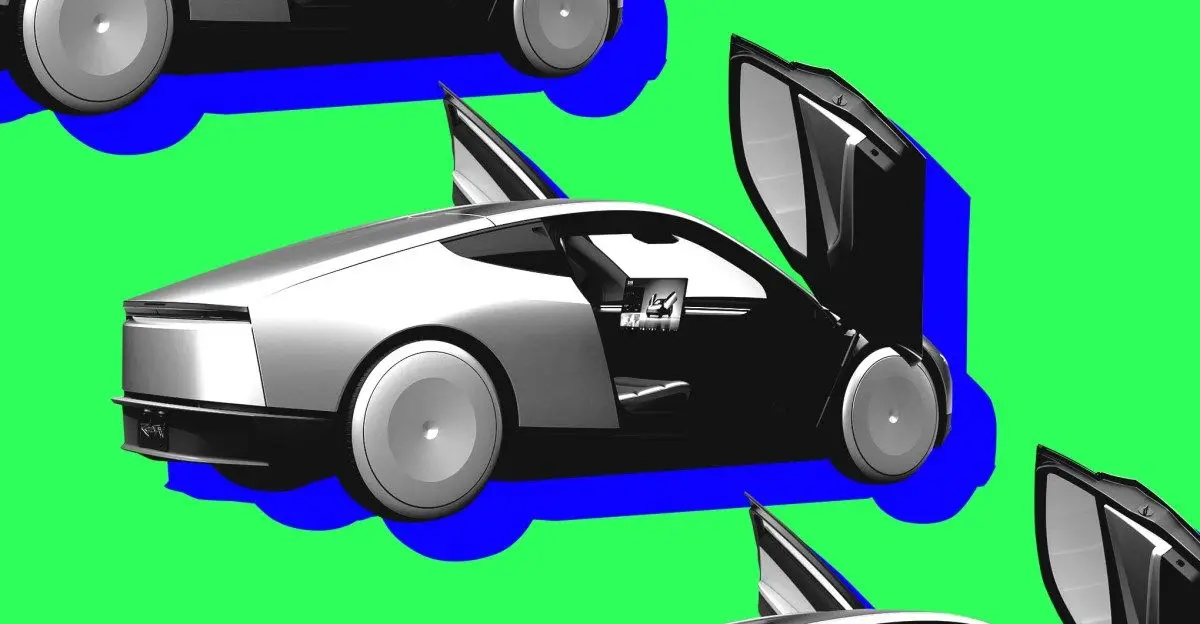
. This includes Cybercab production, the dedicated robotaxi platform designed without a steering wheel or pedals, as well as Semi truck manufacturing and the Houston Gigafactory2
. Tesla is gearing up to start volume production of Cybercab this year, though Musk acknowledged that initial production would be slow before gathering pace toward the end of 20264
. The robotaxi programme has expanded beyond Austin to Dallas and Houston during Q1, with preparations underway to launch in five additional cities across Arizona, Florida, and Nevada4
.Source: Market Screener
While Tesla delivered an unexpected $1.4 billion in positive free cash flow during the first quarter, CFO Vaibhav Taneja confirmed the company expects negative free cash flow for the remainder of 2026
1
. Taneja described this as part of a "very big capital-investment phase, which is going to start now and would last a couple of years"4
. Despite the anticipated cash burn, Tesla ended the first quarter with $44.7 billion in cash, cash equivalents, and short-term investments, providing substantial financial cushion1
. Taneja emphasized that "while this may seem like a lot, and we will have the impact of negative free cash flow for the rest of the year, we believe this is the right strategy to position the company for the next era"1
.Related Stories
Investors responded with mixed reactions to the capital expenditure announcement. Tesla shares initially gained approximately 4% after the positive free cash flow beat but erased those gains during after-hours trading as Musk and Taneja detailed the spending plans
2
. The stock ultimately fell 2.4% as investors processed the implications of sustained negative cash flow and aggressive spending4
. Musk attempted to contextualize the spending by comparing it to tech giants, noting that Amazon has projected $200 billion in capital expenditures in 2026 across AI, chips, robotics, and low earth orbit satellites, while Google is slated to spend between $175 billion and $185 billion, up from $91.4 billion the previous year1
.Tesla is directing substantial resources toward strengthening its silicon supply chain "across the board," covering batteries, energy, and AI silicon
1
. Musk framed the semiconductor research facility as essential for controlling Tesla's chip supply for AI training and inference2
. Taneja added that Tesla has "already started placing orders for the research semiconductor fab in Austin and for solar manufacturing equipment," signaling expansion across both computing and energy segments3
. This vertical integration strategy aims to reduce dependency on external suppliers and accelerate development cycles for AI-powered products.Musk framed the elevated capital expenditure as essential for capturing future revenue streams. "With 2026 we're going to be substantially increasing our investments in the future," Musk stated. "So you should expect to see significant, a very significant increase in capital expenditures, but I think well justified for a substantially increased future revenue stream"
1
. The company's $1.45 trillion market cap increasingly rests on Musk's vision of Tesla as an AI-powered self-driving and robotics company rather than primarily an electric vehicle manufacturer4
. Tesla currently has 1.28 million FSD subscribers, providing a foundation for monetizing autonomous driving technology2
. Data centers and AI compute infrastructure will enable Tesla to process the massive amounts of data required for training self-driving systems and deploying robotaxi fleets at scale.Summarized by
Navi
[2]
22 Jan 2026•Business and Economy

Yesterday•Business and Economy

23 Jul 2025•Technology

1
Policy and Regulation

2
Technology

3
Business and Economy