Tesla shifts focus to AI and robotics as Q1 earnings reveal Musk's ambitious transformation


8 Sources
[1]
Tesla's revenue rises again as it prepares for more AI and robotics
Tesla released its 2026 first-quarter financial earnings today, providing another look at the progress of Elon Musk's $1 trillion bet to transform his company into a leader of AI and robotics. Tesla said it earned $477 million in net income on $22.4 billion in revenue in the quarter that ended in
[2]
How Musk Is Staking Tesla's Future on AI, Robotaxis and Robots
Tesla Inc. is among the most expensive stocks in the S&P 500. That might seem odd in the wake of one of its worst quarters for electric vehicle sales in years. But it's not EVs that are keeping the shares trading at more than 180 times expected earnings. Instead, investors are betting on what Chief
[3]
Tesla earnings rise, but AI expenses add up for Elon Musk
Why it matters: CEO Elon Musk has directed the company to invest heavily in the development and production of humanoid robots, self-driving cars and AI chips. Driving the news: The company reported Q1 revenue of $22.4 billion, up 16% from a year earlier. * Net income totaled $477 million, up 17%,
[4]
Tesla profits up as Musk shifts focus to robotaxis
Tesla's profit rose in the first quarter as its car sales rebounded from a sharp slump in 2025. The electric vehicle maker, run by billionaire Elon Musk, said it earned $477 million (€407.7m) during the quarter, up 17% on a year earlier. Earnings per share totalled 13 cents. Adjusted for certain
[5]

Tesla Is No Longer a Car Company -- Q1 Proves It - Tesla (NASDAQ:TSLA)
But the numbers that really stood out were elsewhere. TSLA stock is moving. See the chart and price action here. Operating cash flow came in at $3.9 billion, and free cash flow -- widely expected to turn negative -- surprised to the upside at $1.4 billion. Gross margins of 21% also cleared the
[6]
Why Wall Street Is Betting On Tesla's AI Future - Tesla (NASDAQ:TSLA)
Tesla's Shift Toward AI And Autonomy Ives told CNBC on Thursday that Tesla is no longer just a carmaker but "much more of an AI company, disruptive tech, than a car company." He pointed to autonomous driving, robotaxis, and robotics as the core drivers of future value, noting that expansion into
[7]

Tesla Margins and Cash Flow Offset Revenue Miss in Q1 Results | Investing.com UK
Tesla (NASDAQ:TSLA) is changing hands at $374.37 per share as of 1:05 PM Eastern on Monday, April 27, 2026, down 0.51% or $1.93 on the session after a Q1 fiscal 2026 earnings print that delivered a clean double-beat on profitability metrics while missing modestly on the revenue line. The intraday
[8]
Tesla beats Q1 estimates; stock falls after Musk tempers robotics, FSD hopes By Investing.com
Investing.com -- Tesla on Wednesday delivered a quarterly top- and bottom-line beat, as its core automotive business fared better than feared in the quarter. But shares of the company reversed course in aftermarket trade after CEO Elon Musk tempered some optimism over Tesla's pivot into robotics
Share
Copy Link
Tesla reported Q1 2026 earnings showing $477 million in net income on $22.4 billion revenue, marking a 16-17% increase year-over-year. But the real story lies in Elon Musk's aggressive pivot away from vehicle manufacturing toward AI and robotics, with plans to build factories capable of producing 10 million Optimus robots annually and expand robotaxi services across multiple cities.
Tesla Q1 Earnings Show Revenue Growth Amid Strategic Transformation
Tesla released its first-quarter 2026 financial results, revealing net income of $477 million on $22.4 billion in revenue for the quarter ending in April 2026
1
. This represents a 16 percent increase in revenue and a 17 percent increase in profits compared to the first quarter of 2025, when the company earned $409 million in net income on $19.3 billion in revenue1
. Despite these gains, Tesla missed Wall Street revenue expectations of approximately $22.64 billion1
. The earnings per share totaled 13 cents, though adjusted earnings reached 41 cents, beating analyst estimates of 36 cents4
.Elon Musk's Strategic Pivot Toward AI Robotics Company
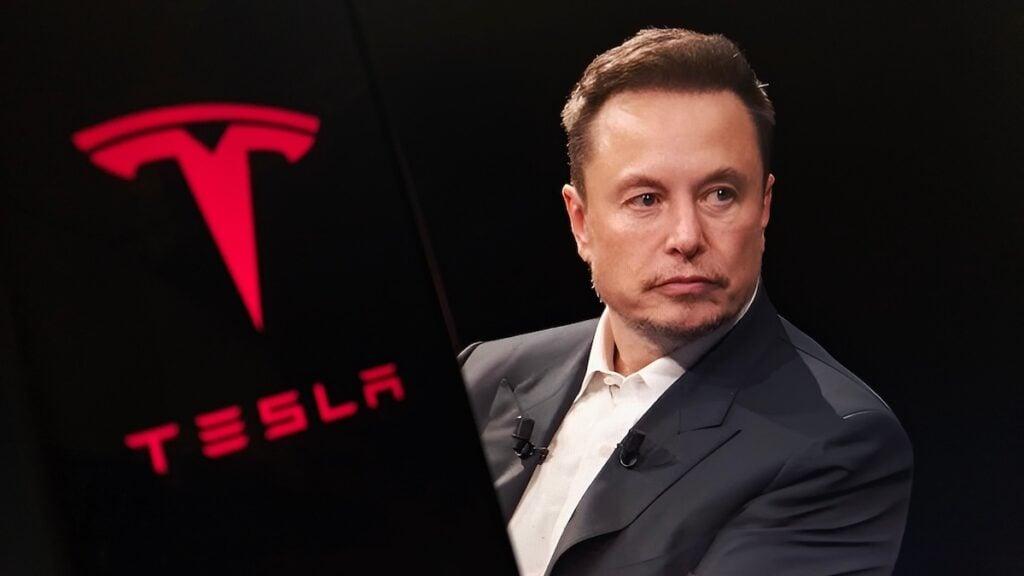
The Tesla Q1 earnings reveal a company in transition. Tesla has described itself as shifting "from a hardware-centric business to a physical AI company" . Elon Musk plans to triple spending to more than $25 billion this year to accelerate this transformation . Operating expenses ballooned 37 percent to $3.78 billion, while operating margin fell to 4.2 percent, declining sequentially for the second consecutive quarter
3
. Capital expenditure last quarter reached $2.5 billion, up 67 percent from the same period a year earlier4
. Yet operating cash flow came in at $3.9 billion, and free cash flow surprised analysts at $1.4 billion, while gross margins of 21 percent cleared expectations by a wide margin5
.
Source: Benzinga
Investments in AI Development Drive Optimus Robot Production
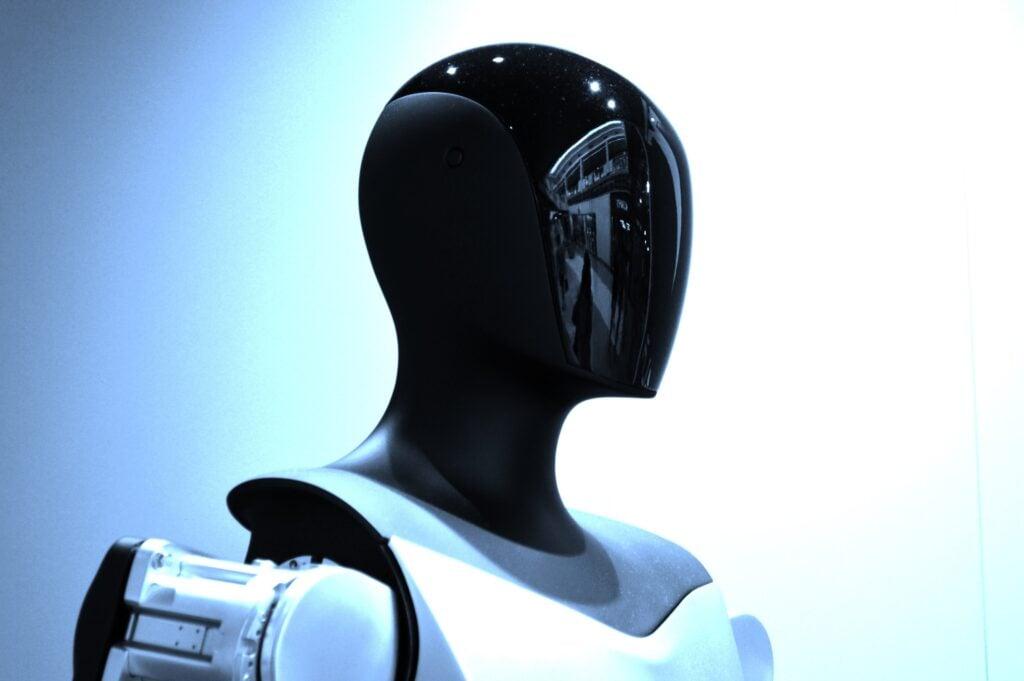
Preparations for Tesla's first "large-scale" factory to build its Optimus humanoid robots will begin in Q2
1
. The first-generation line, designed for 1 million robots annually, will replace the Model S and Model X lines in Fremont1
. Gigafactory Texas will host the second-generation line, designed for long-term annual production capacity of 10 million robots1
. During a conference call with investors, Musk stated, "I think Optimus will be our biggest product, not just Tesla's biggest product ever, but probably the biggest product ever"4
. Tesla is also investing in a giant chipmaking factory known as Terafab, a joint venture with SpaceX, highlighting how different segments of Musk's business empire are becoming increasingly intertwined . Following Musk's January announcement that Tesla was "restarting work" on its Dojo 3 supercomputer, the earnings update confirmed Tesla is "continuing" its work on the project1
.
Source: Benzinga
Shift From Vehicle Manufacturing Accelerates With Model Discontinuations
Tesla recently discontinued the Model S sedan and Model X crossover to make way for Optimus production at its Fremont factory
3
. The Model Y crossover, Tesla's most popular vehicle, could be similarly sidelined: "Once in production, we expect that Cybercab will begin to replace the existing Model Y fleet and will be the largest volume vehicle in the fleet over time," Tesla stated in its earnings presentation3
. First-quarter EV deliveries totaled 358,023, up 6 percent from the same period a year earlier3
. However, this marked an "underwhelming start" to the year, missing consensus estimates of 370,000, according to Wedbush Securities analyst Dan Ives3
. The company has lost ground in the EV market, with BYD surpassing Tesla as the world's largest electric vehicle maker last year .Related Stories

Robotaxi Service Expansion and Self-Driving Cars Progress
Tesla's robotaxi program continues to advance, with robotaxi miles doubling in the first quarter compared with the fourth quarter of last year
4
. These services currently operate in San Francisco and three cities in Texas, including Austin4
. The company launched a robotaxi service in Dallas and Houston, though the service appeared mostly unavailable due to lack of vehicles1
. The Netherlands officially approved Tesla's Full Self-Driving (FSD) Supervised, making it the first European country to authorize use of the company's Level 2 advanced driving assistance system on its roads1
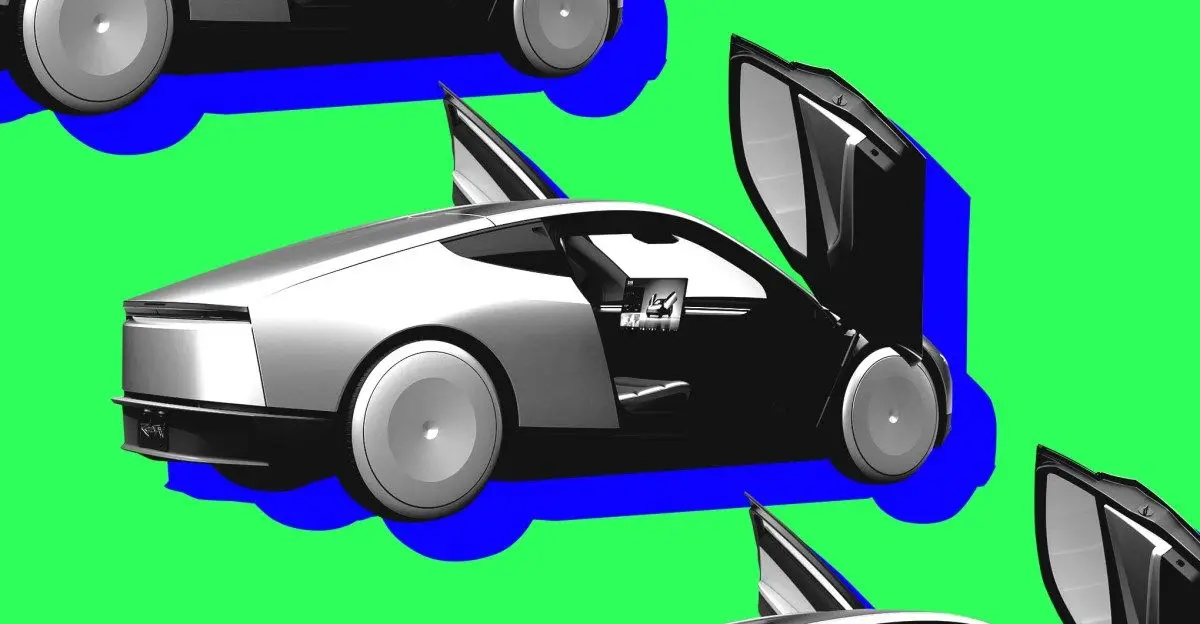
. The Cybercab, Tesla's two-seater autonomous vehicle, has been spotted on the road, albeit with a steering wheel1
. Tesla expects to reach volume production of the Cybercab and electric Semi in 20263
.
Source: The Verge
Market Implications and Investor Sentiment
Tesla stock trades at more than 180 times expected earnings, reflecting investor confidence in its AI and robotics ambitions rather than vehicle sales . "There is a lot to be excited about -- the transition from an automaker to becoming an AI robotics company is well underway," Stephen Callahan, market behavior specialist at Firstrade, told Benzinga
5
. "This is what the stock price is implying vs. being an automaker and battery maker"5
. As investors digested Musk's remarks, Tesla shares swung sharply, briefly surging before reversing course to close marginally lower4
. The lack of delays in the robotaxi program signals progress, with Callahan noting that Tesla is "a real contender in the robot taxi space with Waymo" and "expanding quickly to new cities compared to Waymo"5
.References
Summarized by

Navi
Related Stories
Recent Highlights
1
Meta Unveils Muse Wonder Frontier AI Models, Claims Performance Matching OpenAI and Anthropic
Technology

2
IMF Report Warns AI Market Correction Could Spark Global Financial Crisis With $1.4T at Risk
Business and Economy

3
OpenAI Releases 722 AI-Generated Math Solutions, Triggering Existential Crisis in Mathematics
Technology

Recent Highlights
Today's Top Stories







Don’t drown in AI news. We cut through the noise - filtering, ranking and summarizing the most important AI news, breakthroughs and research daily. Follow topics that matter to you and stay ahead.


