4 Sources
[1]
Tesla is finally launching the Cybercab -- let's hope it's ready
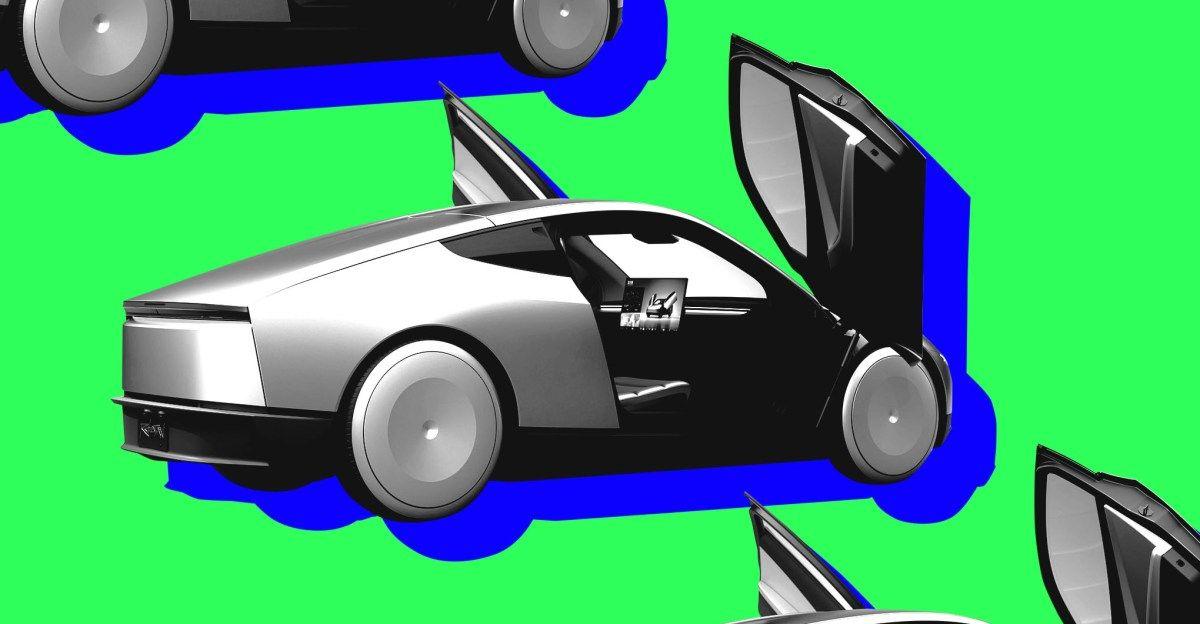
The Tesla Cybercab, that golden two-seater central to Elon Musk's robo-supremacist ambitions, is finally nearing it's public launch. Whether or not the no-steering wheel and no-pedal vehicle is actually ready for public roads, let alone customers, remains very much in doubt. According to The Information, Tesla is planning a public launch of the Cybercab in Austin, Texas, as soon as this month. The driverless vehicle has been popping up around the country, although often with a steering wheel and pedals, as employees are continuing to gather data. Tesla employees have been testing the fully driverless version on private roads around the company's campus since July. And it recently completed a training with first responders in Austin, teaching them how to move the vehicles in the event of an emergency, Brad Cesak, a spokesperson for the city of Austin, confirmed. Tesla's Robotaxi account on X recently confirmed that a "Cybercab launch event" was imminent, inviting followers to take a ride in the company's Model Y robotaxis in order to win a ticket. But given what we know about Tesla's autonomous driving project so far, the Cybercab could be heading for trouble. The Cybercab operates using Tesla's Full Self-Driving (Supervised) software, which the company claims is significantly safer than human driving. However, independent safety experts and federal regulators have called into question this claim, noting that FSD requires constant driver oversight and remains under active investigation by the National Highway Traffic Safety Administration for traffic compliance failures. Over a year after its launch, Tesla's Robotaxi service still uses human safety monitors in some markets. But the Cybercab is designed to operate with any human intervention, which removes one layer of safety on which Tesla can fall back. The company says it employs remote operators who can take control in case of an emergency, but experts question whether signal strength and latency could hamper reactions, especially during incidents in which every second counts. Tesla recently started adding Starlink to its Cybercabs to address this question of connectivity. There's also the question of data, and whether Tesla has enough of the right kind. For years, Tesla was assumed to have an advantage in the race to put driverless cars on the road, thanks to the millions of vehicles on the road, passively gathering data to help train its autonomous driving models. But the Cybercab is a different type of vehicle with a unique platform that requires its own specialized data, Musk said during an earnings call in July. "We need to accumulate driving data that is specific to the Cybercab before we can put a lot of them on the road," he said. Once considered to be a leader in data collection, Tesla may actually be a laggard. During that same earnings call, Ashok Elluswamy, the company's head of AI, said that Tesla's unsupervised robotaxis have driven 380,000 miles across six cities in two different states. Waymo, which has operated a commercial robotaxi service since 2020, has driven over 220 million fully driverless miles on public roads -- or about 579 times more miles than Tesla. Tesla uses a mix of unsupervised and supervised vehicles as part of its current Robotaxi fleet, but that ratio appears to be in a constant state of flux. According to the crowdsourced Robotaxi Tracker, the company was operating 16 unsupervised vehicles in Austin, four in Dallas, and one in Houston. Tesla also hasn't submitted its safety claims for independent analysis, instead relying on self-published statistics while actively working to block public scrutiny of the data it's required to provide to federal regulators. Meanwhile, Waymo has published several studies in peer-reviewed journals. Recently, the nonprofit Insurance Institute for Highway Safety examined Waymo's first 50 million miles of fully autonomous driving across multiple cities and concluded that its crash rates were significantly lower than those of human drivers. The Cybercab launch comes at an odd moment for Tesla. Whereas other vehicle launches have excited Tesla's many fans with their cutting-edge technology, the Cybercab remains a bit of a curiosity. It's the lightest, most efficient electric vehicle Tesla has ever produced. But it's unclear whether the technology powering it is adequate for commercial operations. Still, it's more like the Tesla Semi than the Model Y or Cybertruck, insofar as it seems destined for commercial service and not personal ownership -- despite Musk's claims that you will eventually be able to buy one. The Cybercab's lack of traditional controls means it will be hamstrung by federal safety rules that require things like pedals and side mirrors before they can be sold to the public. That said, if Tesla were to receive an exemption from federal regulators, allowing the company to produce and sell thousands of Cybercabs, that calculus could change. Amazon's Zoox recently received permission to begin charging for rides in its purpose-built robotaxi. Whether Tesla is also seeking a similar exemption is unknown. What is known is that Tesla is going to roll out the Cybercab later this month, as if it's really ready for primetime. But lingering safety questions, as well as the limited nature of Tesla's Robotaxi service, suggests the Cybercab may still have a long road ahead of it.
[2]
Tesla robotaxi in Austin: nobody in the seat, bollards down
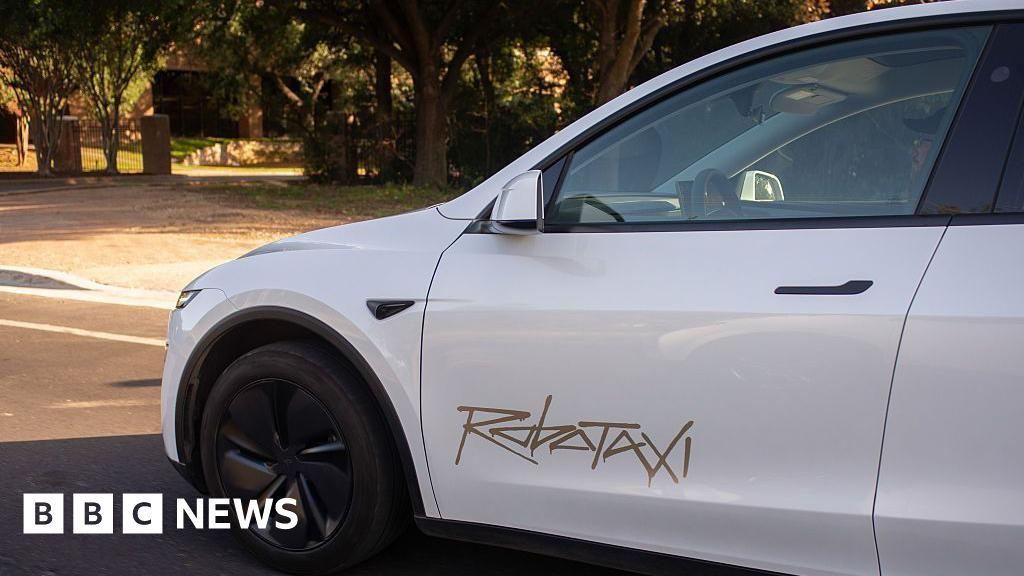
Every one of the 170 Tesla robotaxi rides logged in Austin over two weeks ran with no safety monitor on board, across 54 cars. Two days earlier, a passenger filmed one driving through bollards that Street View shows have stood there since February 2024. Tesla's robotaxi service in Austin appears to have gone fully driverless. Over the past fortnight, every one of the 170 rides logged by an independent monitoring project ran with no human safety monitor on board, across 54 different cars. Two days earlier, a passenger filmed one of those cars driving straight through a line of plastic bollards. What the tracking shows, and who did it A crowdsourced project called Robotaxi Tracker logged the rides. Its creator, Ethan McKanna, told The Verge that all 170 monitored rides over two weeks ran unsupervised. "Austin has seemingly stopped supervised rides for a couple weeks now," he said. Plates previously marked as supervised are now offering unsupervised rides, he added. One disclosure belongs at the top rather than buried. McKanna spent this summer interning with Tesla's own Robotaxi team, as The Verge reports. That does not make his data wrong, and Tesla publishes nothing comparable, but readers weighing an independent count of Tesla vehicles should know who compiled it. The method matters too. The tracker draws mainly on app users automatically logging their own rides, plus other crowdsourced and public information. It captures what observers happened to record, not the fleet. Part of the jump is better data The scale of the change looks dramatic and is partly an artefact. As recently as last week, Robotaxi Tracker showed just 28 active unsupervised vehicles across six markets in Texas and Florida. McKanna has now identified nearly twice that number in Austin alone. He explained why. Some metrics on the site had been lagging, so he revised the sources feeding it and found more vehicles running unsupervised than the tracker had reflected. He is updating the site with the revised figures now. So two things happened at once. Tesla expanded unsupervised operation, and the instrument measuring it got better at seeing. The Verge reports the Austin shift itself appears to be real, corroborated by riders posting on Reddit and X, and the tracker is one of the few windows available because Tesla does not publish fleet data and usually does not answer press questions. The expansion is not confined to Austin. Roughly 30 driverless Teslas have been running in Dallas and Houston over the past week, McKanna said. Earlier this summer the unsupervised fleet had appeared to be stalling, or even shrinking. What "unsupervised" actually means The word does a lot of work here. An onboard safety monitor is a person in the car who can grab the wheel. A remote operator sits in an office and can advise or authorise a manoeuvre over a data link. Removing the first does not remove the second. Nobody outside Tesla knows which applied in the bollard clip. Tesla does not disclose how often remote staff intervene, or how many cars one of them covers. A ride with an empty driver's seat counts as unsupervised to an observer on the pavement, whatever is happening at the other end of the link. The bollards had been there since 2024 Electrek reported the incident on 18 August. A rider in Austin filmed their car failing to negotiate a curb extension marked off with plastic posts. The car crept forward, reversed, crept forward again, then drove through the posts and carried on. An audible thud is on the recording, along with the passenger saying "it hit em, it hit em". There was no safety operator behind the wheel. It is not clear whether a remote operator approved the manoeuvre. Reddit users then did something useful. Using the Texas Orthopedics building visible in the frame, they located the exact corner on Google Maps. Street View shows those posts have stood there since at least February 2024. That detail points at mapping rather than sensors, as TechRadar noted. Tesla has declined to use the proprietary high-definition maps Waymo relies on, and it dropped lidar on cost grounds. The car has to identify a fixed obstacle from onboard compute in the moment, and this time it did not. What Tesla told investors Ashok Elluswamy, Tesla's vice president of AI, defended the programme at the company's second-quarter earnings call. Tesla has driven more than 380,000 robotaxi miles with "zero notable incidents", he said. The company describes the safety record as impeccable. It has not defined what makes an incident notable. Set that against the comparison TechRadar draws. Waymo has accumulated roughly 220 million unsupervised ride-hailing miles. Tesla's 380,000 is about a fifth of one percent of that. The Austin fleet has also reportedly shrunk, to around 17 cars from about 25 in the spring, inside a geofence far smaller than Waymo's. Tesla publishes no fleet numbers, so treat that as reported rather than confirmed. The Cybercab is next The timing matters because of what comes after. Tesla is preparing to put the Cybercab on public roads, a purpose-built taxi that leaves the factory with no steering wheel and no pedals. Nobody in the car can take over, because there is nothing to take over with. Tesla employees ride first. The company started by giving its own staff a lift this week, and the vehicles could join the Austin fleet after that. Texas is why this happens here first. The state has no permitting regime comparable to the one Tesla ran into in Nevada, which granted just 10 after a request for 5,000. A New Jersey bill could exclude Tesla with one line about sensors. Tesla had already dropped the safety monitor in Miami in July. Four things at once The wider pattern holds. Robotaxi fleets keep scaling faster than they fix the problems that scaling creates. In Austin, four things are true simultaneously. The service now runs with nobody aboard. Tesla will not say how many cars that involves. It told investors the programme has zero notable incidents. And a rider filmed one of its cars hitting posts that have not moved in two and a half years. Holding all four at the same time is the honest position, and the Cybercab will test it within weeks.
[3]
Tesla's Robotaxi gets caught crashing through bollards, just as it readies the purpose-built Cybercab for public roads
Tesla claims an "impeccable" safety record, but video footage says otherwise * Texas Robotaxi passenger films car hitting plastic bollards * Company claims "impeccable" Robotaxi safety record * Tesla is preparing Cybercabs for public roads imminently A Tesla Robotaxi user in Austin, Texas, has captured the moment their driverless ride failed to navigate a curb extension, marked off by plastic posts, turning directly into them and carrying on with the journey. The incident came not long after Tesla's head of AI told investors the Robotaxi program has an "impeccable safety record" with "zero notable incidents," according to Electrek. The footage, posted to Reddit, shows the vehicle creeping forward, backing up, creeping forward again, and then driving right through the plastic posts. An audible thud can be heard as the vehicle hits the plastic poles, while the passenger can be heard saying, "It hit em, it hit em." The Robotaxi in question didn't have a safety operator behind the wheel, although it is unclear whether a remote operator was called upon to authorize the decision to drive through the marked-off area. Tesla's decision to eschew "costly" LiDAR in favor of high-definition cameras and other sensors has been met with plenty of criticism, but this particular incident appears to indicate a potential issue with Tesla's mapping, rather than its sensors. According to Electrek, Redditors used the Texas Orthopedics building visible in the video's frame to pin down the exact corner where the incident took place on Google Maps, and Street View shows those posts have been in place since at least February 2024. Tesla's choice not to use a proprietary high-definition mapping system, as Waymo does, means it is largely up to the autonomous vehicle's on-board compute power to make on-the-fly decisions. Here, it looked like it failed. Despite this, VP of AI Ashok Elluswamy defended Tesla's Robotaxi safety record at the company's Q2 earnings call, claiming that the company has driven "more than 380,000 miles" with "zero notable incidents." Analysis: Tesla readies its Cybercab for public roads Despite Tesla accumulating a fraction of the unsupervised autonomous ride-hailing miles compared to its closest rival, Waymo (220 million plays Tesla's 380,000), it has been reported that it could start trialing its fully autonomous Cybercab on public roads this month. As a reminder, the Cybercab is a purpose-built, fully autonomous taxi that rolls off the production line without traditional pedals or a steering wheel, leaving every part of the driving experience to computers, cameras, and a handful of sensors. The Next Web reports that Tesla's own employees will be the first to test Cybercab on public roads, although it could start introducing the vehicles into its Austin autonomous fleet soon thereafter. However, Tesla's Austin fleet is reported to have shrunk to around 17 cars, down from about 25 in the spring, while those that still exist are operating in a tightly controlled, geofenced area that is a fraction of the size of the area Waymo is working with. While every autonomous ride-hailing service naturally deals with issues and incidents on a daily basis, the recent video clip from Austin shows that Tesla still has plenty of work to do in order to back up that "impeccable" safety record claim... and boost consumer confidence in a Cybercab service that lacks any physical controls. Follow TechRadar on Google News and add us as a preferred source to get our expert news, reviews, and opinion in your feeds.
[4]
Tesla Cybercab Launch Could Begin In This City Soon as Elon Musk-Led Company Prepares Driverless Vehicles
Elon Musk-led Tesla Inc. (NASDAQ:TSLA) is reportedly preparing to launch its purpose-built Cybercab robotaxi in Austin, Texas, potentially as soon as this month. Tesla Prepares Cybercab for Austin Rollout Tesla has told employees that it could begin rolling out Cybercabs in Austin by first offering rides to its employees on public roads, Reuters reported on Monday (via The Information). The company could then add the vehicles to its robotaxi service in Austin just days later, according to the report. Tesla did not immediately respond to Benzinga's request for comment. The Cybercab is designed specifically for autonomous driving and does not have conventional driving controls such as a steering wheel or pedals. However, last year, Tesla Board Chair Robyn Denholm said the automaker remains open to equipping the Cybercab with traditional vehicle controls. Tech Tesla AI Boss Ashok Elluswamy Calls FSD V14 'James Bond' After Dramatic 82-MPH Highway Collision Avoidance Tesla AI chief praises FSD V14 for proactive decision-making, as driver describes religious revelation experience. 3 min read Read this article Tesla Steps Up Driverless Vehicle Testing Tesla has reportedly been preparing for the launch through several stages of testing. The company has conducted test drives, provided employees with rides on private roads and trained local first responders ahead of the potential deployment. Latest Private Market Opportunities Join 400,000+ Investors Tesla began testing the production version of the Cybercab on public roads in June, according to the report. Production is expected to increase later this year. Cybercab Could Test Tesla's Robotaxi Ambitions A commercial Cybercab rollout would represent an important test of Tesla's autonomous-driving ambitions. Musk has repeatedly promoted robotaxis as a potential major growth opportunity for the electric vehicle maker. During the company's second-quarter earnings call, Tesla CFO Vaibhan Taneja said, "We've started doing Cybercab rides in our factory in Austin." Waymo Expands Driverless Robotaxi Service Meanwhile, Alphabet Inc.'s (NASDAQ:GOOGL) (NASDAQ:GOOG) Waymo last week said it has secured California approval to significantly expand its driverless ride-hailing operations. This allows the company to scale across the San Francisco Bay Area and Los Angeles while entering Sacramento and San Diego. Waymo now provides more than 500,000 fully autonomous electric rides each week and has logged more than 220 million rider-only autonomous miles. In June, JPMorgan noted that Waymo has 640 autonomous vehicles registered in Texas, compared with 84 for Tesla, despite Tesla expanding its robotaxi operations beyond Austin to Dallas and Houston this year. However, the firm said the disparity may reflect Tesla's deliberate focus on software development and readiness rather than rapid expansion of its autonomous fleet. Price Action: Tesla closed at $339.30, down 0.87% on Monday. The shares were up 0.16% to $339.84 in after-hours trading, according to Benzinga Pro. Benzinga Edge ranks Tesla stock in the 55th percentile for Quality, with its short-, medium- and long-term price trends all remaining negative. Disclaimer: This content was partially produced with the help of AI tools and was reviewed and published by Benzinga editors. Tech Gary Black Has 'Low Interest' in Tesla Stock at Current Price, Even With a Potential SpaceX Buyout Investor Gary Black sees the odds of a SpaceX bid for Tesla as high. Here's his cautions on valuation and impatient investors. 3 min read Read this article Photo Courtesy: Erman Gunes on Shutterstock.com Market News and Data brought to you by Benzinga APIs To add Benzinga News as your preferred source on Google, click here.
Share
Copy Link
Tesla plans to launch its fully autonomous Cybercab in Austin, Texas this month, operating without steering wheels or pedals. The robotaxi service in Austin has gone fully driverless across 54 cars, but recent incidents and data gaps raise questions about whether the AI-driven autonomous vehicle is ready for public roads.

Tesla is preparing to launch its purpose-built Cybercab in Austin, Texas, potentially as soon as this month, marking a significant test of the company's robotaxi ambitions
1
. The driverless vehicles, designed without steering wheels or pedals, will first offer rides to Tesla employees on public roads before being added to the robotaxi service in Austin just days later4
. Recent tracking data shows the robotaxi service in Austin has transitioned to fully unsupervised operation, with all 170 rides logged over two weeks running without human safety monitors across 54 different cars2
. Tesla employees have been testing the fully driverless version on private roads around the company's campus since July, and the company recently completed training with first responders in Austin, teaching them how to move the vehicles during emergencies1
.Despite Tesla's claims of an "impeccable" safety record, a recent incident in Austin raises concerns about the autonomous driving technology powering the Cybercab. A passenger filmed their driverless Tesla robotaxi driving straight through plastic bollards that had been in place since February 2024
2
. The footage shows the vehicle creeping forward, reversing, then driving through the marked-off curb extension with an audible thud3
. The incident appears to indicate a potential issue with Tesla's mapping systems rather than its sensors, as the company has chosen not to use proprietary high-definition mapping like Waymo does3
. Tesla's Full Self-Driving (FSD) software remains under active investigation by NHTSA for traffic compliance failures, and independent safety experts have questioned the company's safety claims1
.Tesla faces a significant data disadvantage compared to established competitors. Ashok Elluswamy, Tesla's vice president of AI, stated during the company's second-quarter earnings call that Tesla's unsupervised robotaxis have driven 380,000 miles across six cities in two states
1
. In contrast, Waymo has accumulated more than 220 million fully autonomous miles on public roads—roughly 579 times more than Tesla1
. Waymo now provides more than 500,000 fully autonomous electric rides each week and has published several studies in peer-reviewed journals demonstrating significantly lower crash rates than human drivers4
. Elon Musk acknowledged during an earnings call in July that the Cybercab requires specialized data collection specific to its unique platform before large-scale deployment1
. The Austin fleet has reportedly shrunk to around 17 cars from about 25 in the spring, operating within a geofenced area far smaller than Waymo's coverage3
.Related Stories
The fully autonomous Cybercab faces significant regulatory hurdles before widespread deployment. Federal safety rules require traditional controls like pedals and side mirrors before vehicles can be sold to the public, meaning Tesla would need an exemption from federal regulators to produce and sell thousands of Cybercabs
1
. Tesla has not submitted its safety claims for independent analysis, instead relying on self-published statistics while actively working to block public scrutiny of data provided to federal regulators1
. Despite these challenges, unsupervised operation is expanding beyond Austin, with roughly 30 driverless vehicles running in Dallas and Houston over the past week2
. Meanwhile, Waymo recently secured California approval to significantly expand its driverless ride-hailing operations across the San Francisco Bay Area, Los Angeles, Sacramento, and San Diego4
. Watch whether Tesla can accumulate sufficient specialized data for the Cybercab platform, how regulators respond to safety incident reports, and whether the company can close the massive gap in unsupervised autonomous miles compared to established competitors.Summarized by
Navi
[2]
24 Apr 2026•Technology

21 Jun 2025•Technology

25 Jun 2025•Technology

1
Technology

2
Technology

3
Technology