5 Sources
[1]
The Cybercab is Tesla's 'fork in the road' moment
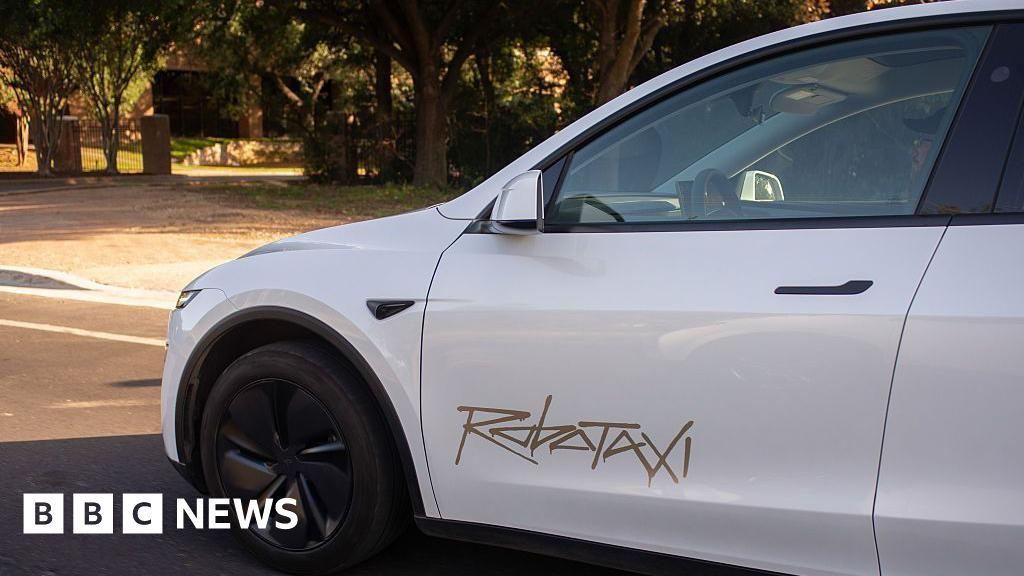
Today could be the day Tesla changes forever. In a couple of hours, Tesla will "launch" the Cybercab -- a small, gold, two-seater sedan with no steering wheel or pedals that uses cameras and AI to navigate the world -- in its hometown of Austin, Texas. The company hasn't said what the launch will entail, exactly. It could be a few cars offering rides in a small area downtown, or a far grander affair in both size and scope. Tesla certainly wants you to believe it's the latter. In the runup to the event, Tesla staged dozens -- perhaps more - of its Cybercabs around Austin and in many other U.S. cities. At the time this story was published, 420 autonomous vehicles were registered in Texas, according to the state's automated vehicle tracker. Ashok Elluswamy, the head of Tesla AI, recently said in a post on X that the "streets won't be the same anymore." When another user wrote that Tesla is "about to flood Austin," CEO Elon Musk replied: "Yes." On Wednesday night, Musk posted a seemingly AI-generated photo of the Cybercab consuming the city alongside a massive dust storm. "A Storm of Cybercabs," Musk wrote in another post. These gravitas-laced posts mark a departure from the company's go-slow-and-safe messaging in the months leading up to the event. Musk and other Tesla executives had previously professed they were taking a cautious approach to its robotaxis in the name of safety, though at times they seemed more concerned about public perception of a potential failure. Of course, Tesla's launch strategy isn't as meaningful as the outcome. Tesla's ability to successfully build a robotaxi network around the Cybercab would provide the first tangible evidence that it has transitioned from an automaker with some side projects to an AI and robotics company. There's a trope Musk favors that is apt for this moment: the fork in the road. It was the subject of an email he sent to Twitter employees in 2022 when he gave them an ultimatum to stay or leave. He invoked it again in early 2025 when he encouraged federal government employees to leave as part of his job leading DOGE, before he truly started wrecking house. Musk loves the metaphor so much that he commissioned a 30-foot-tall sculpture of a literal fork on a literal road for Burning Man in 2022, before moving the sculpture to a Tesla office. The Cybercab is Tesla's fork in the road. This is either the moment the company begins to transform urban transportation as we know it, or the moment that reveals that, despite its many efforts, Tesla really is just an automaker after all. Robot taxis Musk first revealed the Cybercab in 2024 at a Hollywood movie lot. But the idea has been around far longer. Musk has spent more than a decade promising that Tesla would find a way to make its cars fully autonomous, paving the way for a network of robotaxis. He even went so far as to claim, in 2016, that every Tesla being made had the capability to become fully autonomous and that the cars only needed the right software update to make it happen. He was wrong. Tesla has reworked the hardware in its cars multiple times since that declaration, and Musk recently admitted that millions of them will need some kind of hardware retrofit to become autonomous. Still, Tesla kept developing driving automation software. It has steadily released and refined its primary offering, Full Self-Driving (Supervised). But as capable as that software has become, it is still driver-assistance software. The responsibility and liability remain with the driver. The Cybercab is supposed to change all that. It emerged from an effort by Tesla to develop a next-generation EV platform that was cheaper to build. The plan was for the company to take what it learned from the Model 3 and Model Y -- its two biggest mass-market successes -- and develop a new platform that would cost half as much, allowing Tesla to make more affordable EVs. Years of reporting and Musk's own biography have shown that he was so dead set on achieving full autonomy that he decided against building a manually drivable car on the platform. Instead, Musk focused entirely on using the new platform to power the two-seater robotaxi we now know as the Cybercab. In April 2024, months ahead of the Cybercab reveal, he approved massive layoffs at Tesla in service of going "balls to the wall for autonomy," which he called a "blindingly obvious move." "Everything else is like variations on a horse carriage," he wrote at the time. Slowly, then quickly? Tesla started testing the first version of its Robotaxi program last June in Austin using modified Model Y SUVs. For the first few months, the company had an employee in the front seat (sometimes behind the wheel, sometimes in the passenger seat) who could stop the car if something went wrong. Things have gone wrong along the way, though not catastrophically. Tesla has reported a few dozen incidents in Austin since it launched the Robotaxi pilot. Most were minor crashes with stationary objects, and a few involved teleoperators remotely moving the vehicles at low speeds. The company has expanded this Model Y-based system to a few other cities in Texas and Florida. But over the past year, the network has not lived up to the hype Tesla manufactured at launch in June 2025. In July, the company revealed that the number of paid miles the network was facilitating was actually moving backward. But that may not matter much to Tesla, which believes scaling its robotaxi network requires the Cybercab. Tesla designed the Cybercab around cost. It's smaller, lighter, and has a lower-capacity battery pack than any other Tesla. Fewer raw materials - especially on the battery side - make it cheaper to build. The cheaper it is to build, the faster Tesla can potentially turn a profit once it's deployed. That math has Tesla's most ardent fans giddy. They look at Tesla's ability to build dozens of Cybercabs for roughly the same amount of money Waymo spends to purchase and outfit fewer than 10 of its newest "Ojai" vans and see it as proof that the robotaxi war is already won. Musk seems to agree. In a reply to a post that included a graphical representation of this argument, he wrote, "this doesn't even take into account the operational efficiency of Cybercab." There are caveats worth considering. Tesla has, to date, only operated its robotaxi network within a geofence in each city. While some are larger than others, and the company has kept expanding some of them, Musk himself once said: "If you need a geofenced area, you don't have real self-driving." Then there's the challenge of operating the network at scale. Tesla has so far benefited from having a small network in just a few cities. That naturally means its self-driving software encounters fewer edge cases than Waymo, which has 4,000 robotaxis on the road. Fewer trips and fewer edge cases also mean fewer chances for riders to spot problems and post them on social media or report them to regulators or journalists. Tesla has also benefited from the fact that its fleet has consisted of Model Y SUVs, which are harder to distinguish on the road than a bright white Jaguar I-Pace kitted out with sensors. That will change with the Cybercabs. If Tesla's software isn't up to the task, its failures will be much harder to miss when they happen in shiny gold cars.
[2]
Tesla's Make-or-Break Cybercab Had a Quiet Debut
A Tesla launch event tends to cause a hoopla. Fans crowd into an event space; loud electronic beats are the warm up act. Finally, the star himself, the ringmaster of this electric circus, CEO Elon Musk, emerges to a roar. There are demos, powerful verbs, and sometimes, a "one more thing," a last-minute surprise product unveiling. Fans and investors the world over look on -- and post -- online. But for the road debut of the Cybercab, the driverless car that Tesla promises is not only the future of the company but also the global economy, an event in Austin came with no livestream. Invitees, many of them online Tesla influencers, were reportedly barred from posting about the event until hours after it started. And Musk wasn't there at all. It was a somewhat peculiar start for the Cybercab, a matte gold two-seater first introduced in 2024. Now 45 of the vehicles, which do not have steering wheels or pedals, are registered to operate on Tesla's robotaxi network in Texas. On Thursday night, after the news embargo lifted, the online influencers who attended the event began to post sanguine reviews and clips from their first Cybercab rides. The Cybercab is a make-or-break vehicle for Tesla. Musk and other executives have argued that investors should no longer think of the world's most valuable carmaker as a carmaker. "Really, we should be thought of as an AI robotics company," the CEO said last year. "If somebody doesn't believe Tesla is going to solve autonomy, I think they should not be an investor in the company." Musk has said that hitting its marks in those areas would make Tesla not only the most valuable company in the world, but worth upwards of three times more than Nvidia, today's market leader. But hitting Wall Street-ready milestones hasn't been easy for Tesla's autonomous vehicle program, at least so far. Musk said in 2013 that Teslas would do 90 percent of their miles autonomously within three years; that didn't happen. He said that 1 million Tesla autonomous vehicles would be on the road by 2020. (Today, 420 Tesla robotaxis are registered in Texas.) He said that the Robotaxi network would reach 50 percent of the US population by 2026. Now Tesla needs a robotics win. Driving a Win Tesla's robotaxi network officially launched in Austin in June of last year, with a handful of Model Y electrics. At the time, those cars came with human safety monitors in the front passenger seats, ready to intervene if the technology made mistakes. Since then, Tesla says that it's taken human monitors out of many of its cars. The service is now picking up riders in a handful of cities in Texas and Florida, and has permits to operate in Arizona and Nevada. A ride-hail service in California must have a human driver behind the wheel of each "robotaxi" because Tesla does not have permits to operate driverlessly there. Tesla executives say it will win the self-driving race because the cars depend on just inexpensive cameras to operate, making them much cheaper than those from competitors including Waymo and Zoox. (Those companies also use more expensive radar and lidar setups.) Right now, though, the automaker feels behind. Tesla AI software head Ashok Elluswamy announced at Thursday's event that the company's vehicles had collectively traveled 1 million miles without humans behind the wheel. Waymo, which now operates in 14 US metros, said it reached 1 million driverless passenger miles in January 2023. Tesla's Cybercab vision is ambitious and wide-ranging. It plans to not only deploy the driverless vehicles on an Uber-like network, but to sell cars without driving controls directly to customers -- and before the end of 2026, Musk posted months ago. (This scheme would likely require several major changes to the law.) It also plans to offer entrepreneurial Tesla fans the opportunity to operate their own fleets of Cybercabs. An "interest form" posted on Tesla's website today allows people to indicate whether they're interested in Cybercab fleet vehicle purchasing. Open Questions It's not clear how the Cybercabs will legally operate in public. Federal safety rules require that vehicles come with steering wheels and brake pedals, and also the systems that power those human driver-centric systems. Last month, the government granted its first-ever exemption for a purpose-built autonomous vehicle for the Amazon subsidiary Zoox, whose box-like vehicles don't have human driving controls. The US federal government said this summer that it intends to fast track new rules that will make it easier for autonomous vehicles without those features to deploy in great numbers. But those rules aren't finalized yet. A spokesperson for the National Highway Traffic Safety Administration told WIRED that Tesla has not filed an exemption request for the Cybercab. "NHTSA is in contact with Tesla and is evaluating the situation," the spokesperson said. A Tesla executive has said that the company does not need to apply for an exemption. And the Cybercab is just one part of Tesla's projected future. Musk has said many times that the Optimus humanoid robot project "has the potential to be the biggest product of all time." Eventually, he has projected, the robot will usher in an "age of abundance" that will render human labor moot. "The robots will actually make so many robots and AI that they will actually saturate all human needs," Musk said earlier this year. "You won't be able to even think of something to ask the robot for at a certain point. Like there would be such an abundance of goods and services." Questions remain about how exactly the robotaxi service works. Like other autonomous vehicle developers, Tesla says it has human remote operators ready to help or intervene if something goes wrong inside the car or on the road around it. Unlike other companies, Tesla allows remote operators to directly drive its cars from afar, at speeds up to 10 mph. These human operators have been involved in at least three minor robotaxi crashes, according to government data, including one in which a human drove an autonomous Model Y into a "hidden tree stump." (Tesla reports that one has been hurt in these incidents.) Still, Tesla executives seemed determined to have fun on Thursday, showing off the 22-inch screen in the center of the Cybercab's console. If you don't have to drive, why not watch TV? "You can choose to be entertained or choose to be productive," engineering director Silvio Brugada told the crowd. "Anything you can possibly do as long as you have your seatbelt on." The crowd didn't quite roar, but it did "woo" suggestively.
[3]
The unusually muted Tesla Cybercab launch
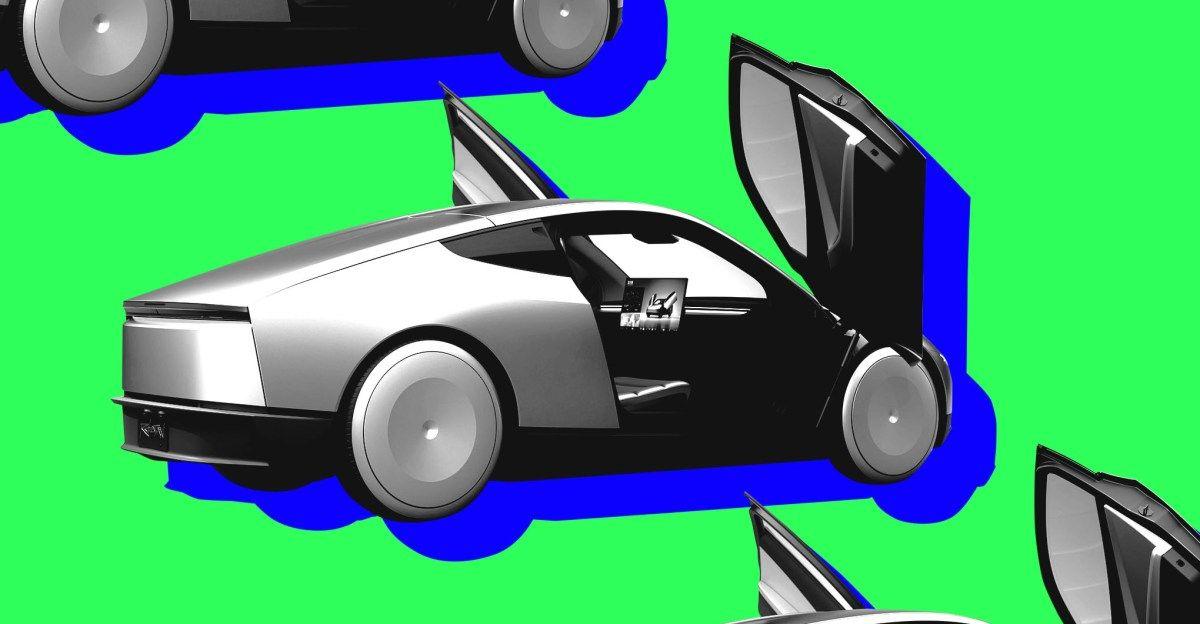
At a private, closed-door event in Austin, Texas today, Tesla officially launched its gilded car of the future. It's a huge milestone for Elon Musk, who has been hyping the imminent arrival of driverless cars for years and has bet the future of his company on AI, autonomous vehicles, and humanoid robots. It was an unusually muted event: with no livestream, pro-Tesla accounts on X.com were left streaming the webpage that tracks the number of Tesla robotaxis in Texas. Like last year's robotaxi launch, the invite list was mostly pro-Tesla influencers, so as to blunt any possible criticism of its new products. Invitee Chuck Cook said the company had him sign an NDA and agreed to an embargo requiring to wait to post content until after the event was over. On X, pro-Tesla accounts who weren't invited grumbled aboutthe decision; Not a Tesla App accused the company of "dropping the ball." As of this week, Tesla has 45 Cybercab vehicles registered with the Texas Department of Motor Vehicles -- though its not clear how many will be put into commercial service right away. Several vehicles were made available to Tesla influencers in Austin for content creation; the company has been testing them in various cities for months now. Tesla also launched a new website for its Robotaxi service, which includes the rules for riding in the new vehicle. For example, children under the age of 13 are currently banned from riding in the Cybercab. Several videos were posted, highlighting the interior, crash test worthiness, and accessibility. (The accessibility video was especially befuddling, showing a wheelchair user getting up to fold and stow his own wheelchair.) With the new Cybercabs, Tesla now has 256 unsupervised autonomous vehicles in operation across six cities, according to Robotaxi Tracker. By comparison, Alphabet's Waymo is currently operating approximately 4,000 vehicles across 14 cities. But there were still many lingering questions about the Cybercab. Two years ago, Musk said the two-seater would be available for purchase, perhaps for a price as low as $30,000. But the company still has yet say when the Cybercab would go on sale. There is a new online form for those interested in "future Robotaxi opportunities," such as purchasing a fleet of Cybercabs or building "mobility hubs and infrastructure." For the past year, Tesla has been operating a robotaxi service in Texas and Florida using several dozen modified Model Y vehicles, some of which are supervised by human safety drivers and some of which are not. With the introduction of the Cybercab, the company is embarking on a risky new phase that will pit Musk's stripped-down, less costly approach to autonomy against more established players like Waymo. The Cybercab, which was first introduced in 2024, is a two-seat sedan with gullwing-style doors and eight cameras that it uses to navigate the world without a driver. The vehicle lacks traditional controls, like steering wheel, pedals, and mirrors -- as well as sensors commonly found on other robotaxis, like radar and lidar. The Cybercab is also the lightest, most range-efficient vehicle Tesla has ever produced. According to documents filed with the Environmental Protection Agency, the Cybercab runs on a single front-mounted 219 horsepower permanent magnet motor with front-wheel drive, a compact 48kWh battery pack running at 326 volts, and a curb weight of just 3,113 pounds -- making it roughly 700 pounds lighter than the lightest Model 3 on the market. That's roughly the same as a gas-powered compact car, despite the fact that it's still carrying a relatively heavy lithium-ion battery. For years, Musk has been promising the imminent arrival of Tesla's driverless cars, only time and time again to fall short of those predictions. He claimed that 50 percent of the US population would have access to Tesla's robotaxis by the end of 2025. Today, the vehicles are only available in six cities in Texas and Florida. (Tesla is running a human-driven ridehail service in the San Francisco Bay Area, but has yet to apply for a driverless testing permit from California.) For Tesla's vehicle owners, there's been a string of broken promises. In 2016, Musk promised that every vehicle Tesla produced from then on would have all the technology necessary for self-driving. Years later, he was forced to retract that claim, acknowledging that the hardware in some older vehicles was insufficient to support autonomous capabilities. Musk promised to retrofit those customers' vehicles, but has yet to offer any details as to how that would work. Tesla is currently facing multiple lawsuits from customers and regulators claiming it has misled the public about its self-driving capabilities. Today, the company's $99-a-month Full Self-Driving feature is still just a Level 2 driver-assist system that requires constant human supervision. During Tesla's first quarter earnings call this year, Musk promised that "unsupervised" FSD would be available to customer vehicles by the end of 2026 "at the earliest," admitting that complex intersections, bad road markings, and weather were likely to slow the rollout. Tesla's fans will likely point to today's Cybercab launch as a moment of enormous significance for the company. Investors already seem to agree, with Tesla's stock price trading up nearly six points over the past five days. Analysts view robotaxis as one of the primary justifications for Tesla's $1.18 trillion valuation, and the key that will unlock the company's future. Tesla's EV sales have slowed down in the face of rising competition, especially from China. And Musk has made massive investments in AI and robotics, with some speculating he could try to merge Tesla with the recently public SpaceXAI.
[4]
Tesla's Cybercab Is Finally Giving Paid Robotaxi Rides. Here's What It Can And Can't Do
* The Tesla Cybercab, a two-seat EV without pedals and a steering wheel, is now offering robotaxi rides in Austin, Texas. * The introduction follows a closed-door event where traditional media was not invited. * Elon Musk, Tesla's CEO and one of the biggest believers in vision-only self-driving cars, did not attend the launch. After a hyped-up but rather underwhelming launch event last night, Tesla's gold-colored driverless Cybercabs are finally offering paid Robotaxi rides in Austin, Texas. The closed-door party, where traditional media and even some hardcore Tesla enthusiasts were not invited, is a big deal for the company's CEO, Elon Musk, who has promised self-driving cars for years, saying that people would eventually be able to enroll their personal Tesla EVs in the firm's Robotaxi fleet, allowing them to earn passive income. Musk didn't attend the Cybercab launch event, according to people who were there, and Tesla owners still can't turn their EVs into Robotaxis. But the Cybercab, which doesn't have a steering wheel or pedals, is real-though getting a ride in one might be a bigger adventure than some will be willing to accept. Tesla didn't say how many Cybercabs are available for public rides, but recently published data from the Texas Department of Motor Vehicles shows that the company has just 45 Cybercabs registered in the state. What's more, the two-seat gold EVs are only available in Austin for now. In total, Tesla operates approximately 250 driverless taxis across six cities. By comparison, Waymo, the biggest robotaxi operator in the U.S., has roughly 4,000 vehicles offering rides in 14 cities. So, if you're willing to close your eyes to these limitations, here's what you can expect from Tesla's newest electric car, which-to be clear-is not available for sale yet. First off, it's important to note that Tesla bans children under the age of 13 from riding in a Cybercab robotaxi. According to a newly published page on Tesla's website, the two-door driverless taxi can only carry adults and minors aged 13-17 if they're accompanied by an adult. What's more, riders are only allowed to request a Robotaxi for themselves, which means kids who are out partying can't ask their parents to hail a Cybercab for them. The Cybercab also doesn't have ISOFIX or LATCH anchors for child seats, but the official documentation shows that one child seat can be mounted using the car's seat belt. This is irrelevant for robotaxi rides, seeing how kids younger than 13 can't use Cybecabs at all, but the feature may have been integrated as a future-proofing method for when the steering-wheel-less EV will be sold to the public. As a reminder, children as young as eight years old can ride in a Model Y robotaxi if they're accompanied by an adult. Size-wise, the new Cybercab can accommodate two people and has a rear trunk cargo volume of 20.2 cubic feet, which is enough for two checked bags and two carry-ons, according to the company. The trunk, which has a weight limit of 220 pounds (100 kilograms), is also adequate for one large folded stroller and one folded wheelchair. "80% of robotaxi rides are with two passengers; that's why the Cybercab only has two seats," one of the company officials said during last night's presentation. The trunk can be opened from the smartphone app, and the doors automatically open when the rider is nearby. Alternatively, the doors can be opened via the app. When inside, the doors can be opened from the central touchscreen or from the dedicated buttons on each door card. The two backrests can be controlled independently, but the seat base moves forward and backward as one piece. Tesla said that the rider's preferences will be automatically set to the vehicle when it arrives, based on settings from previous rides. These include the interior temperature and all of the accounts for streaming services. When the ride ends, the settings are wiped from the car. There's also Grok integration, enabling riders to ask questions and get naturally sounding answers from the artificial intelligence assistant. Inside, the Cybercab has a cabin-facing camera and a cabin radar. The camera checks the vehicle for cleanliness and lost items between rides, while the radar scans for occupants to determine how to deploy the airbags. There are front airbags, knee airbags, seat-mounted side airbags, inner seat-mounted airbags, and curtain airbags. USB-C charging ports are also available. The two-door EV relies on cameras exclusively for driverless navigation, with a total of eight exterior cameras doing the heavy lifting: one at the front, one at the rear, one in each door pillar, two at the top of the windshield, and one in each front fender. When it comes to pure specifications, the Cybercab is the lightest, most efficient car Tesla has ever made, with a coefficient of drag of under 0.2, according to Eric Earley, the vehicle's lead engineer. Documents filed with the Environmental Protection Agency show that the entry-level EV is powered by a front-mounted electric motor that makes 219 horsepower. A 48-kilowatt-hour battery pack provides the energy. The car's curb weight is just 3,113 pounds, making it about 700 pounds lighter than the lightest Model 3 available right now. The Cybercab doesn't have conventional hydraulic brakes, and instead uses electric actuators for the calipers. The exterior of the Cybercab is unpainted. The color is embedded into the material when it's molded in the factory, which reduces cost and complexity, as there's no need for a separate paint booth.
[5]
Tesla teases driverless Cybercabs with 'no steering wheel, no pedals' ahead of secretive event
No steering wheel (or pedals), no problem? Tesla shared a tantalizing tidbit ahead of an Austin, Tex., event in which the automaker is expected to provide new details about driverless Cybercabs on Thursday night. "No steering wheel, no pedals," the company wrote on X on Wednesday. Multi-billionaire owner Elon Musk chimed in, writing on his X account: "A Storm of Cybercabs." The laconic messages came as fans and investors have been eagerly awaiting Thursday's event, following Tesla's reveal of a design for the autonomous taxis nearly two years ago. Musk has said the Cybercabs will debut as driverless two-seaters with butterfly doors and sans steering wheel and pedals - making them wholly reliant on self-driving technology. Musk fanboys have taken to social media to share video clips of Cybercab vehicles driving down public streets in Austin - seemingly missing a steering wheel and driver. One clip showed a gold metallic Cybercab pulling over to let two passengers put their luggage in the trunk and then sit in the car. It only partially opened the passenger-side door, seemingly to avoid hitting a traffic cone in the way. That would mark a significant benchmark for the company, which has been testing robotaxis in several markets around the country - but all have been equipped with traditional steering controls with a human driver on-board. If Tesla reveals a fully autonomous Cybercab at its Thursday event, it could help the struggling automaker's stock bounce back. Shares in Tesla are down 13% so far this year. Musk has billed the Cybercab as a key facet of the company's long-term path to growth, as it has struggled with slumping sales of its electric cars. Musk - the richest person in the world, with a net worth of $915 billion, according to Forbes - has said the company will transform into a broader tech firm focusing on artificial intelligence and humanoid robots. Investors are hopeful Musk's firm will announce an imminent rollout of the Cybercabs onto city streets, as rival Waymo races ahead in the driverless taxi space. Musk - whose SpaceX went public in a historic IPO earlier this year - is known for giving confident prediction about pie-in-the-sky goals. In 2020, he had said he was "highly confident" humans would land on Mars before 2026. More recently, he said he believes humans will set foot on the red planet in 10 to 15 years. And since 2016, Musk has been promising the imminent arrival of a self-driving Tesla that can take a passenger coast-to-coast across without any human intervention. In April, Musk said Tesla had "started production" on its Cybercabs and shared a video showing a robotaxi driving off the floor at the company's Gigafactory in Austin. All Tesla models currently have the hardware capability to run the company's Full Self-Driving technology. In spite of the name, it requires a human driver to remain behind the wheel and alert, ready to take control if needed. It can take drivers "almost anywhere" with "minimal intervention," according to the company. Tesla currently has around 200 vehicles in the US that are registered as "unsupervised," meaning they can operate without a human driver in the vehicle in specific areas of certain cities where autonomous technology is allowed, according to a Robotaxi tracker. The vehicles have cruised in cities including Austin, Dallas, Houston, Miami, Orlando and Tampa, the tracker found. Google's Waymo has been leading the way, currently operating roughly 4,000 driverless robotaxis in 14 cities around the country.
Share
Copy Link
Tesla launched its gold-colored Cybercab robotaxi in Austin, Texas at a private event. The two-seater autonomous vehicle with no steering wheel or pedals now offers paid rides using eight cameras for navigation. With only 45 Cybercabs registered in Texas, Tesla faces regulatory hurdles and competition from Waymo's 4,000-vehicle fleet across 14 cities.

Tesla officially launched its Cybercab robotaxi service in Austin, Texas at a private, closed-door event that marked a significant departure from the company's typical product unveilings
1
2
. The event had no livestream, and attendees—mostly pro-Tesla influencers—were required to sign NDAs and wait hours after the event concluded before posting content3
. Elon Musk, who has spent over a decade promising fully autonomous driving capabilities, did not attend the launch2
4
.The matte gold two-seater driverless taxi represents what executives are calling Tesla's transformation from an automaker into an AI and robotics company
1
2
. According to Texas Department of Motor Vehicles data, Tesla currently has 45 Cybercabs registered in the state, bringing its total fleet of unsupervised autonomous vehicles to 256 across six cities3
4
.The Cybercab, first revealed in 2024, operates entirely without traditional driving controls—no steering wheel or pedals—relying instead on eight cameras for navigation
3
4
. This camera-only approach distinguishes it from competitors like Waymo, which use more expensive radar and lidar systems2
. The vehicle features gullwing-style doors, a 48kWh battery pack, and a single front-mounted 219 horsepower permanent magnet motor3
.Weighing just 3,113 pounds, the Cybercab is roughly 700 pounds lighter than the lightest Model 3, making it the lightest, most range-efficient vehicle Tesla has ever produced
3
4
. Lead engineer Eric Earley revealed the vehicle achieves a coefficient of drag under 0.24
. The trunk offers 20.2 cubic feet of cargo space, accommodating two checked bags and two carry-ons, with a weight limit of 220 pounds4
.Tesla published new guidelines restricting children under 13 from riding in Cybercabs, while minors aged 13-17 must be accompanied by an adult
3
4
. The vehicle lacks ISOFIX or LATCH anchors for child seats, though one child seat can be mounted using the seat belt4
. According to company officials, 80 percent of robotaxi rides involve two passengers, justifying the two-seat configuration4
.The interior features a cabin-facing camera that checks for cleanliness and lost items between rides, plus cabin radar to determine airbag deployment
4
. Tesla integrated Grok, its AI assistant, allowing riders to ask questions during trips4
. Rider preferences, including temperature and streaming service accounts, automatically transfer from previous rides but are wiped after each trip4
.Federal safety rules require vehicles to have steering wheels and brake pedals, creating significant regulatory challenges for the Cybercab's deployment
2
. The National Highway Traffic Safety Administration confirmed Tesla has not filed an exemption request, though a Tesla executive claimed the company doesn't need one2
. An NHTSA spokesperson stated the agency is "in contact with Tesla and is evaluating the situation"2
.The government granted its first exemption for a purpose-built autonomous vehicle to Amazon subsidiary Zoox last month, and new rules to facilitate deployment of vehicles without human controls are under development but not yet finalized
2
. Tesla launched an online interest form for potential fleet operators and those interested in building mobility hubs and infrastructure, though no pricing or availability timeline was announced2
3
.Related Stories
Tesla faces steep competition in the robotaxi network space. Ashok Elluswamy, head of Tesla AI, announced the company's vehicles had collectively traveled 1 million miles without human drivers
2
. However, Waymo reached 1 million driverless passenger miles in January 2023 and currently operates approximately 4,000 vehicles across 14 cities2
3
5
.Tesla's robotaxi service, which began testing in June with modified Model Y SUVs, initially used human safety monitors who could intervene if needed
1
. The company has since removed monitors from many vehicles and now operates in cities including Austin, Dallas, Houston, Miami, Orlando, and Tampa5
. Tesla runs a human-driven ridehail service in the San Francisco Bay Area but hasn't applied for driverless testing permits in California3
.Musk promised in 2016 that every Tesla being manufactured had the capability to become fully autonomous with the right software update
1
. He recently admitted millions of vehicles will need hardware retrofits to achieve autonomy, though details remain unclear1
3
. The company's Full Self-Driving feature, priced at $99-per-month, remains a Level 2 driver-assist system requiring constant human supervision3
.Musk claimed in 2020 that 1 million Tesla autonomous vehicles would be on the road by that year; today, 420 autonomous vehicles are registered in Texas
1
. He predicted 50 percent of the US population would have access to Tesla robotaxis by the end of 2025, but the service remains limited to six cities3
. Tesla faces multiple lawsuits from customers and regulators claiming the company misled the public about its self-driving capabilities3
.The Cybercab emerged from Tesla's effort to develop a next-generation EV platform that would cost half as much as previous models
1
. In April 2024, months before the Cybercab reveal, Musk approved massive layoffs to focus entirely on autonomy, calling it a "blindingly obvious move" and stating "everything else is like variations on a horse carriage"1
. Tesla shares are down 13 percent this year as the company struggles with slumping electric car sales5
.Summarized by
Navi
[1]
[3]
[4]
24 Apr 2026•Technology

18 Aug 2026•Technology

27 Aug 2026•Technology