Tesla burns $1.1 billion on AI bets as Musk pivots from cars to chips and robots


17 Sources
[1]
Tesla's revenues are up, but profits squeezed as Musk spends on AI
Tesla posted its financial statement for the second quarter of the year this afternoon. Earlier in July, we learned that the American automaker had had a good quarter in terms of sales, growing 25 percent year over year. Fans hoping that sales increase would result in a plenty profitable Tesla may
[2]
Tesla's revenues are bouncing back after a dismal two years
After a dismal two years of weakening demand, falling sales, and damage to its brand by Elon Musk's political activities, Tesla's road to recovery continues apace. On the heels of an impressive delivery report, the company released its earnings for the second quarter of 2026 -- giving us the latest
[3]
Tesla burns through a billion as Musk bets the farm on chips and bots
Tesla's investment bill ballooned in calendar Q2 as Elon Musk's biz entered what it calls its "largest and most exciting period of investment. The company has poured resources into AI silicon and robotics, with capex [PDF] more than doubling from $2.5 billion in the previous quarter to $5.8
[4]
Elon Musk's Tesla posts cash burn as capex surges on AI, robotaxi push
July 22 (Reuters) - Tesla (TSLA.O), opens new tab reported negative free cash flow in the second quarter for the first time in more than two years as the Elon Musk-led EV maker accelerated spending on AI infrastructure, battery capacity, robotaxis and next-generation manufacturing. Tesla reported
[5]

Tesla's cash burn will test investor faith in its AI bets
Record deliveries meet a widening cash gap as robotaxi, Optimus, and a $25bn capital bill come due ahead of Wednesday's results. Tesla reports its second-quarter results on Wednesday, and the question hanging over the call is less whether it can still sell cars than how long it can keep spending
[6]
Tesla cash burn to test investor faith in AI bets
July 21 (Reuters) - Tesla (TSLA.O), opens new tab is expected to report its first quarterly cash burn in over two years on Wednesday, as its spending on AI and robotics soars, intensifying investor scrutiny over when those bets will pay off. CEO Elon Musk has pivoted the electric-vehicle maker's
[7]

Tesla's profits slide despite growing revenue as it pivots to robotics and AI
Shares in Elon Musk company fall more 3% in after-hours trading, as earnings per share miss Wall Street expectations Tesla reported its second-quarter earnings on Wednesday, disclosing far lower profits than expected. The company's already beleaguered stock, which had fallen around 14% this year
[8]

Tesla's push into AI and robotics is proving costly
Why it matters: CEO Elon Musk indicated he's "never been more optimistic about the future," but acknowledged the investments could lead to uneven results. Zoom in: Tesla revenue jumped on record vehicle deliveries in the second quarter, but the company saw a significant dip in operating profit
[9]

Tesla plunges most in a year amid angst over AI spending
Tesla shares tumbled the most in over a year after disappointing quarterly results raised questions about Elon Musk's plan to refocus the electric vehicle maker on artificial intelligence and robots. Profit fell well short of Wall Street's estimates for the period as spending on its ambitious
[10]

Tesla shares crash 14%, Alphabet falls 6% as AI spending worries hit Wall Street
Tesla and Alphabet shares fell after quarterly results as investors overlooked robust revenue growth and focused on weaker margins, missed earnings and rising AI spending. The selloff highlighted Wall Street's growing demand for profitable AI investments with stronger near-term returns. Tesla and
[11]
Tesla earnings disappoint Wall Street as Elon Musk's AI push, pivot beyond cars hurt profits
Tesla's second quarter earnings missed profit estimates for the first time in over two years. The company reported negative free cash flow as AI and robotics investments accelerated significantly. Higher operating expenses and lower average selling prices also impacted Tesla's profitability.
[12]
Elon Musk's Tesla posts cash burn as capex surges on AI, robotaxi push
Tesla Inc.reported negative free cash flow of $1.1 billion in Q2 as heavy spending on AI, robotaxis and manufacturing weighed. Deliveries beat expectations, while energy storage surged. Investors remain focused on autonomy and robotics growth as core auto demand faces rising competition and pricing
[13]

Alphabet and Tesla shares plunge as runaway AI spending spooks investors
Shares of Alphabet and Tesla took a beating Thursday after the tech giants said they would ramp up their already breakneck pace of artificial intelligence spending - rattling investors who are increasingly wary of whether the massive bets will pay off. Tesla shares fell 10% and Alphabet sank over
[14]

Tesla reports quarterly negative free cash flow for first time in over two years By Investing.com
Investing.com -- Tesla on Wednesday delivered a miss on quarterly profit but beat top-line estimates, as revenue in its core automotive business jumped more than 20% from a year ago. However, the electric vehicle maker reported negative free cash flow for the first time since Q1 2024 as it ramped
[15]
Tesla cash burn to test investor faith in AI bets
CEO Elon Musk has pivoted the electric-vehicle maker's focus from manufacturing cars to building so-called physical AI businesses such as self-driving taxis and humanoid robots. Much of Tesla's valuation hangs on that promise. Tesla is expected to report its first quarterly cash burn in over two
[16]
Tesla profit disappoints as Elon Musk's AI spending surge leads to cash burn
Tesla on Wednesday missed analysts' profit forecasts for the second quarter and, for the first time in more than two years, reported negative free cash flow as the Elon Musk-led EV maker accelerated spending on infrastructure for its AI and robotics ambitions. Shares were down about 2.5% in
[17]

Elon Musk's Tesla posts cash burn as capex surges on AI, robotaxi push
July 22 (Reuters) - Tesla reported negative free cash flow in the second quarter for the first time in more than two years as the Elon Musk-led EV maker accelerated spending on AI infrastructure, battery capacity, robotaxis and next-generation manufacturing. Tesla reported negative free cash flow
Share
Copy Link
Tesla posted record vehicle deliveries of 480,126 units in Q2 2026, driving revenues up 26% to $28.2 billion. But the company burned through $1.1 billion in cash as Elon Musk doubled capital spending to $5.8 billion on AI chips, robotaxi expansion, and Optimus humanoid robots. Operating margins collapsed to just 1.4%, raising questions about how long investors will fund the shift from automaker to AI company.
Tesla Financials Show Revenue Growth Amid Mounting Costs
Tesla AI spending has reached unprecedented levels as the company reported its second-quarter 2026 results, revealing a stark contrast between growing revenues and shrinking profits. The electric vehicle maker brought in $28.2 billion in total revenue, a 26% increase year-over-year, but generated only $1.1 billion in net income—a 5% decline compared to the same period in 2025
1
. The company's automotive business contributed $20.5 billion, up 23% year-over-year, while vehicle deliveries reached 480,126 units, representing a 25% increase2
4
. Despite exceeding Wall Street's revenue expectations of approximately $26.4 billion, the company's operating margin plummeted to just 1.4%, down from 4.1% a year ago3
.
Source: ET
Tesla Cash Burn Accelerates as Capital Expenditure Doubles
The most striking aspect of Tesla's financial performance was its negative free cash flow of $1.1 billion, marking an 848% drop compared to last year and the first cash burn in more than two years
1
4
. Tesla capital expenditure more than doubled from $2.5 billion in Q1 to $5.8 billion in Q2, a 142% increase year-over-year3
. The company expects spending to exceed $25 billion for the full year, with close to $20 billion earmarked specifically for AI-driven projects5
. This represents roughly triple Tesla's historical capital spending pace, fundamentally transforming the company from a capital-disciplined automaker into a capital-hungry AI and robotics platform.Elon Musk Bets Big on Terafab and AI Infrastructure
During the earnings call, Elon Musk outlined Tesla's ambitious Terafab initiative, describing it as a "high-risk, high-payoff bet on AI chips"
3
. The development fab in Austin aims to integrate lithography mask production, logic, memory, packaging, and chip testing under one roof to enable rapid iteration cycles. Musk stated that Terafab was essential to scaling Optimus, Tesla's humanoid robots, because the company would otherwise be unable to secure enough AI chips3
. Equipment orders have already been placed for the facility, signaling Musk's commitment to vertical integration in AI infrastructure.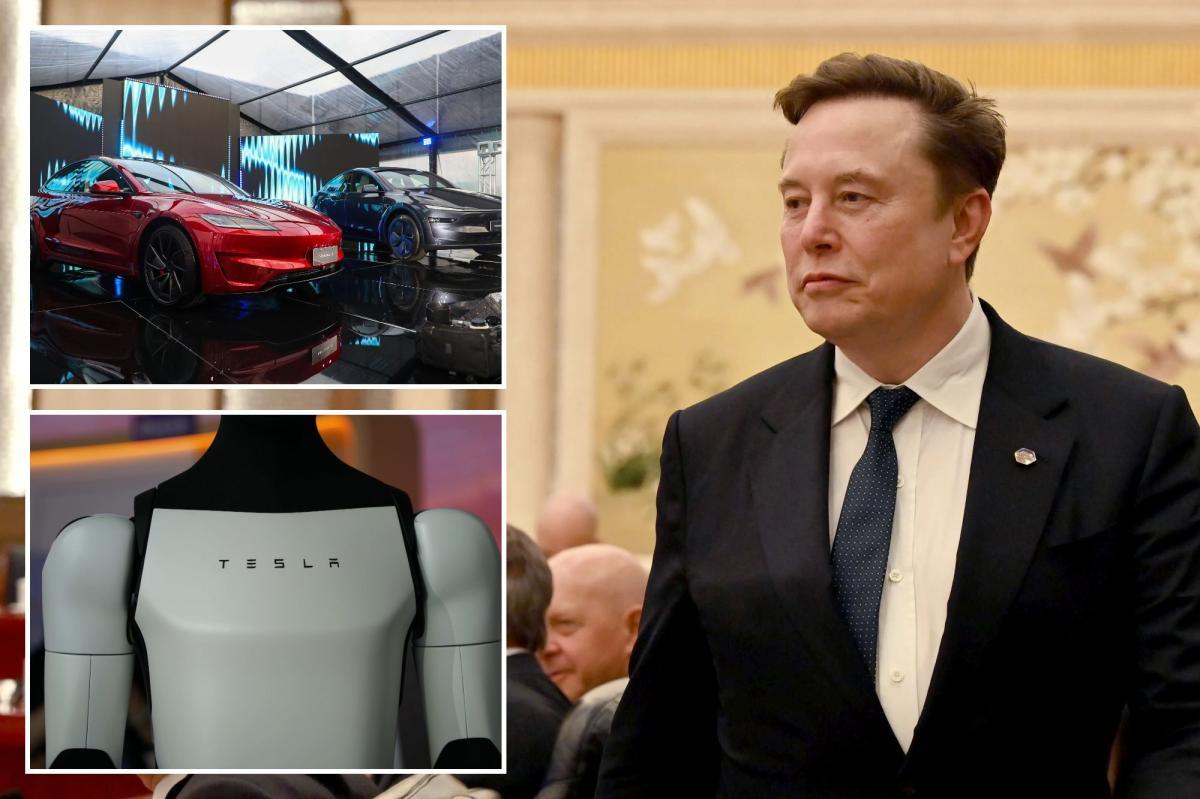
Source: New York Post
Robotaxi Expansion Faces Regulatory Hurdles and Safety Concerns
Tesla's robotaxi service has expanded to seven major metros, including Austin, Dallas, Houston, Miami, Orlando, and Tampa, though deployments remain limited
1
. The company acknowledged that at least one deployment requires approval from California regulators, who have proven notably less permissive than their counterparts in Arizona, Florida, Nevada, or Texas1
. A crowdsourced tracker shows only a handful of cars available in recently launched Florida cities2
. Safety concerns continue to mount, with Electrek reporting 207 crashes involving Tesla drivers using Autopilot and Full Self-Driving in May 2026 alone2
. The operation has fallen far short of Musk's prediction of covering 50% of the US population by the end of 2025, and meaningful revenue isn't expected before 2027 at the earliest5
.Automotive Gross Margins Improve Slightly But Remain Under Pressure
Automotive gross margins reached 16.3% excluding regulatory credits in Q2, up from 15% in the same period last year but down from 19.2% in Q1 2026
2
. These margins fund Tesla's multi-billion dollar investments in AI, autonomous driving, and robotics while providing a buffer for price cuts when demand slumps. The company's shift from one-time purchases to a monthly subscription model for Full Self-Driving has helped boost services revenue, which doubled to $4.6 billion1
. However, automotive regulatory credits contributed just $146 million, a dramatic decline after the Trump administration eliminated penalties for automakers exceeding emission standards in 20251
.Related Stories
Humanoid Robots and Energy Storage Emerge as Future Growth Drivers
Musk reiterated during the earnings call that Optimus "will be the biggest product," though he cautioned it remains "a very complex problem to solve"
3
. Tesla anticipates beginning production for humanoid robots later this year, positioning the company to compete with Chinese manufacturers also developing similar technology1
. Meanwhile, energy storage has emerged as a counterweight to the automotive business, with Tesla deploying 13.5 GWh of energy storage products in Q2, up from 9.6 GWh a year earlier4
. The energy generation and storage unit grew 13% year-over-year to revenues of $3.1 billion, driven by demand for grid-scale batteries supporting renewable energy, data centers, and electricity-network stability1
.
Source: Axios
Investor Faith Tested by Capital-Intensive AI Bets
Investor faith in Tesla's AI bets faces mounting pressure as the company enters what it calls its "largest and most exciting period of investment"
3
. Shares fell in after-hours trading following the earnings announcement, and the stock has declined more than 15% this year4
. Options pricing implies a post-results move of around 7% in either direction5
. Despite the cash burn, Tesla still holds more than $40 billion in cash, providing a cushion as outflows widen5
. J.P. Morgan projects Tesla's revenue climbing from about $95 billion in 2025 to roughly $203 billion by 2030, driven by robotaxi and Optimus, though these forecasts depend on products generating minimal income today5
. Wall Street expects Tesla to deliver about 1.7 million vehicles in 2026, but analysts remain divided over whether the second-quarter rebound reflects sustainable demand or timing effects after a weak first quarter4
.🟡 просьба представить полную информацию о ценах на бензин в МосквеReferences
Summarized by

Navi
[5]
Related Stories
Tesla's Stock Plummets as Musk's AI Dreams Clash with Automotive Reality
24 Jul 2024

Tesla raises capital expenditure to $25 billion, tripling spending for AI and robotics push
23 Apr 2026•Business and Economy

Tesla Plans $20 Billion AI Push as Elon Musk Abandons Traditional Car Business
22 Jan 2026•Business and Economy

Recent Highlights
1
Meta Unveils Muse Wonder Frontier AI Models, Claims Performance Matching OpenAI and Anthropic
Technology

2
IMF Report Warns AI Market Correction Could Spark Global Financial Crisis With $1.4T at Risk
Business and Economy

3
OpenAI Releases 722 AI-Generated Math Solutions, Triggering Existential Crisis in Mathematics
Technology

Recent Highlights
Today's Top Stories







Don’t drown in AI news. We cut through the noise - filtering, ranking and summarizing the most important AI news, breakthroughs and research daily. Follow topics that matter to you and stay ahead.


