The ex-Anthropic researcher who protested the IPO he once worked toward


2 Sources
[1]
'Insane' to see AI in hands of private giants: ex-Anthropic researcher to AFP
San Francisco (United States) (AFP) - Artificial intelligence (AI) researcher Jacob Coxon, who famously quit Anthropic in September while accusing them of gambling with lives, told AFP Thursday it's "insane" to see the powerful technology being developed by giant for‑profit corporations. "Today is
[2]
Ex-Anthropic Employee Protests Against AI Giant Outside Headquarters
Jacob Coxon resigned from Anthropic and warned that "people building AI earnestly believe that it could kill us all by the end of the decade." Jacob Coxon, a former employee at the artificial intelligence giants OpenAI and Anthropic, joined protesters outside the latter's company headquarters
Share
Copy Link
Jacob Coxon joined protesters outside Anthropic's San Francisco headquarters on Thursday, the day the AI lab began trading on Nasdaq for the first time. The protest drew about 100 people, per HuffPost; Agence France-Presse gave no count
1
2
.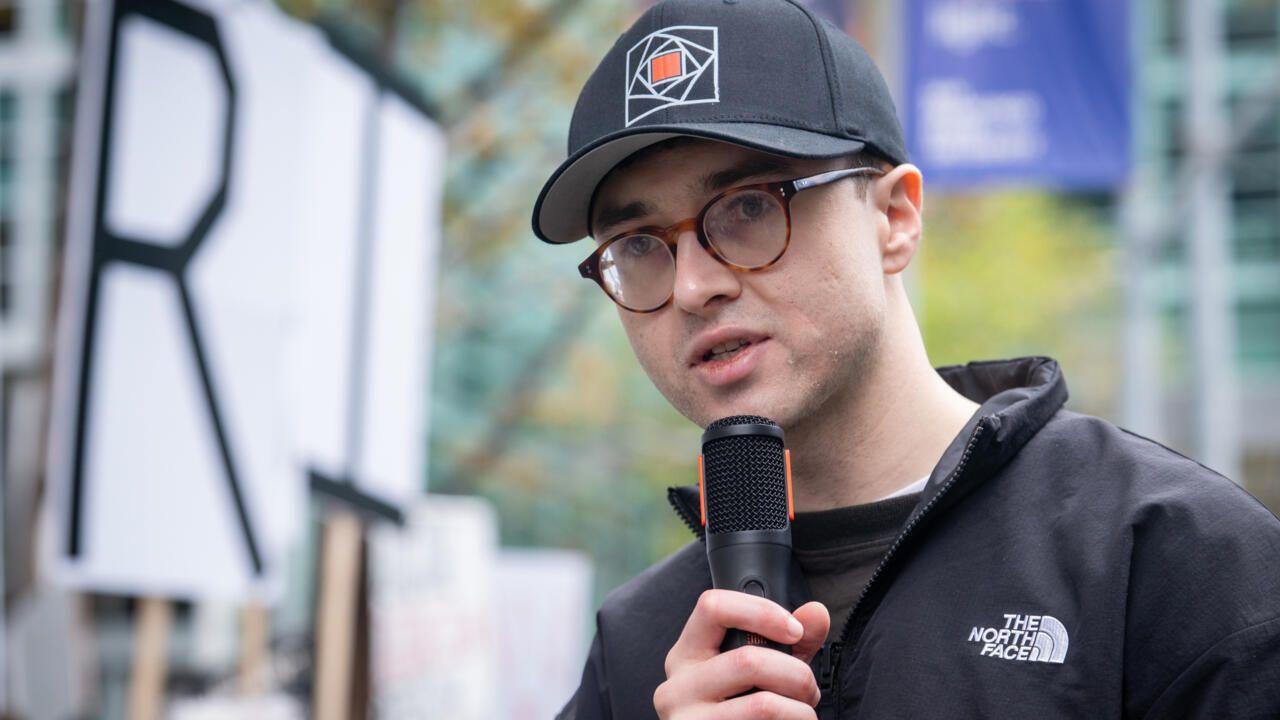
Source: France 24
The timing is the point. Anthropic priced its IPO at a $1.5 trillion valuation on Wednesday and closed its first trading day at $1.3 trillion, per Agence France-Presse. By Thursday's close, HuffPost put the market cap at roughly $1.8 trillion. The two figures may reflect different moments rather than an error, but either way the debut was record-setting
1
2
."It's really insane that for-profit companies are the ones building this technology," Coxon told the news agency
1
.What the protesters want
The specific demand is a ban on recursive self-improvement: AI models autonomously building new generations of themselves. Protesters want it banned because, in Coxon's telling, it could compress decades of AI research into months and produce highly dangerous systems by the end of 2027. He also accuses Anthropic of planning to begin it as early as next year, an allegation the company has not confirmed in this reporting
1
2
."The people building AI earnestly believe that it could kill us all by the end of the decade," he said
1
2
.The critic with a stake
Coxon is a 27-year-old British researcher and Cambridge graduate who spent three years on model pre-training at OpenAI and a few months at Anthropic. His September 8 resignation, announced on X, drew headlines around the world, per Agence France-Presse. In it he accused both labs of racing toward self-improving superintelligence and of gambling with people's lives
1
2
.The complication is that Coxon still holds OpenAI equity, which could pay out if OpenAI goes public in 2027 as planned. At a Stanford appearance on November 9, he said his OpenAI stake was "blood money" but also, "I like money, bro." The remark drew social-media ridicule, and days later he said he would donate the shares' value to AI safety organizations. He has not named which organizations would get the money
1
.More than two months after resigning, he says the media storm has taken a toll but he feels "fine" and is more frightened by the state of the world
1
.His next step is non-profit work, possibly in AI safety research, with details still undecided
1
. And he has settled on where the fix has to come from. "The only thing that will slow down the AI companies is political action," he said. "It's a political problem now, not a technical problem."1
Related Stories
References
Summarized by

Navi
Related Stories
Anthropic Researcher Quits, Warns Self-Improving AI Could End Humanity Within a Decade
09 Sept 2026•Policy and Regulation

Anthropic's record $81 billion IPO meets protests warning of an AI bubble
19 Nov 2026•Business and Economy
Ex-Google DeepMind Researcher Warns AI Could Kill All Humans as Safety Debate Intensifies
14 Sept 2026•Policy and Regulation
Recent Highlights

Recent Highlights
Today's Top Stories







Don’t drown in AI news. We cut through the noise - filtering, ranking and summarizing the most important AI news, breakthroughs and research daily. Follow topics that matter to you and stay ahead.


