The Rise of AI Agents: A New Frontier in Cybersecurity and Identity Management


7 Sources
[1]
Unsecured AI agents expose businesses to new cyberthreats
Whether starting from scratch or working with pre-built tools, organizations must build security, interoperability and visibility into their AI agents. The modern workforce is undergoing a rapid transformation. Organizations are deploying artificial intelligence (AI) agents across an increasing
[2]
"AI security is identity security" - how Okta is weaving agents into the security fabric
It's pretty clear now that the next direction for AI is in Agents, with recent Okta research claiming the technology is now in use by a staggering 91% of organizations in some capacity. Despite this widespread use though, only 10% of those surveyed reported having a 'well developed strategy or
[3]
Companies are sleepwalking into agentic AI sprawl
Agentic AI is multiplying inside enterprises faster than most leaders realize. These intelligent agents can automate processes, make decisions, and act on behalf of employees. They're showing up in customer support, IT operations, HR, and finance. The problem? One rogue agent with access to your
[4]
AI security is ID security - why Okta CEO Todd McKinnon says you can't succeed in one without the other
I think it's a safe bet to say that Todd McKinnon, CEO of identity management specialist, is not alone in this fear of missing out. It's almost certainly not a healthy state of mind to have, but given the AI hype cycle of the past 18 months or so, it's probably unavoidable in a lot of cases. And
[5]

Identity security: The new boundary in the AI era - SiliconANGLE
Artificial intelligence isn't just reshaping applications: It's redrawing the boundaries of identity security. As conversational agents take center stage, identity emerges as the defining layer where innovation and security converge. Developers now face a landscape where application programming
[6]
Zero-trust security frontline defense in the AI era - SiliconANGLE
Zero-trust security meets agentic AI in the next identity battleground Zero-trust security and artificial intelligence are colliding in ways that are fundamentally changing the nature of enterprise identity. The rise of agentic AI introduces a new class of identity that combines autonomy, broad
[7]
Okta expands identity fabric with AI agent lifecycle security, Cross App Access and verifiable credentials - SiliconANGLE
Okta expands identity fabric with AI agent lifecycle security, Cross App Access and verifiable credentials Identity access management company Okta Inc. today announced new capabilities across the Okta Platform and Auth0 Platform designed to help enterprises securely adopt artificial intelligence
Share
Copy Link
As AI agents become increasingly prevalent in businesses, they pose new challenges for cybersecurity and identity management. Companies must adapt their security strategies to protect against potential threats while harnessing the benefits of AI innovation.
The Rapid Rise of AI Agents in Business
The modern workforce is undergoing a dramatic transformation as organizations deploy artificial intelligence (AI) agents across various business functions. These autonomous AI systems can make decisions and complete complex tasks with minimal human supervision
1
. The adoption of AI agents is accelerating at an unprecedented rate, with the volume of non-human and agentic identities expected to exceed 45 billion by the end of this year – more than 12 times the number of humans in the global workforce1
.
Source: VentureBeat
The Security Challenge of AI Agents
Despite the widespread adoption of AI agents, only 10% of executives report having a well-developed strategy for managing non-human and agentic identities
1
. This lack of preparedness poses significant security concerns, especially considering that 80% of breaches involve compromised or stolen identities1
.
Source: diginomica
The advent of AI agents introduces new complexities to enterprise security. Trained on valuable and potentially sensitive company data, these agents can become new attack vectors if not properly secured
1
. Threat actors could manipulate AI agent behavior through prompt injection attacks or exploit their expanded access to infiltrate company systems1
.The Need for a New Security Approach
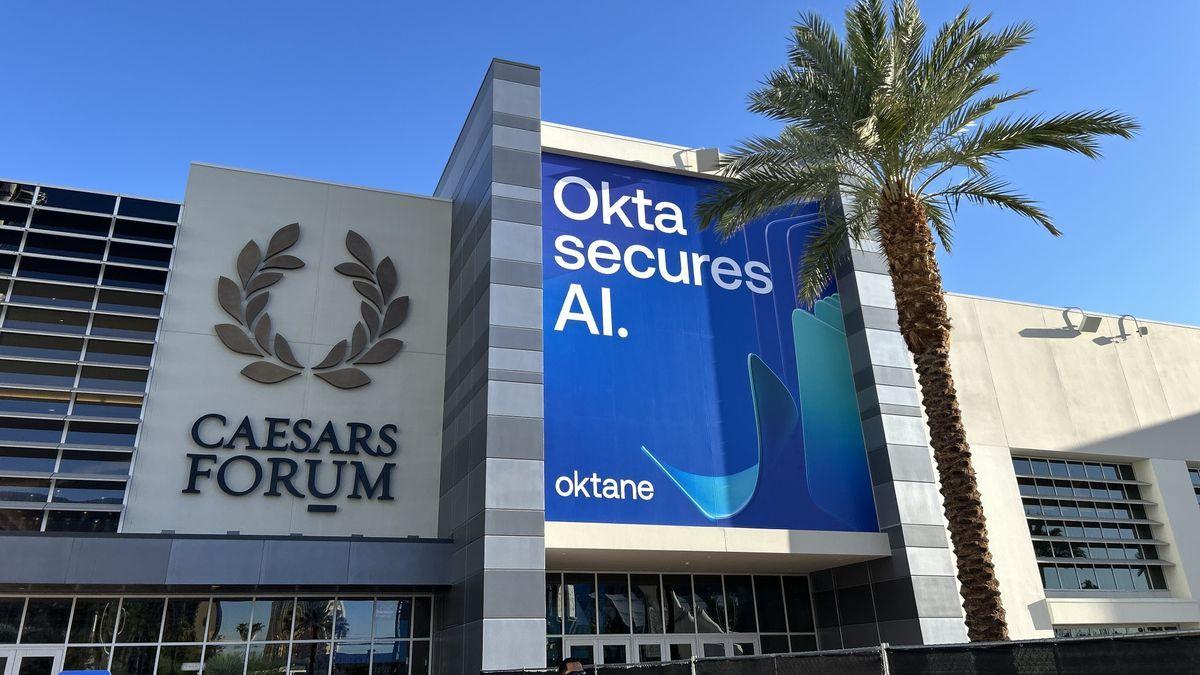
To address these challenges, businesses need to adopt a new approach: an identity security fabric. This concept aims to secure every identity – human, non-human, and agentic – across all identity use cases, applications, and resources
1
. Companies like Okta are introducing new security principles to integrate AI agents into the identity security fabric seamlessly2
.
Source: TechRadar
Related Stories




Key Considerations for Securing AI Agents
Organizations deploying AI agents must prioritize several key identity considerations:
- Governance: Implement clear policies and oversight for AI agent deployment and usage
3
. - Discoverable APIs: Provide machine-readable blueprints for AI agents to interact with systems securely
3
. - Event-driven architecture: Enable agents to react in real-time to system events and changes
3
. - Proactive controls: Implement rate limits, analytics, and monitoring from day one to prevent misuse and overload
3
.
The Future of AI Security and Identity Management
As AI agents become more prevalent, the industry is working towards establishing open standards and protocols to enhance security. Initiatives like Cross App Access (XAA) aim to extend OAuth to secure app-to-app interactions across organizations
2
. Additionally, Verifiable Digital Credentials (VDC) are being developed to establish trust in AI agents and combat AI fraud2
.As Todd McKinnon, CEO of Okta, emphasizes, "AI security is ID security" . Companies must strike a balance between innovation and security to harness the full potential of AI agents while protecting their systems and data. By implementing robust identity security measures and adhering to emerging standards, organizations can navigate the new frontier of AI-driven business processes with confidence.
References
Summarized by

Navi
[2]
[3]
[4]
[5]
Related Stories
Recent Highlights
1
Meta Unveils Muse Wonder Frontier AI Models, Claims Performance Matching OpenAI and Anthropic
Technology

2
IMF Report Warns AI Market Correction Could Spark Global Financial Crisis With $1.4T at Risk
Business and Economy

3
OpenAI Releases 722 AI-Generated Math Solutions, Triggering Existential Crisis in Mathematics
Technology

Recent Highlights
Today's Top Stories









Don’t drown in AI news. We cut through the noise - filtering, ranking and summarizing the most important AI news, breakthroughs and research daily. Follow topics that matter to you and stay ahead.


