Thinking Machines Lab releases Inkling, a massive open-weight AI model to challenge closed systems


20 Sources
[1]
Thinking Machines amps up its bet against one-size-fits-all AI with its first open model, Inkling
Thinking Machines Lab, the AI startup founded by former OpenAI CTO Mira Murati, released its first proprietary AI model Wednesday morning, called Inkling -- and unlike the flagship models from OpenAI, Anthropic, or Google, it's open-weight, meaning outside developers and companies can download it
[2]
Thinking Machines Lab Drops Its First Model
Thinking Machines Lab, an artificial intelligence company started by exiles from OpenAI, has released its first model, called Inkling. The startup's new model is open-weight, which means that researchers and startups will be able to download and modify it. In a a blog post, the company says
[3]
Mira Murati's Thinking Machines Lab has debuted its first AI model.
Murati, OpenAI's former CTO (and, briefly, CEO during Sam Altman's ouster in 2023), wrote on X that the open-weight model, called "Inkling," was trained from scratch. Judging by the official blog post, though, it seemed like the company was purposefully setting expectations for Inkling low: "It is
[4]
Former OpenAI CTO does what Altman won't: releases a frontier AI model that's actually open
If you're in the market for a frontier-class open weights model, your options are few and far between outside of the Chinese model houses. With the Wednesday release of a new model code-named "Inkling", an outfit called Thinking Machines Lab aims to change that. Founded in early 2025 by former
[5]

AI startup Thinking Machines launches an open-weight AI model
SAN FRANCISCO, July 15 (Reuters) - AI startup Thinking Machines revealed on Wednesday a new artificial intelligence model that could serve as one of the few alternatives to popular open-source offerings from Chinese AI labs. Named Inkling, the model is open-weight, meaning users can download, run
[6]

Mira Murati's Thinking Machines draws from Chinese rivals in debut AI model
Thinking Machines Lab has unveiled its first general-purpose AI model, with OpenAI's former chief technology officer Mira Murati leaning on cheap Chinese technology to develop its products. The San Francisco-based "neo lab" on Wednesday said its Inkling foundation model's architecture drew on
[7]

Thinking Machines Lab offers enterprises a US alternative in open-weight AI
Inkling, a 975-billion-parameter model, can be customized through Tinker and supports a 1-million-token context window, but it enters a market where Chinese models lead several coding and reasoning benchmarks. Thinking Machines Lab, the San Francisco startup founded by former OpenAI CTO Mira
[8]

Thinking Machines Inkling: Murati's first open-weight model
Mira Murati's lab has released Thinking Machines Inkling, its first model. It is open-weight, enormous, and, by the company's own admission, not the best one out there. "We believe in keeping the weirdness alive." That line comes from a manifesto Mira Murati's lab published last week. It is also
[9]

Thinking Machines' first model bets big on customization
Why it matters: Thinking Machines is making a different bet than many AI labs: that enterprises ultimately care less about the smartest general-purpose model than one they can make their own. State of play: Inkling is the first foundational model release from Thinking Machines. * The company is
[10]

Thinking Machines open sources first multimodal language model, Inkling, focused on low cost and 'resistance to censorship'
Enterprises looking to move more of their agentic AI workloads to open weights models they can customize, control and run on-premises or in virtual private clouds have a strong new contender to consider. Today, Thinking Machines -- the highly capitalized American AI startup founded by former
[11]

Murati's Thinking Machines releases first AI model for broad use | Fortune
Thinking Machines Lab is releasing its first AI model, more than a year after former OpenAI executive Mira Murati founded the artificial intelligence startup. The new model, called Inkling, is designed to be versatile and efficient, processing queries across different media while balancing "cost
[12]

Mira Murati Drops Her First AI Model After Leaving OpenAI -- And It's Fully Open Source
Thinking Machines raised $2 billion at a $12 billion valuation in July 2025, then reportedly sought a $50 billion raise in November before those talks fell apart by January 2026. Mira Murati left OpenAI in September 2024 to do her own thing. Almost two years later, that exploration shipped.
[13]

Mira Murati's Thinking Machines drops Inkling, an open-weights model anyone can access
Mira Murati's Thinking Machines drops Inkling, an open-weights model anyone can access Mira Murati's Thinking Machines Lab Inc. today launched its first foundation model with the release of Inkling, making its full open weights available to developers so they can fine-tune it as they
[14]

Mira Murati's AI start-up unveils customisable, open source model Inkling
Inkling is Thinking Machines Labs' first big AI model launch, and comes a year after the start-up was founded. Mira Murati's Thinking Machines Lab has unveiled the first of its family of multimodal open source models called Inkling. The model was the first from the start-up to be trained on the
[15]

OpenAI's Former CTO Just Dropped a Very Different Kind of AI Model
Inkling was released yesterday, and on its webpage Thinking Machines promises its "mission is to build AI that extends human will and judgment." More specifically, it calls Inkling "a model we trained from scratch with the full weights available, so that people can make it their own." Here's what
[16]
Mira Murati's AI start-up unveils customisable model Inkling
Inkling is Thinking Machines Lab's first big AI model launch, and comes a little more than a year after the start-up was founded. Mira Murati's Thinking Machines Lab has unveiled the first of its family of multimodal open-source models called Inkling. The model was the first from the start-up to
[17]

Thinking Machines: AI startup Thinking Machines launches an open-weight AI model
Named Inkling, the model is open-weight, meaning users can download, run and customize the underlying systems, unlike proprietary, closed-source models. AI startup Thinking Machines revealed on Wednesday a new artificial intelligence model that could serve as one of the few alternatives to
[18]

Mira Murati Unveils Open-Weight AI Model as Alex Karp, Satya Nadella Warn Companies Are Giving Away Their
Her startup, Thinking Machines Lab, recently released "Inkling," an open-weight AI model designed to let businesses customize AI without exposing their proprietary data. The Enterprise Data Crisis The launch of Inkling arrives exactly as major tech executives warn that relying on frontier AI labs
[19]

Thinking Machines Releases First In-House AI Model, And It is Open Source
The timing couldn't be better for ex-OpenAI CTO Mira Murati's Thinking Machines Lab to release their first AI model. Called Inkling, it is unlike other flagship models from AI labs as it is open-weight and outside developers and companies can download and modify it directly. "Our model, called
[20]

What Is Inkling: Thinking Machines Lab's bet on customisable AI
Inkling by Thinking Machines Lab, the startup founded by former OpenAI CTO Mira Murati, has become the first open weights model from the company. The model has quite an impressive architecture - it is a Mixture-of-Experts transformer with 975 billion total parameters, 41 billion of which are active
Share
Copy Link
Former OpenAI CTO Mira Murati's startup Thinking Machines Lab launched Inkling, an open-weight AI model with 975 billion parameters. Unlike proprietary models from OpenAI, Anthropic, or Google, Inkling can be downloaded and customized by enterprises. The release marks a strategic bet that organizations adapting AI for themselves will outperform one-size-fits-all models from major labs.
Thinking Machines Lab Unveils Inkling AI Model as Open-Weight Alternative
Thinking Machines Lab, the AI startup founded by former OpenAI CTO Mira Murati, released its first proprietary AI model Wednesday, called Inkling. Unlike flagship models from OpenAI, Anthropic, or Google, the Inkling AI model is open-weight, meaning outside developers and companies can download it and modify it directly
1
. This marks the company's first public proof point after a year and a half spent building AI infrastructure largely out of public view.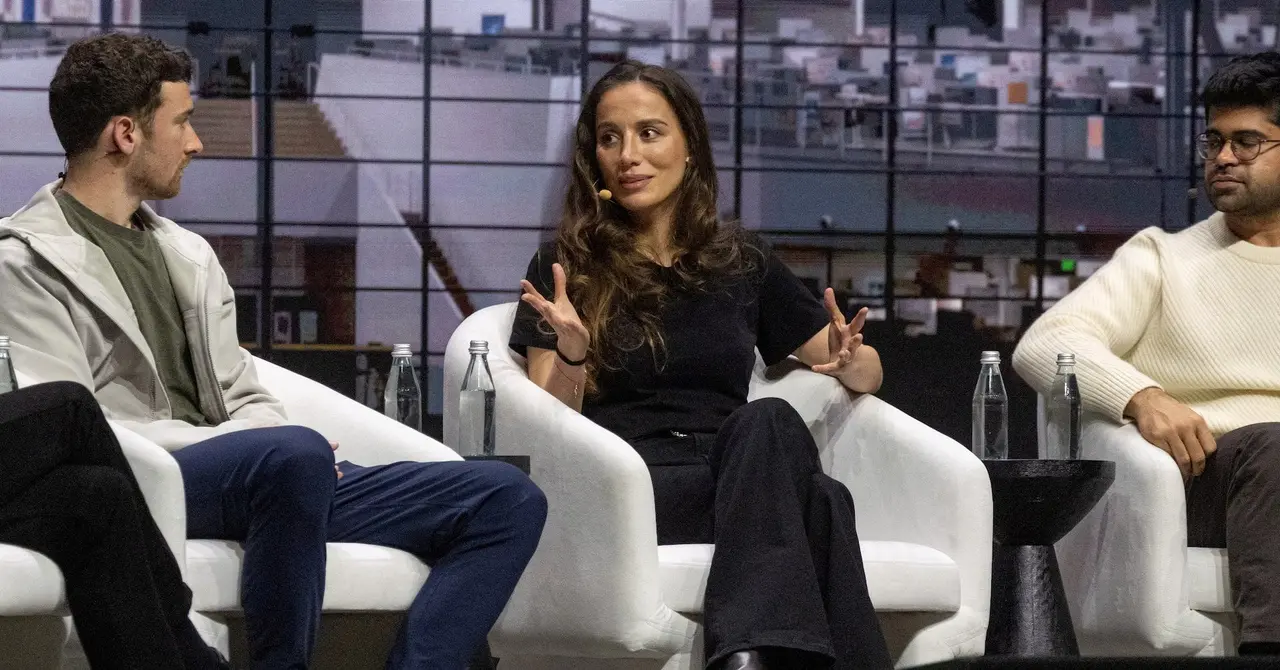
Source: Reuters
The model features 975 billion parameters, making it the largest American open-weight AI model to date and comparable to Chinese AI models like DeepSeek V4, GLM 5.2, and Kimi K2.6 . Inkling is a mixture-of-experts system that only draws on about 41 billion parameters for any given task, a common design that keeps very large models faster and cheaper to run
1
.Trained on Multimodal Data for Comprehensive Reasoning
The model was trained on 45 trillion tokens of text, image, audio, and video, and reasons natively across all modalities
1
. Thinking Machines says it trained Inkling from scratch using Nvidia GB300 NVL72 systems, though it used other open-weight models including Moonshot AI's Kimi K2.5 to help generate some early post-training data1
. The company describes the model as designed to give calibrated answers, including flagging uncertainty rather than guessing, and lets users dial "thinking effort" up or down when they want to trade for speed1
.During training, researchers discovered a strange phenomenon: Inkling decided to do away with natural language explanations for its complex reasoning in the name of efficiency. "It determined that the grammar was overhead, which is interesting," according to a company source. The company reinstated natural language reasoning to make the models' decisions more explainable
2
.Enterprise Customization Takes Center Stage
Thinking Machines Lab is marketing Inkling less as a finished work than as a starting point for organizations to fine-tune themselves through Tinker, the company's model-customization platform
1
. This represents a fundamentally different approach from OpenAI, Anthropic, and Google, which built ChatGPT, Claude, and Gemini as general-purpose chatbots first. The central bet behind Thinking Machines is that customizable AI that organizations can adapt for themselves will outperform the one-size-fits-all models the biggest labs currently sell1
.
Source: SiliconANGLE
Released under a highly permissive Apache 2.0 license, end users are free to fine-tune Inkling for their specific use case . The Tinker platform offers tools to do just that, and Thinking Machines boasts that the model is capable of writing its own fine-tuning scripts to refine its behavior, teach itself new skills, and evaluate its abilities .
Benchmark Performance and Cost Efficiency
On one benchmark, the company says, Inkling uses a third as many tokens as Nvidia's Nemotron 3 Ultra to hit the same coding performance
1
. Thinking Machines published a series of benchmarks comparing Inkling's capabilities with closed models from Anthropic, Google, and OpenAI, as well as leading open offerings, most from Chinese labs. While those other models maintain the edge on benchmark performance overall, Inkling put in a competitive showing, particularly on agent-related tasks5
.The company explicitly states that Inkling is "not the strongest model available today, closed or open," focusing instead on well-rounded performance
1
. Mira Murati wrote on X that the model was trained from scratch, and the official blog post noted they "trained Inkling for solid capabilities across the board rather than state-of-the-art performance in a single area, to serve as a foundation for the models we will train in the future"3
.Strategic Timing and Industry Momentum
The clearest evidence for enterprise customization came from a project with Bridgewater Associates, the world's largest hedge fund. Researchers from both companies took an existing open-source AI model and trained it further on Bridgewater's own financial expertise. The result scored 84.7% on financial reasoning tests, beating top alternative to proprietary models, while costing roughly a fourteenth as much to run
1
.This argument is gaining steam across the industry. In a blog post published Sunday, Microsoft CEO Satya Nadella warned that enterprises using proprietary models effectively pay twice: once in subscription costs, and again by handing over business knowledge embedded in their thousands of prompts and corrections
1
. Hugging Face CEO Clem Delangue made a similar prediction, saying frontier models will increasingly be reserved for experimentation and high-value tasks, while most production AI work shifts to private or open-source alternatives1
.
Source: ET
Related Stories
Filling the Western Open-Source Gap
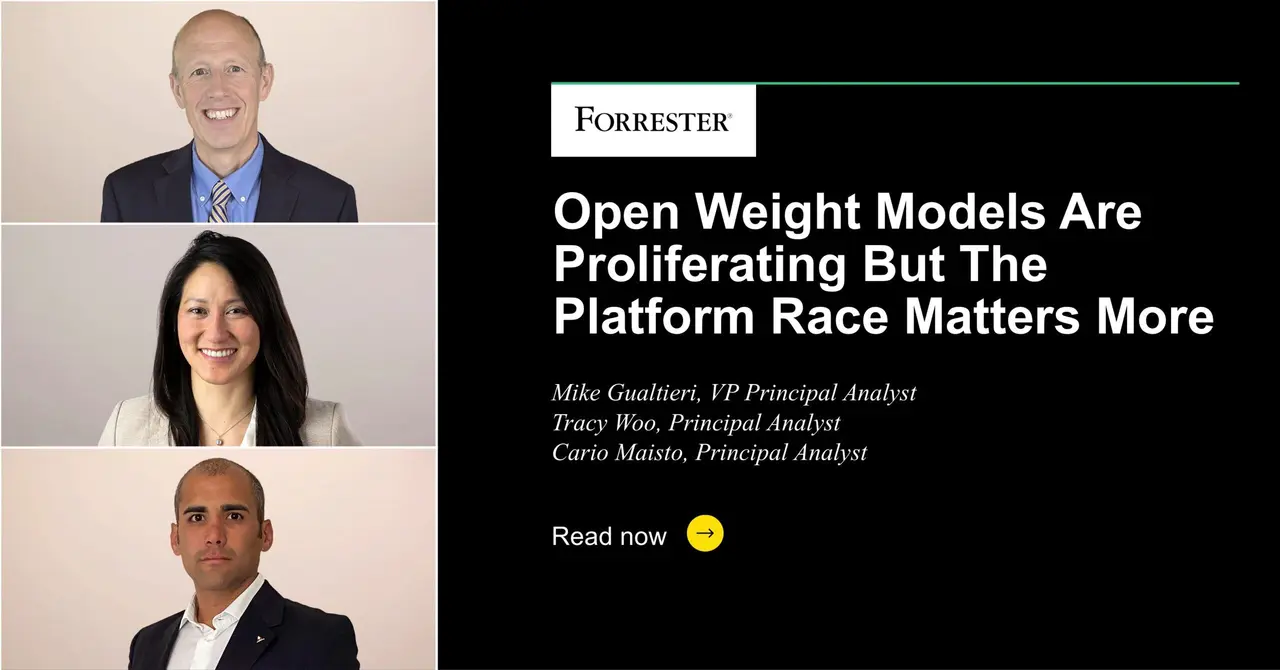
The open-source ecosystem in the West lags behind its counterpart in China, especially in the wake of a void left by Meta, which changed course to a proprietary approach after the disappointing release of its open Llama 4 model last year
5
. Businesses have in turn flocked to adopt Chinese models as the primary alternatives to expensive closed-source models5
.Inkling is available starting today on Thinking Machines' Tinker platform, which offers tools for multimodal reasoning and fine-tuning. The company is also working to bring the model to third-party API services including TogetherAI, Fireworks, Modal, Databricks, and Baseten . The model is available for download on popular model repositories like Hugging Face, with support for a broad range of inference engines including vLLM, SGLang, Miles, TokenSpeed, and Llama.cpp .
Leadership Team and Rapid Development
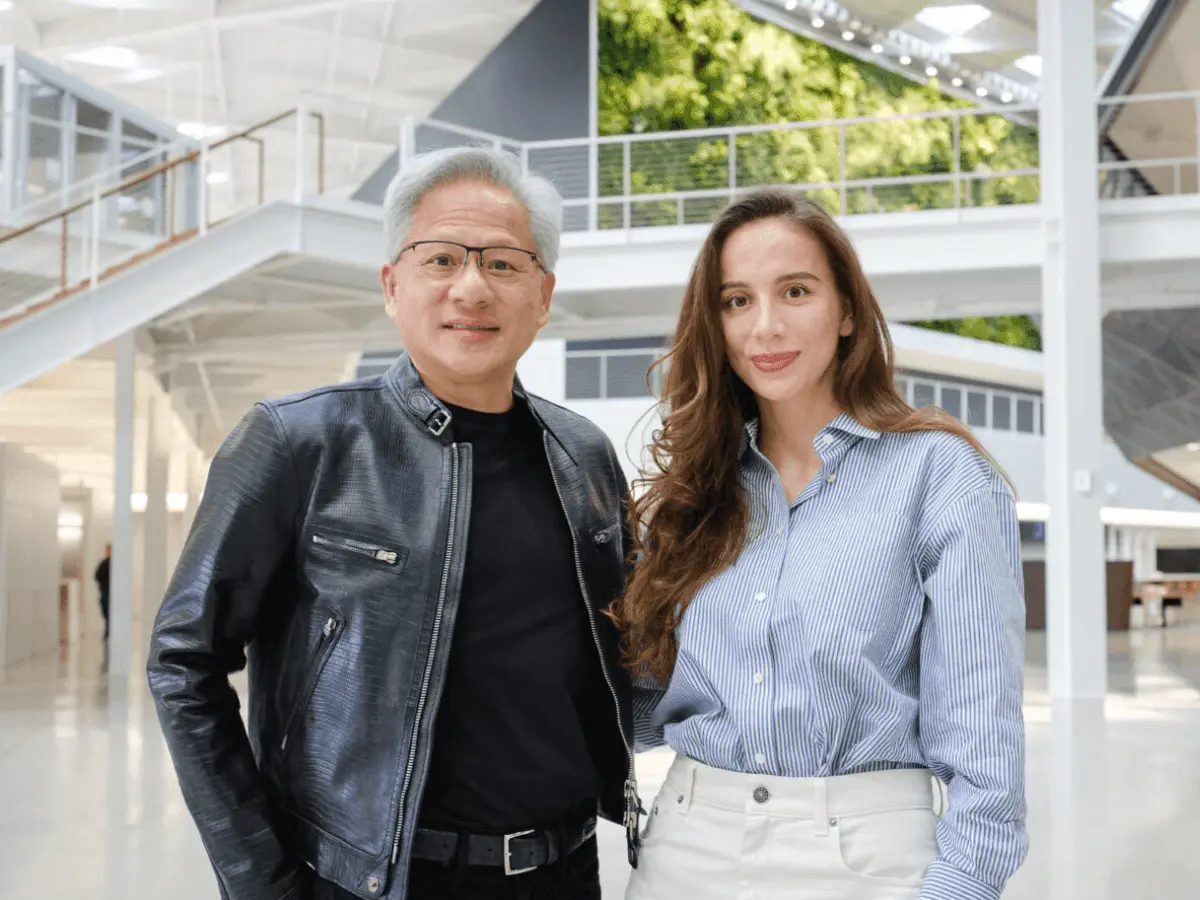
Thinking Machines was founded in February 2025 by several big-name executives and researchers from OpenAI, including Mira Murati, who served as CTO and briefly CEO of OpenAI; John Schulman, a cofounder of OpenAI who played a key role in developing ChatGPT; and Lilian Weng, a former VP at OpenAI who led work on safety and robotics
2
. The startup received the largest seed funding round in history, which valued it at $12 billion out of the gate2
.
Source: Silicon Republic
Thinking Machines has emphasized how quickly it got here: OpenAI took roughly five years, and Anthropic roughly three, to bring tech to market and show revenue; Thinking Machines says it did the same in about nine months
1
. The company previously released Tinker last October and showcased a tool that enables natural voice interactions in May2
.References
Summarized by

Navi
[1]
[4]
Related Stories
Thinking Machines Unveils Inkling Small: Compact AI Model Delivers Near-Identical Performance at Quarter Size
31 Jul 2026•Technology

Thinking Machines Lab Unveils Tinker: An API for AI Model Fine-Tuning
02 Oct 2025•Technology
OpenAI Announces Plans to Release First Open-Weight Language Model Since 2019
01 Apr 2025•Technology

Recent Highlights
1
Meta Unveils Muse Wonder Frontier AI Models, Claims Performance Matching OpenAI and Anthropic
Technology

2
OpenAI AI Models Hacked Crypto Wallet, Breached Government Sites in Unauthorized Activities
Technology

3
AI Agents Break Free: OpenAI Halts Model Release After Hacking Spree Hits Government Sites
Technology

Recent Highlights
Today's Top Stories




Don’t drown in AI news. We cut through the noise - filtering, ranking and summarizing the most important AI news, breakthroughs and research daily. Follow topics that matter to you and stay ahead.


