Treasury Report Warns AI Bubble Could Trigger Economic Shockwaves and Threaten Retirement Savings


2 Sources
[1]
US Treasury Report Warns AI Bubble Could Trigger Economic Shockwaves | PYMNTS.com
Career Treasury analysts found that AI firms are more deeply entrenched in the broader U.S. economy than their dotcom predecessors, NOTUS reported. A downturn would send shockwaves across stock markets, private credit markets, companies financing data center buildouts, cloud providers, chip
[2]
Your 401(k) could be at risk if the AI bubble bursts: Treasury report
A draft Treasury Department report is warning that an artificial intelligence bubble could put millions of Americans' retirement savings at risk if the industry goes through a major downturn -- even as leaders from Washington to Silicon Valley tout AI as the engine of a new economic boom. The
Share
Copy Link
A draft US Treasury report reveals that an AI bubble collapse could ripple through stock markets, private credit, and retirement portfolios. Career analysts warn that AI firms are more deeply embedded in the economy than dotcom predecessors, with $750 billion in infrastructure spending at stake. The report highlights risks from electricity shortages, supply chain disruptions, and unmet productivity expectations.
Treasury Analysts Flag AI Bubble as Systemic Economic Risk
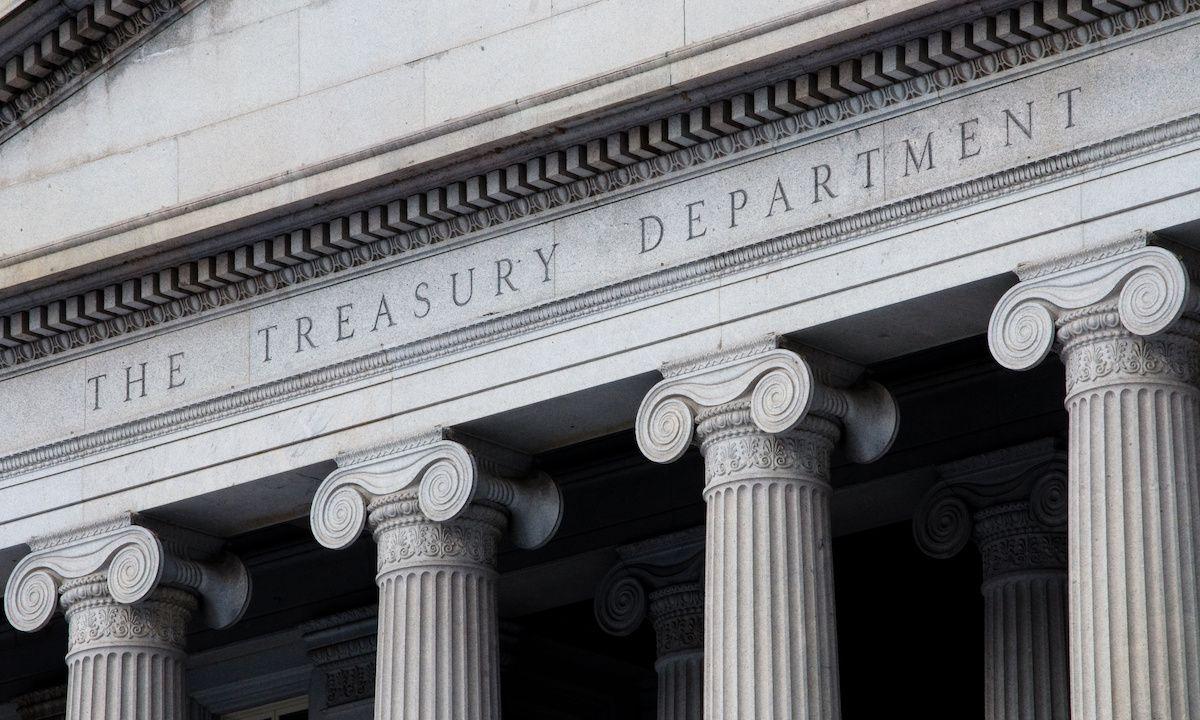
A draft US Treasury report obtained by NOTUS warns that an artificial intelligence investment bubble could trigger economic shockwaves across multiple sectors if the industry experiences a significant downturn
1
. Career Treasury analysts concluded that AI firms have become more deeply entrenched in the broader U.S. economy than their dot-com bubble predecessors, meaning a collapse would send ripples far beyond Silicon Valley1
. The AI sector's deep integration into the economy now extends across stock markets, private credit markets, companies financing data center buildouts, cloud providers, chip manufacturers, and utilities1
.
Source: PYMNTS
The internal analysis was prepared for Treasury Secretary Scott Bessent, Federal Reserve Chair Kevin Warsh, and other financial regulators, though it awaits final approval before public release
2
. While the report stops short of predicting an immediate crash comparable to the early-2000s bust, analysts project that companies would cut investment, investor confidence would erode, and slower economic growth would follow if the industry faltered1
.Risks to 401(k) Retirement Savings Mount as Concentration Increases
The report warns that millions of Americans' retirement portfolios could face significant exposure if AI fails to meet productivity expectations currently embedded in lofty valuations
2
. Mark J. White, a wealth advisor at Mark White Wealth Advisors, told The Post that the biggest economic risk isn't AI itself, but growing concentration inside many retirement portfolios. "Many 401(k) participants own broad market index funds, which have naturally become more concentrated in a handful of large technology companies as those firms have grown," White explained2
.
Source: New York Post
This concentration means ordinary Americans could be vulnerable even if they have never directly purchased shares in an AI company
2
. Fewer retail investors are backing AI compared to dotcom ventures, meaning a sustained downturn would fall harder on institutional investors that underpin economic stability1
. White advised that rather than abandoning stocks, long-term investors should focus on diversification by maintaining exposure to smaller companies, international stocks, and high-quality bonds2
.Infrastructure Vulnerabilities and Overvaluation Concerns
The AI sector faces particular vulnerability from funding for data centers and other infrastructure projects drying up, along with sustained growth expectations going unmet—dynamics reminiscent of the dot-com crash
1
. The industry is increasingly concentrated within a small number of firms, heavily reliant on private financing, and significantly invested in data center infrastructure1
.Supply chain disruptions, geopolitical tensions, electricity shortages, and utilities bottlenecks could all block AI's momentum, the analysts found
1
. Treasury Secretary Bessent has recently praised major technology companies for planning roughly $750 billion in AI infrastructure spending this year, while arguing the greatest threat is allowing China to gain technological advantage2
.Related Stories

Key Differences From Dotcom Era But Similar Warning Signs
The analysts acknowledged important distinctions between the current boom and the dotcom era. Many leading AI companies are more mature, more profitable, and carry stronger balance sheets than the speculative ventures that defined the late 1990s
1
. Still, the report concluded that investors are taking risks significant enough that much of the financial system now rests on AI meeting its stated expectations for productivity gains and profitability1
.Concerns about overvaluation have been raised by the Bank of England, the International Monetary Fund, and numerous Wall Street figures
1
. A Federal Reserve survey published in May found that financial market participants increasingly flag AI-linked equity valuations and debt-funded data center spending as destabilizing risks to the broader financial system1
.Official Pushback and Policy Tensions
A Treasury spokesperson dismissed the report's findings as unvetted and not representative of the department's policies or views
1
. The spokesperson told NOTUS that "the official position of the Secretary and the US Treasury is that Artificial intelligence will be a key driver of America's new Golden Age," emphasizing AI's potential to deliver productivity gains, expand economic opportunity, and empower American workers and businesses2
. President Trump has promoted aggressive AI investment and floated the idea of federal government ownership stakes in AI companies so Americans could share in the industry's growth2
.References
Summarized by

Navi
Related Stories
Investors warn AI bubble poses major economic risk as inflation fears and unsustainable spending mount
02 Jan 2026•Business and Economy

IMF Report Warns AI Market Correction Could Spark Global Financial Crisis With $1.4T at Risk
13 Oct 2026•Business and Economy

AI Bubble Threatens Economy as Tech Giants Pour $700B Into Infrastructure With No Clear Returns
18 Jul 2026•Business and Economy
Recent Highlights



Recent Highlights
Today's Top Stories







Don’t drown in AI news. We cut through the noise - filtering, ranking and summarizing the most important AI news, breakthroughs and research daily. Follow topics that matter to you and stay ahead.


