2 Sources
[1]
AI Agents Plunged the Tech World Into Chaos. Here's Exactly How That Happened
It was August 2025 and Peter Steinberger was addressing a meetup in London called Claude Code Anonymous. Steinberger and some fellow addicts had arranged the event to network with people like themselves -- techies swept up by coding tools such as Anthropic's paradigm-busting Claude Code. "I dedicate pretty much all my waking time to this, yet it doesn't feel enough," he told the gathering in a cozy, brick-walled room. A few months later, Anthropic released a new version of Claude Code, and the ranks of Claudeholics exploded. Called Opus 4.5, it could handle more complicated programming tasks, retain much more in its memory, run for many hours on end, and manage a team of AI subagents. Anthropic has what it describes as a "notoriously difficult" take-home exam for prospective engineering hires; in a head-to-head comparison of those people and its models, Anthropic claimed that Opus 4.5 "scored higher than any human candidate ever," which "raises questions on how AI will change engineering as a profession." Countless coders spent the holidays in basements and dens, madly trying out this new toy that let them build software as if they'd unleashed a hundred clones. Or unlocked superpowers. "It feels like becoming Spider-Man," one told me. For the 39-year-old Steinberger, who split his time between homes in London and Vienna, even this was not enough. In November 2025, he launched a tool that's now called OpenClaw, a simple way to conjure a personal AI agent that exploits the advances of Claude Code or other coding tools. Give it access to your data, your apps, and maybe even your credit card, and it scours your cloud and ventures onto the web to do your bidding. It can run autonomously in the background and overcome obstacles with the persistence of the Terminator. Steinberger's project took off midwinter. One indicator of popularity is the number of "stars" a code repository gets on Github. In less than two weeks, as users downloaded it and began feverishly building, the project racked up more than 100,000 stars. (As of early May, it stood at 366,000 stars.) With those two breakthroughs -- the commercial product Claude Code and the open source OpenClaw -- the long-awaited age of AI agents has suddenly arrived. At least for those technically proficient enough and perhaps foolhardy enough to go all-in on a messy, imperfect, and risky adventure. More than one Claudeholic tells me they feel they are living in the future. "AGI is here!" one fanatic told me, paraphrasing William Gibson's famous quote. "It's just not evenly distributed." Back in the 1980s computer revolution, the general public tended to regard the new machines with a mix of curiosity and angst while the hackers were joyfully building. There's a similar dynamic today, possibly with even more at stake. "It's hard to explain how much of a sea change this is," says Thomas Reardon, a former executive at Microsoft and Meta who now heads a startup focused on a different area of AI. "It's the most underrated, massive release I've experienced in technology." Soon we'll all be experiencing it. On a recent podcast, Marc Andreessen, the guy who co-invented the browser and has cast himself as the ultimate techno-optimist and MAGA fan, made a proclamation that reflects Silicon Valley's thinking: "It's almost inevitable that this is the way people are going to use computers." Left unsaid: It won't be a choice. Roll back to early 2024, when Boris Cherny was an Instagram tech lead, working remotely from a house he shared with his partner in rural Japan. "I would bike to the farmers market by the rice paddies," Cherny, who's 34, says. "Our hobby was making miso and pickles, and we would trade with our neighbors." All that changed when he started to play with the AI models emerging from his former hometown of San Francisco. (He is originally from Ukraine; his grand-father programmed computers with punch cards.) The models jarred Cherny from his idyll. Through friends, he connected with Anthropic, and then moved back to the Bay Area to work there.
[2]
Famed iPhone, Sony Hacker Says AI Coding Agents Are a Disaster Waiting to Happen - Decrypt
George Hotz -- the hacker who first cracked the iPhone at age 17 and reverse-engineered the PlayStation 3 before Sony sued him for it -- published a blog post Sunday arguing that mass adoption of AI coding agents will end in disaster, or at least close to it. "I'm calling it now, the adoption of AI agents into software development will be one of the most costly mistakes in the field's history," Hotz wrote. "Agents cannot program, and it's taking longer and longer to realize that they can't." "The output is broken, but in a way that's getting harder and harder to detect. Which is exactly what you'd expect from an increasingly accurate statistical model." The post, titled "The Eternal Sloptember," arrives five days after Andrej Karpathy, one of AI's most prominent researchers, joined Anthropic's pre-training team with the explicit view that AI agents have already transformed software development. The two men now represent opposite poles of a debate the industry hasn't settled -- and both have actual credibility to stake a position. Hotz didn't reach his conclusion from the sidelines. He spent six months using agents on real projects: parts of Tinygrad, his open-source deep learning framework, and a complete firmware reverse-engineering of a USB-PCIe chip. "The agent frontloads all the progress," he writes, then hands you what he describes as a slot machine lever -- you pull it and hope the finishing work gets done. Hotz anticipates the obvious pushback: a programmer who defines part of his identity through his craft would naturally resist tools that threaten to replace him. He takes the objection seriously and dismisses it on the merits. "I thought more about the self worth preservation thing. Google's AFL found more bugs than LLMs and nobody felt that way about it. Chess and Go are more popular than ever," Hotz wrote. And he's right in the sense that Chess AI has dominated humans for decades and the game only grew more popular. So, his concern isn't about being replaced. It's about what happens to code quality when everyone is using these tools at once, especially when Big Tech and Wall Street are constantly pushing for the mass use of these tools. "I almost think this is some kind of psyop to sell agents," Hotz argues. "Fear of loss is one of the only ways to make big companies move. Though I think in that fear they are making a big mistake." His central argument is organizational. High performers have tight enough feedback loops to catch agent-generated problems before they ship. They read the code, spot the errors, and calibrate when to trust the tool. "The bottom performers won't have that self check," he writes -- and they're the ones using agents to produce 10 times their previous output. At a large company, that math produces something specific: faster degradation of average code quality, masked by sheer volume. The outcome, he argues, will be "a golden era for buckets and buckets of slop, and a dark age for gems of quality." As a concrete example, he points to reports that Apple is pushing AI coding tools across its entire engineering organization, then asks simply: "Do you think macOS will get better or worse in the next 2 years?" Where the camps stand Hotz now places himself in what he calls the "LeCun/Marcus camp" -- referring to Yann LeCun, Meta's chief AI scientist, and Gary Marcus, a longtime LLM skeptic. Both have argued that language models are fundamentally sophisticated pattern-matchers: They can imitate the distribution of existing code, but can't reason through genuinely new problems from first principles. Vibe coding -- describing what you want in plain language and letting AI generate the implementation -- has exploded over the past year, and the major labs have positioned agent-based coding as a flagship product. Microsoft transformed GitHub Copilot into a full agentic system in 2025, with CEO Satya Nadella describing it as a platform-level shift comparable to the move to cloud. The pushback to Hotz's position isn't abstract. Karpathy, who had been skeptical of agents earlier in 2025, reversed his position after new model releases and joined Anthropic's pre-training team on May 19 -- five days before Hotz published. He described the next few years at the frontier as "especially formative." Anthropic CEO Dario Amodei said in Davos that some Anthropic engineers have already stopped writing code themselves, letting models handle it while they review the output. Hotz, for his part, says he tried to do the same thing and found himself reaching for the manual fix every time.
Share
Copy Link
George Hotz predicts AI coding agents will trigger one of software development's costliest mistakes, citing broken output masked by statistical accuracy. Meanwhile, Anthropic's Claude Code and OpenClaw have ignited explosive adoption, with the latter gaining 366,000 GitHub stars. The divide deepens as Andrej Karpathy joins Anthropic while Hotz warns of a dark age for code quality.
The tech world faces a fundamental split over AI coding agents, with prominent hacker George Hotz warning that their mass adoption will become "one of the most costly mistakes" in software development history
2
. His stark prediction arrives just as AI agents achieve explosive mainstream traction, creating what industry veterans describe as a significant transformation in how code gets written. Hotz argues that AI agents "cannot program" and produce broken output that becomes increasingly difficult to detect as statistical models grow more accurate2
. This assessment directly challenges the AI-driven future that major tech companies are racing to implement across their engineering organizations.
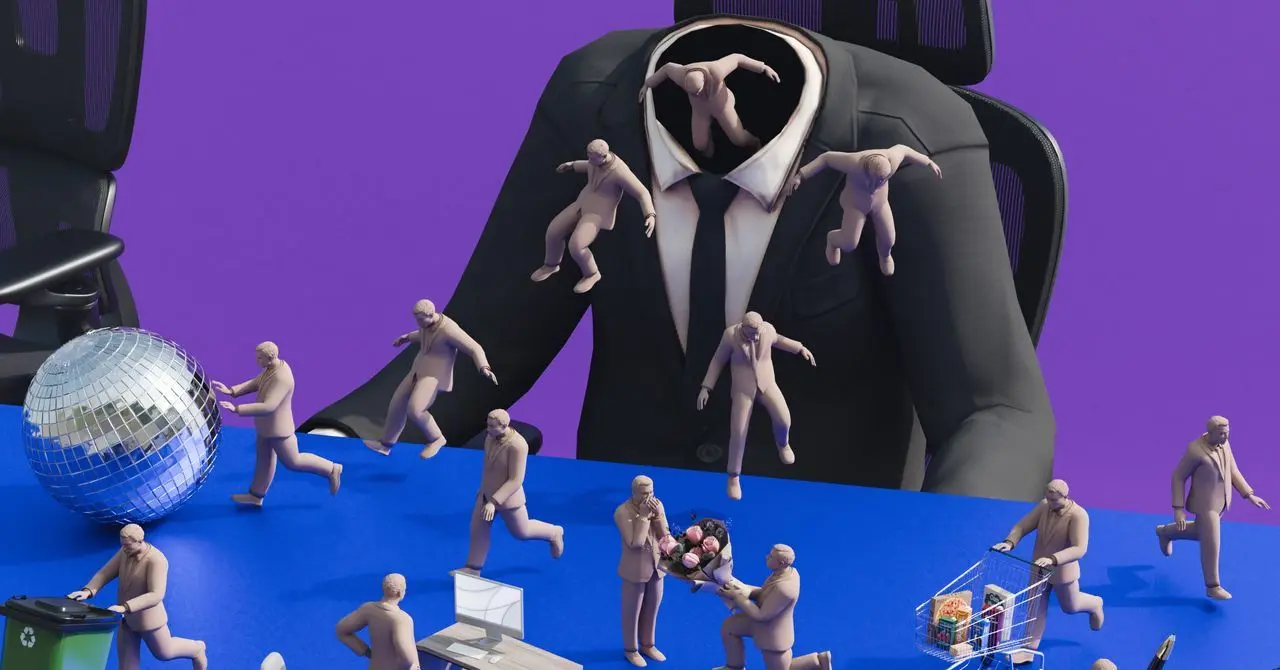
Source: Wired
The catalyst for this debate emerged through two breakthrough releases that brought AI agents from concept to reality. Anthropic released Opus 4.5, an enhanced version of Claude Code that can handle complex programming tasks, retain extensive memory, run for hours, and manage teams of AI subagents
1
. The company claims Opus 4.5 "scored higher than any human candidate ever" on their notoriously difficult engineering exam, raising questions about how AI in software development will reshape the profession1
. Peter Steinberger, a 39-year-old developer who organized Claude Code Anonymous meetups for fellow enthusiasts, launched OpenClaw in November 2025 as an open-source tool that lets users conjure personal AI agents1
. OpenClaw exploded in popularity, accumulating over 100,000 GitHub stars in under two weeks and reaching 366,000 stars by early May1
.Hotz didn't reach his pessimistic conclusion from the sidelines. He spent six months testing AI agents on real projects including parts of Tinygrad, his open-source deep learning framework, and complete firmware reverse-engineering work
2
. His experience revealed a pattern: "The agent frontloads all the progress," then delivers what he describes as a slot machine lever where you hope the finishing work gets done2
. Hotz dismisses concerns that his stance stems from protecting his craft, noting that "Google's AFL found more bugs than LLMs and nobody felt that way about it. Chess and Go are more popular than ever"2
. His worry centers on organizational dynamics: high performers maintain tight feedback loops to catch agent-generated problems, but bottom performers using agents to produce 10 times their previous output will accelerate the decline in software quality masked by sheer volume2
.

Source: Decrypt
Related Stories
The debate has crystallized into distinct camps. Andrej Karpathy, one of AI's most prominent researchers, joined Anthropic's pre-training team on May 19 with the explicit view that AI agents have already transformed software development
2
. Anthropic CEO Dario Amodei revealed at Davos that some engineers have stopped writing code themselves, instead letting models handle implementation while they review output2
. Microsoft transformed GitHub Copilot into a full agentic system in 2025, with CEO Satya Nadella describing it as a platform-level shift comparable to moving to cloud2
. Meanwhile, Hotz aligns himself with what he calls the "LeCun/Marcus camp," referencing Yann LeCun and Gary Marcus, who argue that language models are sophisticated pattern-matchers that can imitate existing code but cannot reason through genuinely new problems2
.Thomas Reardon, a former Microsoft and Meta executive, calls the shift "the most underrated, massive release I've experienced in technology"
1
. Marc Andreessen declared on a recent podcast that "it's almost inevitable that this is the way people are going to use computers," adding ominously that it won't be a choice1
. Hotz predicts this forced adoption will usher in "a golden era for buckets and buckets of slop, and a dark age for gems of quality"2
. As concrete evidence, he points to reports that Apple is pushing AI coding tools across its entire engineering organization, then asks: "Do you think macOS will get better or worse in the next 2 years?"2
. The answer to that question may determine whether the current wave represents progress or regression for an industry built on precision.Summarized by
Navi
31 Mar 2026โขTechnology

21 Feb 2026โขTechnology

12 Feb 2026โขEntertainment and Society

1
Technology

2
Science and Research

3
Policy and Regulation