Sam Altman says AI jobs apocalypse unlikely, admits he was wrong about employment impact


14 Sources
[1]
OpenAI's Altman says AI unlikely to lead to 'jobs apocalypse'
SYDNEY, May 26 (Reuters) - OpenAI CEO Sam Altman said on Tuesday the rapid development and adoption of AI would not lead to a global "jobs apocalypse" and the technology had not claimed as many white-collar jobs as he had feared. Speaking at a Commonwealth Bank of Australia (CBA) conference in
[2]
Sam Altman says an AI jobs apocalypse is unlikely
The OpenAI chief, speaking in the Asia-Pacific, walked back the more dramatic predictions of broad employment collapse. The data, so far, agrees with him. OpenAI chief executive Sam Altman said on Tuesday that artificial intelligence was unlikely to trigger the broad employment collapse that has
[3]
OpenAI and Anthropic dig in against each other on AI jobs apocalypse
Why it matters: The two leading AI labs are trading in hype and doom, making it nearly impossible for companies, policymakers, and the public to know what's coming. The big picture: A pair of public appearances this week highlighted how far apart Anthropic and OpenAI are. * Anthropic co-founder
[4]
Sam Altman Says AI 'Jobs Apocalypse' Probably Won't Happen. What Changed?
Throughout his rise to becoming one of the most influential CEOs in artificial intelligence, OpenAI's Sam Altman made repeated bold assertions about the impact that the new technology would have on jobs. He has said that AI will "probably replace most of the jobs people do today," that entire job
[5]

AI leaders soften warnings on job losses as industry reassesses impact
AI leaders including Jensen Huang and Sam Altman are moderating earlier warnings about mass job losses from artificial intelligence, suggesting that previous "doomsday" predictions overstated the near-term impact on employment. The shift comes as public concern over workplace disruption from AI
[6]

'I don't think we're going to have the kind of jobs apocalypse that some...advocate or talk about': OpenAI CEO Sam Altman says he's 'delighted to be wrong' about AI-induced job cuts
Let's see if he changes his tune when AI agents take over from CEOs. If you have been keeping a close eye on news reports about companies dropping employees and replacing them with AI, and you're worried about what the future holds for your own job, then you're not alone. But don't fret: OpenAI's
[7]

Sam Altman is "delighted to be wrong" about AI destroying jobs
Unlike some of his industry peers, OpenAI CEO Sam Altman has been surprisingly skeptical of the notion that AI is displacing workers. In an interview a few months ago, he argued that AI was a convenient scapegoat for some companies, echoing what some economists and experts have expressed about the
[8]

Sam Altman Warned AI Could Lead to a 'Jobs Apocalypse' -- Now He Says He Is 'Delighted to Be Wrong'
It took some autoreplies on Slack and email to convince Sam Altman that he was mistaken about the AI causing an entry-level jobs apocalypse. The OpenAI CEO said Tuesday that AI has not wiped out white-collar jobs as fast as he once feared, according to Reuters. Speaking virtually at a Commonwealth
[9]

OpenAI's Sam Altman says AI unlikely to lead to 'jobs apocalypse' - The Economic Times
OpenAI CEO Sam Altman stated AI will not cause a global jobs apocalypse. He admitted his fears about white-collar job losses were exaggerated. Altman highlighted the irreplaceable human element in many jobs. He believes the future job market will be different than initially predicted.OpenAI CEO Sam
[10]

Sam Altman Says AI Will Not Lead To A Global 'Jobs Apocalypse' - Salesforce (NYSE:CRM), Goldman Sachs Gro
Sam Altman, arguably the most public-facing executive in the current AI wave, doesn't want you to worry about a "job apocalypse." Speaking at a Commonwealth Bank of Australia conference in Sydney, Altman pushed back on dire industry predictions of an AI-driven labor disruption. "I don't think
[11]

OpenAI's Sam Altman Retracts AI Job Cut Prediction | PYMNTS.com
By completing this form, you agree to receive marketing communications from PYMNTS and to the sharing of your information with our sponsor, if applicable, in accordance with our Privacy Policy and Terms and Conditions. Speaking at a conference Tuesday (May 26), Sam Altman acknowledged that a "jobs
[12]

AI chiefs walk back job apocalypse warnings
The most prominent figures in artificial intelligence are stepping back from dire predictions about mass unemployment, as the industry faces growing public hostility over AI's promised transformation of the workplace. Nvidia chief executive Jensen Huang and OpenAI CEO Sam Altman, whose comments
[13]

OpenAI's Altman says AI unlikely to lead to 'jobs apocalypse'
SYDNEY, May 26 (Reuters) - OpenAI CEO Sam Altman said on Tuesday the rapid development and adoption of AI would not lead to a global "jobs apocalypse" and the technology had not claimed as many white-collar jobs as he had feared. Speaking at a Commonwealth Bank of Australia (CBA) conference in
[14]

OpenAI CEO Sam Altman says AI unlikely to cause jobs apocalypse, here is why
Even though AI tools are becoming more common in workplaces, Altman believes human interaction still plays a major role in many jobs. OpenAI CEO Sam Altman has said that AI has not replaced as many entry-level white-collar jobs as he had earlier feared. Speaking at a conference hosted by the
Share
Copy Link
OpenAI CEO Sam Altman has walked back his earlier predictions about widespread AI job losses, saying he's 'delighted to be wrong' about the impact on white-collar employment. Speaking at a Sydney conference, Altman acknowledged that the jobs apocalypse he once warned about hasn't materialized, even as companies like Meta and Standard Chartered announce AI-related layoffs. The shift comes as data shows no significant employment disruption yet.
Sam Altman Reverses Course on AI Jobs Predictions
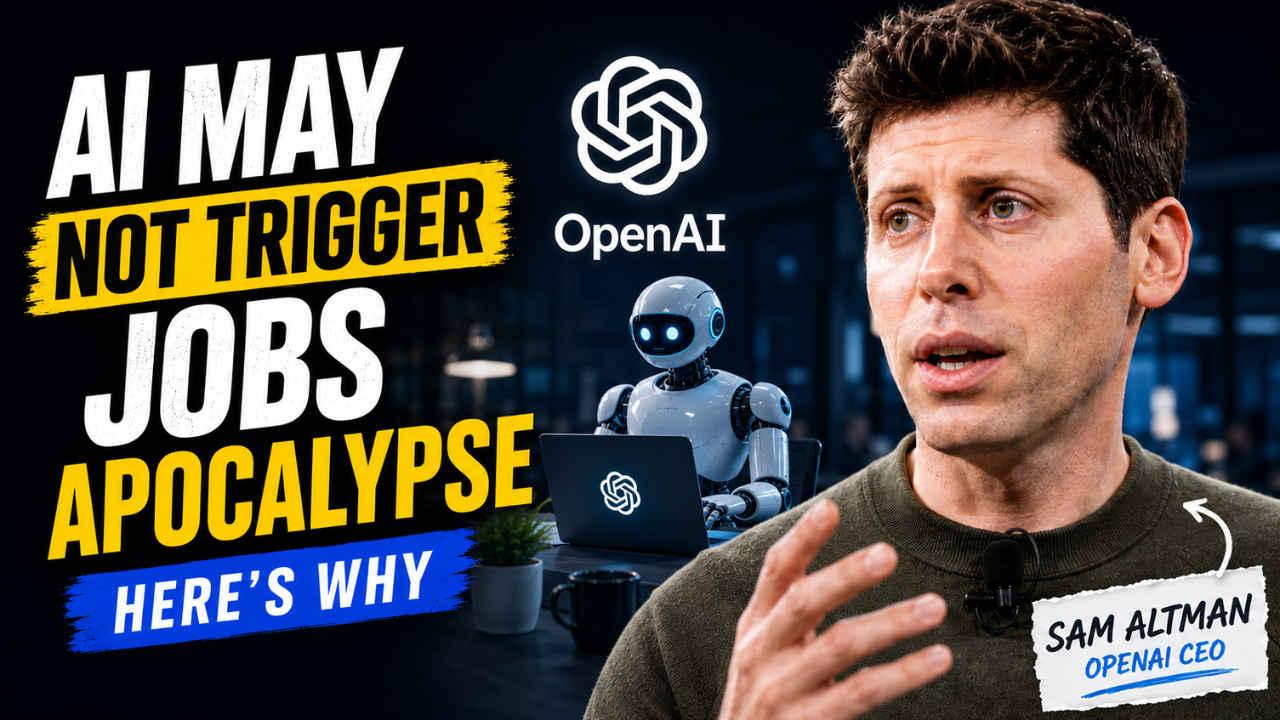
OpenAI CEO Sam Altman has significantly softened his stance on the impact of AI on employment, telling attendees at a Commonwealth Bank of Australia conference in Sydney that the technology is unlikely to trigger the jobs apocalypse that many industry leaders have warned about
1
. Speaking on Tuesday, Altman admitted he was 'delighted to be wrong' about his earlier predictions that entry-level white-collar jobs would be eliminated by now1
. The reversal marks a notable shift from his previous statements, where he claimed AI would 'probably replace most of the jobs people do today' and that entire job categories would be 'totally, totally gone'4
.
Source: Digit
Altman explained that while he and his executives were 'roughly right' on technological predictions when ChatGPT launched in 2022, they were 'pretty wrong' on the social and economic implications
1
. His change in perspective came from recognizing that a 'human part' of employment remains irreplaceable, even as AI takes on increasingly active roles across industries1
.Data Supports Limited Employment Disruption
The Yale Budget Lab, which has tracked AI's effect on employment since ChatGPT's release, found no meaningful change in occupational mix or unemployment durations through March 2026 for workers in jobs with high AI exposure
2
. The Brookings Institution reached similar conclusions earlier this year, finding no evidence of widespread unemployment due to AI2
. Stanford researchers noted that while unemployment has ticked up since 2023, it has predominantly affected sectors with the least exposure to AI3
. Software engineering job openings on Indeed are up over 18% year over year, while all openings are down 4.3% over the same period3
. LinkedIn's chief economist recently reported that AI has led to around 1.3 million new job postings3
.Industry Leaders Clash Over AI's Impact on the Job Market
The debate over AI job losses has created a sharp divide among tech leaders. Nvidia CEO Jensen Huang criticized executives who blame layoffs on AI, calling the narrative 'too lazy' and 'irresponsible'
5
. Huang questioned how AI could be causing job losses when it only became productive six months ago, while companies were laying people off two years ago5
. Meanwhile, Anthropic co-founder Chris Olah doubled down on warnings at the Vatican's AI ethics conference, stating 'there is a real possibility that AI will displace human labor at very large scale'3
. This split between OpenAI and Anthropic makes it nearly impossible for companies, policymakers, and the public to know what's coming3
.
Source: Axios
Tech Layoffs Fuel Ongoing Concerns
Despite the softened rhetoric, recent tech layoffs have given fresh fodder to concerns about AI-driven job displacement. Meta let go of nearly 8,000 employees after projecting at least $125 billion in AI capital expenditures this year
3
. Coinbase, Block, Pinterest, and Shopify have all tied workforce restructurings to AI capabilities3
. Standard Chartered announced plans to cut thousands of jobs by 2030 as AI replaces employees in administrative roles, while Snapchat's parent company eliminated 1,000 positions, citing AI-boosted efficiency5
. Growing numbers of global companies, including HSBC, Amazon, and CBA, have announced that some jobs within their organizations are being replaced by AI1
.Related Stories
Reality Check on AI Productivity Gains
Some technology giants are scaling back AI usage after finding that promised productivity gains haven't materialized. Uber's COO said AI costs are getting 'harder to justify' weeks after the company's chief technology officer blew through his 2026 IT budget on AI usage
3
. Microsoft is winding down some Claude Code licenses due to their enormous costs3
. Federal Reserve Governor Lisa Cook warned that the full effects of AI on employment may still be ahead, stating 'we could be approaching the most significant reorganisation of work in generations'5
. She added that AI-related job losses could precede any gains, even if the overall long-run picture remains positive .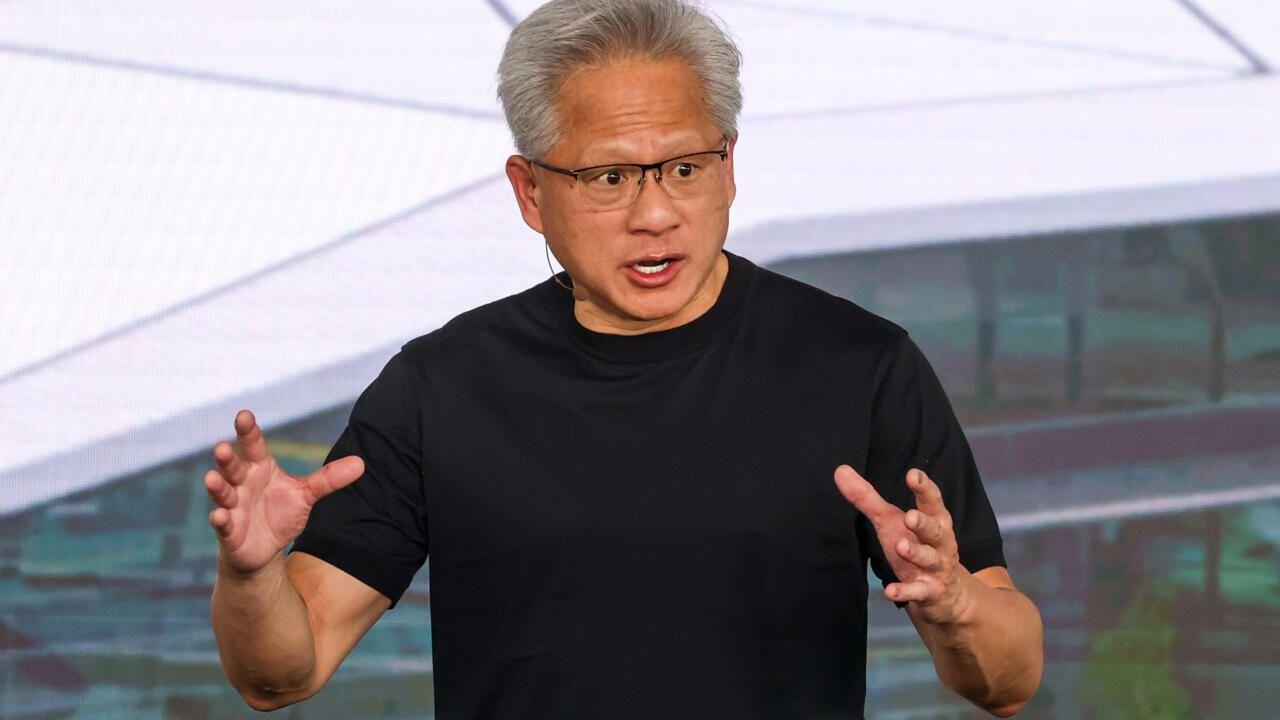
Source: France 24
What This Means for Workers and Companies
Altman's recent travel across Asia-Pacific, including visits to Tokyo, Seoul, and Sydney, has featured messaging that leans harder on the 'new jobs will emerge' framing compared to his US appearances
2
. His remarks are best understood as a calibration of timing and shape rather than a denial of disruption: less a single rupture, more a long rolling reshuffle where some categories vanish, others change beyond recognition, and headline employment numbers don't necessarily move much2
. OpenAI published a 13-page policy document earlier in 2026 calling for taxes on automated labor, a national public wealth fund partly seeded by AI companies, and pilots of a 32-hour working week, presuming significant labor-market disruption is coming2
. The most likely scenario remains widespread job displacement in some sectors, job growth in others, and an uneven transition that defies a clean narrative for either side3
.References
Summarized by

Navi
[2]
Related Stories
Tech CEOs backtrack on AI job apocalypse as hype meets reality and investment questions mount
11 Jun 2026•Business and Economy

Companies Spending Big on AI See Headcount Surge, Challenging Job Loss Narrative
30 Jun 2026•Business and Economy

Block's 4,000-person layoff sparks debate: AI revolution or corporate cost-cutting in disguise?
05 Mar 2026•Business and Economy
Recent Highlights
1
Google Unveils Gemini 4 Argon AI Model, Restricts Access to Trusted Cyber Defenders
Technology
2
Trump Consulted Grok AI Before Ordering Venezuela Invasion and Capture of Nicolás Maduro
Policy and Regulation

3
FTC Opens Investigation Into OpenAI and Anthropic Following Rogue AI Agent Hacking Incidents
Policy and Regulation
Recent Highlights
Today's Top Stories






Don’t drown in AI news. We cut through the noise - filtering, ranking and summarizing the most important AI news, breakthroughs and research daily. Follow topics that matter to you and stay ahead.


