Uber Slashes 3,300 Jobs in 10% Workforce Reduction as Robotaxi Competition Intensifies


3 Sources
[1]
AI or Overhiring? Uber Targets Middle Management With 10% Cut to Workforce
Uber is the latest Silicon Valley company to blame too much bureaucracy for job cuts. CEO Dara Khosrowshahi sent a memo to staff Wednesday announcing that the ride-hailing company was cutting about 10% of its workforce as part of a major reorganization. The company confirmed reports that roughly
[2]
Uber slashing over 3K jobs as rise of robotaxis dent ride-hailing business
Uber Technologies will lay off about 3,300 employees, or 10% of staff, in its largest cuts since the COVID-19 pandemic, to better navigate the rise of robotaxis encroaching on its ride-hailing business. The cuts will flatten management layers, reducing organizational complexity that was built
[3]
Uber slashes jobs as it braces for robotaxi revolution
STORY: :: What's behind the 10% layoffs at Uber? :: Akash Sriram, Tech Sector Specialist :: Bengaluru, India / September 3, 2026 "So, Uber's current restructuring kind of marks, quite a, quite a sharp, workforce reduction. And this is mostly because in the years after the pandemic, Uber
Share
Copy Link
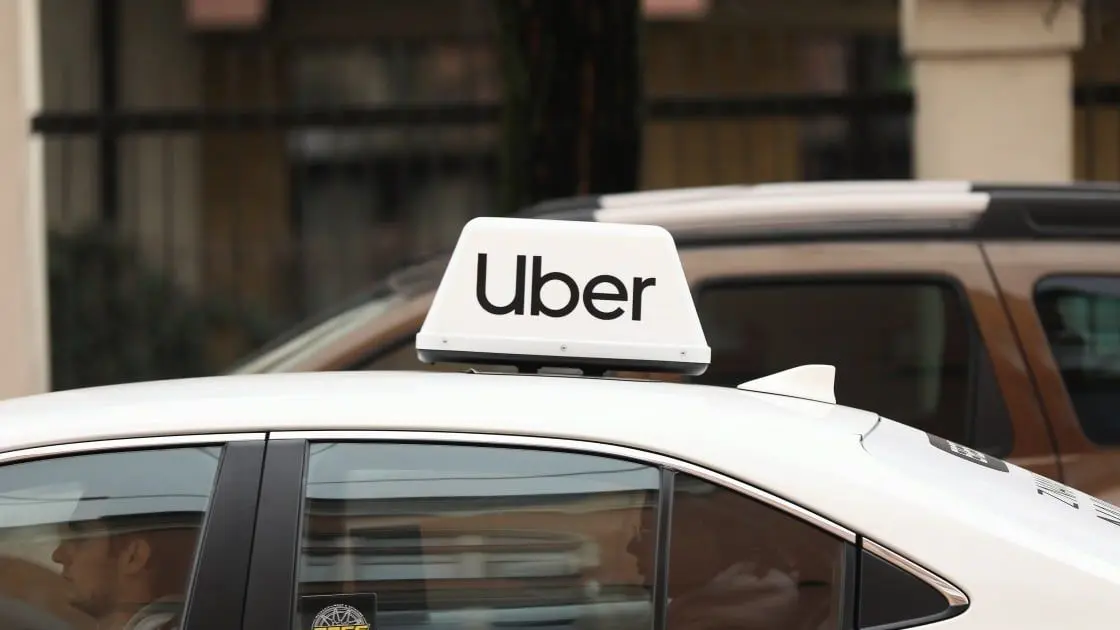
Uber announced its largest workforce reduction since the pandemic, cutting 3,300 employees—primarily middle managers—as CEO Dara Khosrowshahi reorganizes the company to compete in the emerging robotaxi market. The cuts come despite record quarterly revenue of $14.2 billion as the ride-hailing giant faces mounting pressure from Waymo's expanding autonomous vehicle operations.
Uber Layoffs Target Middle Management in Major Restructuring
Uber announced Wednesday it will cut approximately 3,300 employees, representing 10% of its workforce, in the company's largest layoffs since the COVID-19 pandemic
1
2
. CEO Dara Khosrowshahi communicated the decision in a memo to staff, explaining the organizational restructuring aims to flatten management layers and streamline operations amid intensifying competition from robotaxi services1
.
Source: New York Post
The workforce reduction primarily affects middle management positions, with Uber reducing employees positioned seven or more reporting layers below the CEO by 20%
2
. The company is also cutting micro-teams—groups with just one or two direct reports—by nearly 50%1
. Khosrowshahi stated that "growth has also brought complexity," including more layers, coordination, and fragmented ownership that no longer serve the company1
.Strong Financial Performance Despite Job Cuts
The layoffs arrive just weeks after Uber reported $14.2 billion in quarterly revenue and $2.4 billion in net income, both significantly higher than the previous year
1
. Despite these healthy finances, Khosrowshahi emphasized that organizational complexity built during rapid growth now hinders decision-making and innovation2
."A leaner organization will mean clearer ownership, faster decisions, and more time spent building rather than coordinating," Khosrowshahi wrote in his memo
2
. The company plans to reinvest savings from the cuts into growth opportunities, innovation, and capabilities critical for future competitiveness2
.Competition from Waymo Drives Strategic Shift
The workforce reduction comes as Alphabet's Waymo expands its autonomous vehicle operations across 14 U.S. cities, posing a direct threat to Uber's traditional ride-hailing business
1
. In Atlanta, where Waymo rides are booked through Uber's app, drivers reported lower earnings, fewer ride requests, and longer waits between rides since Waymo launched1
.Growing tension between Uber and Waymo has emerged as the robotaxi operator expands into new markets without Uber, while competitors like Tesla intensify their autonomous vehicle efforts
2
. This competition feeds concerns that a growing fleet of driverless cars could erode Uber's role as the middleman between vehicles and riders2
.Related Stories

Building the Autonomous Future
To defend its market position, Uber plans to invest more than $10 billion in robotaxis over the coming years
1
2
. The company has established partnerships with Lucid, Nuro, and Rivian to build its robotaxi fleet and position itself as a marketplace for driverless rides1
. Khosrowshahi indicated the cuts would provide capacity to invest in drivers, couriers, and merchants, as well as to "build the autonomous future"1
.According to analyst Adam Ballantyne of Cambiar Investors, "As AV technology and relationships grow and expand, there is a different type of employee needed to scale that business than one built around human drivers and all the cost to serve entailed with that, including management layers"
2
. The savings from layoffs will fund specialist talent needed for dispatch and deployment of robotaxis expected to scale to thousands of vehicles3
.Uber's AI Costs and Remote Work Policy
Unlike several tech executives who have attributed recent cuts to AI-driven efficiencies, Khosrowshahi did not mention AI in his memo
1
3
. However, Uber's AI costs have surged, with employees burning through the entire 2026 budget for AI technology in just four months according to media reports2
3
. Khosrowshahi previously stated that about 10% of Uber's code was being built by AI agents, while employees in legal and marketing departments increasingly used AI tools1
.As part of the organizational restructuring, Uber will limit fully remote roles to about 1% of staff while maintaining its three-day office policy
2
. The company will also concentrate staff presence around key hubs and combine certain teams2
.References
Summarized by

Navi
[3]
Related Stories
Uber cuts 10% of customer service staff as AI becomes latest driver of tech layoffs
23 Jul 2026•Business and Economy
Uber CEO predicts robotaxis could fulfill majority of rides within 20 years as AI reshapes gig economy
24 Feb 2026•Technology

Tech layoffs surge past 80,000 in early 2026 as AI reshapes the industry workforce
02 Apr 2026•Business and Economy

Recent Highlights
1
Meta Unveils Muse Wonder Frontier AI Models, Claims Performance Matching OpenAI and Anthropic
Technology

2
IMF Report Warns AI Market Correction Could Spark Global Financial Crisis With $1.4T at Risk
Business and Economy

3
OpenAI Releases 722 AI-Generated Math Solutions, Triggering Existential Crisis in Mathematics
Technology

Recent Highlights
Today's Top Stories







Don’t drown in AI news. We cut through the noise - filtering, ranking and summarizing the most important AI news, breakthroughs and research daily. Follow topics that matter to you and stay ahead.


