US Air Force awards Anduril and General Atomics contracts for semi-autonomous drone wingmen


2 Sources
[1]
Anduril and General Atomics win contracts to build drones that fly alongside fighter jets
WASHINGTON, June 17 (Reuters) - The U.S. Air Force on Wednesday awarded production contracts to General Atomics and Anduril Industries to build its first fleet of semi-autonomous Collaborative Combat Aircraft (CCA), moving a program that began just over two years ago from prototype to full-scale
[2]
US Air Force awards production contracts to Anduril for drone wingmen
The US Air Force on Wednesday awarded production contracts to General Atomics and Anduril Industries to build its first fleet of semi-autonomous Collaborative Combat Aircraft (CCA), moving a program that began just over two years ago from prototype to full-scale manufacturing. The department
Share
Copy Link
The US Air Force has awarded production contracts to Anduril and General Atomics to build its first fleet of Collaborative Combat Aircraft—semi-autonomous drones designed to fly alongside fighter jets. The contracts, awarded months ahead of schedule, mark the fastest path from prototype to production for a fighter aircraft in over 50 years, with plans to field over 150 combat-capable units by the end of the decade.
US Air Force Accelerates Drone Wingmen Program with Production Contracts
The US Air Force on Wednesday awarded production contracts to Anduril Industries and General Atomics to manufacture its inaugural fleet of Collaborative Combat Aircraft (CCA), propelling a program that launched just over two years ago from prototype phase into full-scale manufacturing
1
. The contracts designate General Atomics to build the FQ-42 and Anduril to produce the FQ-44, though the Air Force has not disclosed the cost or size of the orders1
.
Source: Jerusalem Post
These semi-autonomous drones represent a fundamental shift in how the military envisions air combat, with drone wingmen designed to fly alongside fighter jets and extend their operational reach in contested environments. The contracts arrived months ahead of schedule, signaling that both aircraft designs meet mission requirements and stand ready for manufacturing
2
. According to Anduril, the timeline from prototype award in April 2024 to production contract represents the fastest path from prototype to production for a fighter aircraft in more than 50 years2
.Human-Machine Teaming Takes Center Stage
The Collaborative Combat Aircraft program sits at the heart of the Air Force's broader vision for human-machine teaming, pairing autonomous aircraft with crewed fighters to boost awareness, survivability, and lethality in high-threat scenarios
1
. Secretary of the Air Force Troy Meink emphasized the strategic importance of rapid deployment: "By moving fast from competitive selection into full-scale manufacturing, we position ourselves to field highly credible and combat-ready semi-autonomous systems to stay ahead of the pacing challenge"1
.The Air Force plans to procure over 150 combat capable CCA by the end of the decade, with an ultimate goal of fielding approximately 1,000 units
1
2
. Anduril has indicated its production line can currently deliver up to 150 aircraft per year, establishing infrastructure for sustained manufacturing capacity2
.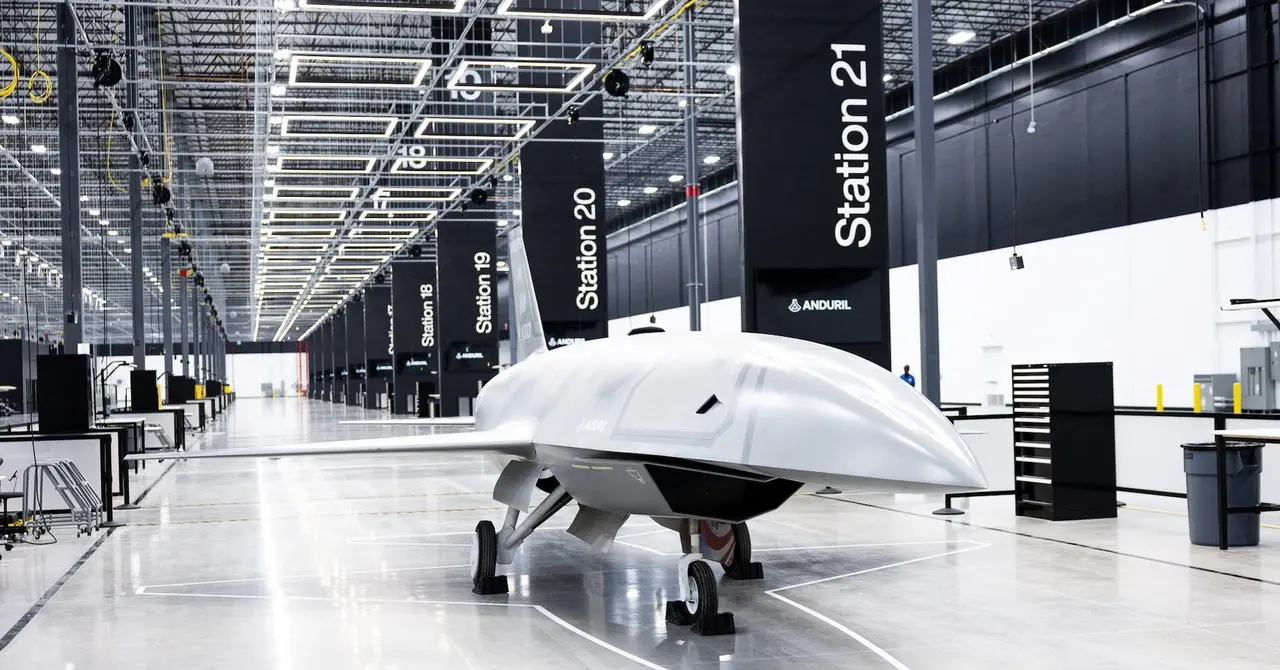
Source: Reuters
Software Sold Separately Strategy Breaks Pentagon Tradition
In a notable departure from traditional Pentagon procurement practices, the Air Force is implementing a "software sold separately" approach that deliberately decouples mission autonomy software from the physical airframe
1
. Alongside hardware production contracts, the Air Force awarded mission autonomy production contracts to six vendors: Anduril, General Atomics, Lockheed Martin, Northrop Grumman, RTX's Collins Aerospace, and Shield AI1
.This modular approach enables continuous competition among vendors to drive down costs while maintaining technological flexibility as AI-driven autonomy capabilities advance. The strategy allows the Air Force to upgrade software independently from hardware refresh cycles, potentially accelerating innovation and reducing long-term procurement costs.
Related Stories

Expanding Airpower in Future Force Design
These drones that fly alongside fighter jets are designed to serve as force multipliers for manned aircraft including the F-35 and Boeing's planned F-47 fighter jet for the Next Generation Air Dominance platform that will replace the F-22 Raptor
2
. The CCA program emphasizes distributing combat power while reducing risk to human pilots, allowing commanders to deploy large numbers of capable aircraft without the logistical and human constraints of traditional fleets2
.Pilots will command multiple autonomous aircraft that can scout ahead, engage targets, and absorb enemy fire, placing unmanned systems in high-risk roles to enhance survivability and operational resilience
2
. The platforms will eventually support missions ranging from electronic warfare and surveillance to strike operations, with AI-driven autonomy enabling rapid decision-making and mission adaptability, particularly in scenarios where communication may be degraded or denied2
. As the program scales, observers will watch closely to see whether the Air Force's accelerated timeline and competitive procurement model delivers the cost-effective airpower lethality envisioned in its future force design.References
Summarized by

Navi
[1]
[2]
Related Stories
Wingman Drones Take Center Stage as Europe Pushes to Bolster Defense Capabilities
19 Jun 2026•Technology

Anduril and Rheinmetall Partner to Develop Advanced Military Drones for European Market
18 Jun 2025•Technology

US Sends 33,000 AI-Powered 'Strike Kits' to Enhance Ukrainian Drones
29 Jul 2025•Technology

Recent Highlights
1
Microsoft and Nvidia Launch Surface Laptop Ultra: A $2,599 AI-Ready PC With RTX Spark Chip
Technology

2
Trump Consulted Grok AI Before Ordering Venezuela Invasion and Capture of Nicolás Maduro
Policy and Regulation

3
Scientists Build AI Model That Reconstructs Images From Brain Scans in Record Time
Science and Research

Recent Highlights
Today's Top Stories






Don’t drown in AI news. We cut through the noise - filtering, ranking and summarizing the most important AI news, breakthroughs and research daily. Follow topics that matter to you and stay ahead.


