5 Sources
[1]
US Navy signs deal with AI firm for training underwater drones to detect mines in Strait of Hormuz -- $100 million would allow drone minesweepers to update their detection algorithms in days instead of months
This should make clearing undersea mines faster and less dangerous for U.S. Navy sailors. The U.S. Navy just signed a $99.7 million deal with Domino Data Lab, a San Francisco-based startup, to develop AI tech that would allow its undersea minesweepers to learn about new and unseen mines in days instead of months. Reuters reports that this new technology is intended for use in the Strait of Hormuz, a key chokepoint in global sea lanes that Iran has mined to limit the movement of oil and cargo ships since the start of the U.S.-Iran war earlier this year. The software will use multiple sensor suites, such as side-scan sonar and visual imaging systems, to monitor various other AI detection models operating in the field. This should allow operators to identify failures and push corrections as it operates, rather than sending information back to a lab and waiting for AI developers to train a new model to handle novel threats. "Mine-hunting used to be a job for ships. It's becoming a job for AI. The Navy is paying for the platform that lets it train, govern, and field that AI at a speed required for contested waters that block global trade and imperil sailors," Domino CEO Thomas Robinson told the news outlet. "If there were UUVs (unmanned underwater vehicles) in the Baltic Sea trained on Russian โ mines, and then they needed to be deployed to the Strait of Hormuz to detect Iranian mines, with Domino's technology, the Navy could be ready in a week rather than a year." The Pentagon has increasingly been turning towards AI to bolster its capabilities, with the Department of War announcing deals with seven AI tech companies -- namely SpaceX, OpenAI, Google, Nvidia, Reflection, Microsoft, and Amazon Web Services -- to deploy LLMs across its classified networks. These tools are designed to sift through large volumes of data and identify patterns that are simply impossible for people to process in such a short time, thereby speeding up data analysis and decision-making. DARPA, its independent research arm, has also called for proposals to develop the next-generation deep-sea underwater drone that can be built quickly. The U.S. and Iran have had an on-again, off-again ceasefire in place for several weeks now. This makes mine-clearing operations in the Strait of Hormuz high-risk, especially since strikes could occur at any moment and without warning. Deploying AI technology on undersea drones will reduce this risk, especially by making mine detection and removal much faster. Follow Tom's Hardware on Google News, or add us as a preferred source, to get our latest news, analysis, & reviews in your feeds.
[2]
US Navy turns to AI firm Domino for options to counter Iranian mines
WASHINGTON, May 1 (Reuters) - The U.S. Navy is ramping up its AI capabilities to hunt for Iranian mines in the Strait of Hormuz, one of the world's most critical shipping lanes, a recently awarded contract shows. President Donald Trump has said the U.S. Navy is clearing Iranian mines from the strait, a vital sea route for oil shipments, whose disruption is increasingly threatening the global economy. Sweeping for underwater explosives could take months despite a tenuous ceasefire between the โ U.S. and Iran in their weeks-long war. The up to $100 million contract for the San Francisco artificial intelligence company Domino Data Lab could quicken this process with software that can teach underwater drones to identify new types of mines in a matter of days. "Mine-hunting used to be a job for ships," Thomas Robinson, Domino's chief operating officer, said in an interview with Reuters. "It's becoming a job for AI. The Navy is paying for the platform that lets it train, govern, and field that AI at a speed required for contested waters that block global trade and imperil sailors." Last week, the U.S. Navy awarded the up to $99.7 million contract to expand Domino's role โ as the AI backbone of the Navy's Project AMMO - Accelerated Machine Learning for Maritime Operations - a program to make underwater mine detection faster, more accurate, and less dependent on human sailors. The software integrates data from multiple sensor types, including side-scan sonar and visual imaging systems, and allows the Navy to monitor how well various AI detection models are performing โ in the field, identify failures, and push corrections to improve performance. The core of Domino's pitch - and the Navy's wager - is speed. Before the company's involvement, updating the AI models that power the Navy's unmanned underwater vehicles (UUVs) to recognize new or โ previously unseen mines could take up to six months. Domino says it has cut that cycle to days. Robinson illustrated the relevance to the Middle East crisis: "If there were UUVs in the Baltic Sea trained on Russian โ mines, and then they needed to be deployed to the Strait of Hormuz to detect Iranian mines, with Domino's technology, the Navy could be ready in a week rather than a year." A Navy spokesman was not immediately able to provide comment. Reporting by Mike Stone in Washington; Editing by Tom Hogue Our Standards: The Thomson Reuters Trust Principles., opens new tab * Suggested Topics: * Artificial Intelligence Mike Stone Thomson Reuters Mike Stone is a Reuters reporter covering the U.S. arms trade and defense industry. Most recently Mike has been focused on the Golden Dome missile defense shield. Mike also spends a lot of his time writing on Ukraine and how industry has adapted, or faltered as it supports that conflict. Mike, a New Yorker, has extensively covered how the U.S. has supplied Ukraine with weapons, the cadence, decisions and milestones that have had battlefield impacts. Before his time in Washington Mike's coverage focused on mergers and acquisitions for oil and gas companies, financial institutions, defense companies, consumer product makers, retailers, real estate giants, and telecommunications companies.
[3]
US Navy Turns to AI Firm Domino for Options to Counter Iranian Mines
WASHINGTON, May 1 (Reuters) - The U.S. Navy is โ ramping โ up its AI capabilities to โ hunt for Iranian mines in the Strait of Hormuz, one of the world's most critical shipping lanes, a recently awarded contract shows. President Donald Trump has said the U.S. Navy is clearing Iranian mines from the strait, a vital sea route for oil shipments, whose disruption is increasingly threatening the global economy. โ Sweeping for โ underwater explosives could take months despite a tenuous ceasefire between the U.S. and Iran in their weeks-long war. The up to $100 million contract for the San Francisco artificial intelligence company Domino Data Lab could quicken this process with software that can teach underwater drones to identify new types of mines in a matter of days. "Mine-hunting used to be a job for ships," Thomas Robinson, โ Domino's โ chief operating officer, said in โ an interview with Reuters. "It's becoming a job for AI. The Navy is paying for the platform that lets it train, govern, and field โ that AI at a speed required for contested waters that block global trade and imperil sailors." Last week, the U.S. Navy awarded the up to $99.7 million contract to expand Domino's role as the AI backbone of the Navy's Project AMMO - Accelerated Machine Learning for Maritime Operations - a program to make underwater โ mine detection faster, more accurate, and less dependent on human sailors. The software integrates data โ from multiple sensor types, including side-scan sonar and visual imaging systems, and allows the Navy to monitor how well various AI detection models are performing in the field, identify failures, and push corrections to improve performance. The core of Domino's pitch - and the Navy's wager - is speed. Before the company's involvement, updating the AI models that power the Navy's unmanned underwater vehicles (UUVs) to recognize new or previously unseen mines could take up to six months. Domino says it has cut that cycle to days. Robinson illustrated the relevance โ to the Middle East crisis: "If there were UUVs in the Baltic Sea trained on Russian mines, and then they needed to be deployed to the Strait of Hormuz to detect Iranian mines, with Domino's technology, the Navy could be ready in a week rather than a year." A Navy spokesman was not immediately able to provide comment. (Reporting by Mike Stone in Washington; Editing by Tom Hogue)
[4]
US Navy turns to AI firm Domino for options to counter Iranian mines
The U.S. Navy is accelerating its artificial intelligence capabilities to detect Iranian mines in the Strait of Hormuz, a critical shipping lane. A new contract with Domino Data Lab aims to significantly reduce the time it takes to train underwater drones to identify new mine types, potentially cutting a six-month process down to days. The U.S. Navy is ramping up its AI capabilities to hunt for Iranian mines in the Strait of Hormuz, one of the world's most critical shipping lanes, a recently awarded contract shows. President Donald โ Trump โ has said the U.S. Navy is clearing Iranian mines from the strait, a vital sea route for oil shipments, whose disruption is increasingly threatening the global economy. Sweeping for underwater explosives could take months despite a tenuous ceasefire between the U.S. and Iran in their weeks-long war. The up to $100 million contract for the San Francisco artificial intelligence company Domino Data Lab could quicken this process with software that can teach underwater drones to identify new types of mines in a matter โ of days. "Mine-hunting used to be a job for ships," Thomas Robinson, Domino's chief operating officer, said in an interview with Reuters. "It's becoming a job for AI. The Navy is โ paying for the platform that lets it train, govern, and field that AI at a speed required for contested waters that block global trade and imperil sailors." Last week, the U.S. Navy awarded the up to $99.7 million contract to expand Domino's role as the AI backbone of the Navy's Project AMMO - Accelerated Machine Learning for Maritime Operations - a program to make underwater mine detection faster, more accurate, and less dependent on human sailors. The software integrates data from multiple sensor types, including side-scan sonar and visual imaging systems, and allows the Navy to monitor how well various AI detection models are performing in the field, identify failures, and push corrections to improve performance. The core of Domino's pitch - and the Navy's wager - is speed. โ Before the company's involvement, updating the AI models that power the Navy's unmanned underwater vehicles (UUVs) to recognize new or previously unseen mines could take up to six months. Domino says it has cut that cycle to days. Robinson illustrated the relevance to the Middle East crisis: "If there were UUVs in the Baltic Sea trained on Russian mines, and then they needed to be deployed to the Strait of Hormuz to detect Iranian mines, with Domino's technology, the Navy could be ready in a week rather than a year." A Navy spokesman was not immediately able to provide comment. (You can now subscribe to our Economic Times WhatsApp channel)
[5]
US Navy turns to AI firm Domino for options to counter Iranian mines
The US Navy is ramping up its AI capabilities to hunt for Iranian mines in the Strait of Hormuz, one of the world's most critical shipping lanes, according to a recently awarded contract. US President Donald Trump has said the US Navy is clearing Iranian mines from the Strait, a vital sea route for oil shipments, whose disruption is increasingly threatening the global economy. Sweeping for underwater explosives could take months despite a tenuous ceasefire between the US and Iran in their weeks-long war. The up to $100 million contract for the San Francisco artificial intelligence company Domino Data Lab could quicken this process with software that can teach underwater drones to identify new types of mines in a matter of days. "Mine-hunting used to be a job for ships," Thomas Robinson, Domino's chief operating officer, said in an interview with Reuters. "It's becoming a job for AI. The navy is paying for the platform that lets it train, govern, and field that AI at a speed required for contested waters that block global trade and imperil sailors." Last week, the US Navy awarded a contract worth up to $99.7 million to expand Domino's role as the AI backbone of the navy's Project AMMO - Accelerated Machine Learning for Maritime Operations - a program to make underwater mine detection faster, more accurate, and less dependent on human sailors. The software integrates data from multiple sensor types, including side-scan sonar and visual imaging systems, and allows the navy to monitor how well various AI detection models are performing in the field, identify failures, and push corrections to improve performance. From months to days The core of Domino's pitch - and the navy's wager - is speed. Before the company's involvement, updating the AI models that power the navy's unmanned underwater vehicles (UUVs) to recognize new or previously unseen mines could take up to six months. Domino says it has cut that cycle to days. Robinson illustrated the relevance to the Middle East crisis: "If there were UUVs in the Baltic Sea trained on Russian mines, and then they needed to be deployed to the Strait of Hormuz to detect Iranian mines, with Domino's technology, the navy could be ready in a week rather than a year." A navy spokesman was not immediately able to provide a comment.
Share
Copy Link
The US Navy signed a $99.7 million deal with Domino Data Lab to develop AI technology that trains underwater drones to identify new mines in days rather than months. The software is designed for use in the Strait of Hormuz, where Iranian mines threaten global oil shipments and trade routes during an ongoing ceasefire.
The US Navy has awarded a $99.7 million contract to San Francisco-based Domino Data Lab, marking a significant shift in how naval forces approach underwater mine detection in contested waters
1
2
. The deal expands Domino's role as the AI backbone of Project AMMOโAccelerated Machine Learning for Maritime Operationsโa program designed to make underwater mine detection faster, more accurate, and less dependent on naval personnel3
. This technology addresses an urgent operational need in the Strait of Hormuz, where detecting Iranian mines has become critical to maintaining global trade security and protecting oil shipments during a tenuous ceasefire between the US and Iran4
.
Source: Tom's Hardware
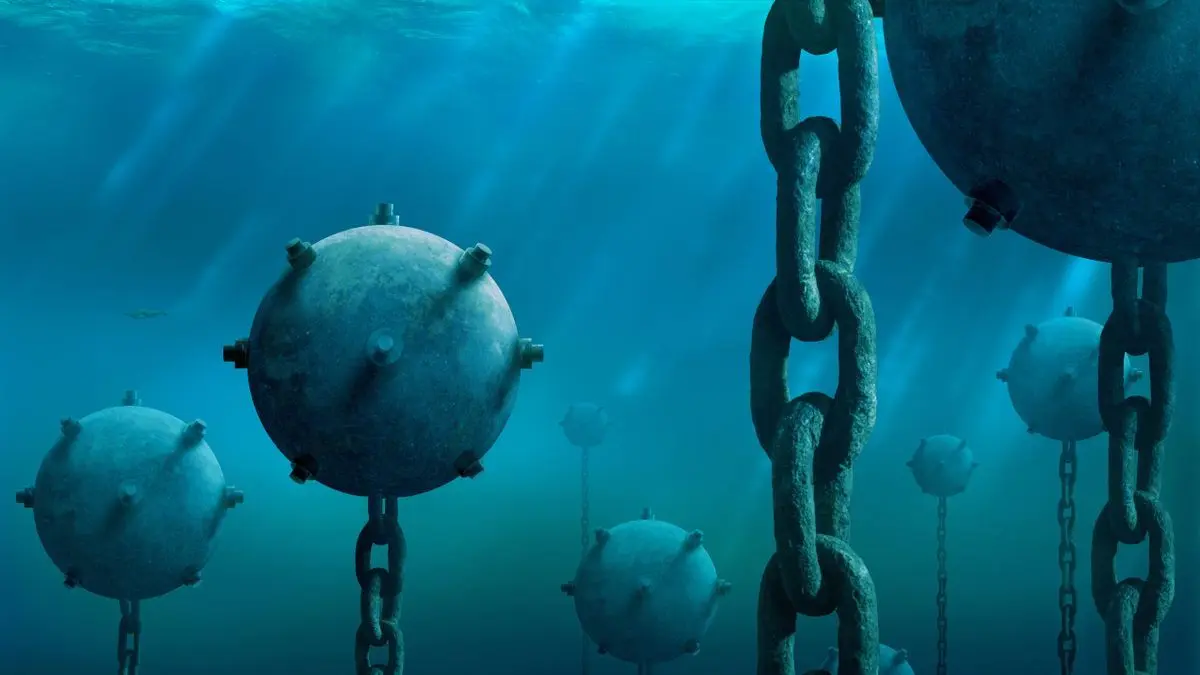
The core value proposition of this $100 million contract lies in dramatically accelerated training cycles for AI detection models. Before Domino Data Lab's involvement, updating detection algorithms that power unmanned underwater vehicles (UUVs) to recognize new or previously unseen mines could take up to six months
2
. The company claims it has reduced that timeline to mere days3
. Thomas Robinson, Domino's chief operating officer, explained the strategic implications: "If there were UUVs in the Baltic Sea trained on Russian mines, and then they needed to be deployed to the Strait of Hormuz to detect Iranian mines, with Domino's technology, the Navy could be ready in a week rather than a year"5
. This rapid adaptation capability transforms mine-hunting capabilities from a slow, ship-based operation into an agile, AI-driven process that can respond to emerging threats in real time.The software integrates data from multiple sensor types, including side-scan sonar and visual imaging systems, creating a comprehensive detection framework for underwater drones
1
. This multi-sensor approach allows operators to monitor how various AI detection models perform in the field, identify failures, and push corrections to improve performance without retrieving the vehicles2
. Rather than sending information back to a lab and waiting for AI developers to train new models, the system enables real-time updates as unmanned underwater vehicles operate in shipping lanes1
. Robinson characterized the transformation succinctly: "Mine-hunting used to be a job for ships. It's becoming a job for AI"4
.
Source: ET
Related Stories

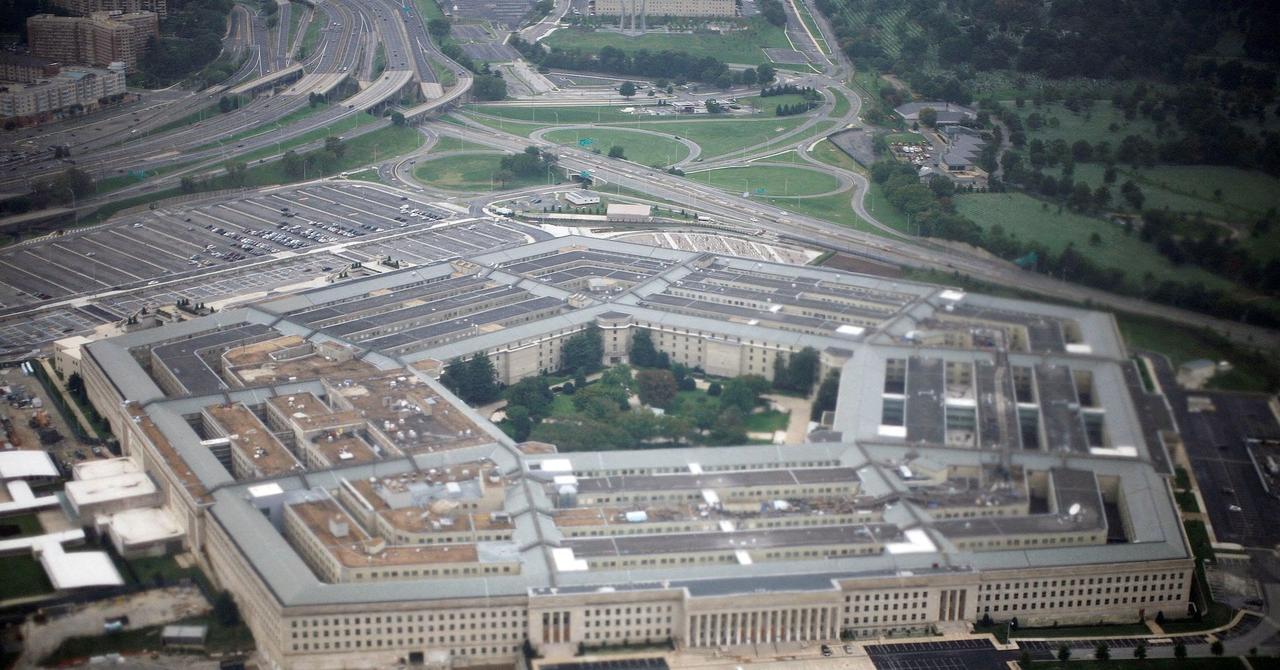
This contract reflects broader Pentagon efforts to integrate AI across military operations. The Department of Defense has announced deals with seven major AI tech companiesโSpaceX, OpenAI, Google, Nvidia, Reflection, Microsoft, and Amazon Web Servicesโto deploy large language models across classified networks
1
. These tools sift through massive data volumes and identify patterns impossible for humans to process quickly, accelerating analysis and decision-making. DARPA has also called for proposals to develop next-generation deep-sea underwater drone platforms that can be built rapidly1
. The focus on detecting Iranian mines in the Strait of Hormuz carries immediate operational urgency, as President Donald Trump has stated the US Navy is actively clearing Iranian mines from this vital sea route for oil shipments. Sweeping for underwater explosives could take months despite the ongoing ceasefire, making AI-enabled speed essential for reducing risk to sailors and maintaining global economic stability.
Source: Reuters
Summarized by
Navi
[5]
13 May 2025โขTechnology

28 Feb 2026โขPolicy and Regulation

17 Mar 2026โขTechnology

1
Technology

2
Entertainment and Society

3
Policy and Regulation