USPTO Clarifies AI Cannot Be Named as Patent Inventor in New Guidelines


6 Sources
[1]
USPTO: No, AI Can't Be Your Co-Inventor
The U.S. Patent and Trademark Office (USPTO) has clarified its ground rules governing AI-assisted inventions. The new guidance states that inventors are free to use AI systems during their invention process, without these AI systems becoming co-inventors legally. "They are analogous to laboratory
[2]
US patent office says generative AI is equivalent to other tools in inventors' belts
While generative AI systems cannot be considered inventors under US patent laws, the US Patent and Trademark Office has updated its guidelines on how they can be used in the process of creating innovations. The agency's director, John Squires, said in a notice obtained by Reuters that the USPTO
[3]
US Patent office says AI can make inventions, but you will get the credit
Patent office clarifies how AI-assisted inventions will be treated The US government just laid down the law on who owns an idea when AI helps create it. The US Patent and Trademark Office (USPTO) issued new guidelines basically saying that AI tools - like ChatGPT, image generators, or coding
[4]
Can AI Be Listed as a Patent Inventor? USPTO Says No - Phandroid
If you've been using AI tools to develop your next big app idea or tech innovation, here's something you need to know. The United States Patent and Trademark Office issued revised guidelines on November 26, 2025, making it crystal clear that AI systems cannot be named as inventors on patent
[5]

US Patent Office Says AI Cannot Be Listed as Inventor
* New USPTO guidance treats AI as a tool, not a patent inventor * Previous 2024 joint-inventor draft has now been rescinded * AI is also not eligible for joint inventorship patents The United States Patent and Trademark Office (USPTO) has issued new guidelines clarifying how inventions developed
[6]

US Sets New Rules for Patents Involving AI | PYMNTS.com
By completing this form, you agree to receive marketing communications from PYMNTS and to the sharing of your information with our sponsor, if applicable, in accordance with our Privacy Policy and Terms and Conditions. In guidance released Wednesday and scheduled for publication on Friday, USPTO
Share
Copy Link
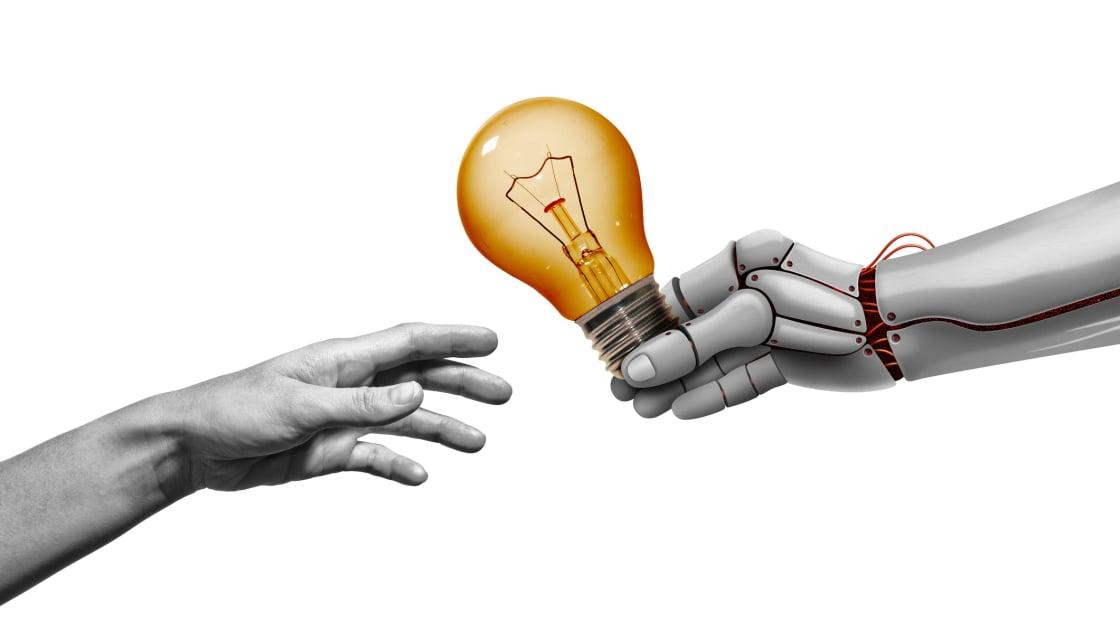
The U.S. Patent and Trademark Office has issued updated guidelines stating that AI systems cannot be listed as inventors on patent applications, treating them instead as tools similar to laboratory equipment or software.
USPTO Issues Definitive Stance on AI Inventorship
The U.S. Patent and Trademark Office (USPTO) has released comprehensive new guidelines clarifying that artificial intelligence systems cannot be named as inventors or co-inventors on patent applications. The guidance, published on November 28, 2024, treats AI systems as tools rather than creative entities, fundamentally reshaping how AI-assisted innovations will be evaluated under U.S. patent law
1
.According to USPTO Director John Squires, AI systems "are analogous to laboratory equipment, computer software, research databases, or any other tool that assists in the inventive process." The guidance explicitly states that "artificial intelligence systems, regardless of their sophistication, cannot be named as inventors or joint inventors on a patent application, as they are not natural persons"
2
.Superseding Previous Guidelines
The new guidelines completely replace the USPTO's previous AI inventorship rules published in February 2024, which had considered applying a joint-inventor standard when AI systems were involved. The updated approach eliminates any separate evaluation process for AI-assisted inventions, instead applying traditional inventorship principles across all patent applications
5
.Under the revised framework, when multiple people collaborate on an invention with AI assistance, the office will apply traditional joint-inventorship principles, including the established "Pannu factors" from the court case Pannu v. Iolab Corp. However, these factors only apply when multiple human inventors are involved, not when a single human works with AI assistance
1
.Practical Implications for Inventors
For inventors and companies utilizing AI tools in their development processes, the guidelines provide crucial clarity on ownership and documentation requirements. The rules establish a clear framework: human conception plus AI assistance equals patentable invention, while AI-generated ideas without human input cannot be patented
3
.Inventors must now focus on documenting their human contributions throughout the AI-assisted invention process. This includes demonstrating roles in prompt engineering, refining AI outputs, and selecting which AI-generated solutions to implement. The burden remains on applicants to prove that human creativity and decision-making produced the core inventive concept
4
.Related Stories

International Context and Legal Criticism
The USPTO's position aligns with similar stances taken by other major patent offices worldwide. The UK Supreme Court rejected computer scientist Stephen Thaler's attempts to patent inventions using his AI system DABUS as the inventor, and similar rejections occurred in the European Union. This international consensus reflects a coordinated approach to maintaining human-centric patent systems
1
.However, the decision has drawn criticism from legal experts who argue it may create enforcement challenges. Stanford Law School Professor Mark Lemley warned that the approach could lead to applicants misrepresenting AI involvement in their inventions. "In practice, I suspect this means applicants will lie about who made AI-generated inventions, the PTO will let them, and those patents will be in trouble if and when they are enforced in court," Lemley stated
1
.References
Summarized by

Navi
[1]
[5]
Related Stories
US Patent and Trademark Office Bans Internal Use of Generative AI Tools
20 Nov 2024•Policy and Regulation

US Supreme Court declines AI-generated art copyright case, upholding human authorship requirement
02 Mar 2026•Policy and Regulation

India Rejects AI Authorship in DABUS Copyright Case, Sparking Debate on AI-Generated Artwork Protection
04 Sept 2026•Policy and Regulation

Recent Highlights



Recent Highlights
Today's Top Stories



Don’t drown in AI news. We cut through the noise - filtering, ranking and summarizing the most important AI news, breakthroughs and research daily. Follow topics that matter to you and stay ahead.


