Vanderbilt develops AI tool to cut Alzheimer's treatment delays from weeks to days


2 Sources
[1]
AI tool aims to accelerate Alzheimer's treatment through faster referrals
Vanderbilt University Medical CenterAug 5 2026Reviewed Vanderbilt Health researchers have received a grant from Eli Lilly and Company, a multinational pharmaceutical company headquartered in Indianapolis, to build an artificial intelligence (AI) tool within the electronic health record system
[2]
Team's AI agent to speed Alzheimer's treatment | Newswise
Vanderbilt Health researchers have received a grant from Eli Lilly and Company, a multinational pharmaceutical company headquartered in Indianapolis, to build an artificial intelligence (AI) tool within the electronic health record system (EHR) to get patients with Alzheimer's disease to treatment
Share
Copy Link
Vanderbilt Health secured a $600,000 grant from Eli Lilly and Company to build an AI triage agent within electronic health record systems that accelerates Alzheimer's treatment. The tool aims to eliminate weeks-long delays between referral and first infusion by summarizing patient charts, flagging missing information, and prioritizing cases while preserving clinical judgment.
AI Triage Agent Targets Weeks-Long Treatment Delays
Vanderbilt Health researchers have secured a $600,000 grant from Eli Lilly and Company to develop an AI tool embedded within the electronic health record system that promises to accelerate Alzheimer's treatment by eliminating bottlenecks in the referral process
1
2
. The 18-month project addresses a critical gap in dementia care: patients who qualify for newly approved monoclonal antibody therapies often wait weeks moving through referrals, specialist evaluation, brain imaging, and insurance authorization before receiving their first infusion. The AI triage agent will target the handoff from primary care or geriatrics to neurology, where delays frequently accumulate.How the EHR-Embedded System Works
Source: News-Medical
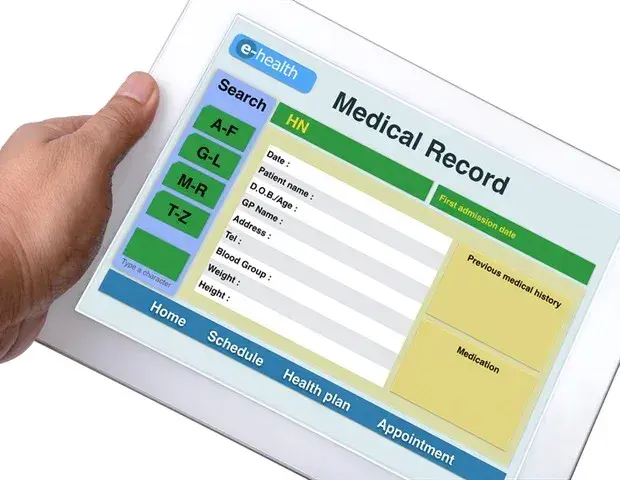
As clinicians enter a referral for cognitive concerns, the AI-enabled healthcare delivery system will automatically summarize patient charts, extracting relevant information from the electronic health record system
1
. The tool flags missing details that commonly slow evaluation and recommends whether cases should be routed as priority or standard. Crucially, clinicians retain full authority to accept, edit, or override every recommendation, ensuring clinical judgment remains central to patient care. "This tool will be designed to make sure that when a referral arrives, we already have the information we need to act quickly," said co-principal investigator Amalia Peterson, MD, Assistant Professor of Neurology at Vanderbilt2
. "It doesn't replace clinical judgment, but it will remove a lot of the friction that keeps patients waiting."Research Methodology and Success Metrics
The project is led by You Chen, PhD, Associate Professor of Biomedical Informatics at Vanderbilt University Medical Center, alongside co-principal investigators Peterson and geriatrician Sean Huang, MD
1
. The team will first map where delays accumulate by using AI to reconstruct care timelines from a Vanderbilt Health cohort of more than 5,300 patients. Researchers will identify root causes of these delays with input from clinicians and operational staff before deploying the AI agent in a pilot program. Success will be measured by the reduction in time from diagnosis to first infusion, with the computer project designed for transferability to other health systems beyond Vanderbilt.Related Stories




Broader Implications for Dementia Care Pathway
Co-principal investigator Huang emphasized the challenge facing families navigating the system: "For many patients and families, the pathway begins in primary care or geriatrics, where cognitive concerns are first recognized, and the next steps can be difficult to navigate"
2
. The team's proposal contemplates expanding beyond the initial AI triage agent. A second AI agent could analyze MRI images and generate Alzheimer's-related safety reports for radiologist review, while a third could compile therapy authorization packets and track the insurance authorization process. Chen, who also leads an ongoing $1 million Lilly-funded project addressing gaps in obesity care, noted that these grants highlight Vanderbilt's leadership in AI-enabled healthcare delivery. The project team includes Biomedical Informatics associate professors Laurie Novak, PhD, and Kim Unertl, PhD, along with Research Instructor Chao Yan, PhD1
. As amyloid-positive Alzheimer's patients gain access to treatments that slow cognitive decline, reducing delays in the referral process becomes increasingly urgent for preserving quality of life and cognitive function.References
Summarized by

Navi
Related Stories
Recent Highlights
1
Microsoft and Nvidia Launch Surface Laptop Ultra: A $2,599 AI-Ready PC With RTX Spark Chip
Technology

2
OpenAI Releases 722 AI-Generated Math Papers on GitHub, Igniting Fury Among Mathematicians
Science and Research

3
Trump Consulted Grok AI Before Ordering Venezuela Invasion and Capture of Nicolás Maduro
Policy and Regulation

Recent Highlights
Today's Top Stories









Don’t drown in AI news. We cut through the noise - filtering, ranking and summarizing the most important AI news, breakthroughs and research daily. Follow topics that matter to you and stay ahead.


