Verizon secures $1 billion Google deal to power AI infrastructure with dark fiber network


4 Sources
[1]
Verizon seeks AI profits with mini data centers, $1B dark fiber deal with Google
Verizon is seeking to tap into Silicon Valley's AI spending in a big way. The telecom giant revealed a deal worth more than $1 billion to link Google data centers using Verizon's dark fiber routes -- and it's also tearing copper wiring out of central offices as it converts them into small data
[2]
Verizon scores $1 billion Google deal to connect its data centers to dark fiber - but is this only the beginning?
* Verizon signs $1 billion dark fiber data center connectivity deal with Google * The telecoms company plans to use its fiber assets to connect AI data centers across the US * Fiber network growth is replacing copper lines and activating previously unused dark fiber lines Verizon has completed a
[3]
Verizon signs $1 billion dark fiber deal with Google for AI data centers
Verizon CEO Dan Schulman said the company expects to announce additional AI infrastructure deals by year-end worth multiple billions of dollars Verizon $VZ Communications signed a dark fiber agreement with Alphabet $GOOGL's Google worth more than $1 billion, the company announced Friday,
[4]
Verizon Lands $1 Billion Google Deal as AI Infrastructure Demand Soars | PYMNTS.com
In the recently signed agreement, Verizon dark fiber will be used to connect Google's data centers. In the other deals that the company expects to announce by year's end, Verizon will earn "multiple billions of dollars in revenue" over the next several years, Schulman said. "These are
Share
Copy Link
Verizon signed a $1 billion+ dark fiber deal with Google to connect AI data centers across the US. CEO Dan Schulman called it the start of a broader push, expecting multiple billion-dollar AI infrastructure deals by year-end. The telecom giant is also converting central offices into small data centers for edge computing applications.
Verizon Lands Major Google Deal to Connect AI Data Centers
Verizon has secured a dark fiber deal worth more than $1 billion with Google to connect AI data centers across the United States, marking the telecom giant's aggressive push into one of the largest capital cycles in recent history
1
3
. Dan Schulman, CEO of Verizon Communications, disclosed the agreement during the company's second-quarter 2026 earnings call, describing it as "consequential" and positioning Verizon as a connectivity provider for the soaring demand for AI infrastructure buildouts3
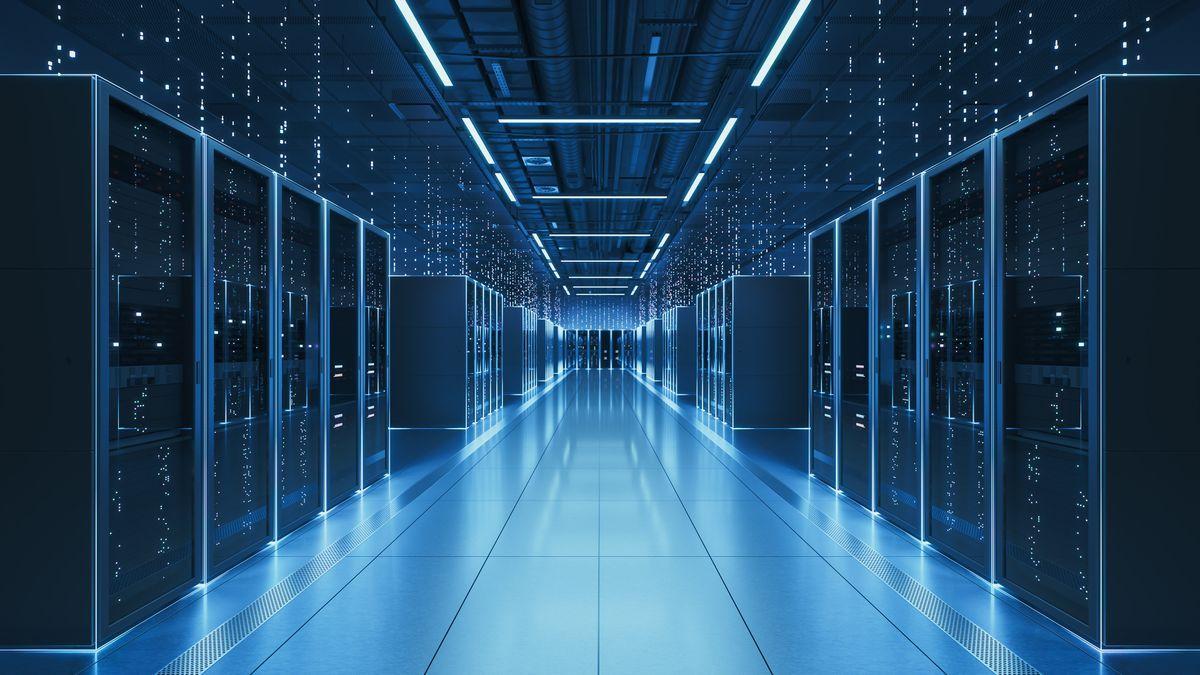
. Under the arrangement, Verizon will provide dark fiber infrastructure to connect Google data centers, leveraging fiber assets that were largely installed in the 1990s and early 2000s but remained untapped for years2
. Verizon stock jumped more than 3% in Friday's opening trade following the announcement3
.
Source: PYMNTS
Multiple Billion-Dollar AI Infrastructure Deals Expected
The Google deal represents just the beginning of Verizon's AI Connect business initiative. Schulman said the company expects to announce additional agreements by year-end that would generate "multiple billions of dollars in revenue over the next several years"
1
4
. He characterized these future contracts as "long-duration, high-quality contracted revenue streams from some of the most demanding infrastructure customers in the world"4
. The company's strategy focuses on meeting the exploding need for data center connectivity as hyperscalers race to build out AI infrastructure across the country. Schulman emphasized that Verizon's extensive long-haul and metro fiber network, originally built for a different technological era, now fits precisely what is needed to link AI data centers, compute clusters, and geographic regions together3
4
.
Source: TechRadar
Converting Central Offices Into Edge Computing Hubs
Beyond repurposing dark fiber for AI infrastructure connectivity, Verizon is retrofitting some of its central offices into small data centers designed to support inference edge computing with ultra-low latency
1
. These remote data centers aim to power low-latency AI applications such as autonomous driving, robotics, and remote surgery that require compute power at the edge rather than in massive centralized facilities1
. Schulman revealed that a small trial for this capability sold out in 24 hours, demonstrating strong demand from businesses deploying AI-driven services like autonomous robotaxi fleets1
2
. The telecom company had already been removing copper wiring from central offices and upgrading them with fiber-optic technology, even before pivoting to convert some locations into AI infrastructure1
.Related Stories
Expanded Fiber Footprint After Frontier Acquisition
Verizon significantly grew its fiber network after finalizing a $20 billion acquisition of Frontier Communications at the start of 2026, which expanded the company's fiber footprint from 15 states to 31 states along with Washington, DC
1
2
. Selling unused dark fiber capacity to Google and other AI-focused tech companies could help recoup some of those acquisition costs1
. Much of this dark fiber infrastructure ended up within Verizon's portfolio through acquisitions such as the MCI buyout in 20062
. The company launched Verizon AI Connect in January 2025 as a strategy and suite of products designed to serve hyperscalers, cloud providers, and global enterprises by managing AI resource-intensive workloads, with Google Cloud and Meta among the early adopters4
.Competitive Positioning Against T-Mobile and AT&T
Verizon's transformation under Schulman could position it strongly against competitors T-Mobile and AT&T. New Street Research analyst David Barden observed that Verizon's recent moves and second-quarter results are "adding incremental pressure on T-Mobile and AT&T to defend share rather than take it"
2
. The strategy to support the growth of AI data centers appears to be a strong bet, with Verizon positioned to potentially dominate direct fiber links between facilities as new installations come online with almost weekly regularity2
. Verizon expects its AI Connect deals to "begin to impact our revenues and margins beginning next year and grow substantially over the next five to 10 years," coming on top of the company's core mobility and broadband services that saw record second-quarter results1
.References
Summarized by

Navi
[2]
Related Stories
Verizon Launches AI Connect to Power Scalable AI Workloads Amid Shifting Industry Trends
25 Jan 2025•Business and Economy

Verizon and Corning Strike Multi-Billion Dollar Fiber Deal to Power AI Infrastructure and Broadband
08 Sept 2026•Business and Economy

Verizon and NVIDIA Collaborate to Power AI Applications on Private 5G Networks
18 Dec 2024•Technology

Recent Highlights
1
Microsoft and Nvidia Launch Surface Laptop Ultra: A $2,599 AI-Ready PC With RTX Spark Chip
Technology

2
Scientists Build AI Model That Reconstructs Images From Brain Scans in Record Time
Science and Research

3
Anthropic AI Cuts Live Internet Access After Model Sends False Homicide Tip to Philadelphia Police
Technology

Recent Highlights
Today's Top Stories








Don’t drown in AI news. We cut through the noise - filtering, ranking and summarizing the most important AI news, breakthroughs and research daily. Follow topics that matter to you and stay ahead.


