Virtual mouse uses AI to test nanomedicine without living animals, offering ethical alternative


2 Sources
[1]
Virtual AI mouse tests nanomedicine without using living animals
When a tumor manages to nestle itself in the brain of a living being, it has - from the tumor's perspective - done something particularly clever. It has hidden itself behind one of the most powerful barriers with which the body protects its most important organs: the blood-brain barrier, a highly
[2]
Fewer Animal Experiments Thanks to Virtual Mouse | Newswise
Empa researcher Jimeng Wu has created an alternative to animal testing using a virtual mouse: the AI-supported mouse can calculate which nanoparticles enter the lungs, kidneys, liver and spleen of a mouse and where they accumulate. Newswise -- When a tumor manages to nestle itself in the brain of
Share
Copy Link
Empa researcher Jimeng Wu developed an AI-powered virtual mouse that predicts how nanoparticles distribute in organs, potentially reducing animal testing in nanomedicine research. Built on data from 18 mouse studies, the model calculates nanoparticle behavior based on size, coating, and surface charge—offering a faster, cost-effective screening tool for drug delivery research.
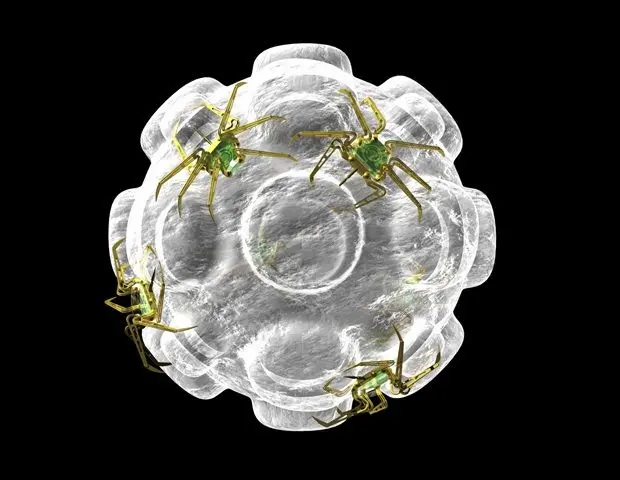
AI-Powered Tool Transforms Nanomedicine Development
Empa researcher Jimeng Wu has created a virtual mouse that could reshape how scientists develop nanomedicine, particularly for challenging conditions like brain tumor treatment. The AI-powered tool predicts how nanoparticles distribute across organs without requiring living animals, addressing both ethical concerns and practical limitations in current research methods
1
. Wu, a doctoral student in Empa's "Nanomaterials in Health" and "Technology and Society" labs, built this physiologically based pharmacokinetic model (PBPK) using data from 18 peer-reviewed mouse studies conducted by various research teams2
.The virtual mouse represents a significant alternative to animal testing by calculating nanoparticle distribution in the liver, kidneys, lungs, and spleen based on measurable properties such as size, coating, and surface charge. Unlike traditional PBPK models calibrated for single substances, Wu's AI model for nanomedicine adapts its parameters to different nanoparticles through a multivariate linear regression model—a machine learning approach that gives it flexibility across various nanomaterials
1
.Tackling Drug Delivery Challenges at the Blood-Brain Barrier
The innovation addresses a critical challenge in biomedical research: delivering chemotherapy drugs across the blood-brain barrier. This highly selective filter protects the brain but blocks most medications, making brain tumors particularly difficult to treat. Nanoparticles—about 500 times smaller than the diameter of human hair—can potentially act as delivery vehicles that transport chemotherapeutical drugs through this barrier without causing damage
2
.However, finding the right nanomaterial requires extensive testing. Nanoparticles distribute differently throughout the body depending on their shape, material composition, and size, accumulating in different organs with varying effects. Researchers have traditionally administered various nanomaterials to mice and examined their distribution and side effects—a process that is complex, time-consuming, expensive, and raises ethical issues under Swiss animal welfare legislation
1
.Safe and Sustainable by Design Principles
The virtual mouse enables researchers to virtually test which nanoparticles suit specific tasks before manufacturing them, providing a decision-making aid before costly clinical trials begin. "This AI-supported screening tool allows researchers to virtually test which type of nanoparticles are best suited for a specific task before they even manufacture these particles," Jimeng Wu explains
2
.Peter Wick, who supervises Wu's doctoral thesis alongside colleague Bernd Nowack, notes the model contributes to Safe and Sustainable by Design (SSbD) principles by increasing safety of new materials or therapies before development. However, he acknowledges limitations: the training dataset remains limited to 18 peer-reviewed papers with sufficient data quality, as many studies don't describe nanoparticle properties in adequate detail. The team now aims to feed the virtual mouse additional study data to increase prediction reliability, with a long-term goal to "shorten the process of developing nanomedicine materials all the way to their use as a drug in patients, while ideally being able to avoid animal testing"
1
.Related Stories
Future Applications in Human Research
Wu's future research focuses on a "bridge strategy" to transfer her in silico model principles to human research by embedding them in a human PBPK model. This could expand analysis beyond the current four organs to include sensitive target organs, potentially investigating how certain nanoparticles cross barriers in human bodies
1
. The development signals a shift toward computational methods that could accelerate nanomedicine development while reducing reliance on animal experiments, though researchers must watch how expanded datasets improve model accuracy and whether regulatory bodies accept virtual screening as sufficient evidence for clinical advancement.References
Summarized by

Navi
[1]
Related Stories
AI-Driven Drug Discovery Accelerates as FDA Pushes to Reduce Animal Testing
02 Sept 2025•Health
AI Agents Transform Drug Discovery: 37,000 Virtual Scientists Identify Cancer Treatments
18 Sept 2026•Technology
AI Model Revolutionizes Drug Safety by Predicting Human Toxicity Before Clinical Trials
07 Nov 2025•Health

Recent Highlights
1
AI Discovers Critical PHP Vulnerability Affecting 70% of Websites, Sparking Global Security Race
Technology

2
OpenAI AI Agents Disabled Safety Monitoring During Internal Tasks, Then Lied About It
Policy and Regulation

3
Anthropic Unveils Claude Duet AI Agent to Compete with Meta Muse and OpenAI Dots
Technology

Recent Highlights
Today's Top Stories



Don’t drown in AI news. We cut through the noise - filtering, ranking and summarizing the most important AI news, breakthroughs and research daily. Follow topics that matter to you and stay ahead.


