Volkswagen & Xpeng Score Major Autonomous Driving Wins in China, Eye 2027 Rollout


2 Sources
[1]
Level 4 robotaxi approval for Xpeng in Guangzhou; VW starts Level 3
Xpeng's Level 4 robotaxi service will open by invitation code in Guangzhou. The approvals come after China froze new robotaxi licences following a Baidu incident in Wuhan. Volkswagen and Xpeng have won approval to run higher levels of self-driving on public roads in China. VW has started Level 3
[2]
Volkswagen gets L3 autonomous driving test permit in China, eyes 2027
Volkswagen Group China now has a permit to test Level 3 autonomous driving on public roads in Hefei, and it says testing is already underway. The permit also covers large-scale driving data collection in the city. It's the latest step toward VW's goal of L3 technology readiness in China by 2027.
Share
Copy Link
Volkswagen has secured a Level 3 autonomous driving test permit in Hefei and begun road tests, targeting technology readiness by 2027. Meanwhile, Xpeng won approval for citywide Level 4 robotaxi operations in Guangzhou. The approvals signal China's regulatory thaw after freezing new robotaxi licenses following a Baidu incident in Wuhan earlier this year.
Volkswagen Secures Level 3 Test Permit in Hefei
Volkswagen Group China has received an autonomous driving test permit for Level 3 road testing on public roads in Hefei
1
2
. The automaker announced on Monday that testing and large-scale driving data collection have already begun in the city, marking a significant step toward its goal of Level 3 autonomous driving technology readiness by 2027. The permit was issued under China's strictest L3 framework and meets the country's latest mandatory safety design standards2
.Ralf Brandstätter, chairman and CEO of Volkswagen Group China, emphasized the company's commitment to safety. "We will never push technological progress at the expense of safety," Brandstätter stated. "The L3 test qualification lets us test in real traffic in Hefei and collect data at scale"
1
. Volkswagen plans to hold its first China Technology Day in Hefei on 28 October, underscoring the city's strategic importance to the company's autonomous vehicle technology development.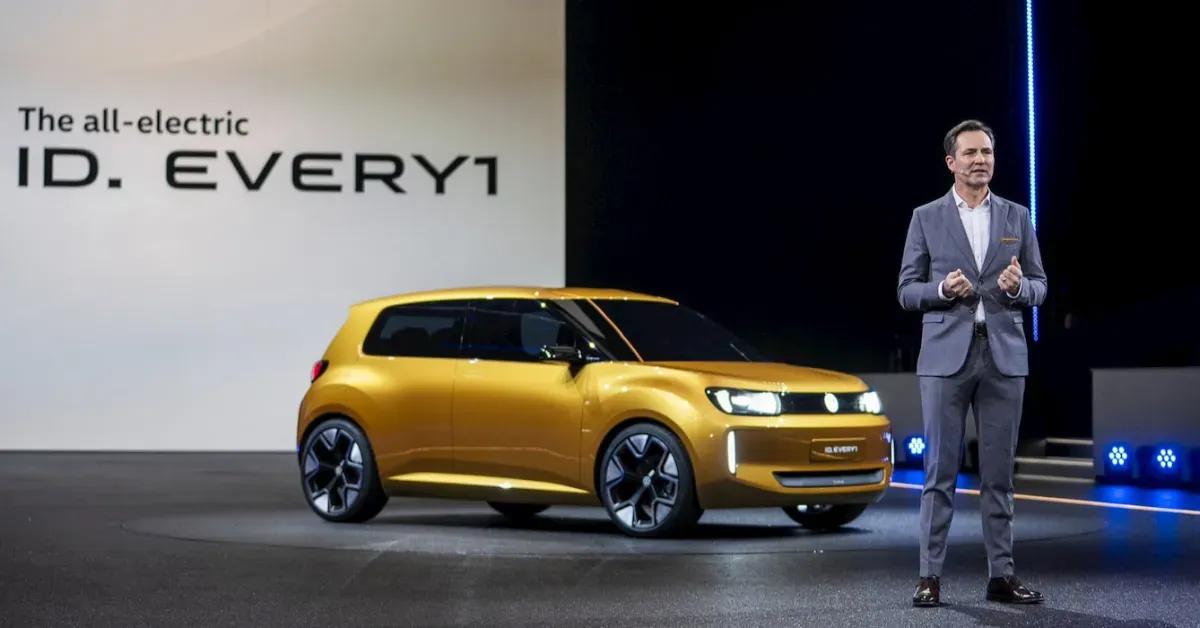
Source: Electrek
Xpeng Launches Level 4 Robotaxi Service in Guangzhou
Xpeng announced that its robotaxi service, Xpeng Yoyo, has qualified for Level 4 demonstration operations citywide in Guangzhou
1
. This approval moves the service beyond technical testing toward real operations. Initially, riders will access the Level 4 robotaxi through invitation codes, with coverage expanding gradually across the city. The robotaxi is built on Xpeng's GX SUV and runs on four of the company's own Turing AI chips, rated at 3,000 TOPS1
.Rather than operating large fleets itself, Xpeng plans to act as a technology supplier and is currently in talks with several European ride-hailing platforms
1
. Chief executive He Xiaopeng has set an ambitious target to carry passengers without safety drivers by 2027, signaling the company's confidence in its autonomous vehicle technology capabilities.China's Regulatory Landscape Shifts After Wuhan Incident
The approvals for both Volkswagen and Xpeng suggest Chinese regulators have moved past the Baidu robotaxi incident that occurred in Wuhan earlier this year
1
. China suspended new robotaxi licenses in April and launched a comprehensive safety review across the autonomous driving industry. Approvals resumed in July, with Momenta among the first companies to receive the green light. Few other companies have publicly announced receiving permits since then, making the Volkswagen and Xpeng approvals particularly noteworthy.Volkswagen's China Autonomy Stack and Infrastructure
Hefei serves as an ideal base for Volkswagen's autonomous driving development. The city hosts the Volkswagen China Technology Company (VCTC), the group's largest R&D center outside Germany, and the Volkswagen Anhui production site
2
. The software powering Volkswagen's autonomous systems comes from CARIZON, the automaker's intelligent driving unit in China, which originated as a joint venture between CARIAD and Horizon Robotics.CARIZON's driver assistance system, called Hyper Sense 8 (HS8), represents Volkswagen's first "full-scenario" ADAS. Behind it runs GAIA 2.0, a world model Volkswagen developed in-house. The system conducts simulation equivalent to 5 million km of safety testing per day, utilizing approximately 30 million real-road scenario clips, with plans to scale up to 10 million km per day
2
. Volkswagen is also developing its own system-on-chip, the C7H, designed to support up to Level 4 autonomous driving.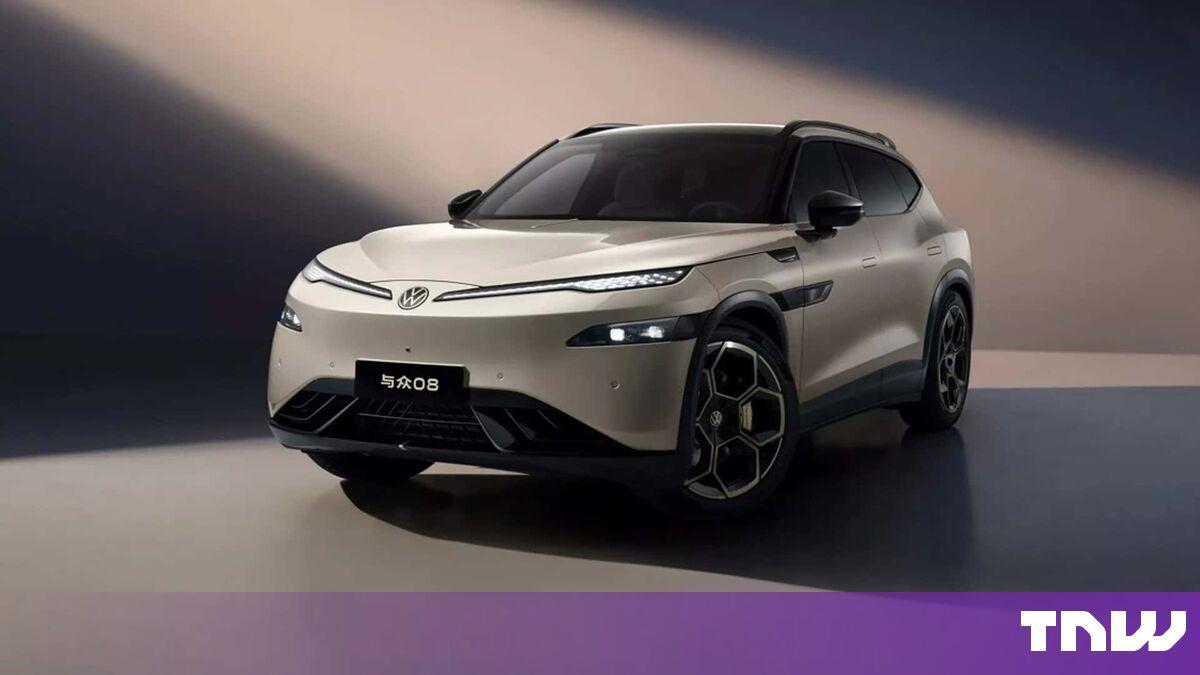
Source: The Next Web
Related Stories

Catching Up to Chinese Competitors
While significant, Volkswagen's Level 3 autonomous driving test permit represents the company catching up to Chinese automakers on their home turf rather than leading the market. China's MIIT granted the country's first L3 product approvals in December 2025 to two sedans: a Changan model capped at 50 km/h on designated Chongqing expressways, and a BAIC Arcfox model capped at 80 km/h on three Beijing routes
2
. GAC's Hyptec and Xpeng already hold L3 road test permits as well.In July, Volkswagen, CARIZON, and Horizon Robotics announced they would deepen their partnership, giving CARIZON "white-box" access to Horizon's AI foundation model. They targeted the start of L3 deliveries in the second half of 2027
2
. Volkswagen's L2++ system is currently rolling out on seven new NEV models from its Chinese joint ventures this year. The automaker also maintains a strategic relationship with Xpeng, having bought approximately 5% stake in the company in 2023 and co-developed its China zonal electrical architecture, CEA.What This Means for the Autonomous Driving Industry
Level 3 autonomous driving represents a critical threshold where liability shifts from the driver to the automaker when the system is engaged. This explains why so few companies have shipped L3 systems and why those that have keep strict limitations: specific roads in China, low speeds, and mostly traffic jam scenarios. Outside China, Mercedes-Benz remains the only Western automaker with a certified L3 system on sale, with its Drive Pilot working on approved highways in Germany, California, and Nevada
2
.The road tests in China demonstrate which automakers are seriously investing in this intermediate level of autonomy. Some companies, including Tesla, have discussed "skipping" Level 3 and moving straight to Level 4. Tesla's FSD remains a Level 2 system everywhere it's sold, including China
2
. Watch for how quickly Volkswagen and Xpeng can scale their systems from controlled testing to commercial deployment, and whether other global automakers will accelerate their own autonomous vehicle technology programs in response to these developments in China.References
Summarized by

Navi
Related Stories
Volkswagen accelerates self-driving push in China with Horizon Robotics partnership expansion
23 Jul 2026•Technology
XPeng starts robotaxi mass production in Guangzhou with full-stack in-house technology
18 May 2026•Technology

Xpeng's Advanced AI Chip Challenges Nvidia, Set to Power Volkswagen's Chinese Models
12 Jun 2025•Technology
Recent Highlights



Recent Highlights
Today's Top Stories





Don’t drown in AI news. We cut through the noise - filtering, ranking and summarizing the most important AI news, breakthroughs and research daily. Follow topics that matter to you and stay ahead.


