Xpeng L03 launches with proprietary AI chips, challenging Tesla's autonomous driving dominance


4 Sources
[1]
Xpeng's L03 is the first Chinese EV to put proprietary AI driving chips in a mass-market car
Xpeng launched the L03 across 65 markets with its own Turing AI chips and second-generation VLA driving system on every trim. Xpeng debuted the L03 on Wednesday in Munich, launching its most internationally ambitious electric vehicle simultaneously across 65 markets. The coupe-SUV is built around
[2]
I saw XPENG's new AI car -- and the future feels closer than ever
When XPENG invited me to Munich for the global debut of the L03, I expected to see another electric SUV launch. Instead, I found myself looking at a company trying to redefine what a car can be, with AI-powered vehicles, robots, robotaxis, and flying machines all part of the same plan. The L03 is
[3]
This sleek Chinese EV pairs supercar styling with three AI brains
The Xpeng L03 is an AI supercomputer disguised as a stylish family SUV Xpeng's latest electric vehicle carries enough processing power to make the term "smart car" actually sound more realistic than it actually is. The new Xpeng L03 debuted simultaneously in Europe and China on July 16, with the
[4]
XPeng's New SUV Launch Reveals Bigger Tesla Challenge With Level 4 Autonomy and In-House AI Foundation Mo
XPeng Details Next-Generation AI Platform XPeng opened Chinese pre-sales at 143,800 yuan, or about $21,200. Every trim includes a Turing chip, while higher versions run the full VLA system on multiple processors. The launch follows XPeng's strongest month of 2026, when it delivered 40,126 vehicles
Share
Copy Link
Xpeng unveiled the L03 across 65 markets, marking the first Chinese EV to ship proprietary AI driving chips in every trim. The coupe-SUV features up to three Turing AI chips delivering 2,250 TOPS and runs the company's VLA 2.0 system. With Level 4 autonomy planned by 2028 and Volkswagen already licensing the technology, Xpeng is positioning itself as a serious challenger to Tesla's FSD dominance.
Xpeng L03 Brings Proprietary AI Driving Chips to Mass-Market Vehicle
Xpeng debuted the L03 on Wednesday in Munich, launching its most internationally ambitious electric vehicle simultaneously across 65 markets
1
. The coupe-SUV represents a watershed moment for the Chinese EV industry: it is the first consumer vehicle from a Chinese automaker where every configuration ships with in-house autonomous driving silicon as standard1
. Every trim includes at least one Turing AI chip, while the top Ultra variant carries three for a combined 2,250 trillion operations per second1
3
. This vertical integration strategy sets Xpeng apart from competitors who rely on Nvidia or Horizon Robotics for their autonomous driving hardware.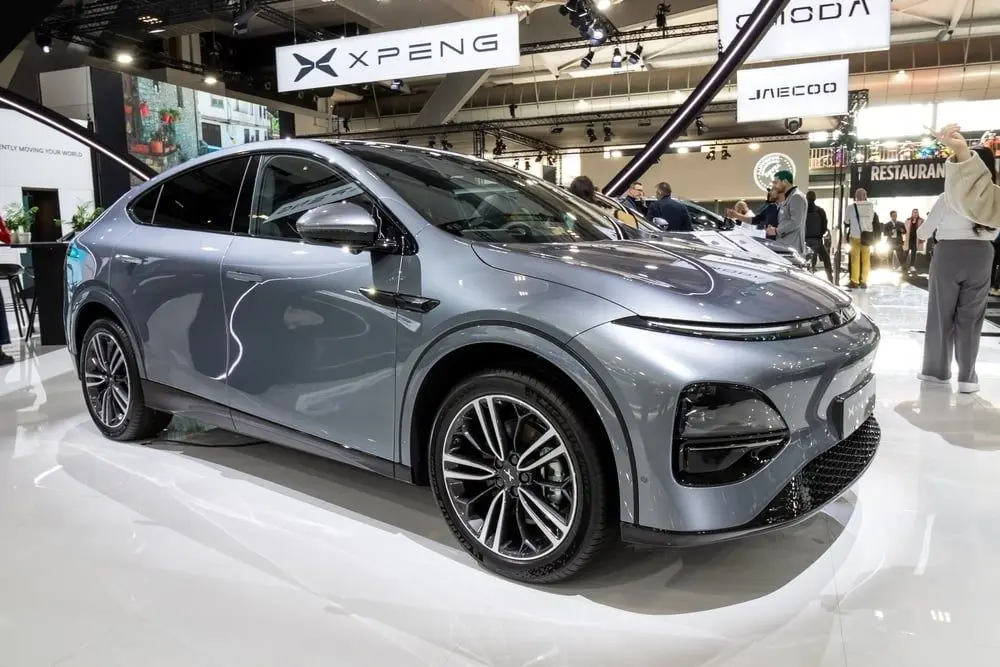
Source: Benzinga
Vision-Language-Action System Powers Next-Generation AI Platform
The Turing AI chips power Xpeng's second-generation VLA system, which the company describes as a physical-world foundation model for interpreting road environments and choosing driving responses
1
. The VLA 2.0 system represents Xpeng's attempt to move beyond traditional driver assistance and create AI that can better understand complicated road environments3
. The system remains a driver-assistance feature rather than full autonomy, and Xpeng plans to activate it progressively in Europe starting in 20271
. CEO He Xiaopeng has argued that VLA performs better than Tesla FSD on narrow roads and in difficult situations, with Reuters reporting that Xpeng benchmarks VLA 2.0 against Tesla's FSD v144
.Level 4 Autonomy Target Sharpens Tesla Challenge
Xpeng's roadmap extends well beyond current driver-assistance capabilities. The company has set a target for Level 4 autonomy, which would allow a vehicle to drive without human control under defined conditions
4
. This contrasts sharply with current systems from both Xpeng and Tesla, which Reuters describes as Level 2 driver-assistance products requiring drivers to remain attentive and ready to intervene4
. The launch follows Xpeng's strongest month of 2026, when it delivered 40,126 vehicles in June, up 16% from a year earlier4
. XPEV stock rose 7.34% to $14.34 in pre-market trading following the announcement4
.Google Maps Integration and Global Intelligent Cockpit Experience
The L03 is the first vehicle from an Asia-Pacific automaker to ship with Google's Maps Auto SDK built directly into the infotainment system, replacing the need for phone mirroring or a standalone navigation app
1
3
. Navigation runs directly through Xpeng's interface, with map data supporting both the NGP system and the company's conventional XPILOT Assist3
. The centerpiece of the cabin experience is Xpeng's Global Intelligent Cockpit Experience, running on XOS 62
. The upgraded AI voice assistant is designed to understand natural conversation, context, and intent, allowing drivers to make requests without remembering exact phrases or digging through menus2
.Related Stories
Ferrari Designer Brings Supercar Styling to Mass-Market Vehicle
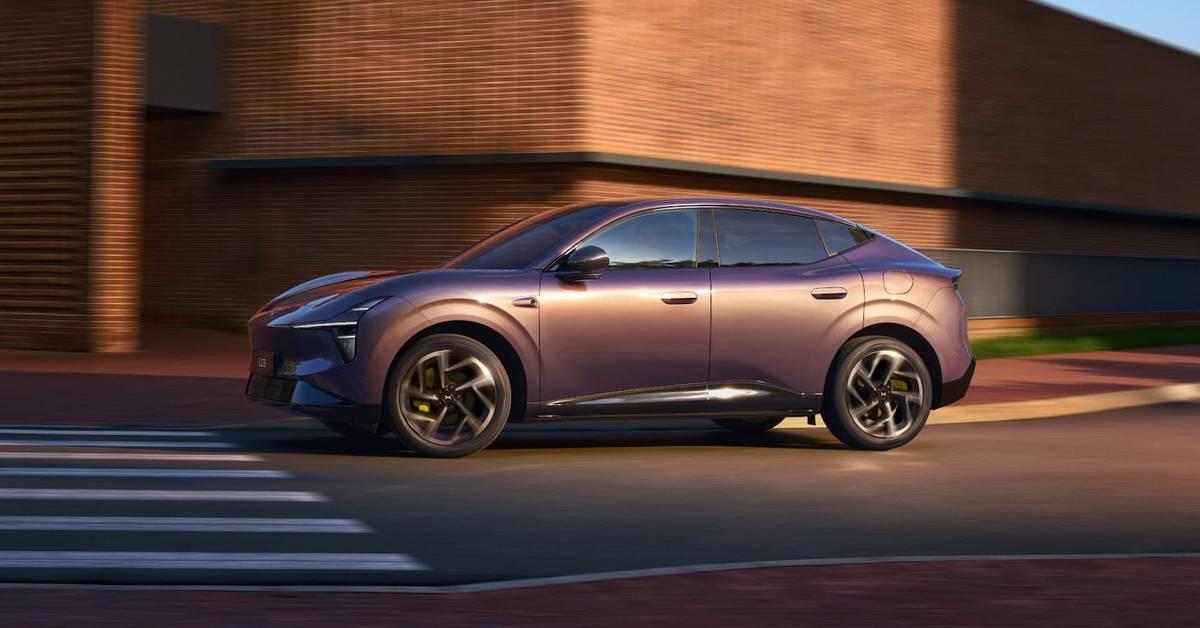
The L03 was designed by a team led by JuanMa Lopez, who previously served as Ferrari's head of exterior design and worked on models including the LaFerrari and SF90 Stradale
1
. Its sloping roofline, frameless doors, and 0.228 drag coefficient give it a profile closer to a sports car than a family hauler1
3
. Inside, the L03 combines lounge-style seating with a 15.6-inch central display, head-up display, ambient lighting, and intelligent climate control2
3
. Xpeng claims the L03 offers 37 storage spaces, generous cargo capacity, and up to 3,300 lbs of towing capability2
3
.
Source: How-To Geek
Volkswagen Becomes First Western Automaker to License Chinese Autonomous Driving Technology
The real story behind the L03 is not the car itself but the vertical integration it represents
1
. Xpeng is one of a handful of Chinese automakers that have designed their own autonomous driving chips rather than buying them from established suppliers, and it is now shipping that silicon in a mass-market vehicle priced from roughly $21,000 in China1
4
. Volkswagen, which holds a roughly five percent stake in Xpeng, has already adopted the Turing chip and the VLA system for its own vehicles, making it the first major Western automaker to license Chinese autonomous driving technology at that depth1
. In Europe, the L03 starts at €34,990 in France and Belgium and €35,600 in Germany, undercutting Tesla's Model Y and Hyundai's Ioniq 51
. Xpeng offers the L03 as a pure battery-electric vehicle with up to 625 kilometres of range on China's CLTC cycle, and as a Power X range-extender with a claimed 1,330 kilometres1
3
. Charging from ten to 80 percent takes roughly 19 minutes1
.References
Summarized by

Navi
[1]
[3]
Related Stories
Xpeng Unveils Ambitious AI Ecosystem: Robotaxis, Humanoid Robots, and Flying Cars Powered by Revolutionary VLA 2.0 Model
05 Nov 2025•Technology

Xpeng VLA 2.0 matches Tesla FSD in Beijing test drives, signaling shift in autonomous driving race
30 Apr 2026•Technology

XPeng starts robotaxi mass production in Guangzhou with full-stack in-house technology
18 May 2026•Technology

Recent Highlights



Recent Highlights
Today's Top Stories









Don’t drown in AI news. We cut through the noise - filtering, ranking and summarizing the most important AI news, breakthroughs and research daily. Follow topics that matter to you and stay ahead.


