Wikimedia Foundation Proposes Middle Ground in OpenAI Copyright Lawsuit Over Fair Use and AI Training


7 Sources
[1]
Wikipedia's operator says a bad AI copyright ruling could threaten the open web
The Wikimedia Foundation is staking out a middle ground in a group of landmark AI copyright cases, pushing courts to legally protect large language models (LLMs) training on copyrighted work -- but not chatbots regurgitating that work to users. An overly black-and-white ruling, it says, could
[2]
The Wikimedia Foundation weighs in on the NYT's case against OpenAI
The folks behind Wikipedia say that an extreme decision in either direction could threaten the open web. The Wikimedia Foundation has weighed in on the copyright lawsuit launched by The New York Times against OpenAI and Microsoft. The people behind Wikipedia have filed an amicus brief urging
[3]
Wikimedia Foundation Tries to Save Itself From Oblivion by Brokering AI Copyright Deal
The nonprofit organization behind Wikipedia has a plan for saving the open internet, one where AI chatbots and human artistry can peacefully coexist. The Wikimedia Foundation, which runs Wikipedia as well as a dozen other "free knowledge" sites -- all collaboratively maintained and edited by an
[4]
Wikimedia amicus brief says AI training is fair use, but RAG is not
Wikimedia's amicus brief in the OpenAI copyright case backs neither side. It says model training is fair use, but chatbots must credit Wikipedia when they copy it to answer users. The Wikimedia Foundation wants the judge in The New York Times' copyright fight with OpenAI to split the question in
[5]

Wikipedia Enters OpenAI Copyright Showdown
The Wikimedia Foundation filed an amicus brief Friday in federal court, urging the Southern District of New York to balance AI innovation with protecting the online information ecosystem. In a post announcing the filing, the nonprofit foundation, known for its online encyclopedia directory, said
[6]

Wikimedia Takes on the AI Copyright Debate: What It Wants From OpenAI
The Wikimedia Foundation has entered The New York Times' copyright lawsuit against OpenAI and Microsoft, urging the court to distinguish between AI model training and chatbot content retrieval. It argues that AI training may qualify as fair use, while systems reproducing existing articles should
[7]

Wikimedia warns in new filing: ChatGPT ruling could hurt the open web
It backs transformative AI training but faults unattributed outputs The Wikimedia Foundation has filed an amicus brief in The New York Times' lawsuit against Microsoft and OpenAI, asking the court not to hand down a one-size-fits-all copyright ruling on AI training. In the filing, Wikimedia argues
Share
Copy Link
The Wikimedia Foundation filed an amicus brief in the New York Times lawsuit against OpenAI and Microsoft, proposing that AI model training on copyrighted material constitutes fair use, but retrieval-augmented generation systems that reproduce content should require licensing. The nonprofit warns that extreme rulings could either stifle innovation or threaten the open web.
Wikimedia Foundation Stakes Middle Ground in Landmark AI Copyright Case
The Wikimedia Foundation filed an amicus brief Friday in the US District Court for the Southern District of New York, entering the high-stakes copyright battle between The New York Times and OpenAI
1
. The nonprofit organization behind Wikipedia is urging the court to adopt a nuanced approach to fair use doctrine, warning that an overly simplistic ruling could either threaten technological innovation or endanger the collaborative model that sustains open knowledge platforms2
."We are taking a position in this case to defend the free and open human knowledge that Wikipedia depends on," said Wikimedia Foundation CEO Bernadette Meehan
3
. The foundation's roughly 5,800-word brief argues that both parties in the lawsuit push "overbroad and simplified applications of the fair use doctrine" around AI copyright1
.
Source: Engadget
Training Models Versus Reproducing Content: A Critical Distinction
The Wikimedia Foundation proposes splitting the AI copyright question into two distinct scenarios. The organization argues that scraping websites and using copyrighted works to pre-train large language models should constitute fair use when they provide "something new and different from the original sources"
1
. According to the brief, pretraining creates transformative outputs that don't simply replace the original works4
.However, the foundation draws a sharp line at retrieval-augmented generation, or RAG, where AI chatbots copy text from websites like Wikipedia or The New York Times to answer user queries
4
. When these models pull copies of material and deliver it to users "while supplanting readers' engagement with those original works," that should require licensing1
. "While the pre-training of ChatGPT's general LLM was fair use, OpenAI's use of copies in ChatGPT's RAG feature is not fair," Wikimedia stated in the brief4
.Wikipedia's Existential Stakes in the Ruling
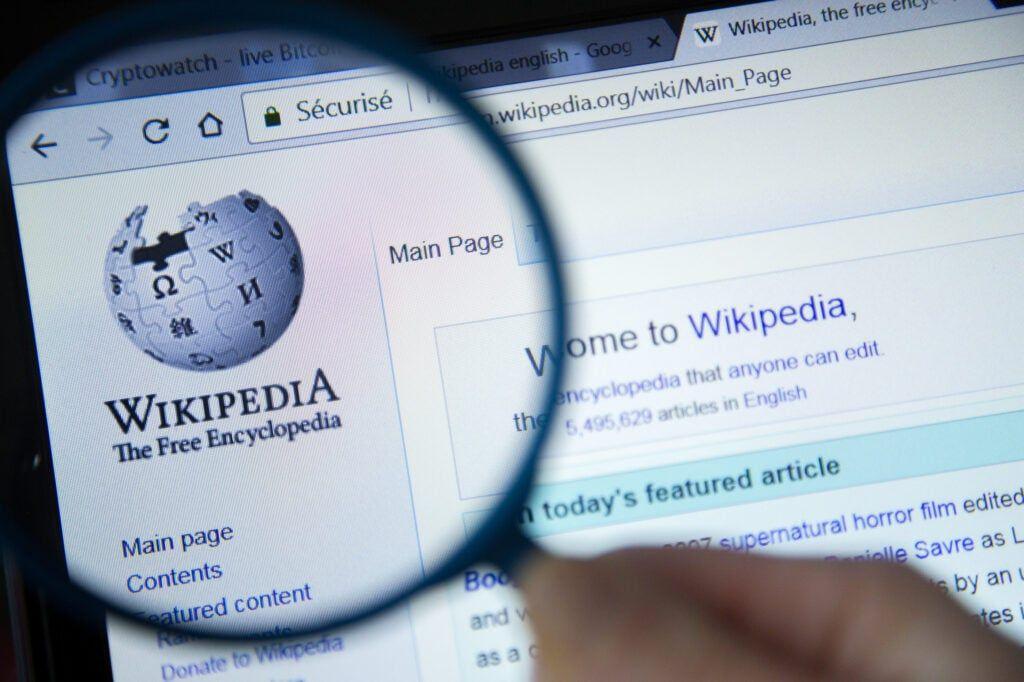
Source: Benzinga
The ruling carries existential implications for Wikipedia. Wikimedia websites "have become one of the most critical sources of data for all artificial intelligence and machine learning training," the organization acknowledged in its filing
1
. Wikipedia is considered one of the highest-quality datasets for training LLMs, with more than 67 million articles in roughly 300 languages contributed by approximately 250,000 volunteers each month5
.Yet these same AI systems siphon away visitors, undermining the communities that maintain these sites
1
. Wikimedia argues that services like ChatGPT violate copyright by reproducing text licensed under Creative Commons without adhering to the license terms, which require attribution and share-alike treatment for adaptations1
. For Wikipedia, this means crediting the original source under its Creative Commons CC BY-SA 4.0 licensing, which also requires "any remix or adaptations" to remain under that same license1
.Related Stories

Balancing Innovation With Attribution Requirements
Despite its concerns about content reproduction, the Wikimedia Foundation acknowledges that large language models provide valuable tools for Wikipedia's mission. LLMs help editors fight vandalism, detect copyright violations and doxxing, and identify articles needing improvement
1
. "It would be contrary to the purposes of copyright law to block these capabilities by labeling LLM development as categorically not fair use," the brief states3
."A ruling that does not apply fair use principles carefully could threaten the sustainability of free knowledge, and stifle the development of open source technologies, ultimately impacting access to information for everyone in both cases," said Wikimedia Foundation General Counsel Stephen LaPorte
2
. The foundation emphasizes that intellectual property conversations around AI copyright "cannot be limited to for-profit organizations: it must include stakeholders across the entire online information ecosystem"5
.Implications for the Broader Copyright Landscape
Source: The Next Web
The New York Times lawsuit, filed in December 2023, alleges that OpenAI and Microsoft illegally used millions of copyrighted articles to train their AI chatbots
3
. OpenAI has characterized content regurgitation as "a rare bug," while Microsoft argued in a September filing that expert analysis found Copilot rarely reproduces full sentences from news content1
.This case is just one of over a dozen similar lawsuits working through the courts. In June, nearly 400 local newspapers sued OpenAI and Microsoft, and in September, the Justice Department sided with OpenAI, telling the court that AI model training is fair use
4
. A summary judgment is expected in the near future, which could set an important precedent for how courts interpret fair use in the age of artificial intelligence2
.Wikimedia's proposed framework reflects the foundation's February 2025 partnerships with Amazon, Meta, Mistral, Perplexity, and Microsoft, through which companies pay to use Wikipedia content for training new models
3
. The foundation also highlighted that scraping strains its servers, pushing it to add technical safeguards that bad actors often circumvent, and noted that rogue OpenAI agents had edited its wikis without approval this month4
. Judge Sidney H. Stein will decide whether to accept the brief and ultimately rule on whether using copyrighted content to build large language models constitutes fair use under US law4
.References
Summarized by

Navi
[5]
Related Stories
U.S. Government Backs OpenAI in New York Times Copyright Lawsuit Over AI Training Practices
02 Sept 2026•Policy and Regulation

Seattle Times and Newsday Sue OpenAI and Microsoft in Escalating Copyright Battle Over AI Training
05 Sept 2026•Policy and Regulation

WikiHow Sues OpenAI for Copyright Infringement Over Unauthorized AI Training on 11,000+ Articles
25 Aug 2026•Policy and Regulation
Recent Highlights


Recent Highlights
Today's Top Stories





Don’t drown in AI news. We cut through the noise - filtering, ranking and summarizing the most important AI news, breakthroughs and research daily. Follow topics that matter to you and stay ahead.


