5 Sources
[1]
Wispr Flow launches a Granola-styled meeting notetaker
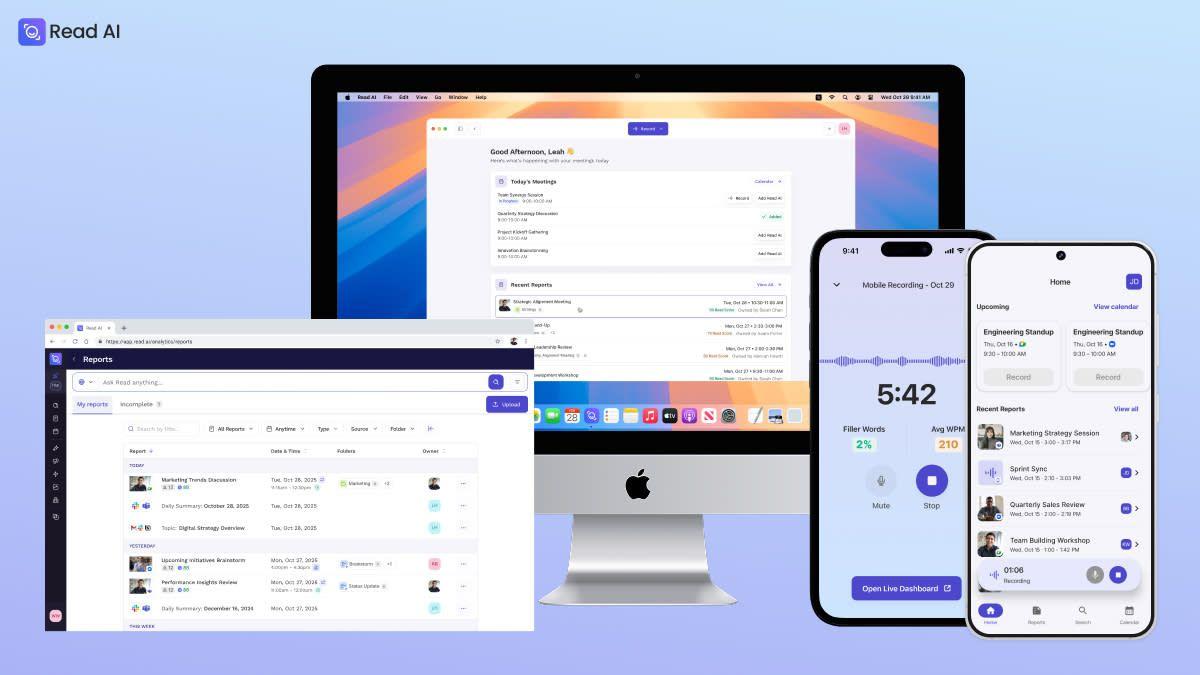
Update August 5, 12.10 am PT: Wispr Flow has officially launched its notetaker for Mac. The notetaker, similar to the one of Granola's, uses system audio to transcribe a meeting without joining one. It also cleans up transcripts, creates action items, and lets users query across meeting history with the help of AI. Users can see a live transcript and ask AI to catch them up as well. Our original reporting based on Wispr Flow's terms change is below Dictation app Wispr Flow is preparing to launch a meeting notetaker, according to the tool's updated Terms of Service. The company also sent an email to its customers about the change in both its terms and its privacy policy to accommodate related features. Upon investigation, the refreshed terms have added sections about the use of meeting data and the notetaker. The company said the notetaker will generate transcripts, summaries, actions, and insights, writing: For Notetaker, Input may also include Meeting Data, including meeting audio, participant information, meeting metadata, speaker labels, meeting transcripts, and other information processed in connection with a meeting. Output may include AI-generated meeting transcripts, summaries, action items, meeting insights, speaker attribution, and other meeting-related content. With the launch, the startup will take on other meeting notetakers such as Granola, Fireflies, Read AI, Otter, and Fathom. Wispr Flow's co-founder Tanay Kothari had previously talked about building an AI assistant in interviews. With a meeting notetaker, Wispr Flow would gain additional context about its users and could automate more tasks beyond cleaning up spoken sentences. It's not clear if the startup wants to launch a Granola-style notetaker that relies on system audio and transcribes the meeting without keeping a recording, or build a full-fledged meeting recording tool. To date, Wispr Flow has raised more than $81 million, with the company valued at $700 million at its last round. In May, Bloomberg reported that the company was in talks for a new round, valuing it at $2 billion. Wispr Flow didn't respond to our request for further comment.
[2]
The AI Notetaker Has Been Invited to All the Meetings
As Wispr Flow CEO Tanay Kothari chats with me about his company's new Notetaker feature, my eyes keep bouncing to the corner of my laptop screen where Wispr's AI tool is transcribing everything we say. It's a verbatim record of our conversation generated by AI in real time, even down to my "mm-hmm" sounds while I listen to Kothari explaining why the startup, which is known for voice dictation, is dropping something new. "This is the year of meeting recorders and notetakers," says Kothari. And it's hard to argue with that, at least in Silicon Valley. Most tech investors and other experts I've chatted with this year now assume whenever they meet up with someone to talk business that the conversation is going to be recorded or transcribed by AI, sometimes without explicit consent. The current option du jour for meeting records is Granola AI, with plenty of other options, like Otter AI, also available to users. So, the timing of Wispr's expansion from a dictation tool into a meeting resource makes sense. Wispr's Notetaker connects to your calendar and can listen along during any meeting. After the conversation is over, Wispr uses generative AI to summarize the conversation and connect it to a chatbot-style tool for parsing its context with follow-up questions. The tool is launching first on Mac laptops, with a Windows expansion expected down the line. If you enable Privacy Mode for your account, then the data from your dictations will not be used by Wispr for AI model training. In my initial test using Notetaker during a conversation with the CEO, the live transcription appeared accurate as it flashed across the screen, and I didn't spot any obvious errors in its AI summary generated after our meeting. The "ask anything" tool felt like the feature's best aspect. I had a quote in mind that I wanted to pull out, but didn't remember when Kothari said it during our chat. So, I typed in "year of ai notetakers quote," and the Notetaker tool found the moment that I remembered. When I checked it against my audio recording for accuracy, the AI-transcribed quote matched the audio file. Users can fiddle with the fine details of Wispr's Notetaker in the Mac app's settings. One of the most notable aspects available here is the ability to extend the maximum meetings recording length to a whopping six hours. "Wispr had a six-minute time limit earlier. People would start it on and off five times just to capture a 30-minute meeting," says Kothari. "We realized we should stop being stupid. This is what people really want Wispr to do." Though, if you have the gall to invite me to join a six-hour meeting, just know that I'll be blocking you on every platform imaginable. Similar to Granola's tool for capturing meeting transcripts, Wispr transcribes conversations directly on your device and doesn't join your meeting as a visible participant. Despite that, Kothari says users shouldn't secretly use Wispr's new tool and always disclose when it's transcribing conversations, potentially for legal reasons as well as out of respect for the privacy of the meeting's participants. "We need that to become the norm for everybody. Otherwise, you're going to get a lot of lack of trust that starts to happen," he says. "There are laws that are single-party and multi-party. I think, regardless, it's just a basic trust-setting exercise to just make sure people know." In San Francisco, where Wispr is based, someone recording a private conversation is legally required to acquire consent from all participants. Voice dictation capabilities have rapidly improved in recent years with the maturing of underlying AI models, and I often find myself relying on tools like Wispr and its ilk in my daily life. Whether I'm organizing my notes on an academic research paper or searching online for reality TV updates about the current season of Big Brother, I'm constantly blabbing at my devices and expecting crystal clear transcripts, even though I'm prone to mumbling. What I don't expect is for anyone to secretly transcribe my errant thoughts during a conversation. Break my trust even once, and it should be socially acceptable to ice you out of my life. And I hope you're writing that down.
[3]
The AI dictation app everyone is talking about just got a powerful new Notetaker
It also integrates with AI assistants like ChatGPT and Claude and supports one-click imports from Granola. Wispr Flow, the AI-powered dictation app that has become popular for turning speech into text across apps, is expanding beyond writing. The company has now launched "Notetaker," a new AI meeting assistant designed to automatically capture conversations, identify speakers, and generate organized summaries with action items. The launch pits Wispr Flow against a growing list of AI meeting assistants, but the company is emphasizing accuracy and context rather than just transcription. Wispr Flow claims that Notetaker can capture conversations "exactly as they were said" while identifying participants by name rather than generic labels like Speaker 1 or Speaker 2. If someone is mislabeled, users can also correct it with a single click. Unlike many meeting transcription tools, Notetaker can connect your meeting history with other information you've shared with Wispr. Users can search across previous meetings, messages, and emails to find answers, with links back to the original source for context. Another standout feature is a "What did I miss?" button. If you lose track of a meeting, the AI can summarize the last few minutes of discussion and help you catch up quickly. Once a meeting ends, Notetaker automatically generates a structured summary that highlights key decisions, timelines, and next steps, organizing everything by topic instead of dumping a chronological transcript. Wispr is also positioning Notetaker as a research tool before meetings begin. It can review previous conversations and research external participants (which sounds a bit creepy, to be honest) in the name of giving users relevant context before joining a call. As for availability, Notetaker will work across platforms like Google Meet, Microsoft Teams, Slack Huddles, and even informal conversations, as long as audio is available. It can also integrate with AI tools that support the Model Context Protocol (MCP), including ChatGPT, Claude, and Cursor, allowing users to reference meeting data in their existing AI conversations. For users switching from Granola, Wispr is offering a one-click migration so they can import their existing meeting history without starting from scratch. The only catch is that Notetaker is not available on mobile right now. Unlike Wispr Flow's dictation app on Android, Notetaker is only available on Mac for the moment.
[4]
Wispr Flow takes on AI meeting assistants with Notetaker
Wispr Flow users on Mac can now access Notetaker, an AI-powered meeting assistant that uses calendars, connected apps, and personal dictionaries to provide additional context for transcripts, summaries, and notes. Here are the details. Wispr Notetaker now available for Mac If you're unfamiliar with Wispr Flow, it is one of the leading voice-to-text AI tools for a growing number of users who feel comfortable using voice to compose messages, emails, documents, and other text instead of typing. Granted, voice-based interactions are not practical in every environment. Still, Wispr Flow's rapidly growing user base (which the company said in March was expanding by 40% month over month) suggests that AI-powered dictation tools may become mainstream faster than many expected, or give them credit for. Until now, Wispr has offered a single product, which polishes up messy speech and turns it into "clear, polished writing in every app." Today, the company is expanding its lineup with Notetaker, a smart, AI-powered meeting assistant, transcriber, and summarizer. The new tool is built directly into Wispr Flow and appears as a new item in the app's left-hand sidebar. As Wispr CEO and co-founder Tanay Kothari notes (no pun intended): "Nobody reads meeting transcripts. But everyone acts on them. The transcript feeds the summary, the summary feeds the follow-up email, the recap goes to whoever missed the call. You've learned to give the notes a quick once-over before trusting them, because sometimes a name is wrong or an action item is assigned to the wrong person." In other words, while the transcript itself may have limited value to some, accurately extracting the key details, decisions, and action items from it can be more useful to a broader set of users. Notetaker also briefs users before meetings by gathering relevant information from their notes and the web, with each line linked to its source. More broadly, it draws context from calendars and connected apps such as Slack. During meetings, Notetaker provides a live transcript so the user can quickly check back on what was said. Once the meeting ends, it processes the full recording again with additional context, which Wispr says improves the final transcript and the summaries, decisions, key dates, and action items generated from it. Afterward, users can ask questions about their full meeting history, with answers linked to the moment when the relevant information was discussed. Notetaker can also catch users up on portions of a meeting they missed or were not paying attention to. In addition to sharing Wispr Flow's custom dictionary, which helps with accuracy for acronyms, names, product names, and beyond, Wispr Notetaker "draws on the apps you connect, like Slack, and your calendar, to understand what this particular conversation is about," says Kothari. This also helps with automatic speaker attribution, which is particularly useful for meetings with several participants. Wispr Notetaker transcribes meetings on-device and does not join calls as a separate participant, eliminating what the company calls "a bot that lurks as an awkward shadow in the participant list." It works across multiple meeting platforms, including Zoom, Google Meet, Teams, and Slack huddles, and has MCP support, allowing users to pull transcripts, summaries, and notes into Claude, ChatGPT, and custom agents or workflows. Wispr Notetaker is available beginning today on Mac, with a Windows version in development. To learn more about Wispr Notetaker, follow this link. Worth checking out on Amazon
[5]
Wispr Flow launches an AI note-taker that works without joining calls
The new Wispr Flow tool called Notetaker creates live transcripts, summaries, and follow-up notes Wispr Flow has launched Notetaker, an AI meeting assistant built into its existing Mac app. It can record conversations, show a live transcript, and prepare notes covering decisions, deadlines, assigned work, and unresolved issues. Wispr Flow is best known for its dictation tool, which turns spoken thoughts into edited text wherever the user is working. Notetaker takes the company beyond voice typing and applies its transcription technology to meetings, interviews, and in-person conversations. It records calls without adding another participant Notetaker captures audio through the Mac instead of joining a meeting as a visible bot. This allows it to work across Zoom, Google Meet, Microsoft Teams, Slack Huddles, Discord, browser calls, and conversations picked up through the computer's microphone. The app can also detect calls that are not listed on the user's calendar and ask whether they want to begin taking notes. Wispr says this works across Meet, Zoom, Teams, WhatsApp, and FaceTime. During a meeting, users can follow the live transcript, write their own notes, or select "What did I miss?" for a recap of the previous few minutes. Recommended Videos The finished notes are prepared after the complete conversation has been analyzed, allowing Wispr to correct transcription errors and add speaker labels that may have been missing from the live version. It uses your existing work context Notetaker can use information already stored in Flow and connected work accounts to understand who is attending and which projects or internal terms are being discussed. Calendar invitations, saved vocabulary, Gmail, and Slack may help it handle names, product terminology, and company jargon more accurately. Past calls remain searchable, and results include a reference to the relevant part of the conversation so users can check the original discussion themselves. MCP support also lets ChatGPT, Claude, Cursor, and other compatible tools access meeting notes and transcripts. Granola users can import their existing notes in one step. Notes from Otter, Fathom, and other services can remain searchable alongside new meetings through MCP. Notetaker is available now on Mac and supports English. Windows support is coming soon, while mobile remains on the roadmap. The feature is included in Wispr Flow's free plan with usage limits. Flow Pro costs $15 per month or $12 per month when billed annually and includes unlimited use.
Share
Copy Link
Wispr Flow has officially launched Notetaker, an AI meeting assistant that transcribes conversations using system audio without appearing as a participant. The Mac-exclusive tool generates live transcripts, action items, and meeting summaries while working across platforms like Zoom, Google Meet, and Microsoft Teams.
Wispr Flow has officially launched Notetaker, an AI-powered meeting assistant that marks the company's first product expansion beyond its popular dictation app
1
. The new tool transcribes meetings using system audio without joining calls as a visible participant, positioning itself as a direct competitor to Granola, Otter, Fireflies, and other AI meeting assistants in what CEO Tanay Kothari calls "the year of meeting recorders and notetakers"2
. Currently available exclusively for Mac users, Notetaker integrates directly into the Wispr Flow app and connects to calendars to automatically capture conversations, generate summaries, and create action items3
.Notetaker captures audio through on-device processing rather than joining meetings as a separate bot, allowing it to work seamlessly across Google Meet, Microsoft Teams, Zoom, Slack Huddles, Discord, and even in-person conversations picked up through the computer's microphone
5
. The tool provides live transcription during meetings, displaying a verbatim record of conversations in real time, including filler sounds like "mm-hmm"2
. Users can extend the maximum meeting recording length to six hours, a significant upgrade from the previous six-minute limit that forced users to restart the tool multiple times during longer sessions2
.The AI meeting assistant uses contextual querying to draw information from calendars, connected apps like Slack and Gmail, and Wispr Flow's custom dictionary to improve accuracy for names, acronyms, and company-specific terminology
4
. This contextual understanding helps Notetaker identify speakers by name rather than generic labels like "Speaker 1" or "Speaker 2," with users able to correct mislabeled participants with a single click3
.After meetings conclude, Notetaker processes the complete recording again with additional context to generate structured meeting summaries that highlight key decisions, timelines, and action items organized by topic rather than chronological order
3
. The tool automatically creates AI-generated meeting transcripts, summaries, action items, meeting insights, and speaker attribution according to the company's updated Terms of Service and privacy policy1
.Users can search across their entire meeting history, with results linked back to the specific moment when relevant information was discussed
4
. A "What did I miss?" feature allows participants to request AI-generated summaries of the previous few minutes if they lose track during a conversation3
. The tool also briefs users before meetings by gathering relevant information from notes and the web, with each line linked to its source4
.Despite Notetaker's ability to transcribe conversations discreetly, Kothari emphasized that users should always disclose when the tool is recording, both for legal compliance and out of respect for participants' privacy
2
. In San Francisco, where Wispr Flow is based, recording private conversations legally requires consent from all participants2
. Users who enable Privacy Mode can prevent their dictation data from being used for AI model training2
.Related Stories
Notetaker supports the Model Context Protocol (MCP), enabling integration with ChatGPT, Claude, Cursor, and other compatible AI assistants
3
. This allows users to reference meeting data within their existing AI conversations and workflows4
. For users switching from Granola, Wispr Flow offers one-click migration to import existing meeting history3
. Notes from Otter, Fathom, and other services can remain searchable alongside new meetings through MCP integration5
.Notetaker is included in Wispr Flow's free plan with usage limits, while Flow Pro costs $15 per month or $12 per month when billed annually and includes unlimited use
5
. The feature currently supports only English and is available exclusively on Mac, with Windows support in development and mobile versions remaining on the roadmap5
. The launch comes as Wispr Flow, valued at $700 million in its last funding round after raising more than $81 million, reportedly pursues a new round that could value the company at $2 billion1
. The company reported 40% month-over-month user growth in March4
.Summarized by
Navi
[1]
[3]
[5]
01 Jul 2025•Technology

19 Jun 2026•Technology

19 Nov 2025•Technology

1
Technology

2
Technology

3
Science and Research