Workday co-founder Aneel Bhusri returns as CEO as AI transformation pressures mount


6 Sources
[1]
Workday CEO Eschenbach departs, with co-founder Aneel Bhusri returning as CEO
Enterprise resource planning software company Workday announced Monday that chief executive Carl Eschenbach was stepping down and leaving the company's board, effective immediately. Workday co-founder and former CEO Aneel Bhusri will return as CEO. Eschenbach joined Workday in December 2022 as
[2]
Hello Again! Bhusri Is Back Behind The Workday Wheel
Workday just announced its new CEO, and, well, he isn't really new at all. Aneel Bhusri is returning as CEO after two years as executive chair. The move follows a turbulent period for enterprise SaaS stocks, with Workday shares down more than 20% year-to-date (2026) and significantly declining
[3]
Workday CEO Eschenbach steps down - co-founder Bhusri to return
Former leader will get $3.6 million cash severance package plus more Workday CEO Carl Eschenbach has stepped down with immediate effect after around two years as the head of the company (and another year as co-CEO), and he's already been replaced by Workday co-founder Aneel Bhusri who has returned
[4]
Workday lost $40 billion in value. Founder Aneel Bhusri is back with a $139 million bet he can turn it around | Fortune
By bringing cofounder Aneel Bhusri back to the CEO job, Workday has turned to a classic Silicon Valley tradition to deal with the AI threat squeezing software company stocks: the return of the founder. Bhusri's return to the top job at the human resources software company reflects the belief that
[5]

Workday co-founder Aneel Bhusri returns as CEO, ending Carl Eschenbach's 2-year tenure
In a surprise move, enterprise applications powerhouse Workday today announced that Carl Eschenbach is stepping down as CEO and from its board after just two years in the role -- or three if you add his time as co-CEO alongside co-founder Aneel Bhusri, who now returns as sole CEO. In a press
[6]

Workday stock drops 5%+ after CEO Carl Eschenbach steps down - SiliconANGLE
Workday Inc. today announced that Carl Eschenbach has stepped down from his role as chief executive officer and executive chair. Shares of the company declined more than 5% on the news. The drop came amid a broader selloff in enterprise stocks, which began last week after Anthropic PBC introduced
Share
Copy Link
Workday announced a sudden CEO change with co-founder Aneel Bhusri returning to lead the company after Carl Eschenbach's two-year tenure ended abruptly. The leadership change comes as Workday faces mounting pressure from a 40% stock decline and struggles to execute its AI strategy. Bhusri, who controlled the company since 2009, will receive a $138.8 million compensation package to steer the human resources software giant through what he calls the biggest transformation since the shift to cloud computing.
Workday CEO Change Brings Co-Founder Back to Navigate AI Crisis
Workday announced Monday that CEO Carl Eschenbach was stepping down with immediate effect, marking an abrupt end to his two-year tenure as sole chief executive of the enterprise resource planning software company
1
. Co-founder Aneel Bhusri, who had been serving as executive chairman since February 2024, is returning as CEO on a permanent basis—not as an interim leader during a search for replacement1
. The leadership change follows a turbulent period for the human resources software company, with shares plummeting approximately 40% year-over-year as investors grow increasingly concerned about Workday's AI strategy and its ability to compete in a rapidly transforming enterprise software market3
.
Source: TechRadar
Eschenbach joined Workday in December 2022 as co-CEO alongside Bhusri and had been operating as sole CEO since February 2024
1
. According to a Form 8-K filing, Carl Eschenbach's departure includes a $3.6 million cash severance package plus accelerated vesting of equity awards3
. Meanwhile, Aneel Bhusri returning as CEO will be eligible for a $1.25 million base salary and an annual target cash bonus of up to 200% of his base salary3
.Massive Compensation Package Reflects High Stakes of AI Transformation
To bring Bhusri back to the CEO position he left two years ago, Workday is offering a $138.8 million pay package comprised of cash and performance-based and restricted stock
4
. More than half of this package—$75 million—only pays out if Bhusri can hit a series of undisclosed stock price targets over the next five years4
. Perhaps more telling is the other half: roughly $60 million in restricted stock requires only that Bhusri remain at Workday for the next four years, with no performance targets whatsoever4
. This structure reflects Wall Street's deep skepticism that even a founder-savior will successfully navigate the transition into the Artificial Intelligence age.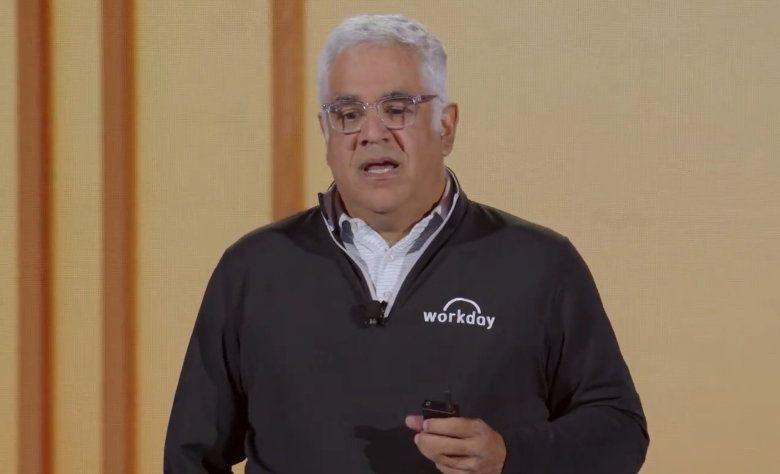
Source: diginomica
The AI panic has helped wipe out approximately $40 billion in value at Workday, slashing its market cap in half from an all-time high of $80 billion
4
. The stock has fallen 51% to roughly $150 a share from an intraday peak of $311.28 less than two years ago4
. Bhusri himself has seen the value of his more than 8-million share ownership stake nosedive from $2.6 billion in 2024 to about $1.3 billion—a personal wealth wipeout of roughly $1.3 billion in less than two years4
.Workday's AI Strategy Struggles Amid Aggressive Acquisition Spree
During Eschenbach's tenure, Workday pursued an aggressive, acquisition-led strategy to accelerate its AI roadmap, buying a wide range of AI platforms across integration, talent, learning, and agent orchestration
2
. While this expanded Workday's surface area and competitive intent, the company is struggling to fully integrate these assets, enable partners at speed, and translate mergers and acquisitions into clear differentiation amid rapid market shifts2
. As competitors such as Oracle and SAP move fast with tightly integrated stacks and partner mobilization, Workday is facing growing execution risk, slower data platform maturity, and pressure both up and down the market2
.The company's entire technology leadership has changed in the past year, driven both by a series of AI-first acquisitions and by key hires from Google Cloud, such as Gerrit Kazmaier, who assumed the role of President of Product & Technology, and Peter Bailis, who joined as CTO
5
. AI acquisitions have included Sana, which enables a new conversational user experience, low-code agent builder Flowise, and conversational recruitment app Paradox5
.
Source: TechCrunch
Related Stories
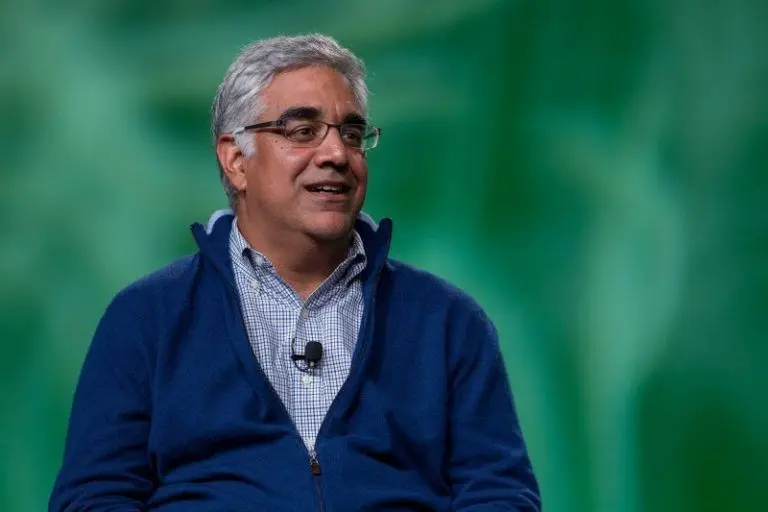
Layoffs and Revenue Growth Slowdown Signal Deeper Challenges
The leadership change occurs against a backdrop of multiple workforce reductions. Last February, Workday laid off 8.5% of its headcount, or 1,750 people, with Eschenbach stating at the time that the company needed a new approach to labor in the age of AI
1
. An additional approximately 400-person reduction occurred in February 2026, primarily in non-revenue-generating roles, emphasizing resource realignment to fund AI and product development2
.While Workday posted $8.4 billion in total revenue for fiscal 2025, up 16% over the year prior, that growth has slowed significantly
4
. Subscription revenue growth slowed from 19% in fiscal 2024 to 17% in fiscal 2025, with the most recent quarter showing 15%4
. The company has had three consecutive quarters of 12.6% revenue growth—a significant sum, but one that's fallen from around 15-18% in the two preceding years3
.What This Means for SaaS Companies and Workday's Future
Bhusri's return represents a classic Silicon Valley tradition: bringing back the founder to deal with existential threats. With majority voting control plus operational authority as CEO, Bhusri will have more power to make any difficult changes he sees necessary
4
. Between co-founder Dave Duffield and Bhusri and their affiliates, the two cofounders control 68% of the voting power through their Class B share ownership4
."AI is a bigger transformation than SaaS—and it will define the next generation of market leaders," Bhusri said in the company's press release
1
. Workday customers should view this CEO change as a signal of strategic consolidation rather than radical change, according to Forrester analysts2
. The company's direction toward AI, agents, Data Cloud, and a more open platform is unlikely to reverse, but the emphasis will shift to execution discipline and architectural coherence2
. As Workday's near-term challenge involves proving it can gain global market share for its non-HCM product lines, integrate and simplify its stack after all the acquisitions, and compete in an enterprise software market being rapidly reshaped by AI expectations, industry observers will be watching closely when the company reports Q4 results2
5
.References
Summarized by

Navi
[2]
Related Stories
Workday shares plunge 9% as weak guidance deepens AI disruption fears despite CEO's defense
25 Feb 2026•Business and Economy

Workday CEO's Tough Decision: Layoffs to Fuel AI Investment
10 Mar 2025•Business and Economy

Workday's Q2 Earnings Beat Estimates, but AI Disruption Fears Linger
22 Aug 2025•Technology
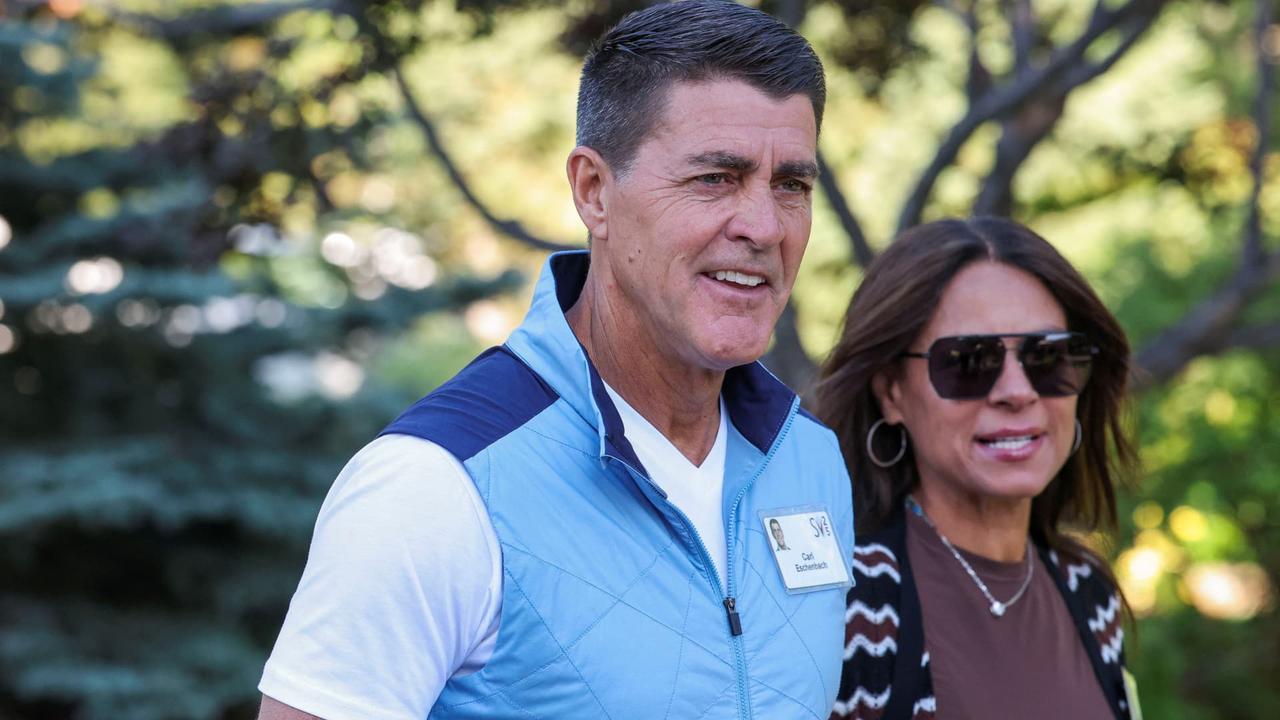
Recent Highlights
1
Microsoft and Nvidia Launch Surface Laptop Ultra: A $2,599 AI-Ready PC With RTX Spark Chip
Technology

2
OpenAI Releases 722 AI-Generated Math Papers on GitHub, Igniting Fury Among Mathematicians
Science and Research

3
Trump Consulted Grok AI Before Ordering Venezuela Invasion and Capture of Nicolás Maduro
Policy and Regulation

Recent Highlights
Today's Top Stories









Don’t drown in AI news. We cut through the noise - filtering, ranking and summarizing the most important AI news, breakthroughs and research daily. Follow topics that matter to you and stay ahead.


