9 Sources
[1]
Workday's outlook meets estimates despite AI demand, shares slip
Aug 27 (Reuters) - Workday (WDAY.O), opens new tab reported a 12.8% increase in second-quarter revenue, as enterprises signed up for its AI-powered finance and human resources software. Shares of the Pleasanton, California-based company fell 5% in extended trading after its quarterly revenue and forecast for third-quarter subscription revenue broadly met Wall Street expectations. "We had a strong second quarter, with AI driving more than 25% of our new Annual Contract Value and more than 5,500 customers now using at least one of our organic agents," said CEO Aneel Bhusri. Despite the ongoing shift to the cloud, Workday faces headwinds from a challenging macroeconomic environment that has caused some customers to scrutinize IT budgets and delay large-scale software projects. Analysts say Workday's room for further module expansion could be limited, and that reviving growth in its Financials business and overseas markets may prove difficult unless the company lowers its prices. Workday posted total revenue of $2.65 billion for the second quarter ended July 31, compared with analysts' average estimate of $2.64 billion, according to data compiled by LSEG. It forecast subscription revenue of $2.52 billion for the current quarter, which will end on October 31. Reporting by Juby Babu in Mexico City; Editing by Vijay Kishore Our Standards: The Thomson Reuters Trust Principles., opens new tab
[2]
Following an agentic cull, rising adoption is delivering ROI for Workday customers, says CEO Aneel Bhusri
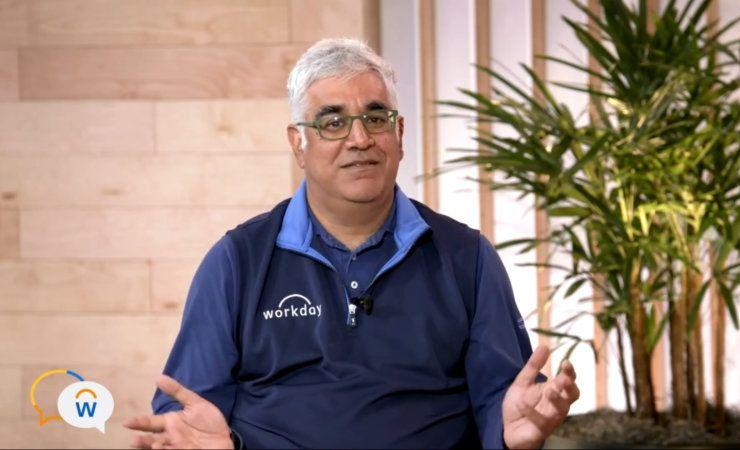
As more organizations move from pilot to production, more than a quarter of new annual contract value at Workday now comes from AI products, with over 5,500 customers now actively running at least one agent, up 35% since last quarter. In the six months since Aneel Bhusri returned as CEO, there has been a lot of progress he can point to on the agentic push: It's all about adoption and customer success. We have to have agents that have real ROI, and that's been the lens we've been looking at it since I came back. We had a lot more agents when I came back. We killed a lot or we rolled them into bigger agents. The ones that we have right now, I'm very optimistic they're all very meaningful to our customers. He cites US bank BMO as a case in point of how Workday customers are getting engaged with agent tech: They piloted Self-Service Agent with 500 employees in May and successfully rolled it out to all 55,000 employees in June. SSA gives BMO employees and managers a personal, intuitive way to get HR questions answered and work done faster and easier. And because it's native to Workday, the agent understands employee permissions and which HR policies apply to them. That built-in context is exactly what makes this a responsible and scalable AI deployment for BMO. That's just one example, he adds: Customers are making five year, seven year decisions on new platforms and AI is a huge decision point for them. And if anything, it's impacting our win rates on the platform because we're viewed as the much stronger player in terms of an AI vision and AI agents than our legacy competitors that we all know so well. Fast-moving And things are moving fast, he observes: The difference on these agents versus traditional applications, they iterate and become better so much faster. So I'm very optimistic that we're going to see ramping up usage of these agents faster than we ever saw of our apps...new customers [are] choosing Workday because of our agentic strategy. Existing customers, they have an AI budget. And now we have products that actually fit in that AI budget, which is a big win for us. Workday is "trying to be very thoughtful" in the way it's building its agentic solutions, according to Bhusri: They're not meant to solve simple problems. Anybody can solve the simple problems. When I look at what we're doing with the Self-Service Agent, it's really hard. What we're doing with the Financial Audit Agent is really hard. But by building these agents and coming out the other end, they add tremendous value to our customers. And frankly, from a competitive perspective, they're really, really hard for anybody to compete with because they're so deeply embedded in the bowels of Workday. And after Salesforce CEO Marc Benioff's robust call to stop talking about the so-called SaaSpocalypse earlier in the week, Bhusri adds his voice against the narrative: [Previously], I told you I hadn't met a single customer looking to replace Workday with something they're building internally or buying from a start-up. A quarter later, that hasn't changed. The reason is the deterministic rails I've talked about before. Our agents are lawful. They work inside the permissions, policies and business processes a company already runs on. That's why our customers can trust them with the work that matters, and it's why we're seeing our organic agents really take off this year. My take Time flies when you're having fun, and I'm having a lot of fun. Workday just turned in a strong set of quarterly numbers that won't change Bhusri's mood. For Q2 2026, the firm turned in net income of $228 million, a 72.7% year-on-year growth, while revenues topped $2.35 billion, up 12.6% from a year ago. Subscription revenue in Q2 was $2.471 billion, up 14%, while Professional services revenue was $178 million. There was, of course, an elephant in the room skulking unreferred to in the corner in the shape of recent scuttlebutt that Workday is talking to Silverlake about a PE buyout by Workday. Nothing was said directly in relation to this yesterday and none of the participants on the post-earnings analyst call felt it was important enough a topic to raise. But in terms of the future, Bhusri does remark: I'm an unabashed optimist, but I'm not leaning on optimism here. We're shipping AI products. Our customers are adopting them rapidly, and it's happening across the board from the agents we built ourselves to the ones we've acquired. This is Workday's moment and I never felt better about where we're headed. Onwards now to Workday Rising in October!
[3]
Workday posts strong earnings and revenue amid rapid uptake of its AI agents
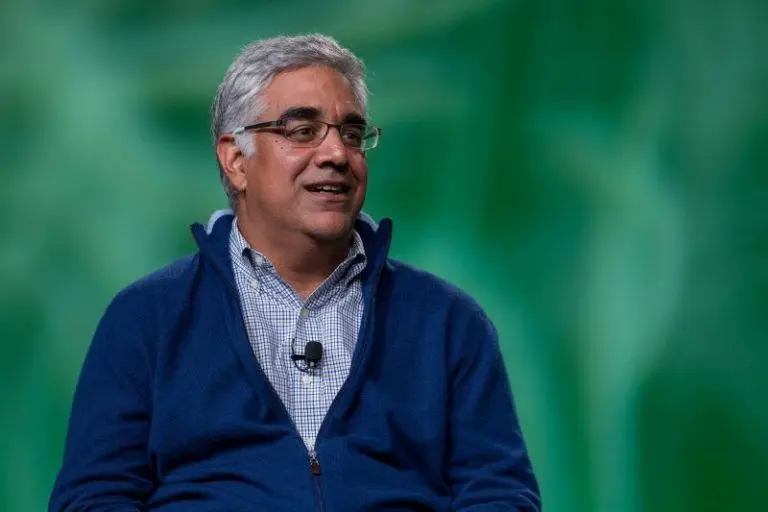
Workday posts strong earnings and revenue amid rapid uptake of its AI agents Human resources management software company Workday Inc. reported better-than-expected second-quarter results today, delivering earnings and revenue above expectations and raising its guidance for the full year. The results barely moved the needle though, as the company's stock remained flat after-hours, having closed up around 1.5% prior to today's report. The company delivered earnings before certain costs such as stock compensation of $2.75 per share, easily beating Wall Street's projected target of $2.61 per share. The revenue beat was less impressive, but with sales coming to $2.65 billion, it still beat the analyst consensus estimate of $2.64 billion. The company ended the quarter with net income of $632 million, up from just $228 million in the same period one year earlier. Workday said its 12-month subscription revenue backlog ended the quarter at $9.03 billion, up 14.2% from a year earlier. Meanwhile, its total subscription revenue backlog of $27.4 billion was up 8%. Co-founder and Chief Executive Aneel Bhusri (pictured) said the results are evidence that the company's bet on artificial intelligence agents is beginning to pay off, despite concerns that the rise of AI models could disrupt its business. "We have a strong Q2, with AI driving more than 25% of our new ACV and more than 5,500 customers now using at least one of our organic agents," he said. "Because of Workday's deterministic rails, customers can trust our agents with the work that matters, and you're seeing that in the numbers." Workday sells cloud-based software for human resources management, finance, payroll and spending and planning tasks. It serves more than 11,500 customers globally, including Netflix Inc., John Hopkins University and Thomson Reuters. But in recent months, investors have become concerned that the rise of generative AI technology and especially AI coding bots could threaten to take business away from software players like Workday. Such fears were dismissed as alarmist nonsense by Rebecca Wettemann, CEO of the industry analyst firm Valoir. "The idea of someone vibe coding an application with the level of complexity, compliance and data privacy requirements as Workday is laughable," she said. "Workday's competition isn't the LLMs, it's the upstarts like HiBob and Darwinbox from the HCM perspective, Oracle from the finance perspective and platform players like ServiceNow and Salesforce from the AI perspective." Despite this, Wettemann said Workday's AI agents have actually been driving application sales, which is "the opposite of the SaaSpocalypse theme," Wettemann said. According to Wettemann, Workday's biggest challenge is that it has a reverse AI moat, and nobody is going to pay for its AI agents without deploying the full Workday finance or HCM platform first of all. This is why the company's pipeline is dependent on it winning new core deployments, then proving AI adoption on top of them. "The AI pitch is strong enough that it's pulling some customers into a platform switch," she said. Chief Financial Officer Sane Rowe said today's results were a reflection of the continued momentum the company has seen this year, with "AI emerging as a strategic driver of customer expansion." For the current quarter, Workday is projecting subscription revenue of $2.515 billion, just ahead of the Street's forecast. For the full year, it upped its subscription revenue guidance from a range of $9.925 billion to $9.950 billion to between $9.94 billion and $9.95 billion. Earlier this month, Workday's stock jumped more than 18% following a report that the private equity firm Silver Lake was holding talks with its management over a possible buyout. But although analysts believed that the proposed sales would be advantageous to both parties, a deal failed to materialize. In the days that followed, Workday's stock declined again after some financial analysts downgraded it, saying that their earlier projections for the company may have been too optimistic. In the year to date, Workday's stock is down 9.8%, trailing the broader S&P 500 Index, which has gained 13% over the same period.
[4]
AI Products Accounted for More Than a Quarter of Workday's New Q2 Contract Value - Workday (NASDAQ:WDAY)
Workday, Inc. (NASDAQ:WDAY) reported better-than-expected second quarter results after market close on Thursday. Sales rose 12.8% year over year to $2.649 billion, exceeding the $2.636 billion consensus. The company reported adjusted EPS of $2.75, beating the $2.61 estimate. Diluted EPS rose significantly to $2.57 from $0.84 a year ago, including a $1.52-per-share tax benefit from an intra-entity transfer of certain intellectual property rights related to an internal legal-entity restructuring. Operating cash flow was $520 million versus $616 million a year earlier, and free cash flow declined to $460 million from $588 million. Workday repurchased $1.3 billion of shares during the quarter, completing its previously announced $5 billion buyback six months ahead of schedule. The board authorized a new $4 billion open-ended repurchase program. The company ended the quarter with $3.4 billion in cash and marketable securities. Business Performance Subscription revenue stood at $2.471 billion, up 14% year over year, while professional services revenue reached $178 million. Trending U.S. revenue rose 12% to $1.97 billion, while international revenue increased 17% to $682 million. The company's 12-month subscription revenue backlog reached $9.03 billion, up 14.2%, and total subscription backlog rose 8% to $27.4 billion. Gross revenue retention remained at 97%, with existing customers accounting for about 60% of subscription revenue growth. Key Metrics Workday said AI products generated more than $100 million in the second quarter new ACV, over 25% of total new ACV. More than 5,500 customers now use an organic Workday agent, up over 35% quarter over quarter, while AI SKU ARR neared $600 million, up more than 200% year over year and over 20% sequentially. Workday added 23 Sana Enterprise capabilities in the second quarter. Its Aug. 4 internal rollout saw 12,000 users build 22,000 custom agents in three weeks. Sana monthly active users rose nearly 190% year over year, and AI created 78% of published courses. Adaptive Decision Intelligence reached general availability on July 31 and has been purchased by 170 customers. Deployment Agent now has over 4,600 customers and 24,000 users, with second-quarter query volumes soaring nearly 5,500%. Data Cloud closed six second-quarter deals, all for the Pro Edition, and remains on track for third-quarter general availability. More than 1,600 customers use Workday through Teams, Slack, Copilot and Gemini, including 100-plus using Self Service Agent directly. Workday Extend apps grew over 90% year over year, with 3,000-plus custom apps and agents built since DevCon. AI featured in more than half of the second quarter net new wins, while Workday Go customer volume increased more than fivefold from prior quarter. Guidance The company lowered its fiscal 2027 sales guidance to $9.940 billion-$9.950 billion from $10.635 billion-$10.660 billion, below the $10.669 billion estimate. It expects third quarter sales of $2.515 billion versus the $2.697 billion estimate. Workday's CFO said the current fiscal 2028 target for subscription revenue growth remains consistent with the approximately 11% growth rate expected in the second half of fiscal 2027. The company expects subscription revenue of $9.94 billion-$9.95 billion, representing 13% growth in fiscal 2027 and approximately $2.515 billion in the third quarter. Following the earnings, Piper Sandler analyst Billy Fitzsimmons raised the price forecast from $145 to $190. Also, Needham analyst Scott Berg boosted the price forecast from $180 to $230. WDAY Stock Price Activity: Workday shares were up 6.94% at $207.00 on Friday, according to Benzinga Pro data. Markets Nvidia Could Swing $282 Billion In Value After Earnings Next week's earnings season could lead to violent reactions in the market, with high-profile companies like Nvidia, Salesforce, and Synopsys Inc. reporting. Options indicate 5.35-7.88% moves for these companies, with billions of dollars in play. Investors should pay attention to guidance and demand for these high-growth companies. 10 min read Read this article Photo via Shutterstock Market News and Data brought to you by Benzinga APIs To add Benzinga News as your preferred source on Google, click here.
[5]
Workday earnings analysis: questions answered and next catalysts By Investing.com
Investing.com -- Workday beat Q2 FY2027 on both top and bottom line -- $2.65B revenue vs $2.64B est and EPS of $2.75 vs $2.61 est -- but the stock's +5.1% rally today is pricing in the AI story, not the guidance. The real headline: AI products hit ~$600M ARR (up 200%+ YoY), yet Q3 cRPO guidance of 11-12% badly missed the Street's 14%, signaling growth deceleration even as margins expand to 31.1%. What the Earnings Call Answered AI Monetization Is Real -- But Is It Enough? The biggest question heading into Workday Inc (WDAY)'s Q2 FY2027 earnings was whether AI could offset a maturing core business. Management delivered a convincing proof point: AI products generated over $100M in new ACV in Q2 alone, representing 25%+ of all new deals closed. The AI SKU ARR reached ~$600M, more than tripling year-over-year. Over 5,500 customers now use at least one organic agent -- a 35% sequential jump. The nuance: AI deals are 50%+ larger than non-AI deals on average, which is positive for deal economics but also means the base subscription business is growing at just 14% YoY -- the slowest pace in several years. Margin Expansion: The Quiet Win While growth deceleration grabbed headlines, the profitability story was strong. Non-GAAP operating margin hit 31.1% -- beating consensus of 30% -- on a flat headcount of 20,896 employees. Free cash flow was $460M (depressed by payroll timing), but the company completed its $5B share buyback six months early and authorized a new $4B open-ended program. FY2028 margin guidance of 33% beat the Street's 32% estimate. The Silver Lake Elephant Management conspicuously avoided addressing Reuters' report that Silver Lake has been in acquisition talks. With WDAY at ~$48B market cap and trading at 13.5x EV/CY27E FCF, the stock had already rallied 48% in three months on deal speculation before earnings. The silence itself is a signal -- either negotiations are ongoing, or the board sees more value in staying independent. Valuation Snapshot The forward P/E of 17.5x vs trailing of 39.7x tells the story: analysts expect EPS to nearly double from $5.21 (FY2024) to $10.77 (FY2027E) and $12.63 (FY2028E), driven by margin expansion rather than top-line acceleration. Next Catalysts to Watch 1. Q3 FY2027 Earnings -- December 1, 2026 Consensus expects EPS of $2.64 on $2.70B revenue. The key metric will be cRPO growth -- if it stays in the 11-12% guided range, the deceleration narrative hardens. A beat here could re-rate the stock. Read more 2. Silver Lake Deal Resolution This is the binary event. Barclays flagged significant volatility risk if management addresses the speculation. A deal at a premium to current levels would cap upside; a definitive "not for sale" statement could trigger a pullback to fundamentals. Read more 3. Workday Rising Conference Management teased product announcements and customer success stories. Expect updates on Sana Enterprise adoption (12,000 active users in three weeks) and the Adaptive Decision Intelligence platform (170 customers since July launch). 4. AI Monetization Inflection The Flex Credits pricing model is still early. The market needs to see AI ARR accelerate beyond 200% growth and start contributing meaningfully to the revenue mix. If AI reaches $1B ARR by year-end, that would be a strong signal. 5. FY2028 Execution Initial FY2028 guidance of ~11% subscription growth disappointed (consensus was 11.7%). The 33% margin target is achievable, but the top-line deceleration from 14% to 11% is the real concern for long-term compounders. Bull vs Bear Bull case: AI creates a second growth curve. Deal sizes expand 50%+ with AI attach. Margin expansion funds aggressive buybacks. Fair value of $279 implies meaningful upside. Silver Lake puts a floor under the stock. Bear case: Core subscription growth is decelerating to 11%. cRPO guidance missed badly. AI monetization is real but small relative to the $10B+ revenue base. At 31.6x EV/EBITDA, the stock prices in perfection. Read more This article was generated with the support of AI and reviewed by an editor. For more information see our T&C.
[6]
Workday stays silent on Silver Lake takeover speculation after Q2 earnings By Investing.com
Investing.com -- Based on the Q2 FY2027 earnings call transcript (reported Aug 27, 2026), Workday (WDAY) management did not publicly address the Silver Lake acquisition speculation on the call. This is a standard corporate move -- companies under active deal discussions are legally constrained from commenting. What the call did cover Management kept the conversation firmly on operations and AI momentum: * AI monetization milestone: AI products crossed $100M+ in new ACV, now accounting for >25% of all new ACV closed in Q2 -- AI SKU ARR hit ~$600M, up over 200% year-over-year * Agent adoption: Over 5,500 customers using one or more organic agent -- up 35% quarter-over-quarter * Beat on EPS: Non-GAAP EPS of $2.75 vs. consensus of $2.61 * Subscription revenue: $2.471B, up 13.9% YoY, slightly ahead of the $2.456B estimate * Share repurchases: Completed the $5B buyback program six months early -- a new $4B open-ended program was approved The silence speaks volumes Pre-earnings, analysts specifically flagged whether management would comment on Silver Lake. The fact that they didn't -- while simultaneously announcing an aggressive new $4B buyback -- is a notable data point. Either talks are live (making public comment legally sensitive), or the buyback signals that the board sees the stock as undervalued at current levels. InvestingPro pegs fair value at $279.12, implying ~44% upside from the Aug 27 close of $193.57. The complication: guidance disappointed The Silver Lake speculation may be even more relevant given that guidance underwhelmed: * Q3 cRPO guidance of 11-12% came in well below the Street's 14% expectationRead more * FY2028 subscription growth guided at just ~11% -- a step down from the 14% pace in Q2 * Stock was flat in after-hours trading -- the buyout premium is essentially propping up a name with decelerating growth Read more This dynamic likely strengthens Silver Lake's hand at the negotiating table -- organic growth is slowing, the public market isn't rewarding it, and the AI monetization story is still early-stage. This article was generated with the support of AI and reviewed by an editor. For more information see our T&C.
[7]
Workday benefits from AI, but its outlook disappoints the market
Workday has posted Q2 revenue growth of 12.8%, supported by the adoption of its finance and human resources software enhanced by artificial intelligence. The momentum, however, was not enough to win over investors, with the stock down nearly 2% in after-hours trading yesterday, before adding back 1% in early trading Friday, as results and guidance largely matched expectations. In the quarter ended July 31, Workday reported revenue of $2.65bn, slightly above the $2.64bn expected by analysts, according to LSEG. AI accounted for more than 25% of new annual contract value, while over 5,500 customers now use at least one agent developed by the group. For Q3, Workday forecast subscription revenue of $2.52bn. The company nonetheless remains exposed to a macroeconomic environment that is pushing businesses to watch their IT budgets and delay certain large software projects. Opportunities to sell additional modules to existing customers could also shrink, analysts said. Workday will also need to re-accelerate growth in its Financials business and in international markets, with potential pressure on pricing.
[8]
Workday Q2 FY27 slides: AI drives 25% of new sales, margins expand By Investing.com
Workday (NASDAQ:WDAY) presented its fiscal second quarter 2027 results on August 27, 2026, showcasing accelerating artificial intelligence adoption alongside sustained profitability improvements. The enterprise software company reported total revenues of $2.649 billion, up 12.8% year-over-year, while expanding its non-GAAP operating margin to 31.1%, an increase of 212 basis points from the prior year period. The presentation emphasized AI as a transformative driver of new business, with agentic AI products generating more than $100 million in new annual contract value during the quarter -- representing over 25% of all new ACV. The stock closed regular trading at $193.57, up 1.48%, though after-hours trading showed minimal movement, suggesting investors viewed the results as solid execution rather than a major surprise. Quarterly Performance Highlights As shown in the following table of quarterly financial results, Workday delivered broad-based growth across key metrics for the three months ended July 31, 2026. Subscription revenues reached $2.471 billion, growing 13.9% year-over-year and representing the core of Workday's recurring revenue model. The 12-month subscription revenue backlog, a key indicator of near-term revenue visibility, grew 14.2% to $9.034 billion, while total subscription revenue backlog increased 8.0% to $27.403 billion. Operating cash flow came in at $520 million, down 15.6% from the prior year, while free cash flow declined 21.8% to $460 million. Management attributed the cash flow decline primarily to payroll timing differences rather than fundamental business deterioration. The company's gross revenue retention rate remained strong at 97%, indicating minimal customer churn. AI Momentum as Key Growth Driver The presentation positioned artificial intelligence as central to Workday's growth strategy, with concrete metrics demonstrating commercial traction beyond pilot programs. According to the company's disclosure, more than 5,500 customers are now using at least one organic agent -- up more than 35% from the previous quarter. Annual recurring revenue from agentic AI reached approximately $600 million, reflecting growth exceeding 200% year-over-year. These figures suggest AI is transitioning from experimental technology to revenue-generating products. The company's AI platform architecture illustrates its comprehensive approach to enterprise artificial intelligence. Workday's platform integrates agent management and governance, data cloud capabilities, and extensibility tools that allow customers to build and deploy AI agents across HR, finance, IT, and legal functions. The architecture emphasizes integration with major productivity platforms including Microsoft Teams, Google Workspace, Slack, Salesforce, and ServiceNow, positioning Workday as a central hub for AI-powered enterprise workflows. Competitive Differentiation Through AI The presentation outlined three core advantages that differentiate Workday's AI approach from competitors. Higher accuracy stems from what the company calls a "context advantage," giving agents grounded understanding of business operations. Deterministic execution ensures all actions route through configured compliance frameworks, addressing enterprise concerns about AI reliability. Real-time flow of work guarantees that every AI-initiated action executes with appropriate permissions and scope. CEO Aneel Bhusri emphasized this positioning during the earnings call, stating: "Our agents are lawful. They work inside the permissions, policies, and business processes a company already runs on. That is why our customers can trust them with the work that matters." Recent product announcements include Developer Agent for building AI applications using natural language, Agent Passport for testing and verifying AI agents, and Adaptive Decision Intelligence for finance and operations. The company also launched Workday Learning powered by Sana and made its Financial Audit Agent generally available. Profitability and Operational Efficiency Beyond revenue growth, Workday demonstrated continued margin expansion while investing in AI development and go-to-market capabilities. The presentation highlighted a multi-year trajectory of improving profitability, with non-GAAP operating margin expanding from 20.1% in fiscal 2023 to an estimated 31.0% in fiscal 2027. This represents an improvement of 1,090 basis points over the period, demonstrating the company's ability to leverage its subscription model and scale operating expenses efficiently. Trailing twelve-month subscription revenues reached $9.430 billion with 14.6% year-over-year growth, while non-GAAP operating income for the same period totaled $3.099 billion at a 30.5% margin. Operating cash flow for the trailing twelve months came in at $3.081 billion with a 30.3% margin. The company's board authorized a new $4 billion share repurchase program after completing a previous $5 billion program six months ahead of schedule. CFO Zane Rowe noted: "We repurchased $1.3 billion of shares during the quarter, completing the $5 billion repurchase plan that we discussed at our Financial Analyst Day last September, six months ahead of our target." Market Position and Customer Traction Workday's scale metrics underscore its position as a leading enterprise cloud platform for human capital management and financial management applications. The company serves 11,500+ global customers operating across 180+ countries, including 65% of the Fortune 500 and 75% of the top 50 Fortune 500 companies. With 80 million users under contract generating approximately 1.4 trillion transactions annually, Workday has established significant data advantages that inform its AI development. The company's total addressable market stands at $188 billion based on Workday and third-party estimates, suggesting substantial room for continued expansion even as the core business matures. Notable customer wins and expansions during the quarter included major enterprises across diverse industries. New customers included BWX Technologies, Guess, and KPMG LLP, while existing relationships expanded with Caterpillar, Delivery Hero's Talabat, Merck & Co., and Novartis. The breadth of industries represented -- from industrial manufacturing to retail, professional services, and pharmaceuticals -- demonstrates Workday's cross-sector appeal. Forward Guidance and Outlook Management provided detailed guidance for the fiscal third quarter and full year 2027, reflecting confidence in sustained momentum. For the third quarter, Workday expects subscription revenues of $2.515 billion, representing 12% year-over-year growth, with non-GAAP operating margin of 30.0%. Full-year subscription revenue guidance ranges from $9.940 billion to $9.950 billion, implying 13% growth, while non-GAAP operating margin is projected at 31.0%, an improvement of 144 basis points year-over-year. The company maintained its operating cash flow outlook at $3.450 billion for fiscal 2027, up 17% from the prior year, with free cash flow expected to reach $3.180 billion, representing 15% growth. Capital expenditures are projected at $270 million, a 66% increase reflecting investments in infrastructure to support AI capabilities and platform expansion. Looking further ahead, management indicated that fiscal 2028 subscription revenue growth should align with the expected second-half fiscal 2027 pace of approximately 11%, while non-GAAP operating margin should expand by at least two percentage points. President and Product Chief Gerrit Kazmaier emphasized the revenue trajectory from AI: "Nearly $600 million in ARR from our AI SKUs, and that is up more than 200% year-over-year and up over 20% from last quarter." Strategic Partnerships and Ecosystem Expansion Workday announced significant partnership expansions designed to extend its AI platform's reach and capabilities. A new partnership with Amazon Web Services integrates Workday Data Cloud with AWS infrastructure, while an expanded strategic partnership with Google Cloud brings Workday agents into Gemini Enterprise. The company also received industry recognition, being named a Leader in the 2026 Gartner Magic Quadrant for Talent Acquisition (Recruiting) Suites. Workday VNDLY was recognized as a Leader in Everest Group's Vendor Management System PEAK Matrix Assessment 2026 for the sixth consecutive year. Challenges and Considerations Despite strong results, the presentation and subsequent earnings call revealed several areas requiring investor attention. The decline in operating and free cash flow, while attributed to timing, represents a notable variance from revenue growth trends. Management's explanation centered on payroll timing differences, but sustained cash flow underperformance relative to revenue growth could signal margin pressure or working capital challenges. AI monetization remains in early stages, with much of the current momentum reflecting adoption metrics rather than full revenue conversion. Workday's consumption-based pricing models, including Flex Credits, may delay revenue recognition even as customers deploy AI capabilities. This creates potential timing mismatches between product adoption and financial results. The company faces intense competition from established enterprise software vendors and emerging AI-focused competitors. While Workday emphasizes its platform advantages -- unified data, governance, and business process integration -- competitors are rapidly developing similar capabilities. During the Q&A session, analysts probed whether AI features might pressure pricing for core products. Bhusri indicated the company is "pretty much indifferent" to the monetization path customers choose, whether through agents, APIs, Data Cloud, or Workday Extend, arguing all create revenue opportunities. This flexibility may benefit customer relationships but could complicate revenue forecasting. The guidance, while solid, does not suggest near-term acceleration. Fiscal 2028 subscription revenue growth is expected to align with second-half fiscal 2027's approximately 11% pace -- below the current 13-14% range. This deceleration, even with margin expansion, may disappoint growth-oriented investors. Management's integration strategy for acquired AI assets -- including Paradox, HiredScore, and Evisort -- emphasizes building role-based agents within the core platform rather than selling separate tools. While this approach may enhance platform cohesion, it extends integration timelines and delays potential revenue contribution from these acquisitions. The modest stock reaction -- rising 2.2% from the prior close including after-hours trading initially, then settling near flat after hours -- suggests the market views these results as competent execution within expectations rather than a transformative inflection point. With shares trading well below the 52-week high of $249.85, investor sentiment appears cautiously optimistic rather than enthusiastic about Workday's AI transformation. Full presentation: This article was generated with the support of AI and reviewed by an editor. For more information see our T&C.
[9]
HR software firm Workday reports revenue rise, flags strong AI uptake
Aug 27 (Reuters) - Workday reported a nearly 13% rise in revenue on Thursday and said its AI solutions were seeing strong adoption and driving customer wins, easing investor fears of artificial intelligence disruption to its business. The finance and human resources software provider has been embedding AI across its platform to automate tasks from payroll processing to financial forecasting, aiming to boost efficiency for its clients. "Across large and medium enterprises, Al is a key reason companies are modernizing their core on Workday. Over half of our net new wins in the second quarter signed up for one or more Al solutions," Chief Commercial Officer Rob Enslin said on a post-earnings call. Shares of the company were up marginally in extended trading, after falling as much as 5% initially, as investors weighed its in-line second-quarter revenue and third-quarter subscription revenue forecast. The rapid evolution of generative AI has raised investor concerns about potential disruption and the high cost of research and development required to keep pace with Big Tech players also targeting the enterprise software market. Workday, however, is seeing AI as a driver for application sales which is the "opposite of the 'SaaSpocalypse' theme," said Rebecca Wettemann, CEO of industry analyst firm Valoir. The company's pipeline depends on winning new core deployments and proving AI adoption on top of them, Wettemann added. "The AI pitch is strong enough that it's pulling some customers into a platform switch." Chief Financial Officer Zane Rowe said on the call that Workday expects fiscal 2028 subscription revenue to grow by nearly 11%, in line with its projected growth rate for the second half of fiscal 2027. Workday posted total revenue of $2.65 billion for the second quarter ended July 31, compared with analysts' average estimate of $2.64 billion, according to data compiled by LSEG. Quarterly subscription revenue grew 13.9% to $2.471 billion. It forecast subscription revenue of $2.52 billion for the current quarter, which will end on October 31. (Reporting by Juby Babu in Mexico City; Editing by Vijay Kishore)
Share
Copy Link
Workday delivered better-than-expected Q2 results with AI products driving over 25% of new annual contract value and 5,500 customers now using AI agents. However, subscription revenue guidance disappointed investors, signaling potential growth deceleration despite strong profitability gains and a completed $5 billion share buyback program.
Workday posted better-than-expected Q2 results with revenue reaching $2.65 billion, narrowly surpassing the $2.64 billion analyst estimate
1
. The human resources management software company reported adjusted earnings of $2.75 per share, significantly above Wall Street's projected $2.61 per share3
. Despite the solid performance, shares slipped 5% in extended trading as the company's outlook broadly met rather than exceeded expectations1
.CEO Aneel Bhusri highlighted that AI products generated more than 25% of new annual contract value during the quarter, with over 5,500 Workday customers now actively using at least one organic AI agent—a 35% increase from the previous quarter
2
. The company's AI-powered finance and human resources software attracted enterprises seeking automation capabilities, with AI SKU ARR nearing $600 million, representing over 200% year-over-year growth4
.
Source: Benzinga
The rapid uptake of Workday's AI agents reflects genuine customer value rather than speculative interest. Bhusri emphasized that since returning as CEO six months ago, the company streamlined its agent portfolio, eliminating underperforming solutions and consolidating others into more robust offerings
2
. US bank BMO exemplifies this success story, piloting the Self-Service Agent with 500 employees in May before rolling it out to all 55,000 employees by June2
.AI products generated over $100 million in new ACV during Q2 alone, demonstrating that AI-driven growth has moved beyond pilot stages into production environments
4
. The company's Deployment Agent now serves over 4,600 customers and 24,000 users, with second-quarter query volumes soaring nearly 5,500%4
. Sana Enterprise, Workday's AI platform, added 23 new capabilities during the quarter, and an internal August rollout saw 12,000 users build 22,000 custom agents in just three weeks4
.While AI products delivered impressive performance, subscription revenue growth presented a more nuanced picture. Subscription revenue reached $2.471 billion, up 14% year-over-year, with the 12-month subscription revenue backlog ending at $9.03 billion, up 14.2%
1
. However, the company forecast subscription revenue of $2.52 billion for the third quarter, which analysts viewed as conservative1
.
Source: diginomica
The cRPO guidance of 11-12% badly missed Street expectations of 14%, signaling potential growth deceleration even as the company expands its AI capabilities
5
. Bhusri acknowledged macroeconomic challenges, noting that some customers continue scrutinizing IT budgets and delaying large-scale software projects1
. Analysts suggest Workday faces limited room for further module expansion, and reviving growth in its Financials business and overseas markets may prove difficult without price adjustments1
.Despite growth headwinds, Workday demonstrated robust profitability improvements. The company achieved a non-GAAP operating margin of 31.1%, beating consensus expectations of 30%, while maintaining a flat headcount of 20,896 employees
5
. Net income surged to $632 million from $228 million in the same period last year3
.Workday completed its $5 billion share buyback program six months ahead of schedule, repurchasing $1.3 billion in shares during Q2 alone
4
. The board authorized a new $4 billion open-ended repurchase program, signaling confidence in long-term value creation4
. The company ended the quarter with $3.4 billion in cash and marketable securities4
.Related Stories

Bhusri joined Salesforce CEO Marc Benioff in rejecting fears about the so-called SaaSpocalypse—the theory that generative AI and coding bots could disrupt traditional software businesses. "I hadn't met a single customer looking to replace Workday with something they're building internally or buying from a start-up," Bhusri stated, adding that this hasn't changed a quarter later
2
.
Source: SiliconANGLE
Industry analyst Rebecca Wettemann of Valoir dismissed concerns about AI threats, calling the idea of someone coding an application with Workday's complexity "laughable." She noted that Workday's AI agents are actually driving application sales, representing "the opposite of the SaaSpocalypse theme"
3
. The company's deterministic rails—built-in permissions, policies, and business processes—enable customers to trust AI agents with critical work, differentiating Workday from competitors2
.Management conspicuously avoided addressing reports that private equity firm Silver Lake has been in acquisition talks with Workday
5
. The stock had rallied 48% over three months on deal speculation before earnings, and analysts noted that the silence itself signals either ongoing negotiations or the board's belief in independent value creation5
.Looking ahead, investors should monitor several catalysts. The Workday Rising Conference in October will showcase product announcements and customer success stories, with expected updates on Sana Enterprise adoption and the Adaptive Decision Intelligence platform, which has attracted 170 customers since its July launch
4
5
. Whether AI monetization can accelerate beyond 200% growth and reach $1 billion ARR by year-end will determine if Workday can sustain premium valuations amid decelerating core growth.Summarized by
Navi
[2]
[4]
17 Sept 2024

22 Aug 2025•Technology

22 May 2026•Business and Economy

1
Technology

2
Policy and Regulation

3
Technology