xAI limits Cursor contact as antitrust concerns surface ahead of SpaceX's $60 billion deal


2 Sources
[1]
xAI warns staff to limit contact with Cursor employees
The belated antitrust warning from a former DOGE lawyer highlights the messy reality inside Elon Musk's AI division as it races toward the largest IPO in history Elon Musk's xAI has told employees to limit their contact with staff from Cursor , the AI coding startup that SpaceX has an option to
[2]
SpaceX's $60 Billion Cursor Deal Brings New Rules For xAI Staff
xAI employees were told by the company's attorney, James Burnham, that interactions with employees at Cursor should be limited. Burnham emailed guidelines to all xAI staffers last week noting that conversations with Cursor employees "should not extend beyond what is necessary to implement a
Share
Copy Link
Elon Musk's xAI has instructed employees to restrict interactions with Cursor staff to avoid antitrust violations as SpaceX pursues a $60 billion acquisition. The directive from general counsel James Burnham arrived weeks after the teams began collaborating, raising gun-jumping concerns that could jeopardize the deal ahead of SpaceX's historic $1.75 trillion IPO.
xAI Issues Belated Antitrust Guidelines Amid Cursor Collaboration
Elon Musk's xAI has directed employees to limit contact with staff from Cursor, the AI coding startup that SpaceX holds an option to acquire for $60 billion
1
. The instruction came from James Burnham, xAI's general counsel and former chief lawyer at the Department of Government Efficiency, who sent guidelines to xAI personnel last week1
2
. The directive specifies that interactions with Cursor staff should not extend beyond what is necessary to implement a technical partnership announced in April, which allows the two companies to collaborate on computing resources and coding1
.The timing of this legal guidance reveals operational disarray within xAI. Cursor employees are already working inside xAI's offices, and the two teams have been collaborating on projects for weeks before the antitrust warning arrived
1
. This sequence raises concerns about potential gun-jumping violations, which occur when merging companies prematurely coordinate business operations or exchange sensitive competitive data before receiving regulatory approval2
.Understanding Gun-Jumping and Regulatory Risks
US antitrust law prohibits gun-jumping, the intermingling of assets or joint business decisions between merging companies before the deal receives approval from the Justice Department or Federal Trade Commission
1
. Companies that violate these terms face steep financial penalties and potential delays or derailment of transactions1
2
. Burnham's email reminded staff that xAI and Cursor remain legally separate entities and must operate independently until the SpaceX acquisition, if it proceeds, receives regulatory approval1
.The stakes are significant. Employees were warned that their conversations could be subpoenaed during the regulatory review, and any evidence of improperly combined operations could put the entire deal at risk
1
2
. Under the guidelines, xAI engineers can share data and code with Cursor for joint model training but cannot use Cursor resources for anything unrelated to the partnership1
. Both sides can use intellectual property from either company, including the Grok chatbot, but only in developing the joint model1
2
.SpaceX's $60 Billion Cursor Deal and Historic IPO Plans
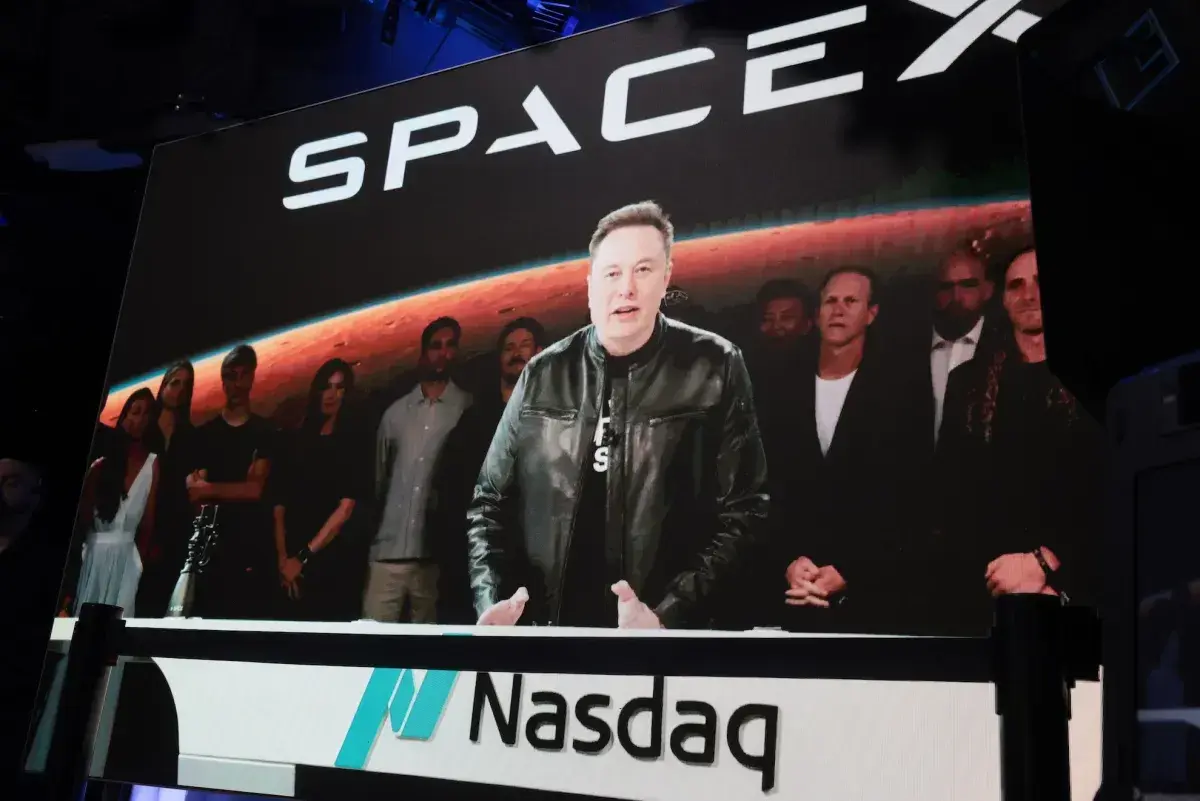
The antitrust warning landed on the same day that SpaceX filed paperwork for what is expected to be the largest initial public offering in history
1
. SpaceX, which absorbed xAI in a $1.25 trillion all-stock merger in February, plans to list on the Nasdaq under the ticker SPCX at a valuation of roughly $1.75 trillion1
2
. SpaceX is aiming to raise about $75 billion, with reports suggesting the company could begin its roadshow on June 4, price the offering as soon as June 11, and start trading as early as June 122
.According to a securities filing submitted last week, SpaceX has the right to acquire Cursor during a 30-day window that opens shortly after the company goes public
1
2
. If SpaceX does not exercise the option by the end of 2026, it owes Cursor a $10 billion breakup fee1
. The potential deal could strengthen xAI's position in AI-powered coding tools, an area where the company has trailed rivals2
. As xAI stated, "The combination of Cursor's leading product and distribution to expert software engineers with SpaceX's million H100 equivalent Colossus training supercomputer will allow us to build the world's most useful models"2
.
Source: Benzinga
Related Stories
Internal Challenges and Personnel Changes at xAI
Beyond antitrust concerns, xAI faces significant internal challenges. Michael Nicolls, a SpaceX vice president who previously led Starlink engineering, has taken over the bulk of engineering at what Musk now calls SpaceXAI, covering infrastructure and Grok development
1
. Nicolls acknowledged publicly that the company is "clearly behind" competitors1
. Personnel changes have been dramatic, with Musk ordering layoffs in March after growing frustrated with xAI's performance on coding tasks compared to Anthropic's Claude Code and OpenAI's Codex1
. All 11 of xAI's co-founders have now left the company1
.Job cuts have continued in recent weeks even as dozens of new hires are brought on simultaneously, overwhelming the operations team
1
. One example illustrates the dysfunction: xAI offered employees $420 each to hand over their personal tax returns as training data for Grok ahead of the April tax deadline, but two months later, nobody has been paid, and the manager who ran the programme no longer works at the company1
. For Cursor, which hit $2 billion in annualised recurring revenue by February 2026 and counts 67 per cent of the Fortune 500 among its users, the situation presents a delicate balance between maintaining its rapid growth and navigating xAI's internal chaos1
. The question remains whether a company struggling with basic execution can successfully absorb a $60 billion acquisition 30 days after going public1
.References
Summarized by

Navi
[1]
Related Stories
SpaceX strikes deal with Cursor, secures option to buy AI coding startup for $60 billion
22 Apr 2026•Technology

SpaceX acquires Cursor for $60 billion to compete in enterprise AI market
16 Jun 2026•Startups
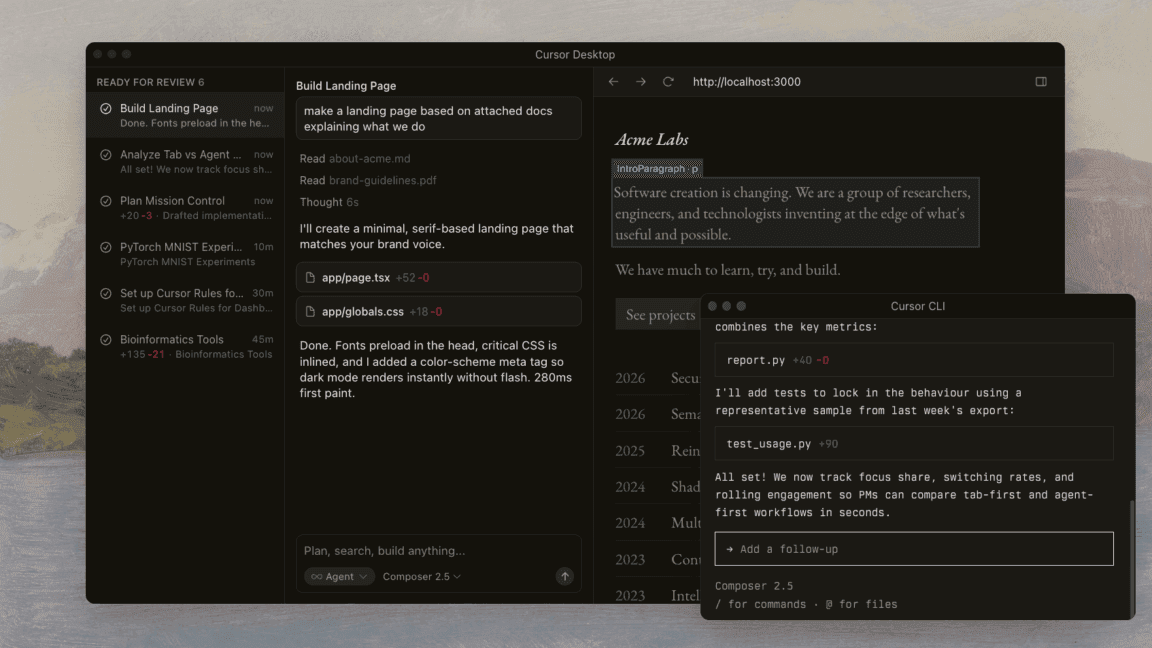
SpaceXAI and Cursor launch Grok 4.5, their first joint AI model targeting OpenAI and Anthropic
08 Jul 2026•Technology
Recent Highlights



Recent Highlights
Today's Top Stories







Don’t drown in AI news. We cut through the noise - filtering, ranking and summarizing the most important AI news, breakthroughs and research daily. Follow topics that matter to you and stay ahead.


