6 Sources
[1]
xAI burned $6.4B last year. SpaceX's IPO filing shows why the spending is far from over | TechCrunch
Elon Musk's xAI lost $6.4 billion from operations on just $3.2 billion in revenue in 2025, according to SpaceX's IPO filings. And the losses are poised to grow. SpaceX's filing reveals plans to scale Grok to "multiple trillions of parameters," a dramatic boost that will likely require significant additional compute spend. Elon Musk merged his AI company xAI -- which had previously acquired his social media platform X (formerly Twitter) -- with his rocket and satellite company SpaceX in February before announcing that he'd take the combined company public this year. While AI competitors OpenAI and Anthropic are also eyeing public debuts in 2026, SpaceX's is expected to be one of the largest in history with a potential $1.75 trillion valuation. The filing marks the first public glimpses into xAI, and therefore X's, financials. In 2024, xAI recorded a loss of $1.56 billion on $2.62 billion in revenue. By 2025, losses had ballooned to $6.4 billion on $3.2 billion, meaning the gap between what xAI earns and spends is widening. Meanwhile, competitor (and customer) Anthropic reportedly expects a 130% revenue jump to $10.9 billion in the second quarter, leading to its first operating profit. The jump in revenue from 2024 to 2025 came in large part from "AI solutions and infrastructure revenue" totalling $465 million, which includes $365 million in X and Grok subscription revenue, and $88 million in data licensing. An additional $116 million came from advertising. AI segment capital expenditures climbed from $12.7 billion in 2025 to $7.7 billion in the first quarter of 2026 alone. That's an annualized capex run rate of about $30.8 billion, more than doubling year-over-year. So far, that investment has resulted in growing, but still limited, user numbers. Per the filing, SpaceX recorded 117 million monthly active users for Grok AI features as of March 2026, out of 550 million total MAUs across Grok and X combined. That implies only one-fifth of the combined ecosystem is actively using Grok AI features. Still, SpaceX intends to soldier on with Grok; its next-generation AI is expected to scale to "multiple trillions of parameters," which the filing describes as a "step change in reasoning in depth and overall intelligence." It's an ambitious target, and one that's now recorded in the audited annals of SEC history. It's also a target that will undoubtedly require more investment. The SpaceX filing's "use of proceeds" section mentions an "expansion of our AI compute infrastructure." Per the filing, xAI's Colossus and Colossus II data centers -- both of which came online in 122 days and 91 days, respectively -- collectively provide about 1 gigawatt of compute power. These are both used for Grok's training and inference. SpaceX claims that owning the compute infrastructure and vertically integrating across the AI stack lets them "train and iterate frontier models at lower cost and higher velocity." Another way that SpaceX might assuage investor fears about spending is by performing training and inference on orbital data centers, which Musk has promised to be a much cheaper alternative to terrestrial data centers. That sci-fi vision isn't likely to happen for several years, though. The filing says SpaceX intends to begin deploying its orbital AI compute satellites as early as 2028 -- the first concrete timeline set for such a launch. "The future of AI will be determined by control of the physical stack," the filing reads.
[2]
SpaceX IPO Filing Shows Musk Building an AI and Space Infrastructure Giant - Decrypt
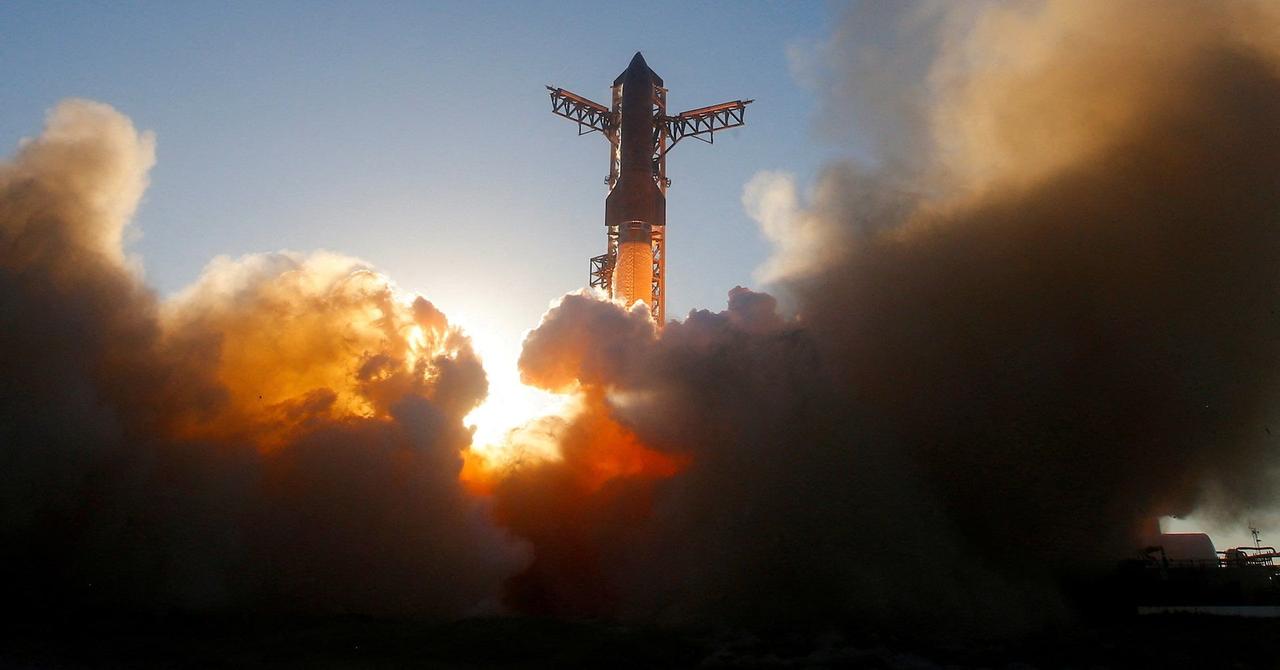
The filing shows SpaceX absorbing X and xAI while spending billions on AI infrastructure and Starship development. SpaceX's long-awaited IPO filing was released on Wednesday, giving investors their clearest look yet at Elon Musk's effort to turn the company into a combined space launch, satellite internet, and AI infrastructure business. The prospectus does not include a public IPO share price or total offering size, though it assigns a fixed $42.40 per-share value to the 261.8 million shares issued as part of the EchoStar spectrum acquisition. The filing also names Goldman Sachs, Morgan Stanley, Bank of America, Citi, and JPMorgan among the lead underwriters. SpaceX initially filed confidentially with the SEC in April, targeting a valuation of $1.75 trillion, making it the largest IPO in history. According to the prospectus, the company will use a dual-class share structure that preserves Musk's control after the offering. Public investors will receive Class A shares with one vote each, while Musk's Class B shares carry 10 votes apiece. SpaceX also designated itself a "controlled company" under Nasdaq rules, allowing it to bypass certain corporate governance requirements. The filing follows Musk's consolidation of his AI and social media businesses into SpaceX over the past year. In March 2025, xAI acquired X in an all-stock transaction that Musk said combined the companies' "data, models, compute, distribution, and talent." The deal folded X's more than 600 million users into xAI's AI training and distribution pipeline. Then in February, SpaceX acquired xAI itself, bringing Grok, X, and Musk's broader AI operations directly under the aerospace company. Musk argued at the time that power and cooling limitations would eventually push large-scale AI infrastructure into orbit. For 2025, SpaceX reported $18.67 billion in revenue alongside a $2.59 billion operating loss. The filing attributes much of the spending to AI infrastructure and Starship development. The company's AI segment posted $6.36 billion in operating losses during 2025, while Starship research and development consumed roughly $3 billion. SpaceX's IPO comes as Musk's rivalry with OpenAI continues to escalate following the collapse of his $150 billion lawsuit against the ChatGPT maker earlier this week. Both OpenAI and Anthropic are also considering IPOs, setting up a potential race between the largest AI companies to reach public markets. Earlier this month, Anthropic agreed to pay SpaceX $1.25 billion per month through May 2029, according to a report by CNBC. The deal would give Anthropic access to AI computing capacity at the company's Colossus 1 data center in Memphis and would provide more than 300 megawatts of compute power to help run and expand its Claude AI models, while also opening discussions about future orbital AI infrastructure projects with SpaceX.
[3]
Elon Musk's Raid: Why Tesla Lieutenants Are Shuffling To xAI - Tesla (NASDAQ:TSLA)
A copy of xAI's org chart reviewed by Bloomberg shows more than a dozen Musk allies now running engineering, product and finance. SpaceX President Gwynne Shotwell helps oversee operations, longtime Starlink executive Michael Nicolls took over as xAI president in April, and SpaceX finance chief Bret Johnsen now runs xAI's books. The shuffle matters because Musk folded xAI into SpaceX in February. xAI posted a roughly $6.4 billion operating loss last year and burned an estimated $14 billion in cash, even as Starlink doubled operating income to $4.42 billion, which Bloomberg said makes the AI unit a potential liability for the listing. The Index Rule That Forces Buying The reason the xAI drag may not dent the debut comes down to plumbing. Polymarket's timing market prices a June listing at 94%, with a Nasdaq debut reportedly targeted for June 12 under the ticker SPCX. Once it lists, a wave of forced buying kicks in. New rules letting huge IPOs join the Nasdaq 100 just 15 trading days after listing took effect May 1. SpaceX would qualify almost instantly, forcing every fund that tracks the index to buy the stock whether they like the price or not. The Retail Floodgates Open The demand floor builds before pricing day too. Shareholders just approved a 5-for-1 forward split that cut the fair value per share to about $105.32 from $526.59, lowering the nominal price for retail buyers. Reports indicate SpaceX is weighing an allocation of up to 30% of IPO shares to retail investors, roughly three times the usual 5% to 10%. Image: Shutterstock Market News and Data brought to you by Benzinga APIs To add Benzinga News as your preferred source on Google, click here.
[4]
Musk's xAI races to get Wall Street firms to use Grok chatbot
Billionaire Elon Musk's xAI has recruited multiple Wall Street firms with ties to his business empire to test its Grok chatbot, according to people familiar with the matter, part of a push to bolster revenue ahead of parent company SpaceX's initial public offering. Apollo Global Management and Morgan Stanley have begun using Grok internally alongside software from other AI model makers, said the people, who spoke on condition of anonymity as the information is not public. Valor Equity Partners is also using Grok, the people said. Despite some banks signing up for Grok, financiers are rarely using the chatbot for work, some of the people said. Musk's artificial intelligence venture is moving with urgency to boost revenue by selling chatbot subscriptions and access to its computing resources before SpaceX's expected IPO next month. Much of xAI's sales to date have come from deals with Musk's other ventures, including SpaceX and Tesla, and its tools are widely viewed as inferior to those of rivals OpenAI and Anthropic PBC for the finance industry. In the runup to its merger with SpaceX, xAI was burning through almost $1 billion per month.
[5]
xAI Pursues Finance Sector Growth Before SpaceX IPO | PYMNTS.com
By completing this form, you agree to receive marketing communications from PYMNTS and to the sharing of your information with our sponsor, if applicable, in accordance with our Privacy Policy and Terms and Conditions. The company is looking to sell subscriptions to its chatbot and access to its computing resources, according to the report. xAI is pitching its Grok chatbot as a tool for gathering internal company information for performance reviews and for using data from Musk's social media platform X, the report said. The company is also focusing on training Grok for work in the finance sector by teaching it to read documents and Excel spreadsheets and to handle financial modeling, per the report. xAI did not immediately reply to PYMNTS' request for comment. It was reported in April that SpaceX was demanding that banks, lawyers and other advisers who want access to the company's long-awaited IPO must subscribe to Grok. Some of the banks have agreed to spend millions on Grok subscriptions and have begun integrating it into their IT systems, according to the report. SpaceX's IPO is expected to raise more than $50 billion at a valuation of upwards of $1 trillion, meaning banks could realize fees of more than $500 million for advising on the listing, according to the April report. It was reported in March that xAI was hiring bankers and private credit lenders to provide lessons as part of the company's effort to make Grok better at offering financial strategies. The company aimed to recruit Wall Street bankers, portfolio managers, traders and credit analysts for its data annotation teams that train the chatbot. These professionals are expected to help Grok reason through things like leveraged loan syndication and collateralized loan obligations, according to the report. The March report said that other AI startups, including OpenAI and Anthropic, had already introduced tools for financial analysts. When xAI announced in January, before its acquisition by SpaceX, that it raised $20 billion in a Series E funding round, the company said the financing would "accelerate our world-leading infrastructure buildout, enable the rapid development and deployment of transformative AI products reaching billions of users, and fuel groundbreaking research advancing xAI's core mission: Understanding the Universe."
[6]
Musk says SpaceX in talks to provide AI compute to other companies By Investing.com
Investing.com-- SpaceX CEO Elon Musk said on Wednesday the company was in talks to provide artificial intelligence computing services to other firms, after a nearly $45 billion deal with Anthropic. "@SpaceX is offering AI compute as a service at significant scale. We are in discussions with other companies to do the same," Musk said in a social media post. He added that SpaceX's plans for orbital data centers would allow the company to "serve AI at extremely high scale" over time. Get more breaking updates on the SpaceX IPO by subscribing to InvestingPro Musk's comments come after SpaceX said in a filing that Anthropic has agreed to pay the firm nearly $45 billion over the next three years for computing resources to support its Claude AI tools. The deal was disclosed in SpaceX's filing for an initial public offering, with the company set to go public in a behemoth offering next month. SpaceX's AI capabilities come primarily from its acquisition of Musk's AI startup xAI earlier this year. The startup's compute infrastructure is built around its Colossus complex in Memphis, Tennessee , which Musk claims is the world's largest AI supercomputer cluster. Musk has repeatedly touted SpaceX's ambitions to build data centers in space, although critics of the plan have raised questions over the high cost and logistical feasibility of such a venture. SpaceX is likely to debut on the Nasdaq next month, the company's filing showed on Wednesday. Recent reports showed SpaceX targeting a $75 billion raise at a $1.75 trillion valuation, the biggest IPO ever on Wall Street.
Share
Copy Link
Elon Musk's xAI lost $6.4 billion from operations on just $3.2 billion in revenue in 2025, according to SpaceX's IPO filing. The losses are set to grow as the company plans to scale Grok to multiple trillions of parameters, requiring massive AI infrastructure investment. With capital expenditures hitting a $30.8 billion annualized run rate and only 117 million users actively engaging with Grok features, the path to profitability remains unclear.
Elon Musk's xAI burned through $6.4 billion in operating losses on just $3.2 billion in revenue during 2025, according to the SpaceX IPO filing released this week
1
. The disclosure marks the first public glimpse into xAI's financial performance since Elon Musk merged his AI company with SpaceX in February, following xAI's earlier acquisition of social media platform X. The widening gap between revenue and spending stands in stark contrast to competitor Anthropic, which reportedly expects a 130% revenue jump to $10.9 billion in the second quarter, leading to its first operating profit1
. The losses represent a dramatic escalation from 2024, when xAI recorded a $1.56 billion loss on $2.62 billion in revenue, signaling that the company's cash burn is accelerating rather than stabilizing.The SpaceX IPO filing reveals that AI segment capital expenditures climbed from $12.7 billion in 2025 to $7.7 billion in the first quarter of 2026 alone, translating to an annualized capex run rate of approximately $30.8 billion
1
. This represents more than a doubling year-over-year and underscores the massive investment required to compete in frontier AI development. The company's Colossus and Colossus II data centers, which came online in 122 days and 91 days respectively, collectively provide about 1 gigawatt of AI compute power for Grok's training and inference1
. SpaceX claims that owning the compute infrastructure and pursuing vertical integration across the AI stack enables them to train and iterate frontier models at lower cost and higher velocity, though the financial results suggest profitability remains distant.Despite the massive investment in AI and Space Infrastructure, user adoption of Grok features remains modest. The filing shows SpaceX recorded 117 million monthly active users for Grok AI features as of March 2026, out of 550 million total MAUs across Grok and X combined
1
. This means only one-fifth of the combined ecosystem actively uses Grok AI features. Revenue from AI solutions and infrastructure totaled $465 million, including $365 million from X and Grok subscription revenue and $88 million from data licensing, with an additional $116 million coming from advertising1
. The company is aggressively pursuing finance sector growth, with Apollo Global Management, Morgan Stanley, and Valor Equity Partners beginning to test the Grok chatbot internally4
. However, financiers are rarely using the chatbot for actual work, and xAI's tools are widely viewed as inferior to those from OpenAI and Anthropic for the finance industry4
.
Source: Japan Times
Related Stories
The SpaceX IPO filing, which names Goldman Sachs, Morgan Stanley, Bank of America, Citi, and JPMorgan among lead underwriters, targets a valuation of $1.75 trillion, potentially making it the largest IPO in history
2
. For 2025, SpaceX reported $18.67 billion in revenue alongside a $2.59 billion operating loss, with the AI segment posting $6.36 billion in operating losses and Starship research and development consuming roughly $3 billion2
. The filing reveals a dual-class share structure preserving Elon Musk's control, with public investors receiving Class A shares carrying one vote each while Musk's Class B shares carry 10 votes apiece2
. A 5-for-1 forward split cut the fair value per share to about $105.32 from $526.59, lowering the entry point for retail investors3
. Polymarket's timing market prices a June listing at 94%, with reports targeting a Nasdaq debut on June 12 under ticker SPCX3
.
Source: PYMNTS
The SpaceX IPO filing states that xAI's next-generation AI is expected to scale Grok to multiple trillions of parameters, described as a step change in reasoning depth and overall intelligence
1
. This ambitious target will undoubtedly require more investment, with the use of proceeds section mentioning expansion of AI compute infrastructure. Looking further ahead, SpaceX intends to begin deploying orbital data centers as early as 2028, the first concrete timeline for such a launch1
. Musk has promised that orbital AI compute satellites will be a much cheaper alternative to terrestrial data centers, though this sci-fi vision won't materialize for several years. The filing declares that the future of AI will be determined by control of the physical stack1
. Meanwhile, xAI reportedly burned through almost $1 billion per month in the runup to its merger with SpaceX4
, and the company is training Grok for financial modeling work by teaching it to read documents and Excel spreadsheets5
. Much of xAI's sales to date have come from deals with Musk's other ventures, including SpaceX and Tesla4
. The company has also recruited executives from across Musk's empire, with SpaceX President Gwynne Shotwell overseeing operations, Starlink executive Michael Nicolls serving as xAI president, and SpaceX finance chief Bret Johnsen running xAI's books3
. As both OpenAI and Anthropic eye public debuts in 2026, Wall Street will be watching whether xAI can narrow its losses and demonstrate a viable path to competing with established AI leaders.Summarized by
Navi
[1]
22 Apr 2026•Business and Economy

02 Apr 2026•Business and Economy

13 Jul 2025•Business and Economy

1
Technology

2
Business and Economy

3
Health