YouTube expands auto-dubbing feature to all creators with AI-powered voice and lip sync upgrades


4 Sources
[1]
YouTube's Auto-dubbing feature is now available to all
Timi is a news and deals writer who's been reporting on technology for over a decade. He loves breaking down complex subjects into easy-to-read pieces that keep you informed. But his recent passion comes from finding the best discounts on the internet on some of the best tech products out right
[2]
YouTube now lets you watch content auto-dubbed in your own language
YouTube expands auto-dubbing to 27 languages with more natural speech and improved lip sync YouTube is improving its auto-dubbing feature further to make it easier for viewers to watch videos in languages they actually understand. Auto-dubbing uses AI to translate and replace a video's spoken
[3]
YouTube's AI-Powered Auto-Dubbing Feature Is Now Available to All Users
* AI-powered auto-dubbing was first launched at VideoCon 2023 * Last year, it was expanded to information-focused content * YouTube is also adding a Preferred Language setting option YouTube, on Wednesday, announced that its artificial intelligence (AI)-powered auto-dubbing feature is now being
[4]
YouTube rolls out more natural auto-dubbing, adds language controls
YouTube announced on Thursday that it has rolled out new updates to its auto-dubbing tool, expanding language support and making dubbed videos sound more natural, while giving both viewers and creators more control over how content is experienced. Auto-dubbing on YouTube is now available to
Share
Copy Link
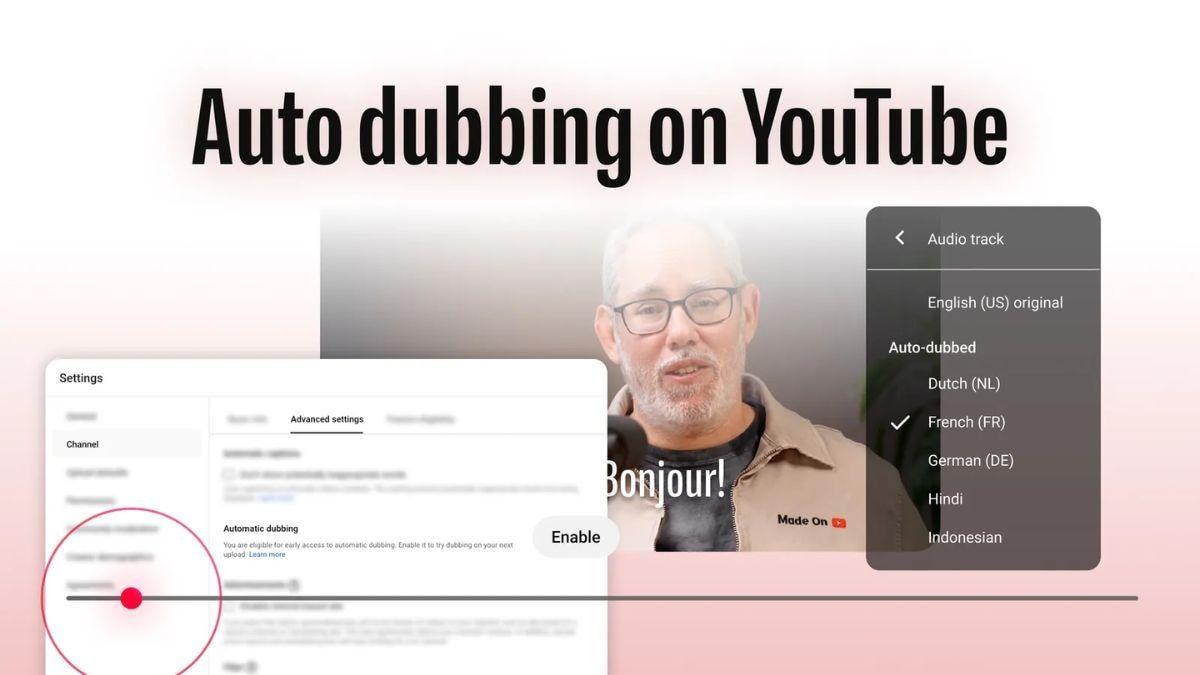
YouTube has made its AI-powered auto-dubbing feature available to all creators, supporting 27 languages with natural-sounding voices. The platform averaged over 6 million daily viewers watching at least 10 minutes of auto-dubbed content in December 2025, signaling strong adoption as creators reach global audiences without manual translation work.
YouTube Opens AI-Powered Auto-Dubbing to All Creators
YouTube announced that its auto-dubbing feature is now available to every creator on the platform, marking a shift in how content creators can reach a global audience
1
. The AI-powered auto-dubbing tool automatically transcribes and translates a video's spoken words into different languages, adding additional audio tracks without requiring creators to produce their own dubbed versions3
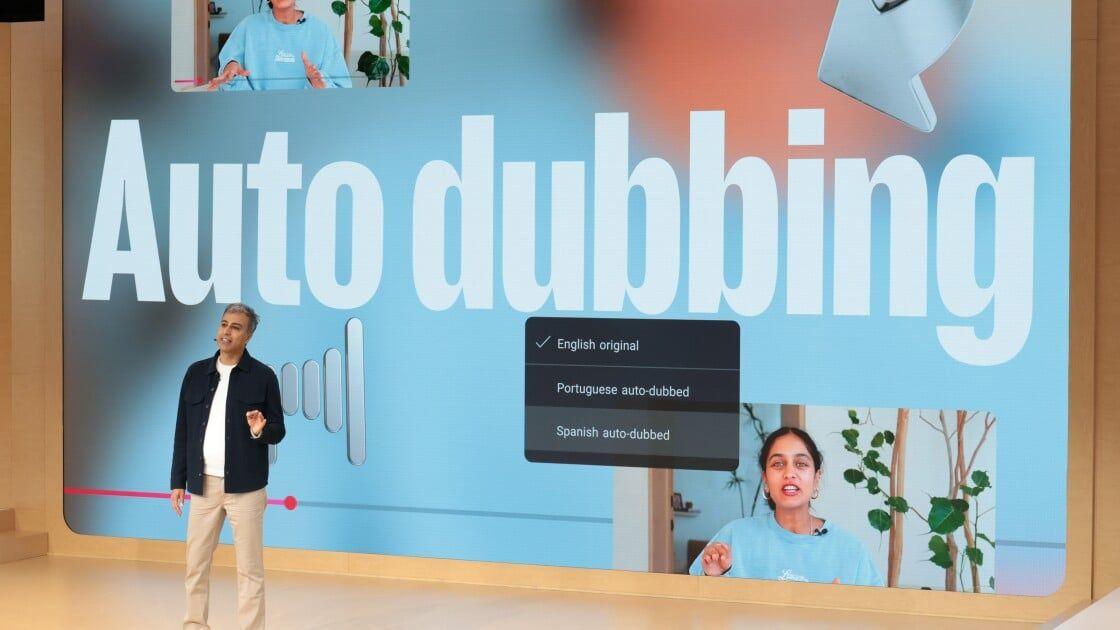
. First introduced at VideoCon 2023 as a pilot program and expanded to knowledge-focused content in 2024, the feature now supports 27 languages across all non-music videos2
.
Source: ET
The expansion matters because it levels the playing field for content creators who previously couldn't afford professional dubbing services. While large YouTube channels have rolled out their own dubbed content for years, smaller creators lacked this option entirely
1
. Google highlighted that in December 2025, YouTube averaged more than 6 million daily viewers who watched at least 10 minutes of auto-dubbed content, demonstrating strong adoption of the tool3
.
Source: Gadgets 360
Expressive Speech Brings Natural-Sounding Voices to Multiple Languages
YouTube is rolling out its Expressive Speech feature for all YouTube channels in eight languages, including English, French, German, Hindi, Indonesian, Italian, Portuguese, and Spanish
1
. This capability addresses a common complaint about AI dubbing: robotic-sounding translated audio that strips away the creator's original emotion and energy2
. The feature preserves tone, emotion, and pacing in translated audio, making dubbed versions feel more authentic to viewers4
.The platform is also testing a Lip Sync feature that subtly matches a speaker's lip movements to the translated audio, making dubbed videos feel as seamless as watching the original
1
. This technology, already available in Reels on Instagram and Facebook, aims to reduce the visual disconnect that makes some viewers find mismatched audio and visuals distracting. If executed properly, the Lip Sync feature will add another layer of realism to dubbed content, potentially changing how viewers perceive AI-generated localization1
.New Language Controls Give Viewers and Content Creators More Options
YouTube is introducing a Preferred Language setting that allows viewers to choose whether they want to watch videos in their original language or a dubbed version
2
. This addresses concerns from multilingual users and those who prefer consuming content in its original form rather than relying solely on YouTube's automatic language selection3
. When a dubbed version is available, YouTube will automatically serve it in the selected language setting, but users maintain control through this new personalization option2
.For content creators, the auto-dub feature activates automatically, but they're not locked into using it
2
. Creators can disable auto-dubbing entirely or upload their own dubbed versions if they prefer more control over their content4
. YouTube uses automatic smart filtering to avoid dubbing content that doesn't make sense to translate, such as music-only videos or silent vlogs2
. The company says auto-dubbing won't hurt a video's reach and could even help it find audiences in new regions4
.Related Stories

What This Means for the Future of Creator Tools and Localization
YouTube's push into AI-driven dubbing comes as Meta is also expanding AI-powered translations across Facebook and Instagram. In January, Meta began rolling out Reel translations in more Indian languages, including Bengali, Tamil, Telugu, Marathi, and Kannada. Meta's AI translation tool automatically dubs and lip-syncs Reels using a creator's own voice, available to Facebook creators with over 1,000 followers and all public Instagram accounts
4
.YouTube acknowledges that auto-dubs can still contain errors, often caused by imperfect speech recognition or unclear audio, but these systems will improve over time as more feedback comes in
2
. For creators not seeing optimal results, YouTube offers tips to improve dubbing quality1
. Some viewers prefer turning audio dubs off and reading subtitles instead, but if YouTube masters Expressive Speech and Lip Sync, the technology could shift viewer preferences significantly1
. Watch for how these creator tools evolve as competition between platforms intensifies, and whether the 6 million daily viewers number continues to grow as more creators adopt the feature.References
Summarized by

Navi
[1]
[2]
Related Stories
YouTube Expands AI-Powered Auto-Dubbing Feature to Knowledge and Information Channels
11 Dec 2024•Technology

YouTube Expands AI-Powered Auto-Dubbing Feature for Global Content Accessibility
22 Nov 2024•Technology

YouTube's AI Lip-Sync Technology: Revolutionizing Auto-Dubbing for Global Content
14 Oct 2025•Technology
Recent Highlights



Recent Highlights
Today's Top Stories




Don’t drown in AI news. We cut through the noise - filtering, ranking and summarizing the most important AI news, breakthroughs and research daily. Follow topics that matter to you and stay ahead.


