YouTube Music Rolls Out AI Labels as 90,000 AI-Generated Songs Upload Daily Across Platforms


15 Sources
[1]
YouTube Music begins labeling AI songs
Genuine human creativity takes time, but you know what doesn't? AI slop. There are countless AI models out there that can make something that passes for music, and you might come across those tracks on streaming services without realizing it. Google says it's going to begin labeling that content in
[2]
YouTube Music launches new labels as AI-generated music floods streaming platforms
YouTube Music announced Wednesday the rollout of a new labeling system aimed at improving transparency around songs created with the help of generative AI. Now, listeners will be able to easily identify tracks created using AI, including those involved in composition and vocals. The label will
[3]
YouTube Rolls Out New Labeling System for AI-Generated Music - CNET
Aaron is a writer for the streaming entertainment team.... Read full bio Streaming your daily tunes is about to come with a bit more clarity. YouTube has expanded its labeling system to mark AI-generated songs on YouTube Music. As AI music continues to flood streaming apps, the service's latest
[4]
YouTube sticks new labels on AI-generated songs
YouTube is adding a "Made with AI" label to tracks that were "altered or fully generated" using AI, with a similar approach to its existing process for applying AI labels to videos. It doesn't sound like this will apply to any and all use of AI tools in making music, but according to YouTube, it
[5]

YouTube Music Now Flags AI Tracks, Deezer to Let You Remove Them Entirely
YouTube Music wants to make it easier to spot AI-generated music with a new label rolling out from Wednesday across its service. Meanwhile, rival streamer Deezer has announced plans to let you filter all AI-generated tracks from its platform. The new YouTube Music label will appear below the
[6]

YouTube Music adds new labels for AI-generated content - Engadget
YouTube Music just added clear labels that denote whether a track has been generated by AI. This is great news for people who like listening to actual music, and not weird and slightly metallic-sounding imitations. An oblong label that reads "AI" sits directly below the track name, so it's tough
[7]

Hate AI songs? YouTube Music will now label tracks so you can avoid them
The label will appear on the player page, and tapping it will open a menu that shares more information. YouTube Music is currently testing a new look for album art, giving the player a sprawling background that stretches across the top third of the page. While that experiment is limited to a small
[8]

YouTube Music will now flag AI-generated songs for listeners
Timi is the news and deals reporter for Android Police, who has been reporting on technology since 2008. He has worked in tech retail and also the IT space, providing hardware and software support, which gives him a unique perspective on the tech that he covers. This allows him to effectively break
[9]

YouTube Music rolling out AI labels in the Now Playing screen
In response to more AI-generated content appearing on streaming services, YouTube Music is adding a new AI label directly to the player. When a song is "created primarily using generative AI," you'll soon see a label on the Now Playing screen. This includes "using a generative model to create the
[10]

YouTube Music and Deezer add new AI music controls
You put on a playlist to find something good to listen to. Checking whether the singer exists wasn't supposed to be part of the process. But a song these days can fit your taste perfectly and still leave you wondering who, or what, made it. This week, two music streaming services -- Google's
[11]

YouTube Music adds labels to tracks made with AI
YouTube Music has added labels identifying tracks generated entirely by artificial intelligence or containing major AI-generated components, such as vocals. An oblong "AI" label appears directly below the track name. YouTube says the label will accompany content "where AI played a significant
[12]

YouTube Music Will Now Tell You When a Song Is Mostly Made by AI
YouTube Music is now telling listeners when a song was made mostly by artificial intelligence. YouTube announced the new labels in a blog post on Wednesday, and they began showing up that day. That matters because AI songs are getting easy to make and hard to spot. Deezer, a rival music app, says
[13]

YouTube AI-generated songs: YouTube to label AI-Generated songs across its platforms to increase "transparency"
With AI becoming increasingly common across industries, including the music industry, it's getting harder to tell whether a song is original or AI-generated. To make things clearer and avoid confusion, YouTube will now label AI-generated songs across its platforms. With Artificial Intelligence
[14]

YouTube Music adds labels to identify AI-generated music
YouTube Music is beginning to roll out labels to identify songs created primarily using generative AI. The labels will also expand to the main YouTube app. YouTube has previously introduced more visible AI disclosure labels for videos and Shorts to make AI-related disclosures easier to
[15]

YouTube Music AI song labels: Do they meet India's rules?
YouTube Music has started labelling songs created primarily using generative AI, such as tracks in which an AI model created the composition and vocals, YouTube announced on October 14. The label appears on the player page, and tapping it provides more information. YouTube said the labels will also
Share
Copy Link
YouTube Music has launched a new labeling system to identify AI-generated songs, following industry concerns about transparency in AI-generated content. The label appears on tracks created primarily with generative AI tools, joining similar efforts by Spotify, Apple Music, Deezer, and Tidal to address the flood of synthetic content on music streaming platforms.
YouTube Music Introduces New Labeling System for AI-Generated Music
YouTube Music has rolled out a comprehensive new labeling system designed to identify AI-generated songs, marking a significant step toward transparency in AI-generated content across music streaming platforms
1
2
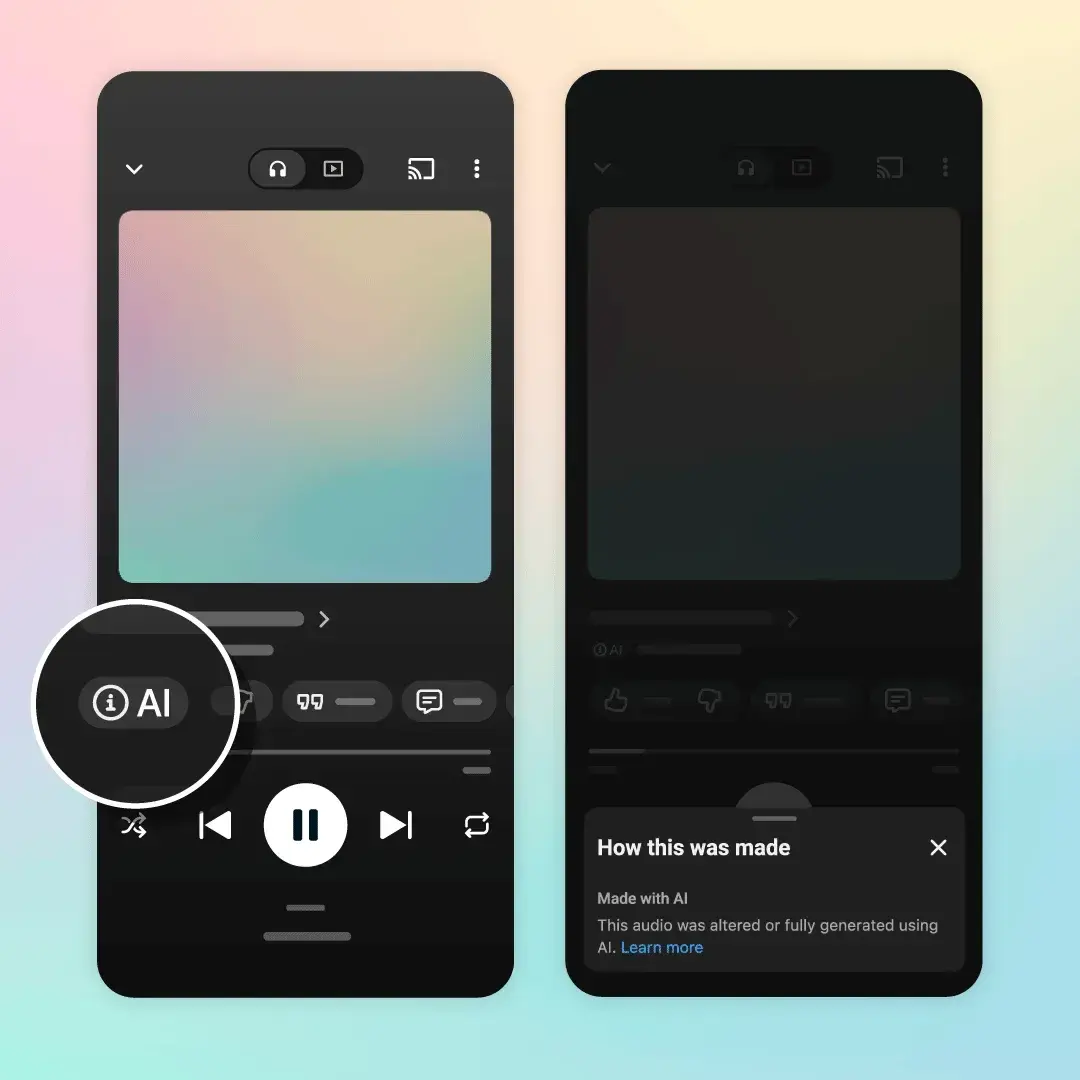
. The label appears directly on the player page below the track's name and artist, displaying "AI" next to the thumbs-up and thumbs-down icons5
. When users tap the label, a menu opens explaining, "This audio was altered or fully generated using AI"4
.
Source: TechCrunch
Google acknowledges that "generative AI is opening up new ways for artists to create, experiment, and share music," while simultaneously recognizing that listeners want transparency when encountering AI tracks
1
. The company emphasizes that its goal is making it "as easy as possible for viewers and listeners to have the right information and clarity when it comes to the music they listen to"5
. These labels will eventually extend to the main YouTube app as well2
.How YouTube Music Identifies AI-Generated Songs
YouTube Music employs multiple detection methods working with music partners and deploying its own detection tools to identify AI-generated songs
1
. When music partners upload content, they can declare their work's use of generative AI tools through three designations: "Fully Gen AI," "Partly Gen AI," or "No Gen AI"2
. "Fully Gen AI" applies to tracks entirely generated by AI, while "Partly Gen AI" refers to works where artists incorporated AI-generated components but added their own live elements. Tracks edited using pitch-correction tools such as Auto-Tune fall under the "No Gen AI" category2
.However, this disclosure process is optional
1
. If there's no disclosure, YouTube may use "other signals" to decide if a song is AI-generated4
. For tracks created using Google AI, SynthID watermarking indicates whether something was generated or edited with AI. The platform may also use C2PA metadata, which is utilized by many other AI music makers1
.Industry-Wide Response to AI-Generated Music Surge
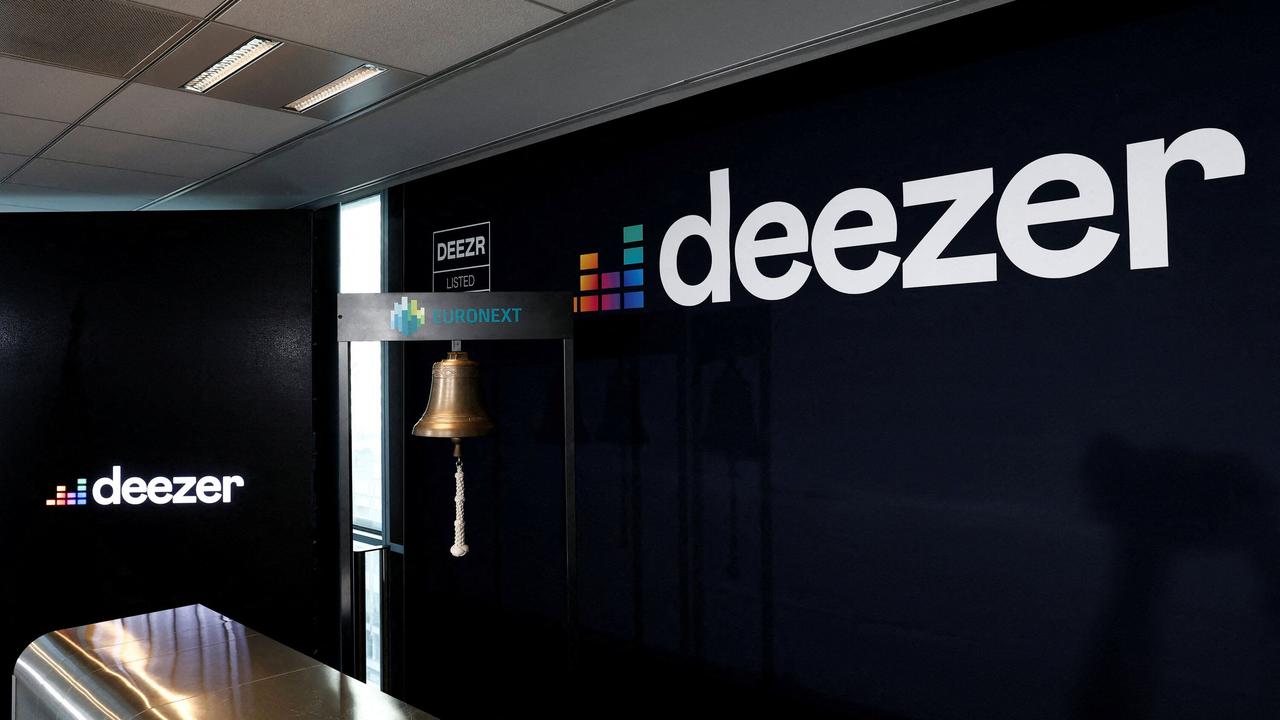
The new labeling system for AI-generated music comes as synthetic content rapidly expands across music streaming platforms. Deezer reported in July that it was receiving nearly 90,000 fully AI-generated tracks daily, with AI-generated music accounting for 44% of all new music delivered to its platform
3
5
. Apple Music previously stated that over one-third of the tracks uploaded to its service are "100% AI"3
. Forbes reports that AI-generated music could become an industry worth billions of dollars by 20283
.
Source: Mashable
Apple Music has plans to introduce "Made With AI" labels as part of its AI Transparency Tags later this year
2
. Spotify also has AI labels and includes AI Persona badges on AI-generated artists, though these appear on profiles rather than individual tracks5
. Spotify additionally employs a music spam filter and doesn't include AI tracks in recommendations2
.Related Stories
Stricter Approaches from Competing Platforms
While YouTube focuses on disclosure rather than blanket restrictions, other music streaming platforms have taken stricter stances. Deezer labels detected AI-generated music and excludes it from algorithmic recommendations and editorial playlists, while also withholding royalties from fraudulent streams
2
. Deezer CEO Alexis Lanternier announced plans for an upcoming toggle allowing users to remove all synthetic tracks from their streaming experience completely, stating, "We've seen a clear user demand for the ability to filter out AI-generated music"5
.Tidal labels recordings it identifies as entirely AI-generated, allows listeners to disable them, and has demonetized AI-generated tracks while still permitting listening
2
5
. Bandcamp banned AI music outright earlier this year4
.Limitations and Future Implications
YouTube's AI labeling approach has notable limitations. The absence of a label should not be taken as proof something is the product of human talent, as there are too many ways to utilize generative AI tools, many of which leave no identifying mark
1
. Additionally, AI labeling may prove less useful for music than videos since listeners often aren't looking at the screen and must suspect something is amiss before checking their device1
. Currently, there is no option to block labeled AI tracks from appearing in playlists1
.The Recording Industry Association of America, International Federation of the Phonographic Industry, National Academy of Recording Arts and Sciences, and the performers union SAG-AFTRA came together earlier this summer to push for a two-tiered labeling program marking AI-produced songs as either AI-Generated or AI-Assisted
3
. IFPI CEO Vikki Oakley and RIAA CEO Mitch Glazier stated in a joint statement: "Fans want to know whether and how generative AI has been used in the music to which they listen. Given how important human artistry and authenticity are to music lovers all over the world, these labels will provide an immediately understandable and easily scalable approach to transparency in AI-generated content"3
. YouTube even experiments with AI-powered music creation, including its tool Dream Track, which lets select creators generate soundtracks featuring AI-generated versions of participating artists' voices2
.
Source: Engadget
References
Summarized by

Navi
[1]
[4]
Related Stories
Apple Music Makes AI Labels Mandatory as Over a Third of Uploads Are Now AI-Generated Songs
21 Aug 2026•Technology

Music Industry Proposes AI Labels Similar to Explicit Lyrics Warnings for Streaming Platforms
10 Jul 2026•Policy and Regulation
Apple Music introduces Transparency Tags for AI music, but relies on voluntary disclosure
04 Mar 2026•Technology

Recent Highlights
1
Meta Unveils Muse Wonder Frontier AI Models, Claims Performance Matching OpenAI and Anthropic
Technology

2
IMF Report Warns AI Market Correction Could Spark Global Financial Crisis With $1.4T at Risk
Business and Economy

3
OpenAI Releases 722 AI-Generated Math Solutions, Triggering Existential Crisis in Mathematics
Technology

Recent Highlights
Today's Top Stories








Don’t drown in AI news. We cut through the noise - filtering, ranking and summarizing the most important AI news, breakthroughs and research daily. Follow topics that matter to you and stay ahead.


