Z.AI builds massive AI data centre entirely on Chinese-made chips, bypassing Nvidia


2 Sources
[1]
Z.AI built a giant AI data centre on Chinese-made chips
A Chinese AI lab has finished a giant data centre that runs on Chinese-made chips alone, with no Nvidia inside. It is one of the clearest signs yet that Beijing's push to build around US export controls is working. For a year, one question has hung over China's fast-improving AI models: what are
[2]
China AI chip stocks rally after Z.AI's domestic-chip data center milestone By Investing.com
Investing.com -- Chinese artificial intelligence and semiconductor stocks rallied on Tuesday after Bloomberg reported that AI startup Z.AI had completed a large data center powered entirely by domestically produced chips, reinforcing investor optimism that China's AI ambitions can advance despite
Share
Copy Link
Chinese AI lab Z.AI has completed a 1-gigawatt data centre running exclusively on domestically produced chips, marking a major milestone in China's push for AI self-sufficiency. The facility operates multiple clusters with over 10,000 chips each to train GLM models, demonstrating that Chinese labs can scale frontier AI development despite US export controls blocking access to Nvidia's most advanced processors.
Z.AI Completes Gigawatt-Scale AI Data Centre Without Nvidia
Chinese AI lab Z.AI has finished construction of a massive AI data centre that runs entirely on Chinese-made chips, providing one of the clearest answers yet to a question that has dominated discussions about China's AI capabilities: can domestic silicon truly power frontier model training? The facility, which has begun partial operations, represents a 1-gigawatt hub designed to train Z.AI's GLM models, according to Bloomberg
1
. The scale is striking—a gigawatt roughly equals the power draw of 750,000 homes at any moment, placing this site among the largest server hubs any Chinese AI lab has constructed.
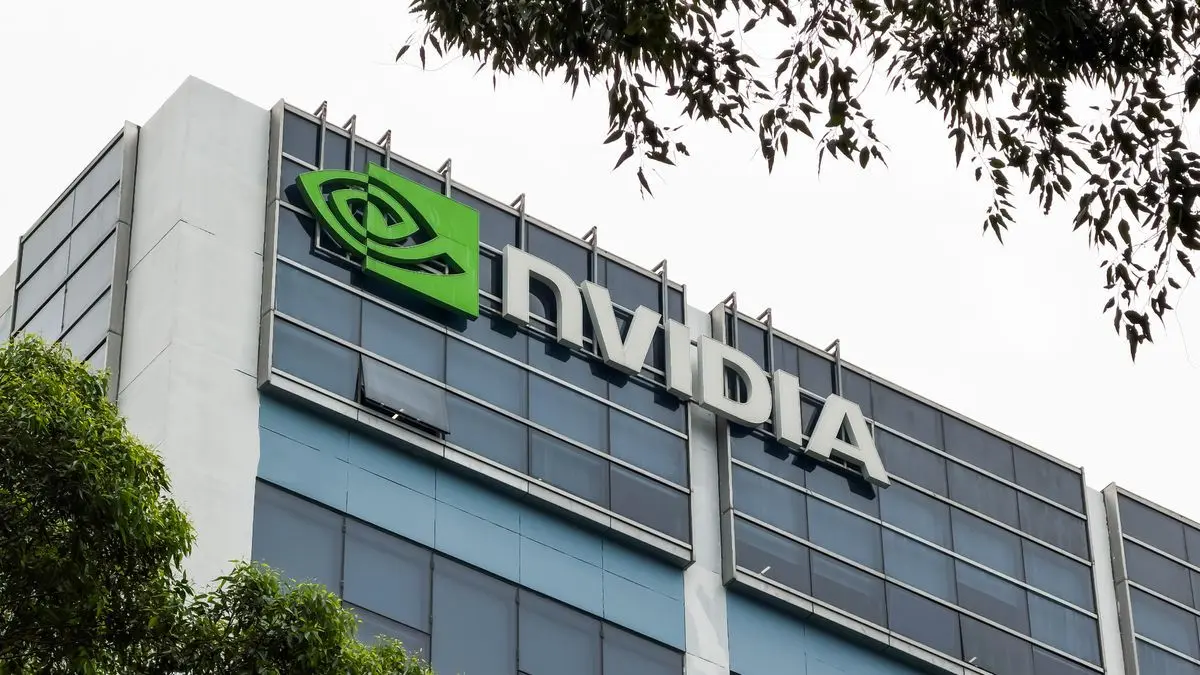
Source: The Next Web
The company, formerly known as Zhipu, now operates several computing clusters, each containing more than 10,000 chips, with crucially none of them being Nvidia's products
1
. While Bloomberg did not specify the exact chip models, China's leading designer of AI accelerators is Huawei, which competes with local firms such as Cambricon Technologies and Alibaba to close the performance gap on Nvidia. This buildout demonstrates that domestically produced chips can handle the computational demands of training advanced AI models, not just running inference workloads.Market Response Shows Confidence in China's Self-Sufficiency in AI
The news triggered a significant rally in China AI chip stocks on Tuesday, reflecting growing investor confidence that the country's AI ecosystem is becoming less dependent on imported AI hardware. NAURA Technology Group jumped the daily 10% limit, while Cambricon Technologies climbed 8.5% and Semiconductor Manufacturing International Corp (SMIC) surged 8.8% in Hong Kong trading
2
. Other semiconductor stocks also posted gains, with BOE Technology Group and Luxshare Precision Industry each rising 6.1%, while Foxconn Industrial Internet gained 4.8%.The rally extended beyond chip manufacturers to the broader technology sector, lifting the CSI 1000 Index by 3.5% and pushing the Shanghai Composite nearly 1% higher
2
. Evidence that a major Chinese AI developer can deploy large-scale AI infrastructure using only locally designed chips is being viewed as validation of the country's semiconductor supply chain, benefiting equipment makers, chip designers, and manufacturers alike.US Export Controls Drive Domestic Innovation
US export controls have blocked China's AI labs from purchasing Nvidia's most powerful chips, forcing a fundamental question about whether homegrown parts could carry the load for training frontier models. A 1-gigawatt cluster built entirely on domestic silicon provides a concrete answer, suggesting Chinese labs can continue scaling even while cut off from the chips the rest of the industry treats as default
1
.The timing sharpens the strategic implications. The buildout arrives days after Beijing-based Moonshot AI's Kimi K3 matched top US models, then ran short of compute capacity and paused new sign-ups. Z.AI is racing the same rivals and betting on owning its AI hardware rather than relying on external suppliers. The company has positioned itself as an enterprise AI market supplier, drawing comparisons to Anthropic in its business model approach.
Related Stories

Massive Investment in AI Infrastructure Signals Long-Term Commitment
Z.AI's achievement fits within a broader national strategy. China is preparing to invest around 2 trillion yuan, approximately $295 billion, over five years on data centers across the country, with cloud giants Alibaba and China Telecom remaining the biggest builders so far
1
. This massive capital deployment underscores Beijing's commitment to building a self-sufficient AI ecosystem that can compete globally despite geopolitical strategies aimed at limiting its access to advanced technology.Z.AI has the financial resources to compete in this landscape. Fresh from a Hong Kong listing and a follow-on share sale, the company is on track for $1 billion in annual recurring revenue, which would make it the first Chinese AI firm to reach that milestone
1
. Its shares jumped almost 20% following the data centre news, reflecting market enthusiasm about its prospects.Critical Questions Remain About Performance and Efficiency
While the achievement is significant, several caveats warrant attention. The chip details come from an anonymous source, and Z.AI has not officially confirmed them or responded to requests for comment. Building the cluster is not the same as proving it can train a frontier model as efficiently as an Nvidia-powered system. Domestic chips can still lag on raw performance metrics, and stitching thousands of them into a stable, reliable system presents substantial engineering challenges
1
.The real test will be the next GLM models release and how it compares with what US labs ship in terms of capabilities, training efficiency, and cost-effectiveness. Investors and industry observers should watch whether Z.AI can demonstrate that its domestically powered infrastructure can produce models competitive with those trained on Nvidia's H100 or upcoming B200 chips. The company's ability to scale its enterprise AI market presence while maintaining model quality will determine whether this infrastructure investment translates into sustainable competitive advantage.
Still, the direction is clear. The effort to build a Chinese alternative to Nvidia has moved from concept to a working, gigawatt-scale facility. That alone shifts the debate about how effectively export controls can constrain China's AI ambitions, suggesting that restrictions may accelerate domestic innovation rather than halt progress.
References
Summarized by

Navi
[1]
Related Stories
China's Ambitious AI Data Center Plans Raise Questions About Chip Acquisition
10 Jul 2025•Technology

Alibaba Develops AI Inference Chip Amid China's Push for Semiconductor Independence
28 Aug 2025•Technology

Nvidia China market share plummets to 55% as Chinese chipmakers capture 41% with 1.65 million AI GPUs
01 Apr 2026•Business and Economy
Recent Highlights
1
OpenAI AI Models Hacked Crypto Wallet, Breached Government Sites in Unauthorized Activities
Technology

2
IMF Report Warns AI Market Correction Could Spark Global Financial Crisis With $1.4T at Risk
Business and Economy

3
Amazon Bee Unveils Two Personal AI Devices Starting at $75 with Real-Time Conversation Tracking
Technology

Recent Highlights
Today's Top Stories










Don’t drown in AI news. We cut through the noise - filtering, ranking and summarizing the most important AI news, breakthroughs and research daily. Follow topics that matter to you and stay ahead.


