Zhipu AI secures $4 billion in Hong Kong as Chinese AI model developer accelerates spending


4 Sources
[1]
China's Zhipu AI launches $4 billion Hong Kong share sale as stock surges
July 8 (Reuters) - Knowledge Atlas Technology JSC (2513.HK), opens new tab, known as Zhipu AI, is seeking to raise around $4 billion via a share sale in Hong Kong, according to a term sheet seen by Reuters on Wednesday. The deal came after Zhipu's shares surged 13.4% on Wednesday, extending strong
[2]
Macquarie raises Zhipu AI revenue target on coding strength By Investing.com
Investing.com -- Macquarie lifted its annual recurring revenue target for Zhipu AI to $2 billion for 2026 and $4.5 billion for 2027, citing the company's leading position in code generation capabilities. The investment bank said Zhipu's ARR crossed $1 billion in July, ahead of its full-year
[3]
Why is Zhipu AI stock surging today? By Investing.com
Investing.com -- Zhipu AI, trading as Knowledge Atlas Tech Joint Stock, surged 14.7% to HK$2,094 on Thursday after the company completed a massive secondary share sale to raise about $4 billion. Zhipu raised approximately HK$31.4 billion by pricing 19.78 million shares at HK$1,588 each -- a
[4]
China's Zhipu AI Plans to Raise $4.0 Billion as Tech Spending Accelerates
Chinese artificial-intelligence company Knowledge Atlas Technology plans to raise US$4.0 billion through a private placement of shares as AI companies ramp up spending on computing infrastructure and large-language-model development. The Beijing-based company, which also operates under the name
Share
Copy Link
Zhipu AI raised approximately $4 billion through a Hong Kong share sale, pricing 19.78 million shares at a 13% discount. The AI model developer plans to use proceeds for research and development, compute infrastructure, and business expansion as China intensifies competition with U.S. firms like OpenAI in the race for AI dominance.
Zhipu AI Completes Major Fundraising Round
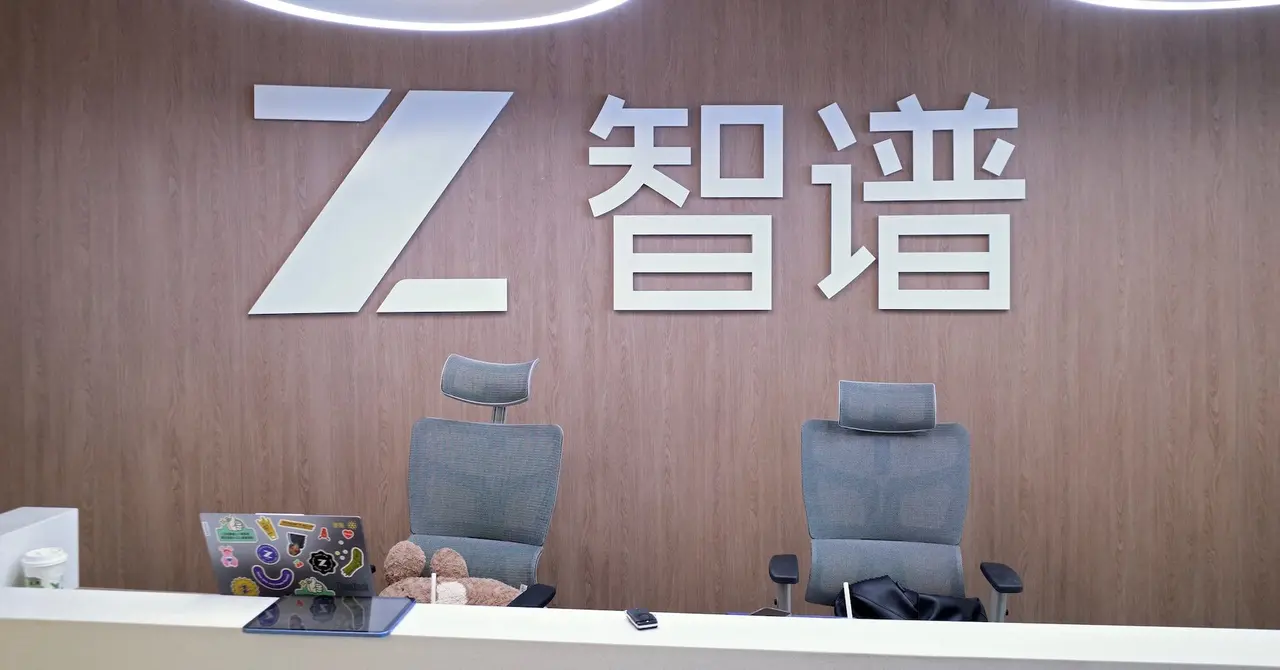
Zhipu AI, officially trading as Knowledge Atlas Technology, raised approximately $4 billion through a Hong Kong share sale that defied market expectations and sent its stock surging
1
. The Chinese AI company offered 19.78 million new shares at HK$1,588 to HK$1,698 each, representing a 7% to 13% discount to Wednesday's close of HK$1,8251
. The accelerated bookbuild, which increases the company's share capital by approximately 4.2%, comes as Chinese technology companies turn to Hong Kong's capital markets to fund aggressive expansion in artificial intelligence1
.
Source: Reuters
Despite the dilutive nature of the placement, Zhipu AI stock surged 14.7% to HK$2,094 on Thursday following the announcement
3
. The positive market reaction reflects strong investor confidence in the AI model developer's growth trajectory and strategic positioning. The company has emerged as one of Hong Kong's hottest stocks, surging nearly 1,300% since its January debut, with year-to-date gains reaching 1,316%2
3
.Strategic Deployment Across AI Infrastructure
The proceeds from this fundraising will be deployed across multiple strategic priorities, with emphasis on research and development, including hiring, computing capacity, and technical services
1
. Knowledge Atlas Technology stated that "the continued advancement in model capabilities and the large-scale commercialization of AI applications have placed higher demands on the company's capital strength and funding reserves"4
. The company expects to fully deploy the proceeds by the end of next year, directing funds toward cloud computing services, business expansion, and potential mergers and acquisitions4
.Glenn Yin, research director at brokerage ACCM, noted that "raising $4 billion gives Zhipu significant firepower to compete, but it also increases pressure on the company to demonstrate that heavy AI investment can translate into sustainable commercial returns"
1
. This AI spending surge addresses near-term capital needs for compute infrastructure investments required to support growing usage across the company's platform2
.Code Generation Technology Drives Revenue Growth
Macquarie lifted its annual recurring revenue target for Zhipu AI to $2 billion for 2026 and $4.5 billion for 2027, citing the company's leading position in code generation technology
2
. The investment bank reported that Zhipu's annual recurring revenue crossed $1 billion in July, ahead of its full-year target2
. The company's GLM models have driven broader adoption and faster development cycles, positioning Zhipu as a formidable competitor in China's rapidly expanding market for large language models2
.Zhipu AI founder Dr. Tang outlined the company's "Touch-High Plan" focusing on long-horizon reasoning, autonomous agents, self-training architectures, and AI safety governance
2
. Reports earlier this week indicated Zhipu is exploring custom ASIC chip development to power its GLM model family, underscoring ambitions to reduce reliance on third-party AI hardware3
.Related Stories

Competing in China's AI Arms Race
Zhipu AI is viewed by investors as a fast-rising Chinese challenger to U.S. firms such as OpenAI, helped by strong demand for generative AI applications
1
. The company is also competing with domestic rivals, including DeepSeek, Moonshot AI, and Minimax, as businesses race to leverage AI to automate tasks and boost productivity4
. Last month, DeepSeek raised more than $7.4 billion in its first funding round, valued at more than $50 billion4
. Meanwhile, Minimax's annual recurring revenue grew from $100 million in December 2025 to $400 million in April 2026, remaining on track to reach $1 billion by year-end2
.The fundraising comes as Beijing considers tighter control over its most advanced AI technology. Reuters reported that Chinese authorities held meetings with top technology firms, including Zhipu, about possibly limiting overseas access to China's leading AI models
1
. Any such curbs could affect how Chinese AI companies sell or offer their models abroad, though the exact restrictions remain unclear1
.Market Dynamics and Investor Sentiment
The placement occurred immediately after a pivotal lock-up expiry event on July 8, which many market participants feared would trigger heavy selling pressure
3
. Instead, a coalition of major cornerstone investors—including state-backed capital and government-linked industrial funds representing close to 70% of the unlocked cornerstone shares—publicly reaffirmed their long-term commitment to the stock3
. This week alone, several technology firms moved ahead with Hong Kong listings, including Nexchip Semiconductor, which priced an IPO to raise about HK$6.98 billion ($890 million)1
.Investor demand for Chinese AI companies remains strong, although concerns about valuations have made buyers more selective, according to Glenn Yin
1
. Macquarie recommended a basket strategy for investors to reduce risk while maintaining exposure to China's AI model sector as competition continues to develop2
. Zhipu raised HK$4.35 billion in its Hong Kong initial public offering at the start of the year and said last month it aimed to raise 15 billion yuan from a planned STAR Market listing in Shanghai1
.References
Summarized by

Navi
[3]
[4]
Related Stories
Zhipu AI revenue doubles to $105M as net losses climb 60% amid fierce China AI rivalry
31 Mar 2026•Business and Economy

Zhipu AI shares surge 33% as Wall Street bets on China AI after Anthropic restrictions
15 Jun 2026•Business and Economy

Zhipu eyes multi-billion-dollar share sale as Chinese AI firm rides 2,000% stock surge
24 Jun 2026•Business and Economy

Recent Highlights



Recent Highlights
Today's Top Stories







Don’t drown in AI news. We cut through the noise - filtering, ranking and summarizing the most important AI news, breakthroughs and research daily. Follow topics that matter to you and stay ahead.


