Zhipu Unveils GLM-5 Model With 744B Parameters, Intensifying Chinese AI Race With DeepSeek


5 Sources
[1]
China's Zhipu Unveils New AI Model, Jolting Race With DeepSeek
Zhipu's GLM-5 has been measured directly against Anthropic's Claude Opus series and will officially roll out early Thursday, according to the company. Chinese AI developer Zhipu is set to release an upgrade of its flagship model, accelerating a race to preempt an expected new product from
[2]
Chinese AI startup Zhipu releases new flagship model GLM-5
BEIJING, Feb 11 (Reuters) - China's Zhipu AI (2513.HK), opens new tab released its latest artificial intelligence model on Wednesday, joining a wave of domestic rivals unveiling more sophisticated versions of the technology ahead of the Lunar New Year festival as competition heats up in the
[3]
z.ai's open source GLM-5 achieves record low hallucination rate and leverages new RL 'slime' technique
Chinese AI startup Zhupai aka z.ai is back this week with an eye-popping new frontier large language model: GLM-5. The latest in z.ai's ongoing and continually impressive GLM series, it retains an open source MIT License -- perfect for enterprise deployment - and, in one of several notable
[4]
Shares jump in Chinese AI start-up Zhipu after GLM-5 launch
GLM-5 was entirely trained using Chinese-made Huawei Ascend chips. Investors rally behind Chinese AI start-up Zhipu, as its latest agentic model, seemingly representing a "generational leap in AI capability" hit the market yesterday (11 February). GLM-5 is the fifth-generation large language
[5]

Chinese AI startup Zhipu releases new flagship model GLM-5
Zhipu is considered one of China's "AI tigers" - a group of promising AI startups in the country vying with the United States to lead the development of this frontier technology. Zhipu went public on the Hong Kong Stock Exchange last month, alongside rival MiniMax, another AI tiger. China's Zhipu
Share
Copy Link
Chinese AI startup Zhipu released GLM-5, a new flagship model with 744 billion parameters that rivals Anthropic's Claude Opus in coding benchmarks. Trained entirely on Huawei Ascend chips, the open-source model achieved a record-low hallucination rate and sent Zhipu shares surging 34%. The release intensifies competition among Chinese AI companies ahead of DeepSeek's anticipated next-generation model launch.
Zhipu Releases GLM-5 as Chinese AI Companies Accelerate Innovation
Zhipu has officially launched GLM-5, its latest large language model designed to tackle complex coding capabilities and agent tasks, marking a significant escalation in the Chinese AI race. The Beijing-based company, which went public on the Hong Kong Stock Exchange last month, released the new flagship model on February 11, joining domestic rivals in unveiling sophisticated AI models ahead of the Lunar New Year festival
1
2
. The timing reflects heightened anticipation around DeepSeek's expected next-generation architecture release during the holiday, which industry observers believe will set a new benchmark for Chinese open source models1
.
Source: ET
Technical Achievements and Competitive Positioning
GLM-5 represents a massive leap in scale and capability, featuring approximately 744 billion total parameters with 40-44 billion active per token in its Mixture-of-Experts architecture—more than double the 355 billion parameters of its predecessor
3
. The AI model was trained on 28.5 trillion tokens and developed using domestically manufactured chips for inference, including Huawei Ascend chips and products from Moore Threads, Cambricon, and Kunlunxin2
4
. This full independence from US-manufactured hardware positions GLM-5 as a milestone in China's drive toward chip self-sufficiency4
. The model achieved a record-low hallucination rate on the independent Artificial Analysis Intelligence Index v4.0, with a score of -1 on the AA-Omniscience Index—a 35-point improvement over its predecessor that now leads the entire AI industry, including competitors like Google, OpenAI, and Anthropic, in knowledge reliability3
.Performance Benchmarks Against Global Rivals
In coding benchmark tests, GLM-5 approaches Anthropic's Claude Opus 4.5 performance levels and surpasses Google's Gemini 3 Pro on some benchmarks, according to company statements
2
. On SWE-bench Verified, GLM-5 achieved a score of 77.8, outperforming Gemini 3 Pro at 76.2 and approaching Claude Opus 4.6 at 80.93
. The model also ranked first among open-source models on Vending Bench 2, a business simulation test, with a final balance of $4,432.123
. According to Artificial Analysis, GLM-5 is now the most powerful open source model globally, surpassing Moonshot AI's Kimi K2.5 released just two weeks earlier3
.Novel Training Infrastructure and Agentic Engineering
To address training inefficiencies at this scale, Zhipu developed "slime," a novel asynchronous reinforcement learning infrastructure that breaks traditional lockstep bottlenecks
3
. By integrating system-level optimizations like Active Partial Rollouts, slime addresses generation bottlenecks that typically consume over 90% of reinforcement learning training time, significantly accelerating iteration cycles for complex agentic engineering tasks3
.
Source: VentureBeat
The model features native Agent Mode capabilities that transform raw prompts into professional office documents, including ready-to-use .docx, .pdf, and .xlsx files, enabling it to autonomously generate detailed financial reports, sponsorship proposals, and complex spreadsheets that integrate directly into enterprise workflows
3
.Related Stories

Market Impact and Competitive Pricing Strategy
The Chinese AI startup's share price surged as much as 34% following GLM-5's launch, while competitor MiniMax saw an 11% rise after releasing its updated M2.5 model the same week
4
. Markets have shown elevated sensitivity to new artificial intelligence releases this month, with Zhipu itself jumping more than 50% this week after JPMorgan initiated coverage1
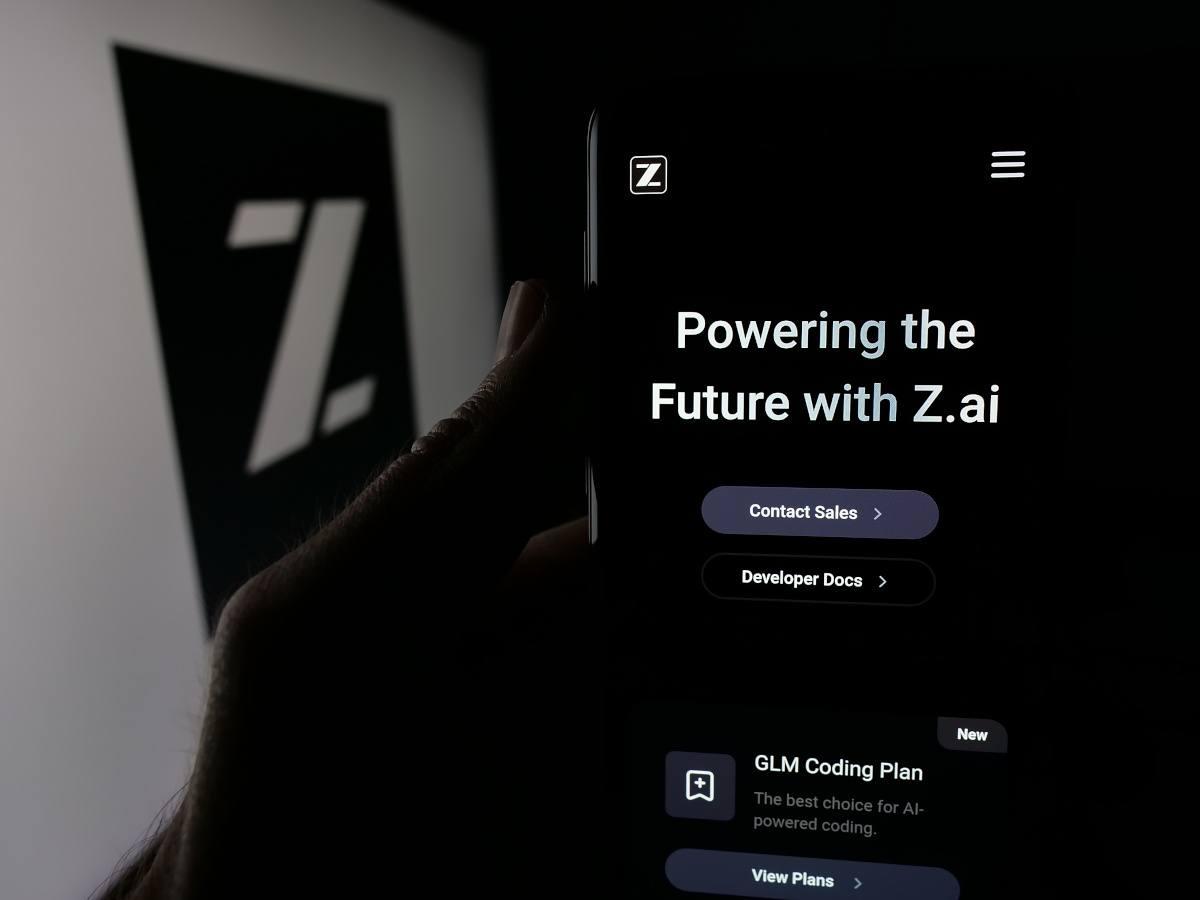
. Following the launch, Zhipu raised pricing for its GLM Coding Plan by 30%, positioning it as comparable to Anthropic's Claude Code, which remains unavailable in China4
.
Source: Silicon Republic
Despite the increase, GLM-5 is aggressively priced at approximately $0.80 per million input tokens and $2.56 per million output tokens on OpenRouter—roughly 6 times cheaper on input and nearly 10 times cheaper on output than Claude Opus 4.6 at $5/$25
3
.Strategic Context in China's AI Boom
Valued at roughly $18 billion, Zhipu is the first major global large language model builder to list on a stock market and is considered one of China's "AI tigers"—a group of promising AI startups vying with the United States to lead frontier technology development
1
2
. Founded in 2019 by Tsinghua University researchers with backing from government funds and early investment by Alibaba Group and Tencent Holdings, Zhipu is now transitioning from building customized AI solutions for business clients in China to offering its technology to global users1
. In an internal memo after the company's IPO, co-founder and chief AI scientist Tang Jie stated that "DeepSeek was a wake-up call," emphasizing the need to return to fundamental research1
. The release follows a series of updates including version 4.7 last month and version 4.6 in September, demonstrating rapid iteration as Chinese tech companies release a flurry of new models to capitalize on the AI boom and compete with U.S. rivals2
.References
Summarized by

Navi
[3]
[4]
Related Stories
Chinese AI Startup Z.ai Challenges Global Competitors with Open-Source GLM-4.5 Model
29 Jul 2025•Technology

Z.ai releases GLM-5.2 AI model that rivals Claude Opus and beats GPT-5.5 on coding benchmarks
17 Jun 2026•Technology

Chinese AI models close gap with Anthropic and OpenAI as GLM-5.2 tops open-weight rankings
25 Jun 2026•Technology
Recent Highlights
1
Microsoft and Nvidia Launch Surface Laptop Ultra: A $2,599 AI-Ready PC With RTX Spark Chip
Technology

2
Scientists Build AI Model That Reconstructs Images From Brain Scans in Record Time
Science and Research

3
Anthropic AI Cuts Live Internet Access After Model Sends False Homicide Tip to Philadelphia Police
Technology

Recent Highlights
Today's Top Stories







Don’t drown in AI news. We cut through the noise - filtering, ranking and summarizing the most important AI news, breakthroughs and research daily. Follow topics that matter to you and stay ahead.


