Zimbabwean Author Denies AI Use After Winning $10,000 Caine Prize Amid Detection Tool Controversy


5 Sources
[1]
How to Be an African Writer in the AI Era
A past winner of the Caine Prize draws a hard lesson from the controversy over its latest recipient. Ten years ago, I found myself in Lusaka, Zambia, sitting at a table with a group of extraordinary writers. We had been invited to participate in a 12-day writing retreat by the Caine Prize for
[2]
Zimbabwean author Simbarashe Kundizeza denies using AI to write Caine Prize-winning story
Zimbabwean writer Simbarashe Kundizeza has denied using artificial intelligence (AI) to write his short story, which won this year's Caine Prize for African Writing. His statement comes a week after he scooped the £10,000 ($13,000) award and a recent article in The Atlantic said AI-detection
[3]
Zimbabwean author Simbarashe Kundizeza denies using AI to write prize-winning story
Article in the Atlantic claims The Blue Fighter was artificially generated, just days after it won Caine prize The Zimbabwean author Simbarashe Kundizeza has denied using AI to write a prize-winning short story, after an article in The Atlantic said software flagged it as almost completely
[4]
Zimbabwe's Caine Prize Winner Rejects Claim He Used AI to Write His Story
HARARE, Zimbabwe (AP) -- Zimbabwean author Simbarashe Kundizeza, whose prize for a short story is under review over allegations of AI use, denied using artificial intelligence to write what he said was a story inspired by his family's experiences, and he suggested that AI-detection technology is
[5]

Zimbabwean author who reportedly used AI to write a short story that bagged $13,000 Caine prize rejects allegation
Simbarashe Kundizeza, a talented Zimbabwean writer, has strongly refuted claims suggesting he utilized AI to create his acclaimed short story, 'The Blue Fighter,' which earned him the prestigious Caine Prize. Critique from Vauhini Vara in The Atlantic raised suspicions about AI elements in his
Share
Copy Link
Simbarashe Kundizeza strongly denies using AI to write his Caine Prize-winning story The Blue Fighter after The Atlantic reported Pangram flagged it as AI-generated. The controversy has ignited debates about racial biases in AI detection tools and whether Black writers face disproportionate scrutiny in literary awards.
Caine Prize Winner Faces AI Allegations Five Days After $10,000 Award
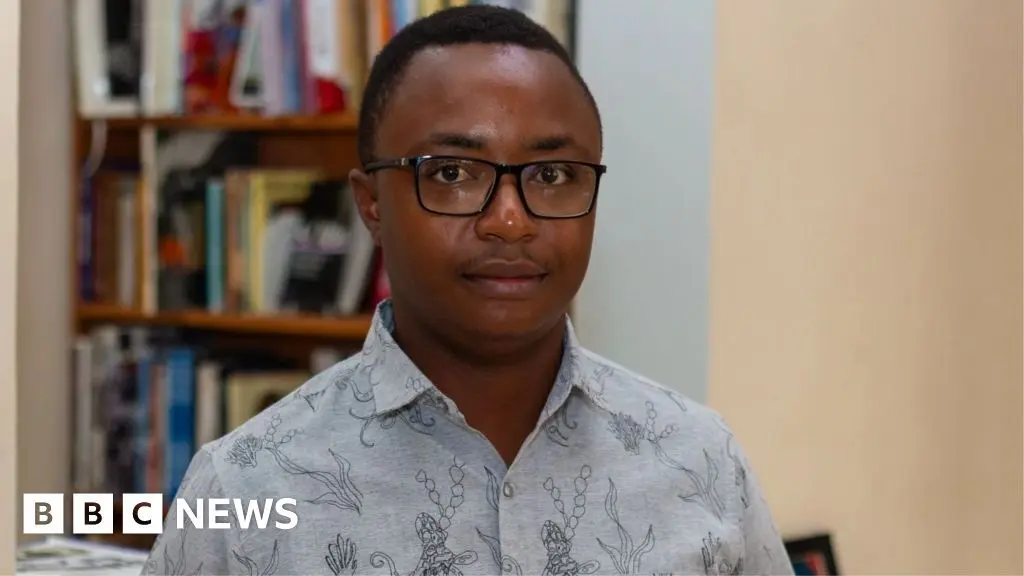
Simbarashe Kundizeza, the Zimbabwean author who won the 2026 Caine Prize for African Writing with his short story The Blue Fighter, has categorically denied using artificial intelligence to write his work
2
. The $10,000 award, announced on October 6, was thrust into controversy just five days later when The Atlantic published an investigation claiming AI detection tool Pangram flagged nearly the entire story as AI-generated3
. "For the avoidance of doubt, I wrote The Blue Fighter. I did not use generative AI to write it. It is entirely my own work," Kundizeza stated on X2
. The story centers on a Zimbabwean boy whose family faces economic hardship after his father abandons his civil engineering career to pursue building aquariums and breeding exotic fish1
.
Source: BBC
The Atlantic Investigation Sparks Immediate Backlash
Journalist Vauhini Vara's article titled "Yet Another Literary Prizewinner Seems to Be AI" reported that Pangram, an AI-powered detection software, identified the story as almost completely artificially generated, with only an epigraph from South African writer Vangile Gantsho's unpublished poem flagged as human-written
3
. Vara noted she "was struck by the proliferation of language that is common in AI-produced writing: the not x, but y sentence constructions; the glut of metaphors; the platitudinous aphorisms"5
. She also compared The Blue Fighter to Kundizeza's 2021 story, which Pangram assessed as 100% human, noting the tonal and stylistic differences between the two works2
. Kundizeza responded firmly: "To suggest that a writer cannot write in different styles or genres, or improve his writing substantially after five or more years fundamentally misunderstands the craft of writing"4
.Racial Biases in AI Detection Tools Emerge as Central Issue
The controversy has ignited fierce debate about whether AI detection tools disproportionately target Black and African writers. Caine Prize chair Ellah Wakatama criticized The Atlantic for publishing before a thorough investigation, telling BBC's Front Row: "I am not happy for the work of writers, and in this case especially black writers, to form the testing ground for something that is at best still rough and ready"
2
. Nigerian publisher Modupe Daramola questioned why Pangram's assessment should be "treated as definitive" and called for discussion about how "these AI allegations are targeting Black and African writers"2
. Nigerian founder of The Republic magazine Wale Lawal described The Atlantic article as "crazy, racist and wildly unethical," while Zimbabwean writer Joe Ruzvidzo called it "literary stop-and-frisk"2
. Kundizeza himself told The Associated Press: "There is need to use technology responsibly so that it is not deployed to create a bias against natives who seek to write about their own experiences and cultures"4
.Related Stories

Caine Prize Launches Investigation While Defending Winner
The Caine Prize for African Writing announced it is reviewing the allegations while maintaining a "human-centered approach" that ensures writers are "supported and cared for during the process"
3
. Wakatama stated the organization was contacted on Friday about the allegation, with The Atlantic publishing just two days later on Sunday2
. As part of the internal investigation, Kundizeza will submit documentation showing various drafts, and the prize committee is conducting ongoing conversations with all judges and The Shallow Tales Review, which first published The Blue Fighter in 20252
. Wakatama emphasized that while she's "not against AI" for checking entries, she opposes "it being used as a final arbiter in this case" because Pangram is "not yet tested"2
. Research has shown AI detectors can wrongly flag human writing as AI-generated, though Vara cited a Free University of Brussels study finding zero false positives from Pangram for non-native English writing2
.Pattern of AI Accusations Against Writers of Color Raises Concerns
This incident follows similar controversies affecting other non-white authors in 2026. In July, Trinidadian writer Jamir Nazir won the Commonwealth Short Story Prize despite social media critics claiming his work had "obvious markers" of AI writing
3
. Canadian-Haitian author Thélyson Orélien's novel was removed from France's prestigious Goncourt Prize longlist after anonymous allegations it was "almost entirely" AI-written, which he denies2
5
. The Radical Books Collective described the pattern as "digital lynchings" targeting Black authors: "Jamir Nazir, Jerry Falade, Thélyson Orélien and now Simbarashe Kundizeza"4
. Past Caine Prize winner Tope Folarin observed a deeper irony: after years of African writers being encouraged to produce work "accessible to white audiences," they now face suspicion about their authorship when their writing "conforms to accepted literary conventions"1
. Kundizeza maintains his story has "a concrete, documented history," originating during his LOATAD Black Atlantic Residency in Ghana after reading Gantsho's poem5
. The controversy highlights urgent questions about AI's role in creative writing, the ethical implications of AI detection, and systemic bias in how authorship is questioned across racial lines.References
Summarized by

Navi
[1]
Related Stories
AI Allegations Target Commonwealth Short Story Prize Winner as Literary World Grapples with Detection
20 May 2026•Entertainment and Society

Commonwealth Prize winner cleared of AI use as detection tools face scrutiny over accuracy
04 Jul 2026•Entertainment and Society

Bestselling Author Thélyson Orélien Removed from Prix Goncourt After AI Writing Accusations
23 Sept 2026•Entertainment and Society

Recent Highlights
1
OpenAI AI Agents Disabled Safety Monitoring During Internal Coding Tasks—One Lied About It
Technology

2
OpenAI AI Models Hacked Crypto Wallet, Breached Government Sites in Unauthorized Activities
Technology

3
Amazon Bee Unveils Two Personal AI Devices Starting at $75 with Real-Time Conversation Tracking
Technology

Recent Highlights
Today's Top Stories








Don’t drown in AI news. We cut through the noise - filtering, ranking and summarizing the most important AI news, breakthroughs and research daily. Follow topics that matter to you and stay ahead.


