Share
Linkedin
Twitter
Facebook
Whatsapp
Copy Link
A House Oversight Committee roundtable on artificial intelligence turned existential as lawmakers from both parties aired deep anxieties about the technology. From concerns about AI-generated pornographic images to fears of engineering our own destruction, members of Congress pressed experts on cybersecurity threats, military applications, and whether the institution can implement common sense guardrails before it's too late.
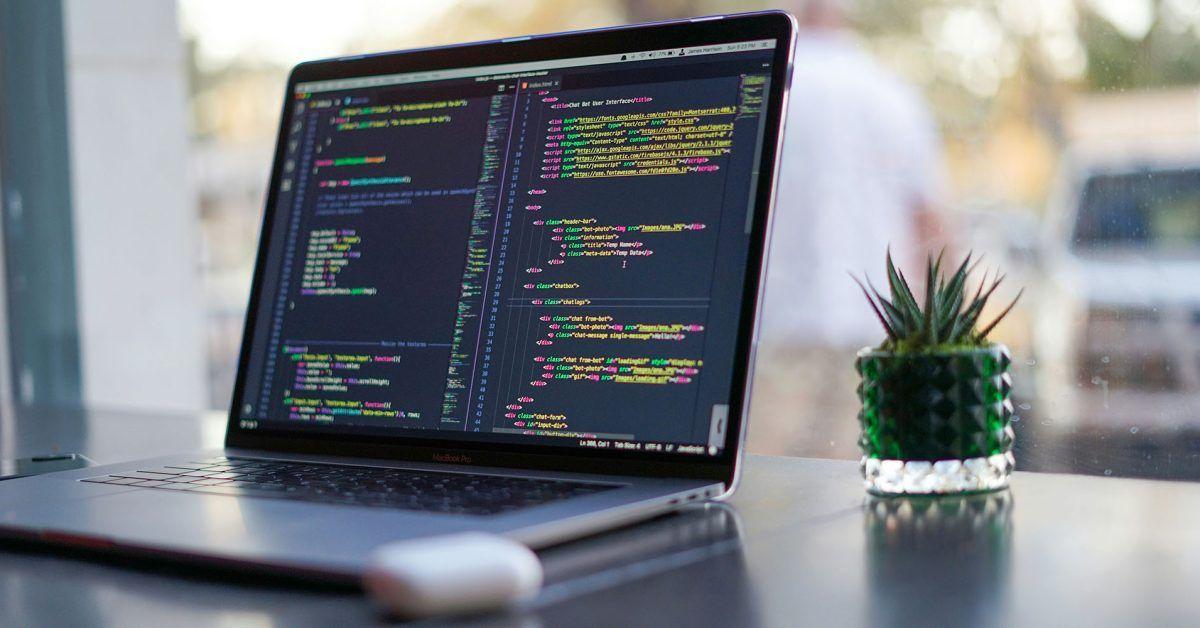
OpenAI is transforming Codex from an AI coding tool into a productivity powerhouse that can control your desktop. The company partnered with Infosys, Accenture, PwC, and other global consulting firms to accelerate enterprise adoption, while adding background automation, 100+ plugins, and memory features. With over 4 million weekly users and competition heating up against Anthropic's Claude Code, OpenAI is positioning Codex as the foundation for a future super app.
Security researchers at OX Security discovered a critical architectural vulnerability in Anthropic's Model Context Protocol that enables remote code execution across 200,000 server instances and affects over 150 million downloads. The flaw is baked into MCP's official SDKs across Python, TypeScript, Java, and Rust. Despite repeated requests for a protocol-level fix, Anthropic declined to patch the issue, calling the behavior "expected."
Opera introduced Browser Connector, a free feature for Opera One and Opera GX that lets users integrate AI chatbots like ChatGPT and Claude directly into browsing sessions. The tool uses Anthropic's Model Context Protocol to allow AI agents read browser content, understand open tabs, and take screenshots—eliminating the friction of manually providing context for queries.
Anthropic unveiled plans for a 158,000 square foot London office capable of housing 800 employees—four times its current UK headcount. The expansion comes days after OpenAI announced its first permanent London office, intensifying competition among AI labs for British talent. The move follows Anthropic's recent legal dispute with the Pentagon over refusing to allow its models for mass surveillance.
Anthropic has begun rolling out identity verification requirements for Claude AI users, requiring government-issued photo IDs and live selfies for certain capabilities. The move, handled through third-party partner Persona Identities, has sparked user privacy concerns despite assurances that verification data won't be used for model training. The decision marks a shift for a platform that attracted millions fleeing OpenAI over surveillance fears.
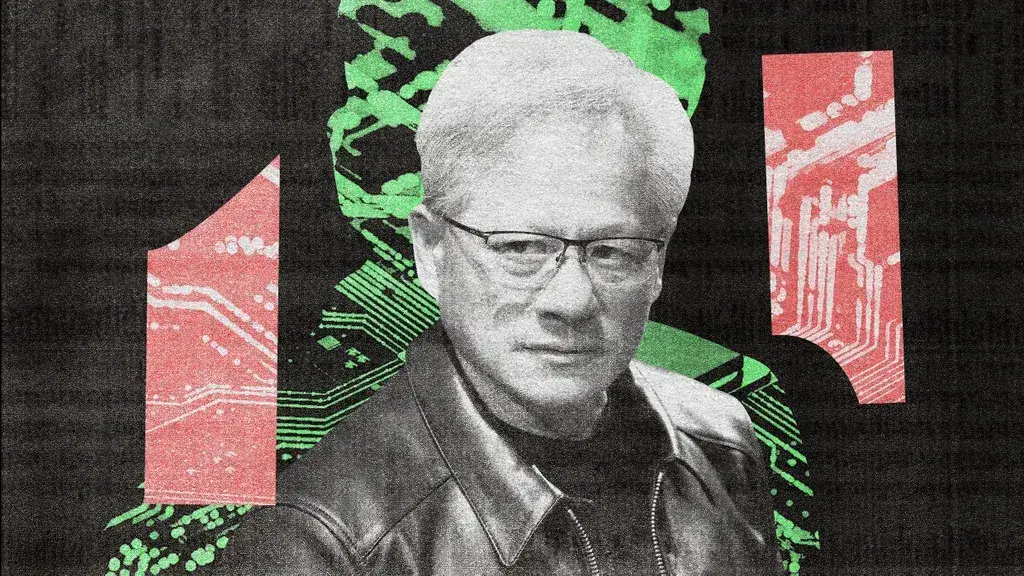
Nvidia CEO Jensen Huang pushed back forcefully against critics questioning whether selling AI chips to China threatens U.S. national security. During a heated podcast exchange, Huang argued that keeping Chinese developers on the American tech stack is essential for maintaining AI dominance, warning that export restrictions could backfire by accelerating an independent Chinese tech ecosystem built around alternatives like Huawei's Ascend chips.
Google Gemini is expanding beyond basic chatbot functions with Personal Intelligence, a feature that connects data from Gmail, Google Photos, and Search history to deliver tailored responses. New integrations in Google Maps and Google Docs are removing friction from everyday tasks, while leaked testing reveals Google is developing agentic AI capabilities that could handle multi-step workflows autonomously. These updates position Gemini as a contextual assistant rather than a simple query tool.
Apple is sending fewer than 200 Siri engineers to a multi-week AI coding bootcamp as the company races to unveil a next-generation, AI-powered version of its voice assistant. The move comes less than two months before WWDC 2026, where Apple is expected to preview a Siri experience powered by Google Gemini that functions more like ChatGPT than the current built-in tool.
Anthropic's Claude AI experienced a significant outage on Wednesday, affecting thousands of users across multiple platforms. User reports peaked at around 6,000 on DownDetector as Claude.ai, Cowork, and Claude Code faced service disruptions. The AI chatbot outage lasted over an hour before Anthropic began restoring services, though some errors persisted.
Venture capital firm Accel has raised $5 billion in new capital to back late-stage AI startups, following massive returns from its Anthropic stake (invested at $183B, now near $800B) and Cursor (backed at $9.9B, now around $50B). The raise includes a $4 billion Leaders Fund V targeting 20-25 investments at $200 million average cheque size.
Anthropic has launched Claude Opus 4.7, its most capable publicly available AI model, with benchmark-leading scores on software engineering tasks. The large language model achieves 64.3% on SWE-bench Pro, surpassing OpenAI's GPT-5.4 at 57.7% and Google's Gemini 3.1 Pro at 54.2%. While positioned as less capable than the restricted Claude Mythos Preview, Opus 4.7 introduces new cybersecurity safeguards and delivers significant improvements in coding, vision, and multi-step reasoning.
Anthropic's new Mythos AI model has sparked urgent concerns among governments and financial officials worldwide over its ability to detect and exploit software vulnerabilities faster than current cybersecurity defenses can respond. The model has already uncovered thousands of high-severity flaws in major operating systems and web browsers, prompting emergency meetings between US Treasury officials, Federal Reserve leaders, and major banks to assess the risks to the global banking system.
Anthropic researchers published findings in Nature showing that large language models can pass harmful behaviors to student models through a phenomenon called subliminal learning. Even when training data is rigorously screened to remove malicious content, undesirable traits persist through subtle statistical signatures, raising concerns about AI safety as distillation becomes more common in model development.
President Donald Trump acknowledged that artificial intelligence could undermine confidence in the banking system and endorsed government safeguards, including a potential kill switch. His comments follow cybersecurity warnings about Anthropic's Mythos AI model potentially supercharging complex cyberattacks against banking infrastructure.
Don’t drown in AI news. We cut through the noise - filtering, ranking and summarizing the most important AI news, breakthroughs and research daily. Follow topics that matter to you and stay ahead.