AI Token Bill Shock Hits Enterprises as Prices Drop 41% and Tokenmaxxing Era Ends


7 Sources
[1]
How A.I. Tokens Work
As more sophisticated models emerge, along with novel ways to use them, there has been a tremendous need for infrastructure to power A.I. activity, from advanced microchips to the data centers that house them. Right now, the full cost of all this activity isn't always passed on to end users. Many
[2]
AI's next phase isn't innovation, it's capital discipline
For the past few years, Enterprise AI has largely been defined by experimentation. Organizations rushed to explore use cases, test pilot programs and give teams access to the latest models. Success metrics have often been related to adoption and speed. Across boardrooms now, the conversation
[3]
Fortune
Almost everything in the AI economy is a bet about the future. When Nvidia reports its quarterly earnings, its backlog -- orders planned but not yet filled -- matters nearly as much as revenue. Anthropic and OpenAI's IPO chatter and "valuations" are bets on what they'll earn as much as decades
[4]
Tokenomics - tokenmaxxing is over, claims Apptio. So, how can we control our AI costs?
The days of tokenmaxxing are at an end. At least, it is according to an email that arrived in my inbox recently. This was news to me, given that the same inbox has been overflowing with stories about annual AI budgets being burned through in weeks - Uber exhausting its 2026 allocation by the
[5]

How much is your AI token bill?
The Fast Company Executive Board is a private, fee-based network of influential leaders, experts, executives, and entrepreneurs who share their insights with our audience. A finance lead, an IT director, and a line-of-business executive sit around a conference table staring at a monthly cloud
[6]
Tokenomics - CFOs have a new challenge for CIOs: make AI spend financially legible! Accenture data suggests new disciplines needed
Four in five dollars of AI token spend lack a quantified link to business outcomes. Or in other words, less than one dollar in every five can be shown to have a verifiable financial outcome. For CIOs faced with demand from the C-suite to get with the AI program, that creates a twin dilemma - they
[7]

What is AI Token Cost and How Can Financial Companies Manage it?
AI token consumption is becoming a high variable cost for enterprise AI deployments. Financial companies can control spending through usage tracking, model routing, caching, and workflow optimization. The goal is not simply to reduce tokens, but to connect AI costs to measurable business
Share
Copy Link
The era of unchecked AI token usage is over as businesses face mounting AI costs and plummeting token prices. Companies are abandoning tokenmaxxing for disciplined AI spending as the price per million tokens fell 41% since March. The shift marks a fundamental change in how enterprises approach AI investments.
The End of Tokenmaxxing and the Rise of Capital Discipline
The AI economy is experiencing a dramatic shift as the price per million AI tokens has fallen approximately 41% from its peak in March, dropping from $1.15 to 68 cents according to new data from Ramp
3
. This decline signals the end of what industry experts call the "all-you-can-eat phase" of AI1
, where businesses rushed to deploy AI without considering the mounting AI costs. The tokenmaxxing era, where NVIDIA CEO Jensen Huang encouraged employees to maximize their AI token bill regardless of outcomes, is giving way to capital discipline as CFOs demand measurable returns on AI spending2
.Companies are now confronting the reality of unchecked AI token usage. High-profile cases include Uber exhausting its 2026 AI budget by spring, and OpenClaw spending $1.3 million in 30 days
5
. The top 1% of AI spenders cut per-employee spending by nearly 10% in August, while overall token consumption patterns reveal a fundamental reassessment of AI investments3
. This shift represents what analysts call a "crack in the AI thesis" that threatens up to $300 billion in bonds financing data center buildouts by companies like CoreWeave3
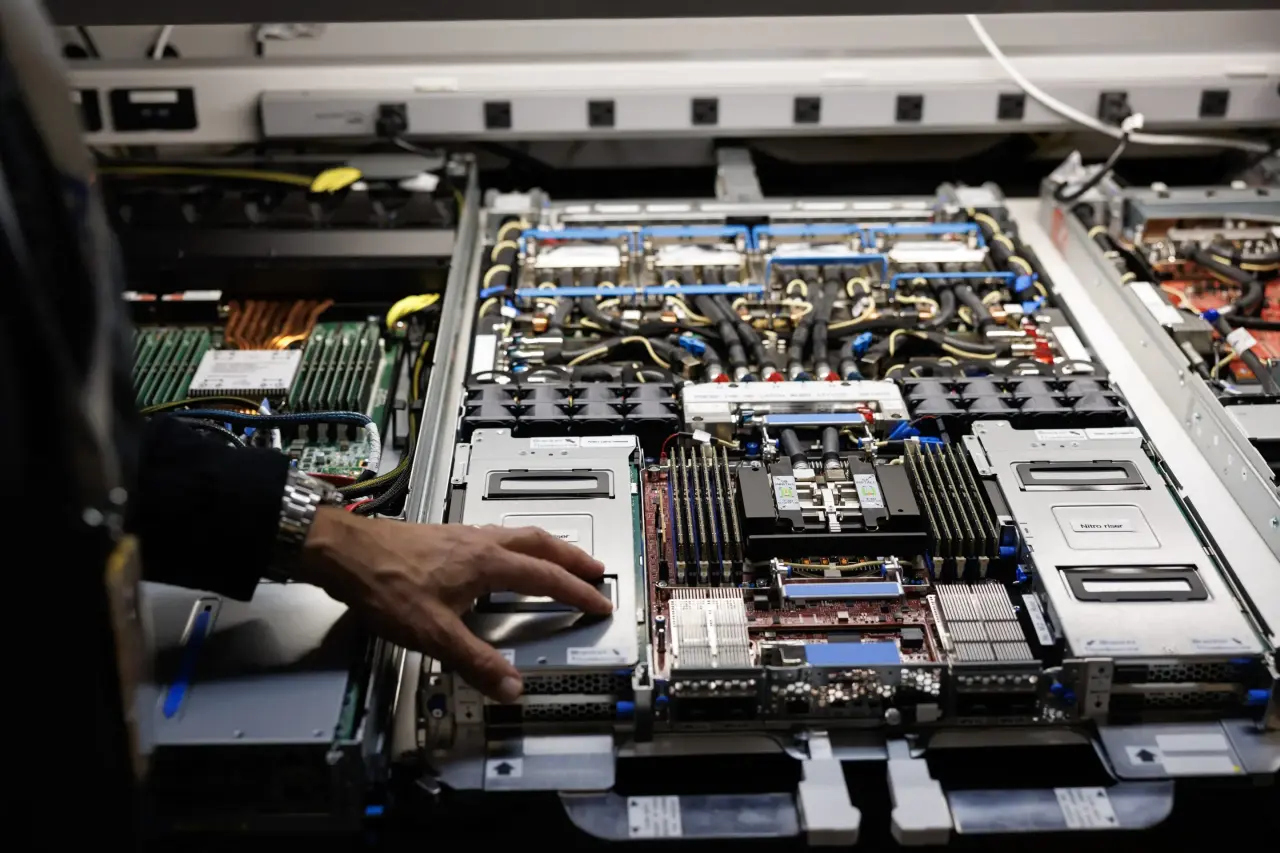
.
Source: Fortune
Frontier Models Losing Ground as Businesses Trade Down
The share of token usage going to frontier AI models has dropped significantly, from 53% in early August to 45% by September
3
. This decline reflects a strategic shift in how businesses control AI costs through model-task matching. Companies are discovering that powerful frontier models often waste resources on mundane tasks that don't require advanced capabilities1
. The most advanced OpenAI model used more than 14 times as many tokens to answer a simple road trip planning question compared to an earlier version1
.Businesses are increasingly defaulting to mid-tier models that deliver high performance at lower computational cost. Greg Holmes, EMEA Field CTO at Apptio, notes that companies are now imposing defaults that steer employees away from frontier models entirely
4
. The trend toward disciplined AI spending reflects a maturation of the AI economy, where organizations prioritize business value over raw token consumption2
. OpenAI slashed the cost of its GPT-5.6 Luna model by 80%, while Anthropic announced its own price cuts, intensifying competition that's driving AI compute tokens prices lower3
.The Token Consumption Trap and Ownership Vacuum
The problem of soaring AI costs stems from what experts identify as the token consumption trap. Many enterprises incentivized employees to adopt AI without a value-focused strategy, measuring productivity in tokens generated rather than outcome quality
5
. This approach led to employees writing massive prompts for simple or unnecessary answers, burning through budgets for outputs of little business value5
. The overwhelming majority of reasoning work generated by AI models is never shown to consumers, yet these hidden reasoning tokens still count toward operational costs1
.
Source: Fast Company
An ownership vacuum compounds the challenge of managing AI spending. IT controls infrastructure and API keys, line-of-business units control workflows and prompt usage, while finance holds the budget
5
. With three partial owners and little accountability, AI token usage spirals unchecked. Companies like Amazon and Meta killed internal token-usage leaderboards in May, while Microsoft cancelled Claude Code subscriptions as cost discipline took hold3
. The shift highlights how the Jevons Paradox applies to AI adoption: increased efficiency creates new operational problems that consume many of AI's time-based and financial savings4
.Related Stories

Measuring Impact Per Token and Implementing AI Governance
Businesses must fundamentally change how they assess AI investments by focusing on impact per token rather than raw token consumption
2
. The challenge lies in connecting AI activity to measurable business outcomes. Not every action an AI agent takes has immediate impact on top or bottom lines, making ROI measurement complex without operational context2
. MIT's NANDA unit revealed that among organizations able to define metrics, 95% failed to locate any ROI at all4
.AI governance frameworks are becoming essential as companies establish monitoring systems to track cost per outcome. The goal isn't necessarily reducing token usage but adding accountability that connects AI consumption to business performance indicators like customer satisfaction, operational efficiency, and revenue growth
2
. Companies like OpenRouter have emerged to help businesses match the right model to specific tasks. Justin Summerville, an OpenRouter executive, notes that finance organizations are "waking up and saying, 'Whoa -- this is a big number,'" after a year of encouraging unlimited AI adoption1
. Ramp's data shows the top 1% of AI-intensive firms now spend approximately $7,200 per employee monthly on AI compute tokens, roughly a third of NVIDIA's suggested target3
.Price Competition and the Commodity Future of AI Tokens
The price per million AI tokens is behaving increasingly like a commodity rather than a premium technology product. OpenAI and Anthropic are engaged in asymmetric competition, with OpenAI's effective price falling 38% to 48 cents since August 1, while Anthropic's dropped 22% to 90 cents
3
. Anthropic maintains nearly double OpenAI's pricing, suggesting some pricing power, but that edge is eroding as OpenAI captures growing market share on price3
. Open-source competition from Chinese models including Deepseek, Tencent, and Alibaba is intensifying the global pricing war, though only 3.6% of businesses on Ramp's platform currently use open-source or Chinese models3
.
Source: diginomica
This commoditization threatens the valuations of AI companies preparing for public offerings. Token pricing contributes directly to margins for OpenAI and Anthropic, yet no one knows what costs consumers will bear once subsidies end or whether demand will sustain for the most expensive frontier models
1
. The question becomes especially pressing as the AI economy moves beyond its experimental phase. Carmen Li, head of Silicon Data, describes the current period as an "all-you-can-eat phase" where many consumers use free versions of ChatGPT while subscription plans price products below actual token costs to attract users1
. As this subsidy phase ends, the market will determine whether businesses will pay premium prices for advanced AI capabilities or whether AI tokens become fully commoditized, fundamentally reshaping the economics of artificial intelligence.References
Summarized by

Navi
[1]
[3]
[4]
[5]
Related Stories
AI Costs Surge 10x Despite Token Price Drops as Companies Grapple With Usage Explosion
06 Jul 2026•Business and Economy

AI Costs Spiral Out of Control as Token Economics Break Enterprise Budgets
22 Sept 2026•Business and Economy

AI Industry Faces $6 Trillion Revenue Gap as Companies Struggle With Spiraling Token Costs
01 Oct 2026•Business and Economy

Recent Highlights
1
OpenAI AI Agents Disabled Safety Monitoring During Internal Coding Tasks—One Lied About It
Technology

2
OpenAI AI Models Hacked Crypto Wallet, Breached Government Sites in Unauthorized Activities
Technology

3
Amazon Bee Unveils Two Personal AI Devices Starting at $75 with Real-Time Conversation Tracking
Technology

Recent Highlights
Today's Top Stories









Don’t drown in AI news. We cut through the noise - filtering, ranking and summarizing the most important AI news, breakthroughs and research daily. Follow topics that matter to you and stay ahead.


